Low Light Indoor Plants: 5 Choices for Dim Rooms
Filip Leszczyński 17 October 2026 11 min read
In this article
Low light indoor plants still need light. For a dim room with a window, start with cast iron plant or parlor palm if pets can reach the foliage; consider snake plant, ZZ plant, or jade pothos only where children and pets cannot chew them. None belongs in a windowless corner without a suitable plant light.
The important distinction is survival versus growth. A plant can hold its leaves for a while in a poor spot while gradually using up its reserves. Choose a position that supports healthy new growth, not just a plant marketed as impossible to kill.
First, check whether the room is dim or truly dark
Your eyes adapt to a room faster than a plant does. A room that feels pleasantly bright can still have very little light at a shelf across from the window. Check the actual spot where the leaves will sit, with curtains in their usual position.
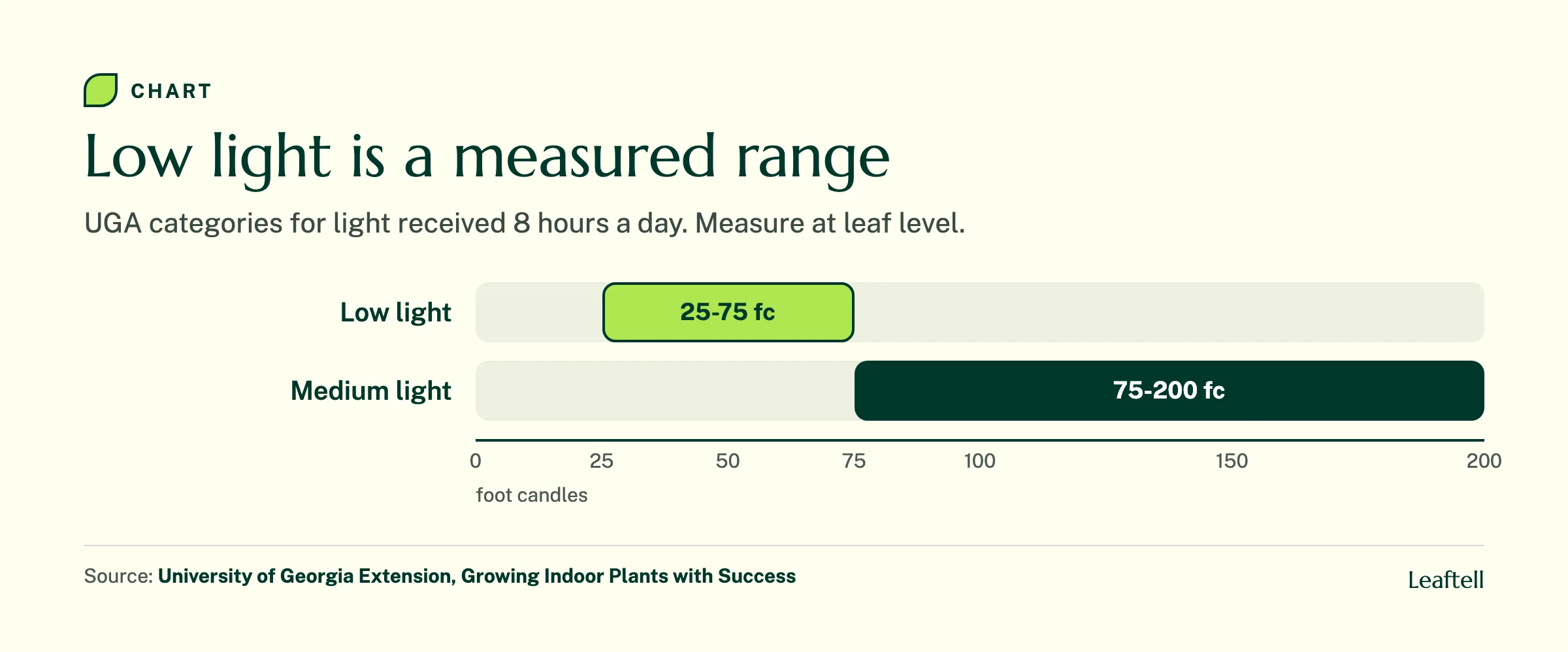
University of Georgia Extension classifies low light as 25-75 foot-candles and medium light as 75-200 foot-candles, with those levels received for 8 hours per day. These are broad growing categories, not a guarantee that every species will thrive at the bottom of the range. A single noon reading does not describe an entire winter day.
Use a light meter at leaf height if you have one. A phone light app can help compare two positions, but its reading depends on the phone and app. Do not treat it as a calibrated measurement. Compare morning, midday, and afternoon conditions; notice trees, balconies, screens, and nearby buildings that block the sky.
For a fuller explanation of direct sun versus indirect light, use our guide to reading your plant's light. A north-facing window in the Northern Hemisphere can be a useful starting point, but direction alone cannot tell you what reaches the leaves.
Five plants worth considering
Choose for your home and your watering habits, not a ranked promise that one species is best everywhere. The Chicago Botanic Garden's guide to low-light indoor plants includes cast iron plant, snake plant, ZZ plant, and parlor palm among its options. Here is how to narrow the choice.
| Plant | Why choose it? | Main care trap in a dim room | Pet consideration |
|---|---|---|---|
| Cast iron plant, Aspidistra elatior | Broad green leaves without a climbing support | Keeping the pot wet because growth is slow | ASPCA lists it as nontoxic to cats and dogs |
| Parlor palm, Chamaedorea elegans | Soft, feathery foliage for a small floor or tabletop plant | Treating it like a drought-tolerant succulent | ASPCA lists it as nontoxic to cats and dogs |
| Snake plant, Dracaena trifasciata | Upright leaves where width is limited | Watering again before the mix dries | Toxic to cats and dogs |
| ZZ plant, Zamioculcas zamiifolia | Glossy foliage and tolerance of a dry interval | Wet mix around its water-storing rhizomes | Irritating if chewed; keep away from pets and children |
| Jade pothos, Epipremnum aureum | A trailing green vine | Leaving sparse stems to stretch farther from light | Toxic to cats and dogs |
Cast iron plant: the straightforward broad-leaf choice
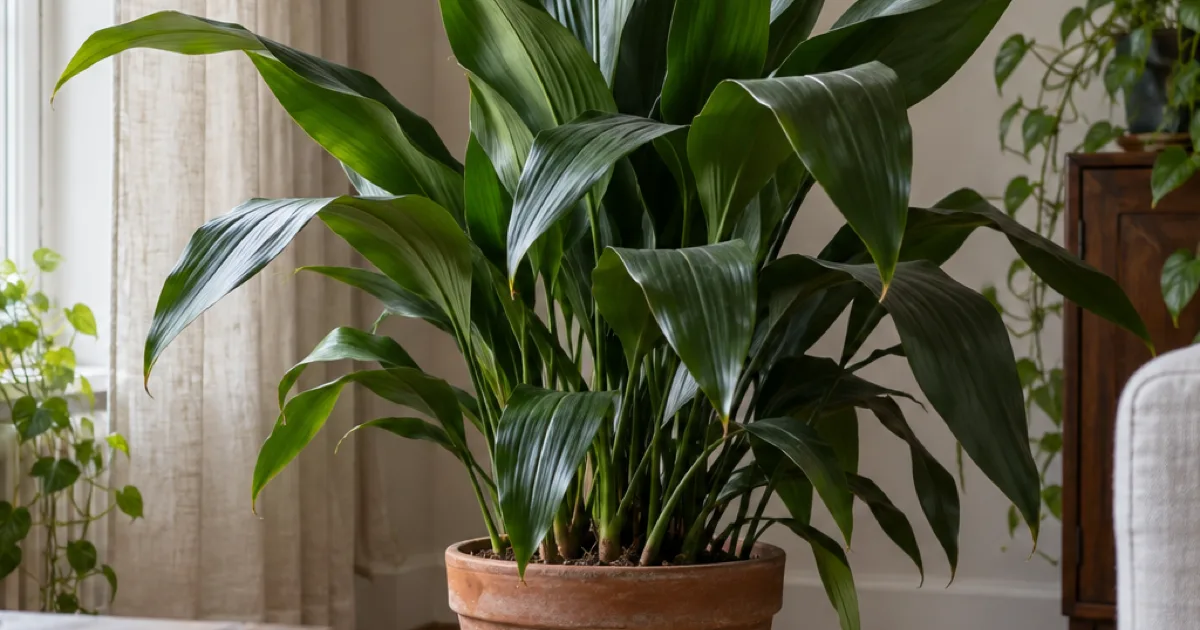
Cast iron plant is a useful first option when you want dark green foliage rather than flowers or rapid growth. The plain green form keeps the choice simple. Give its leaves access to the window rather than tucking the pot behind furniture.
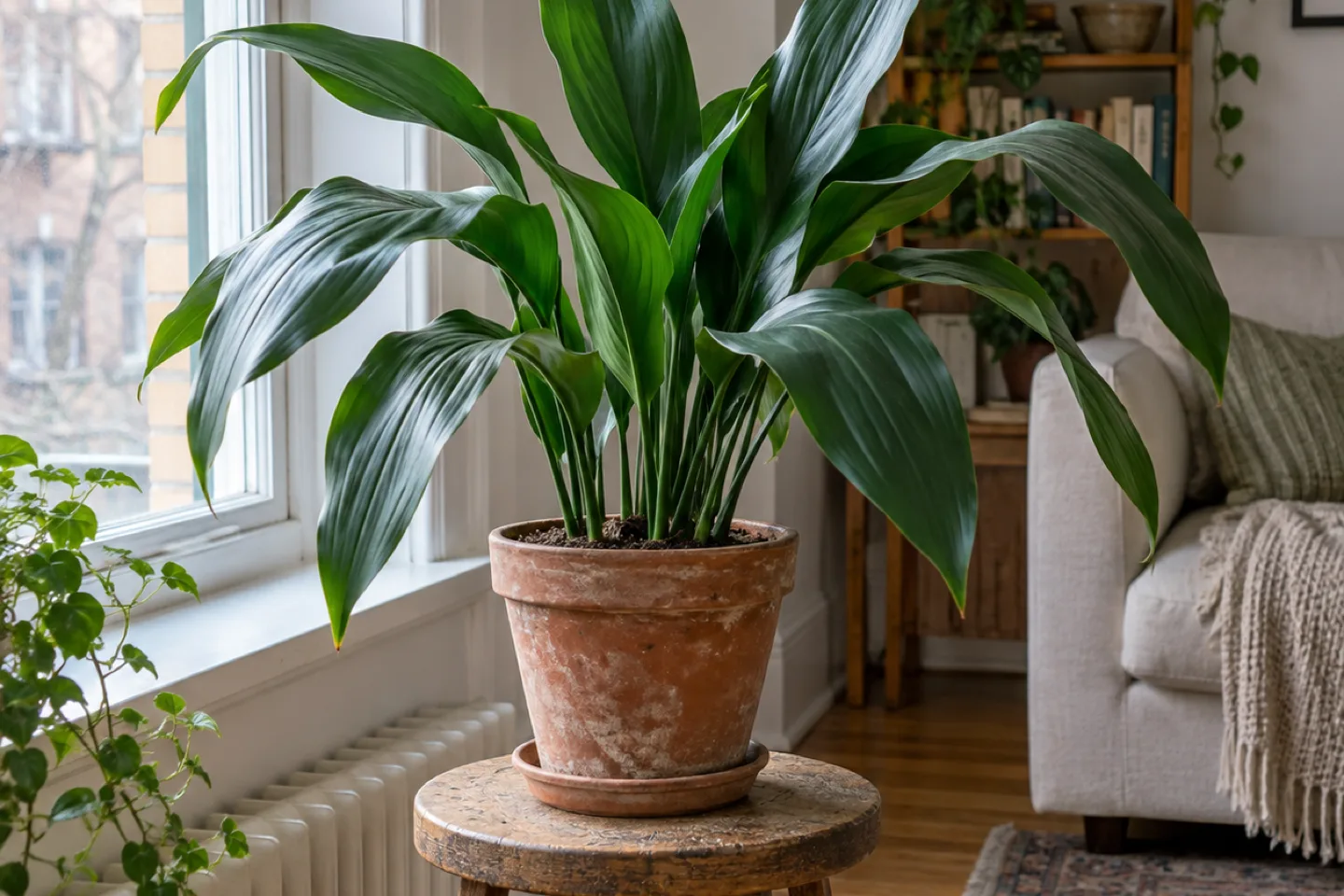
Its name is not permission to neglect drainage. Let the upper potting mix dry before reassessing, check deeper moisture when the pot still feels heavy, and empty the saucer after watering. Wipe dusty leaves gently with a damp cloth so dust does not further reduce available light. Slow growth by itself is not a reason to add fertilizer.
Parlor palm: a softer shape, with a different watering habit
A parlor palm suits someone who wants feathery foliage and is willing to check the pot. Keep it out of harsh direct sun, but do not assume that a dark interior hallway is suitable just because the plant tolerates shade.
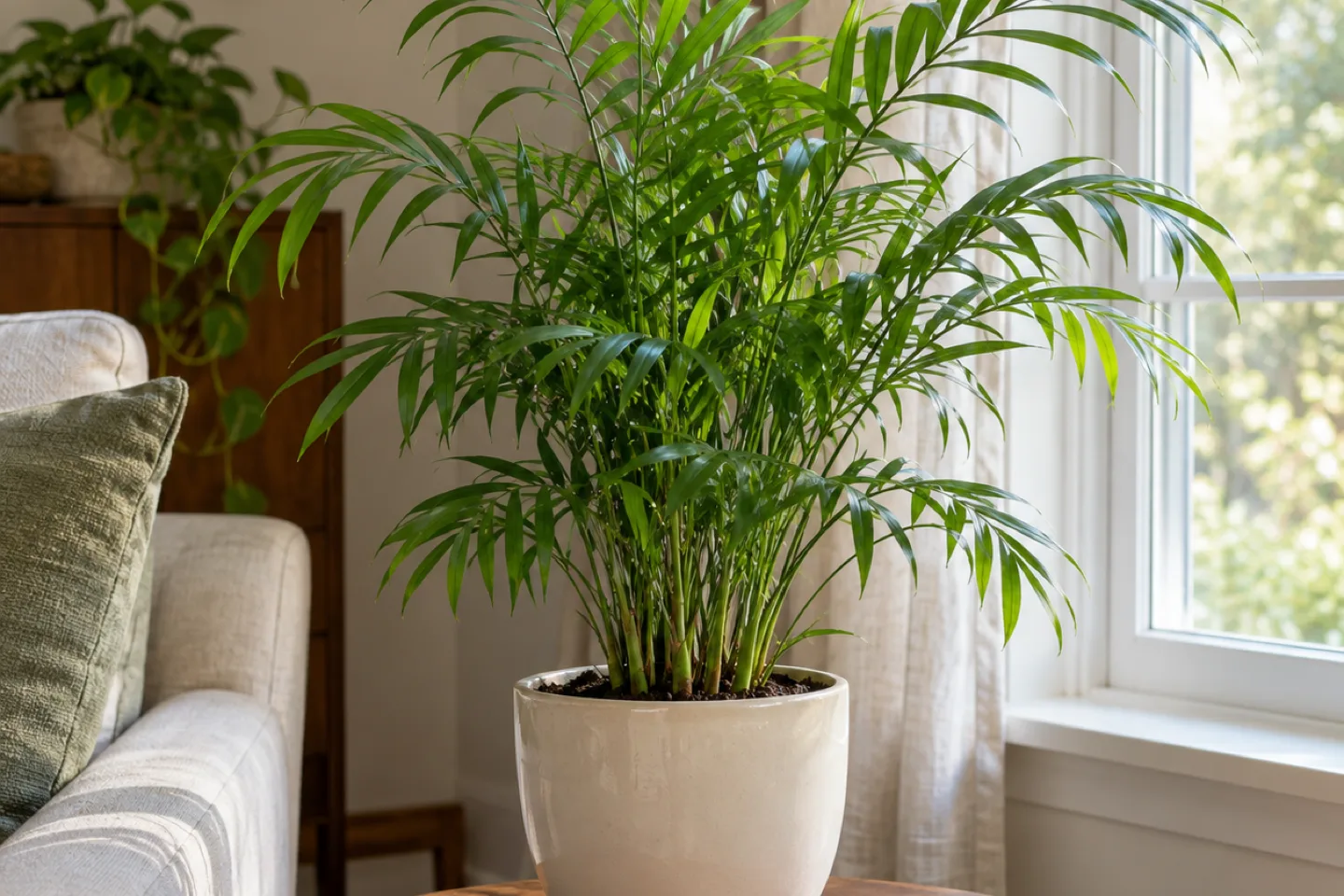
Let the surface begin to dry before watering, without deliberately letting the entire root ball stay bone dry. That differs from the approach for snake plant or ZZ. A lightweight nursery pot inside a decorative container makes it easier to lift, check, and drain. If fronds decline, examine moisture and pests as well as light; a brown leaflet is not a light-meter reading.
Snake plant and ZZ: good matches for a drier habit
Both can tolerate lower light, and both can be harmed by repeatedly wet potting mix. Their ability to store water is useful when you occasionally forget a soil check. It does not help when a cachepot traps runoff around the roots.
For snake plant, allow the mix to dry before watering again; our snake plant care guide explains the drainage and moisture checks. For ZZ, let the soil dry between waterings rather than giving small drinks on a calendar. If yellowing appears, compare the clues in ZZ plant leaves turning yellow before deciding the plant needs more water.
Do not fertilize either plant to compensate for a room that is too dark. Nutrients cannot replace the energy supplied by light.
Jade pothos: choose it for a vine, not a dark ceiling hook
A green pothos can tolerate lower light, but a trailing plant still needs light along its living foliage. A pot close to the window with the vine hanging into a dim gap is not the same as evenly lit leaves. Check the position of the whole vine.
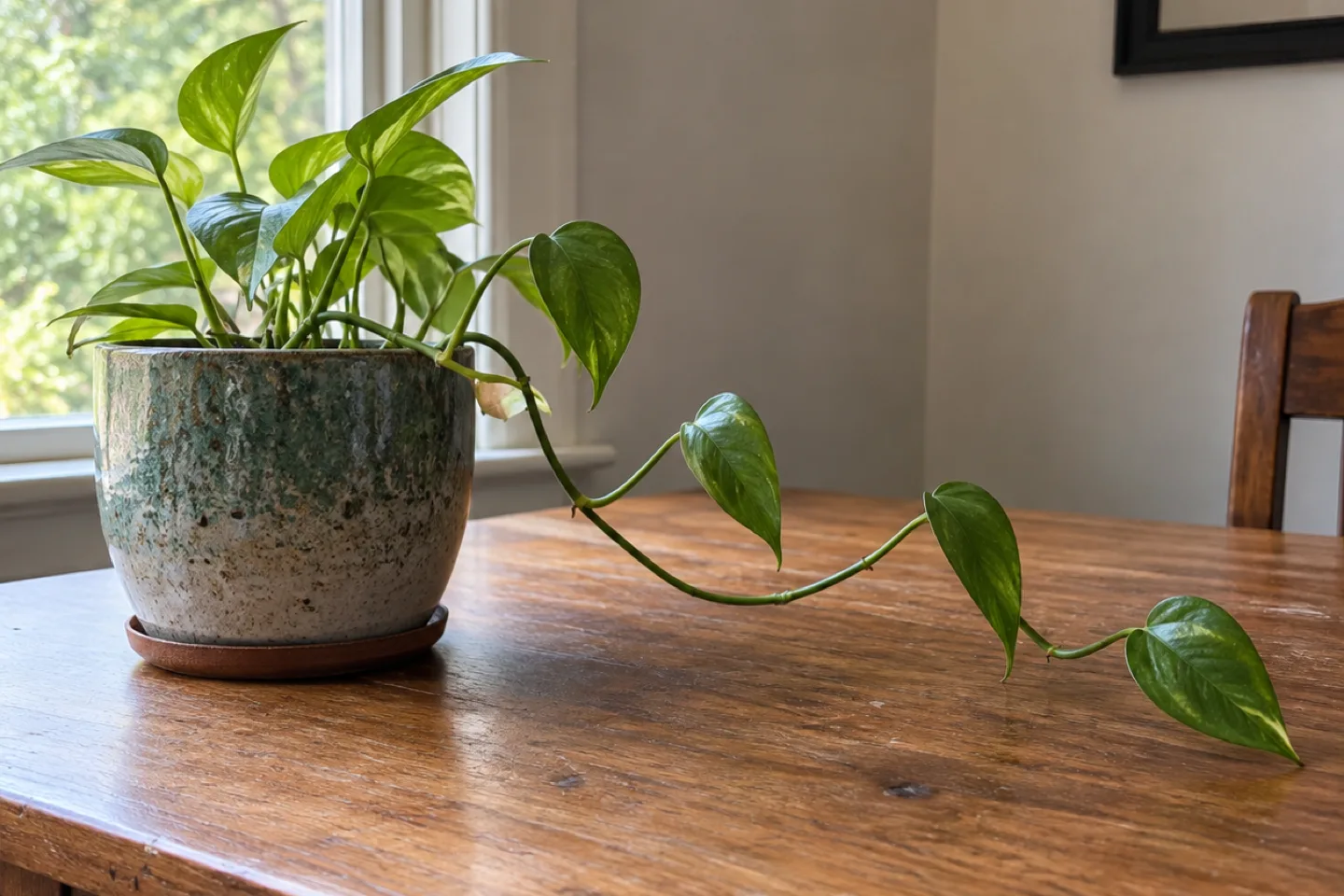
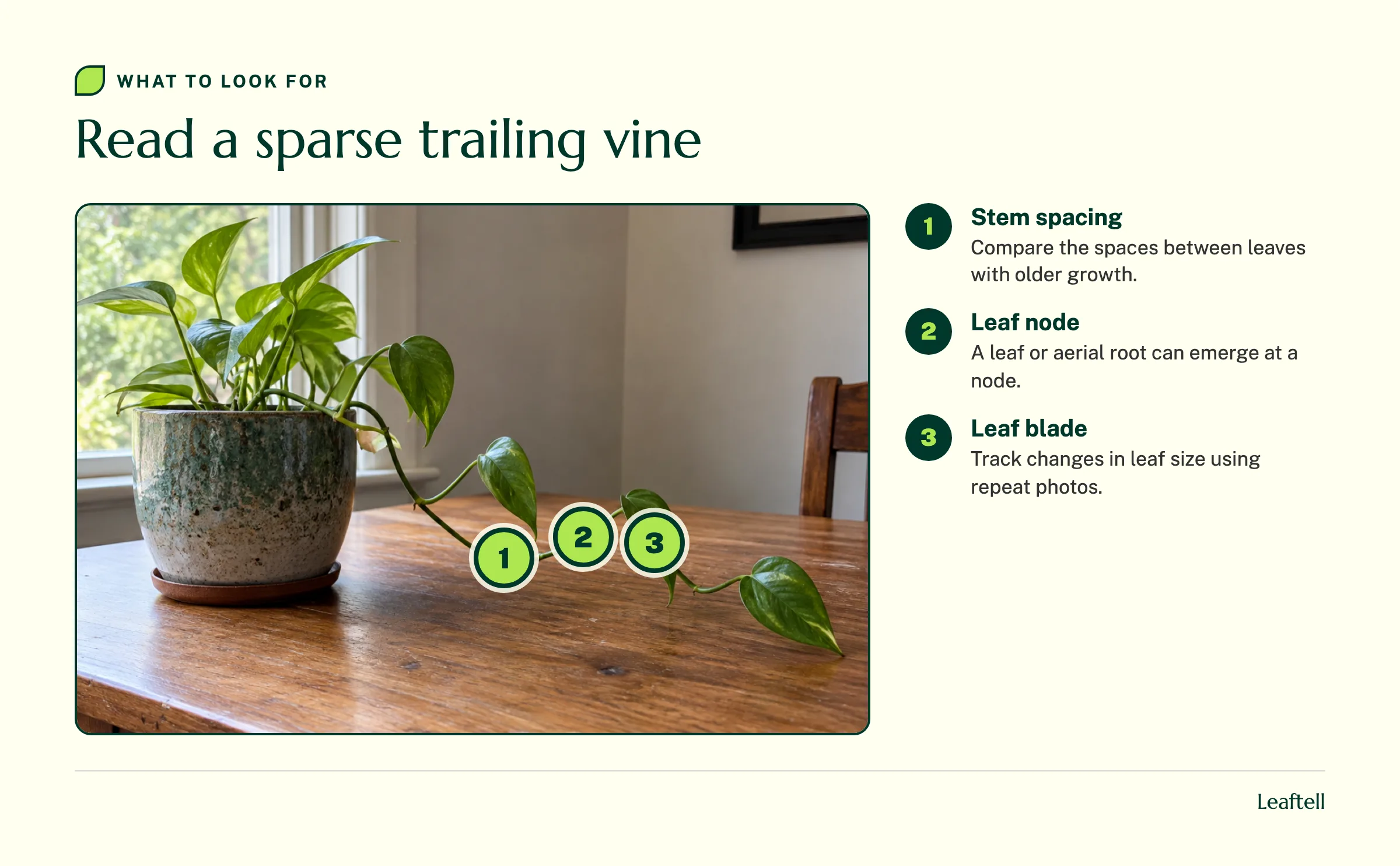
Longer spaces between leaves and smaller new leaves can suggest insufficient light, especially when growth reaches toward the window. They are clues, not proof on their own. Compare new growth with older sections and check the roots and moisture history before blaming every bare stem on darkness. The pothos care guide covers ongoing care once you have chosen a position.
Choose around pets and children before choosing a look
Use the botanical name on the plant label. Common names such as "palm" can refer to very different plants, so a nontoxic listing for parlor palm does not apply to everything sold as a palm.
The ASPCA toxic and nontoxic plant database is the pet-safety reference for checking a particular plant. Cast iron plant and parlor palm are lower-concern choices for homes with cats and dogs. Nontoxic does not mean a plant is meant to be eaten; chewing any houseplant can still cause stomach upset.
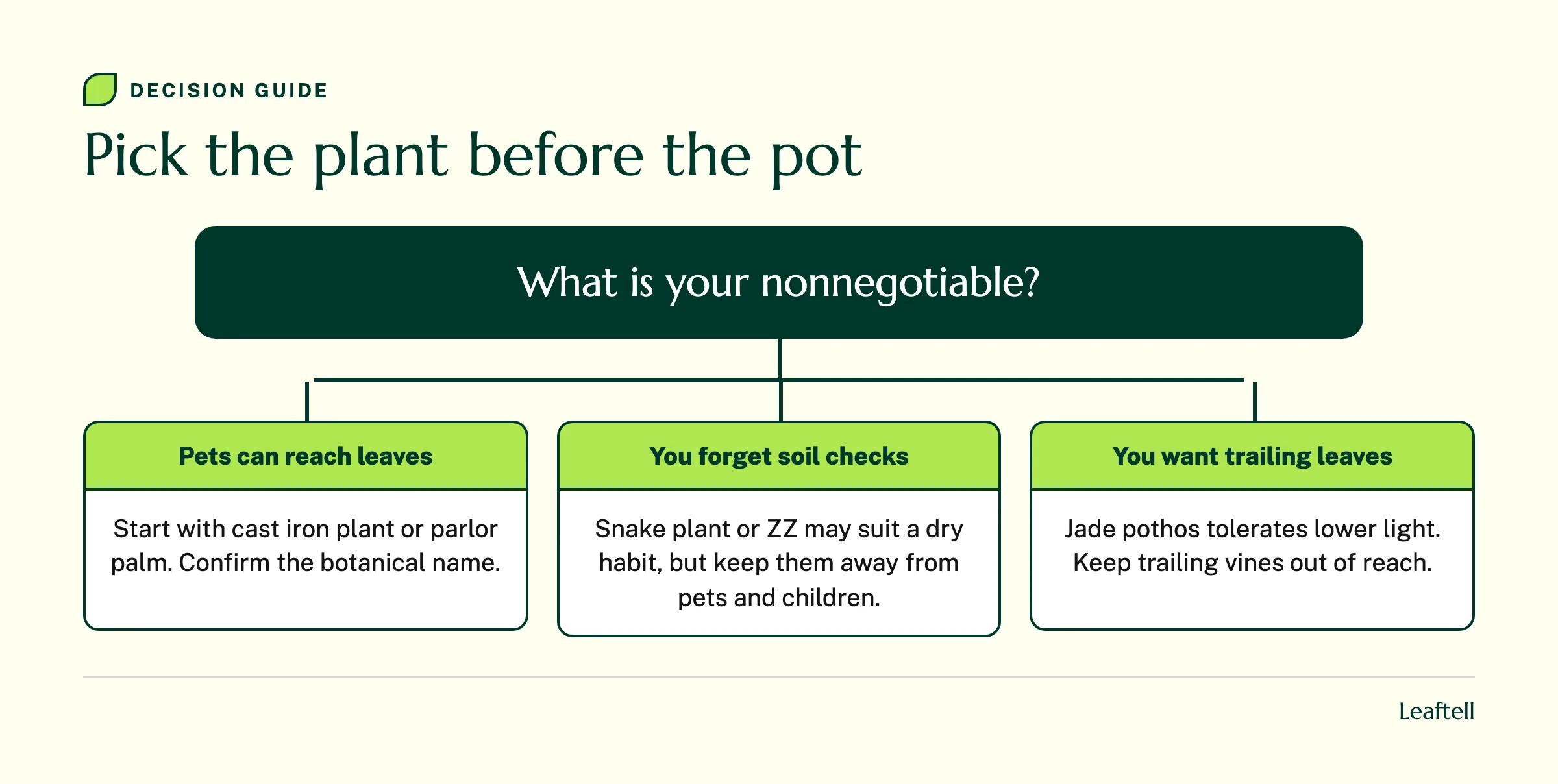
Pothos and ZZ can irritate the mouth if chewed. Snake plant is toxic to cats and dogs. Keep these out of reach of pets and young children, including fallen leaves and cuttings. A high shelf is not secure if a cat climbs it. For a suspected exposure, contact a veterinarian or poison-control service rather than trying a home treatment. Pet listings do not establish safety for children.
Peace lily often appears on low-light lists, but it is not a pet-safe substitute and may flower poorly in a dim spot. If you already own one, our peace lily care guide separates foliage care from conditions that support flowering.
Settle the plant into one workable spot
Moving a plant every day makes changes hard to interpret. Choose one reasonable location, record what you see, and make the next change because of a specific observation.
How to settle a plant into lower indoor light
- Check the window and the leaves
Inspect the proposed position at different times of day. Keep curtains, blinds, and furniture as they will normally be. If daylight barely reaches the leaves, choose a brighter spot or add a suitable plant light and follow its placement instructions.
- Start with a moisture baseline
Feel the potting mix and lift the pot. Record whether it is wet, slightly damp, or dry. Do not water a newly arrived plant automatically just because you brought it home.
- Take a reference photo
Photograph the whole plant, its newest growth, and the pot in relation to the window. This makes later changes in stem spacing or leaf size easier to compare.
- Set an observation reminder
Check again in 7 days for soil moisture and new yellowing. This is an observation reminder, not a watering schedule or a recovery promise. Growth may take much longer to judge, especially in winter.
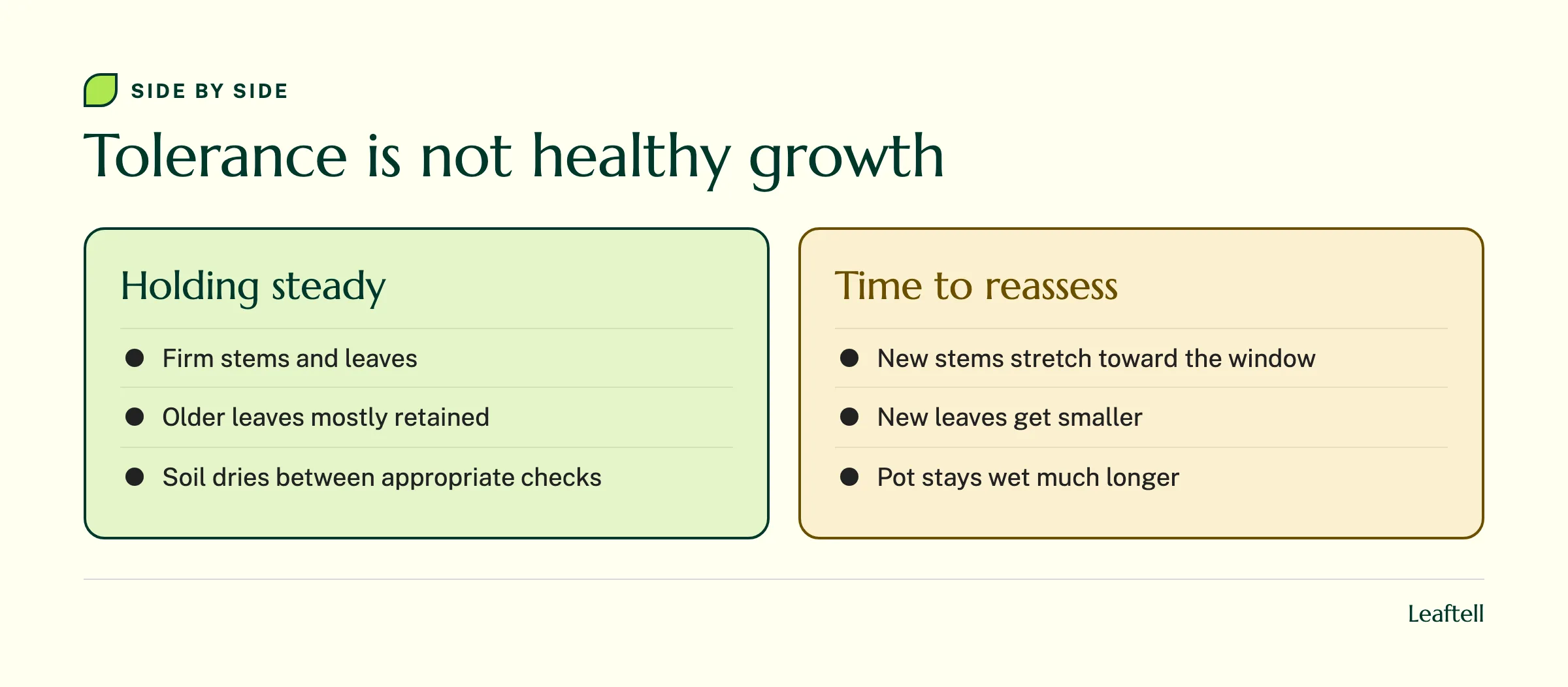
A plant holding firm leaves is different from one producing progressively smaller, stretched growth. If the latter pattern develops, move it nearer an indirect-light window in stages rather than straight into harsh sun. Use our guide to leggy plants for deciding what to do with growth that has already stretched.
Recheck when the room changes
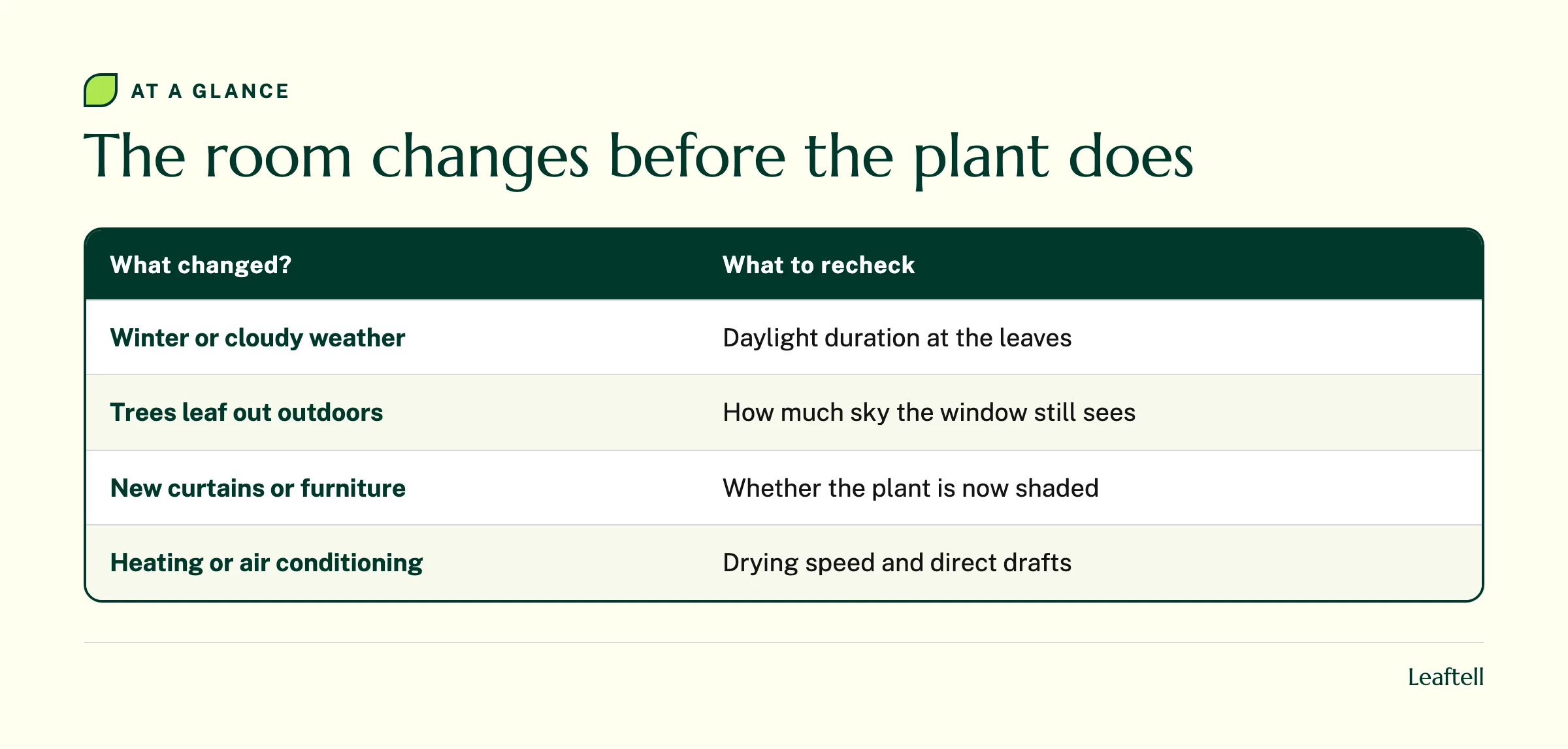
The same shelf does not provide the same conditions all year. A tree outside can shade a window in summer; a winter heating vent can change the pot's drying speed even as daylight falls. Recheck the position after a change in the room rather than assuming a plant that did well there in spring will stay comfortable.
Water for the pot you have, not the calendar
A plant in lower light often uses water more slowly. That is a reason to check before watering, not a reason to prescribe the same longer interval for every species. Pot size, mix, roots, heat, and airflow all change drying speed.
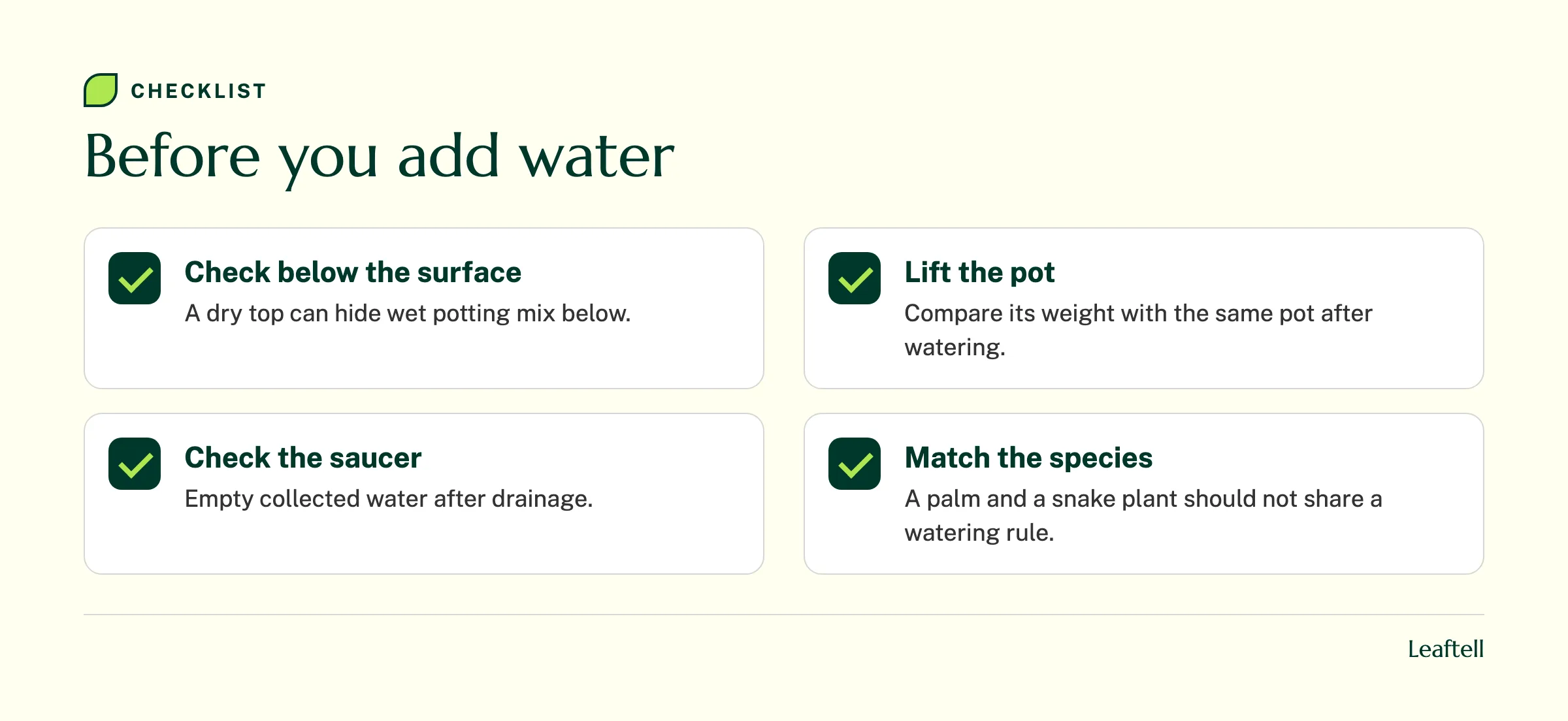
Feel below the surface when possible and compare the pot's weight with its own previous readings. If the mix is still damp and the plant is stable, wait. When watering is appropriate for that species, water evenly, let excess drain, and empty the outer container or saucer.
Persistent wetness together with yellowing, a soft base, or an unpleasant smell calls for a root and drainage check. More water is not the default response to a drooping leaf. Do not keep trying darker locations if the plant is steadily losing foliage; fix the light and moisture conditions first.
Check your low-light plant in Leaftell
Start with the light at leaf level, choose a species that fits your household, and adjust watering to the actual pot. Cast iron plant or parlor palm is a useful starting point when pet access matters. Snake plant, ZZ, and pothos offer other shapes, but need secure placement and species-appropriate moisture checks.
If a plant is declining and you are not sure which condition matters most, check your low-light plant in Leaftell. Bring a whole-plant photo, a close view of the affected growth, and your soil and window observations. A photo alone cannot measure the day's light or moisture inside the pot.
Check your growing conditions with the plant watering calculator.
Frequently asked questions
For a dim room that still has useful daylight, cast iron plant is a practical broad-leaf option, and parlor palm offers softer foliage. Neither can grow indefinitely in complete darkness. Check the light at the intended position before choosing a species.
Houseplants can grow without direct sunlight if they receive enough indirect daylight or appropriate artificial light. They cannot grow indefinitely without any usable light. A plant that still looks green in a windowless corner may be using stored reserves rather than thriving.
Indoor "shade" is not the same as outdoor shade beneath a tree, which can still be bright. Cast iron plant, parlor palm, snake plant, ZZ, and pothos tolerate lower indoor light, but each still needs adequate light and appropriate watering. Choose by the actual room conditions rather than the word shade on a label.
Share article
About the author

Keep checking your plant
Plant care reference
Indoor plant care
Build a routine around your plant, light and potting mix.
Plant care reference
Why is my plant dying
Trace leaf and root symptoms before choosing a care change.
Plant care reference
Pothos plant care
Choose a growing spot and prune a trailing pothos for fuller growth.
Plant care reference
How to fix root rot
Inspect root firmness and drainage, then decide whether to repot.