How to Care for a Rubber Plant: Light, Water and Leaf Drop
Filip Leszczyński 24 November 2026 14 min read
In this article
To care for a rubber plant, give it bright, indirect light (an east window is ideal), water it thoroughly once the top couple of inches of soil are dry, empty the saucer, and keep it above 55°F and away from drafts. Feed it in spring and summer, wipe the dust off its leaves, and repot only when the roots fill the pot.
The part most care guides bury: a rubber plant rarely dies of neglect. It drops leaves because something changed. A move across the room, a cold draft from a door, a heavy watering on a gray week. NC State Extension puts it plainly: this plant prefers to stay in one location. So the best care decision you make is the first one, where it lives. Get that right and the rest of this guide is light maintenance.
What a healthy rubber plant looks like
Before you change anything, learn to read the plant. A rubber plant (Ficus elastica) tells you a lot every time you water: whether it is growing, whether the light suits it, and whether the roots are too wet.
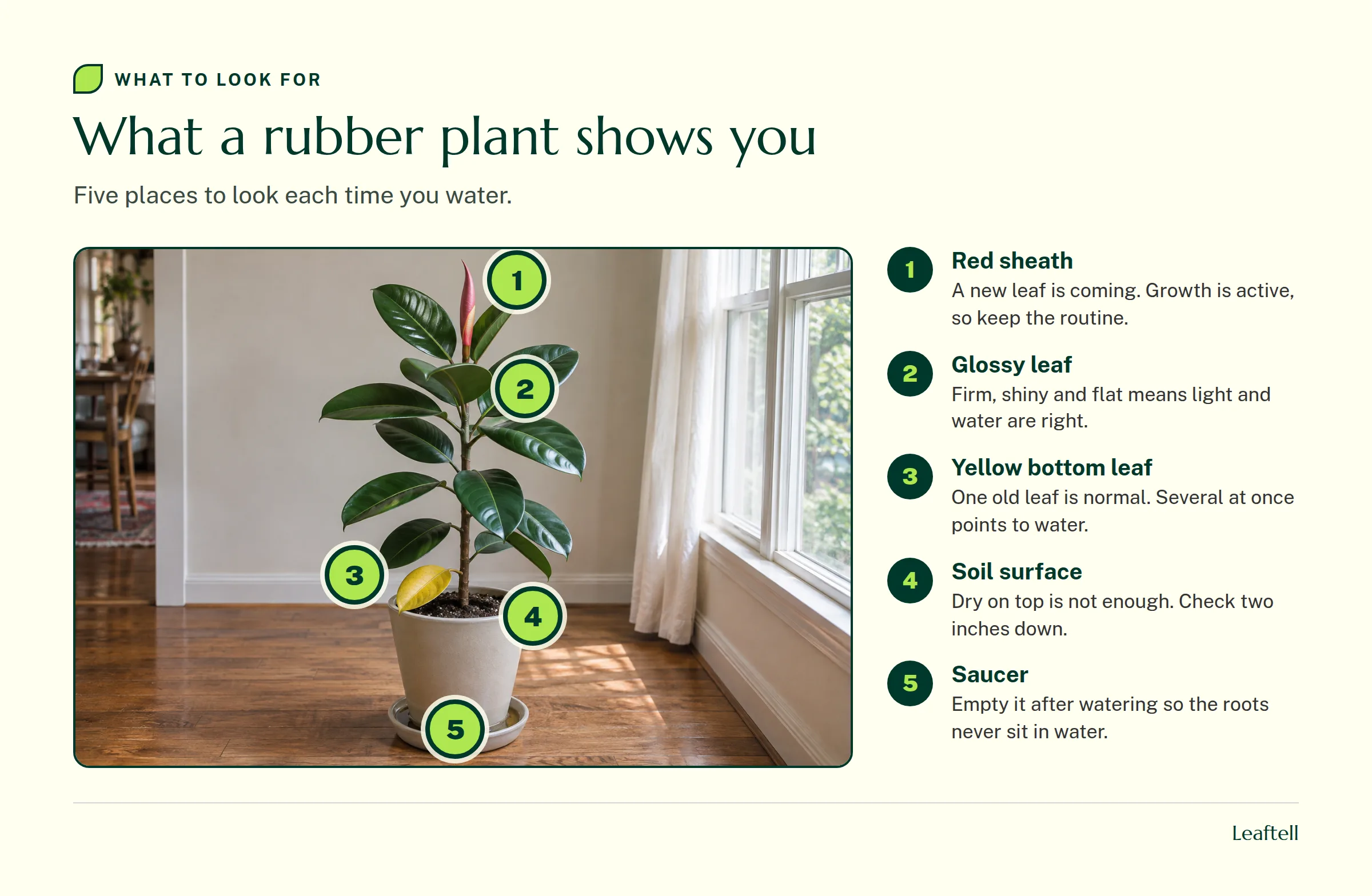
The pinkish red sheath at the tip wraps the next leaf. While new leaves keep appearing in spring and summer, the plant is growing and your routine is working. One old leaf at the bottom turning yellow and dropping is normal; NC State notes that some bottom leaves yellow and fall as the plant ages. Several at once, or yellowing higher up, is a signal to check the soil.
Rubber plant care at a glance
| Need | What it wants | Sign it is off |
|---|---|---|
| Light | Bright, indirect light; morning sun from an east window | Long gaps between leaves, small new leaves, a lean toward the glass |
| Water | Water thoroughly, then let the top 2 inches dry | Yellow lower leaves on wet soil, or limp, curling leaves on dry soil |
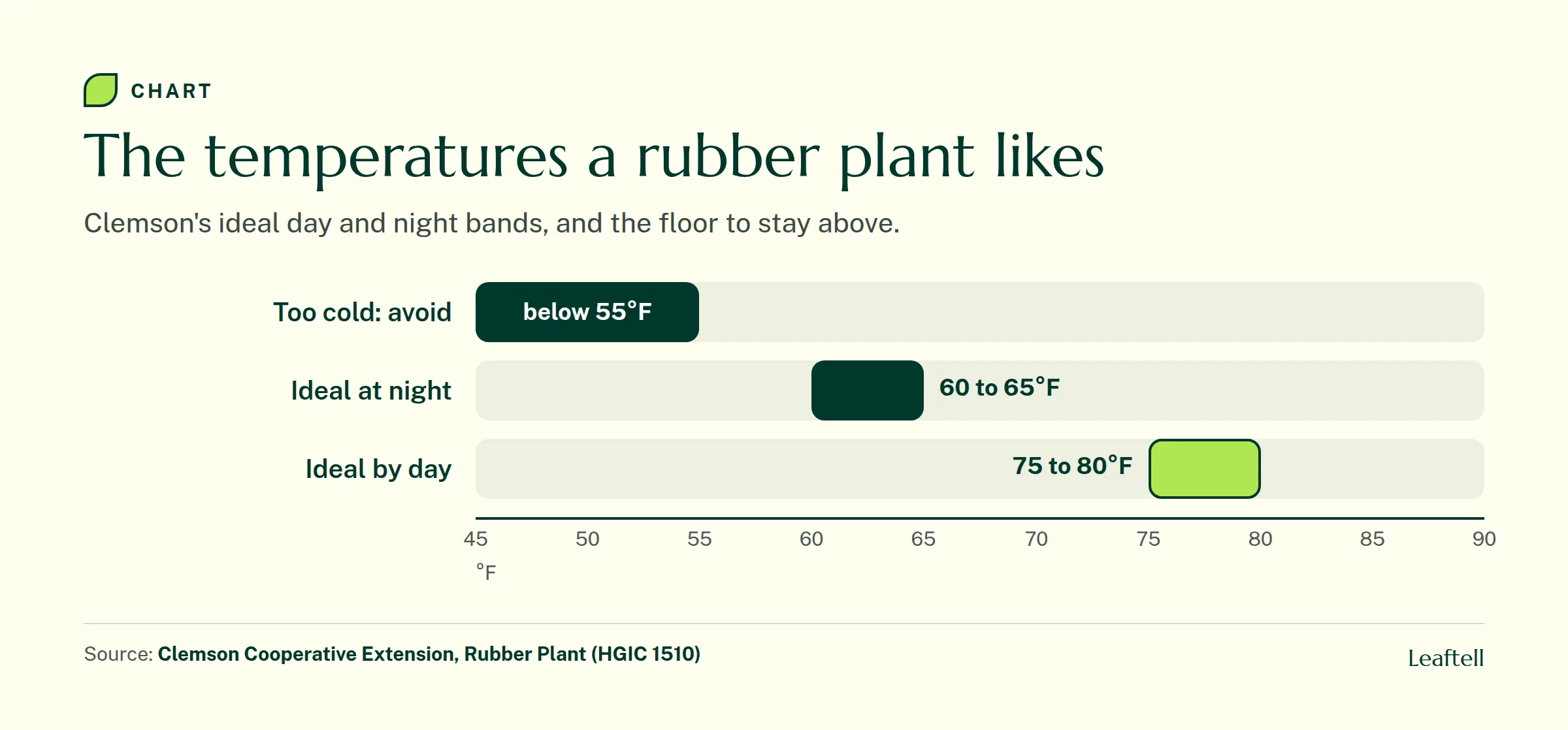
| Temperature | 60 to 65°F at night, 75 to 80°F by day, never below 55°F | Sudden leaf drop after a cold night or a move |
| Humidity | Likes humid air, tolerates normal home air | Brown, crispy edges near a heater |
| Soil | Well drained houseplant mix in a pot with drainage holes | Soil that stays wet for a week or more |
| Feeding | Houseplant fertilizer every two weeks in spring and summer | Pale new growth in summer, or crusty salt on the soil |
Temperatures and feeding come from Clemson Cooperative Extension; the 2 inch check is our rule of thumb for "dry slightly to the touch".
Where to put a rubber plant
Pick a spot with bright, indirect light and plan to leave the plant there. Clemson says rubber plants grow best with morning light from an east window, and NC State recommends bright indirect light or partial shade with protection from afternoon sun. A spot a few feet back from a bright window, or right behind a sheer curtain, does both.
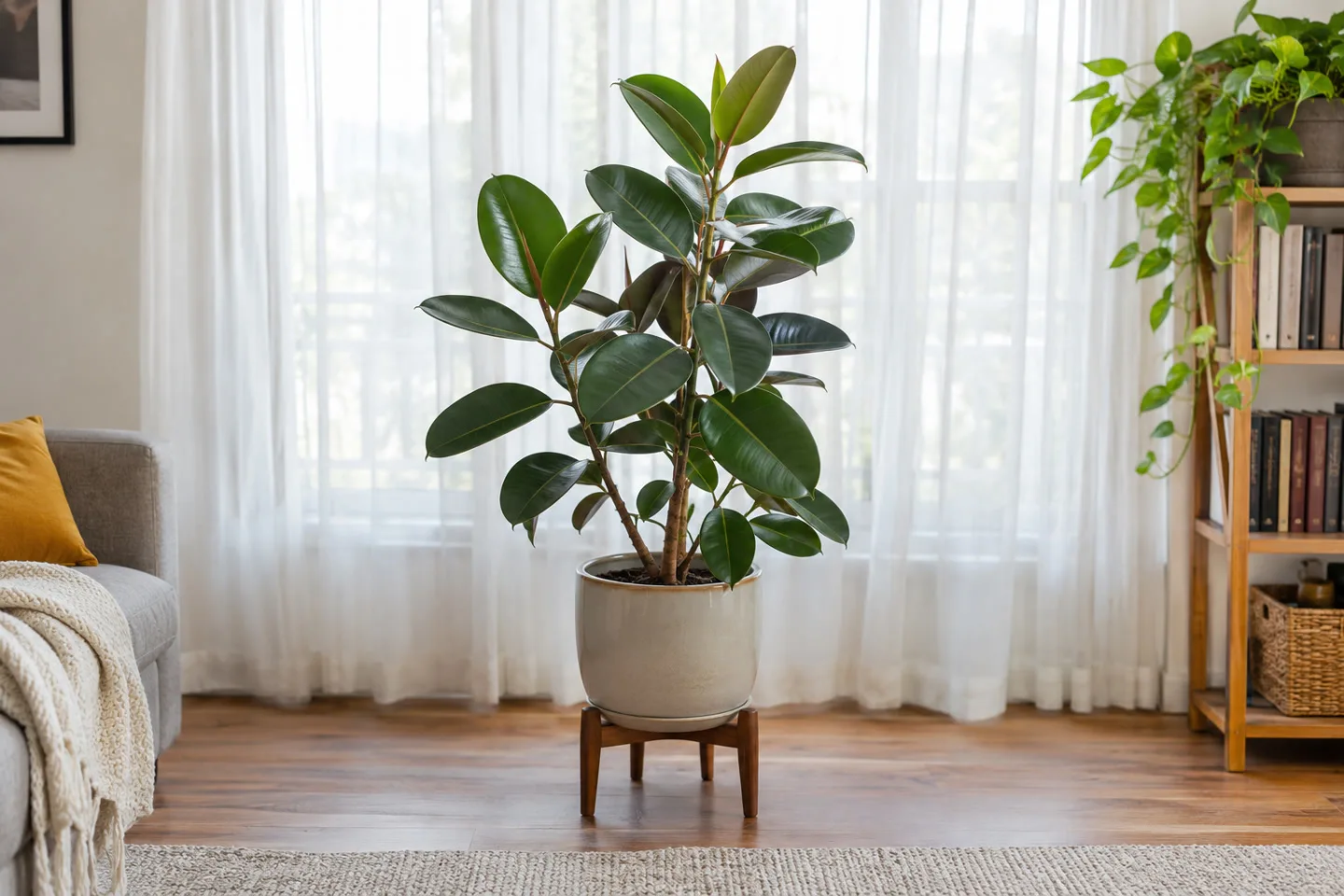
Here is how common windows work out:
| Your window | Verdict | What to do |
|---|---|---|
| East | Best | Place it within a few feet of the glass |
| South or west | Good with a filter | Set it back from the glass or behind a sheer curtain so afternoon sun does not hit the leaves |
| North | Workable for plain green types | Keep it close to the glass and expect slower growth |
| Interior room, no window | Poor | It survives for a while, then stretches and drops leaves |
Rubber plants adapt to lower light, but they show it. New leaves come in smaller and farther apart, and the plant leans. If you are not sure how bright your spot really is, our guide to reading the light at your window shows how to judge it without a meter.
Once it is placed, keep it out of the path of drafts: exterior doors, single pane windows in winter, and air vents that blow hot or cold. Clemson lists cold drafts, sudden drops in temperature and anything below 55°F as things to avoid.
How to water a rubber plant
Water a rubber plant thoroughly, then wait until the top 2 inches of soil are dry before you water again. Clemson's advice is to water thoroughly but let the soil dry slightly to the touch, in a pot with drainage holes, and to empty the saucer afterwards. There is no fixed number of days: a plant by a warm, bright window in July may need water every week, the same plant in December far less often.
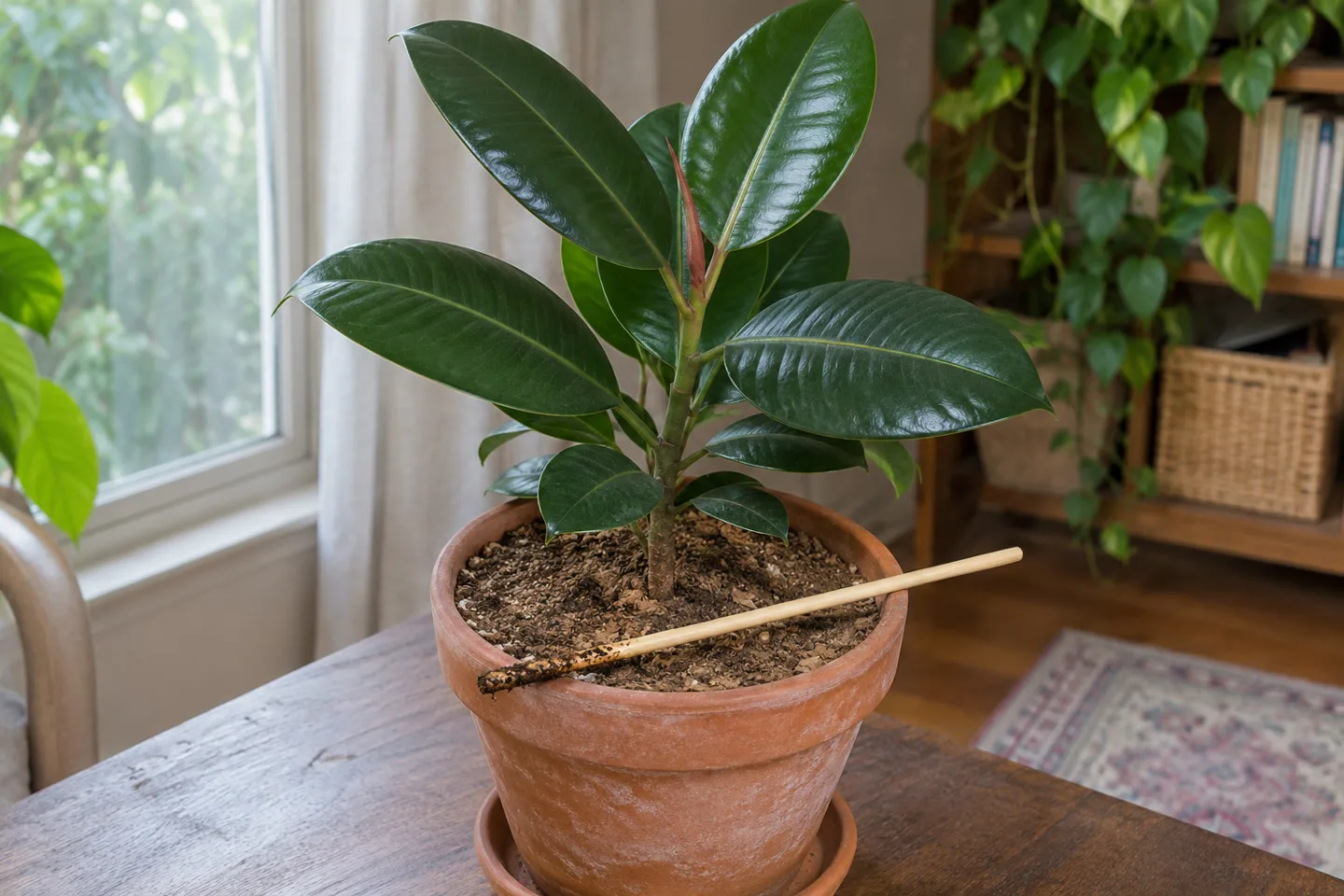
A wooden chopstick or skewer is the easiest test. Push it 2 inches into the soil, leave it a minute and pull it out. Dark, damp soil stuck to it means wait. A clean, dry stick means water. Our guide to checking whether soil is wet or dry covers finger, stick and pot weight checks in more detail.
How to water a rubber plant
- Check the soil 2 inches down
Push a finger or a wooden chopstick into the soil. Only water if it comes out dry.
- Water slowly until it drains
Pour room temperature water over the whole soil surface until it runs out of the drainage holes.
- Empty the saucer
Wait 10 to 15 minutes, then tip out any water left in the saucer or cachepot.
- Check again in a few days
Repeat the soil check rather than watering on a set day. Expect longer gaps in fall and winter.
Cut back in the cool months. NC State says to reduce watering from fall to late winter, when growth slows. This is when most rubber plants get overwatered: the routine stays the same while the plant uses far less water. If the soil has stayed wet for a week and lower leaves are yellowing, our guide to saving an overwatered plant walks through what to do next.
Humidity, dust and clean leaves
Rubber plants prefer humid air but cope with normal indoor air, according to Clemson. You do not need a humidifier. What you need is to keep the plant away from a radiator or heating vent, which dries the leaf edges fast.
Dust matters more than most people think on leaves this big. Both Clemson and NC State recommend wiping the leaves with a damp, soft cloth or sponge. A dusty leaf gets less light, and pests hide under the film.
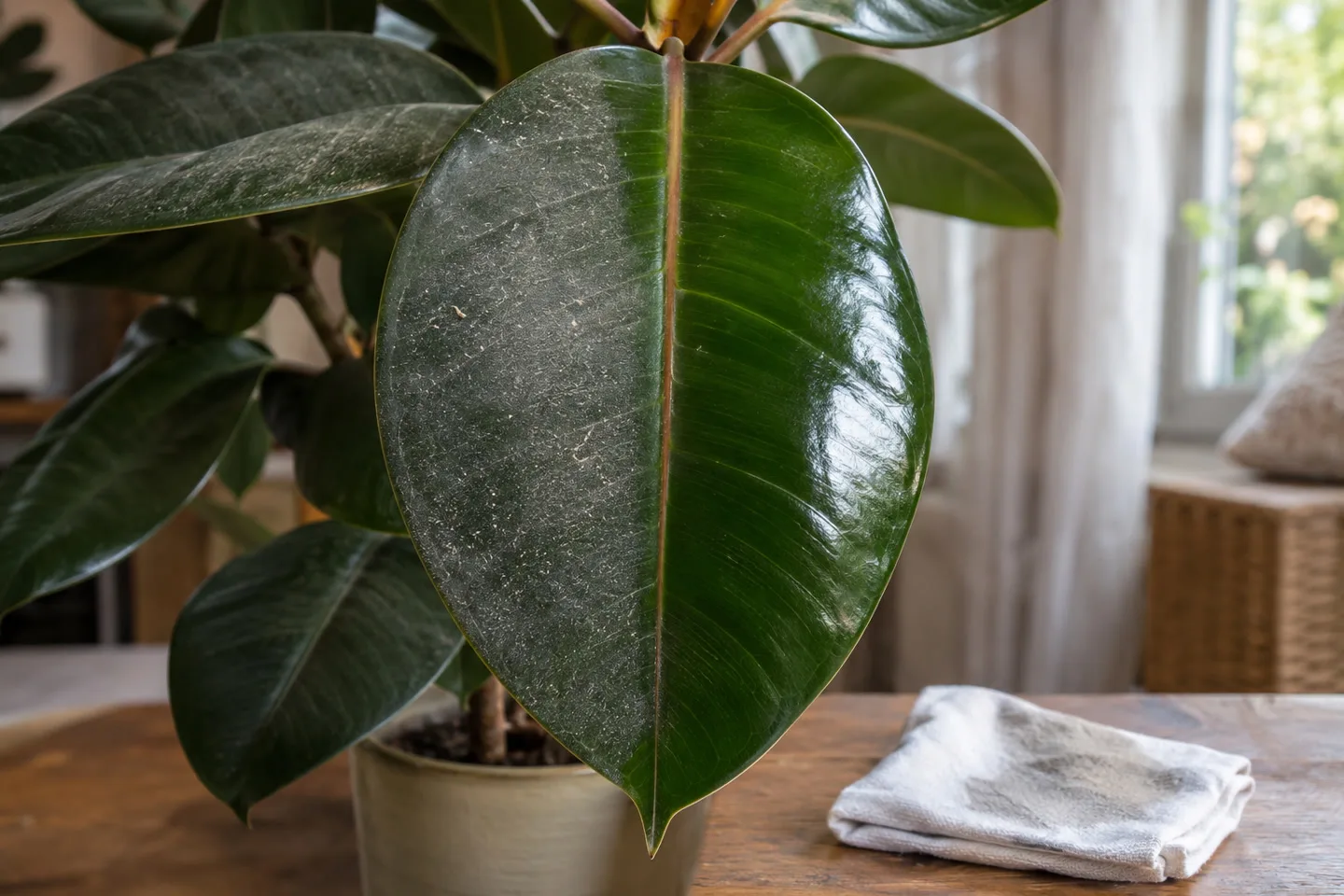
Support each leaf with one hand and wipe from the stem out to the tip with a cloth dampened in plain water. Skip leaf shine products; plain water does the job and you can see what you cleaned. While you are there, turn a few leaves over and look at the undersides, which is where pests start.
Why rubber plants drop leaves
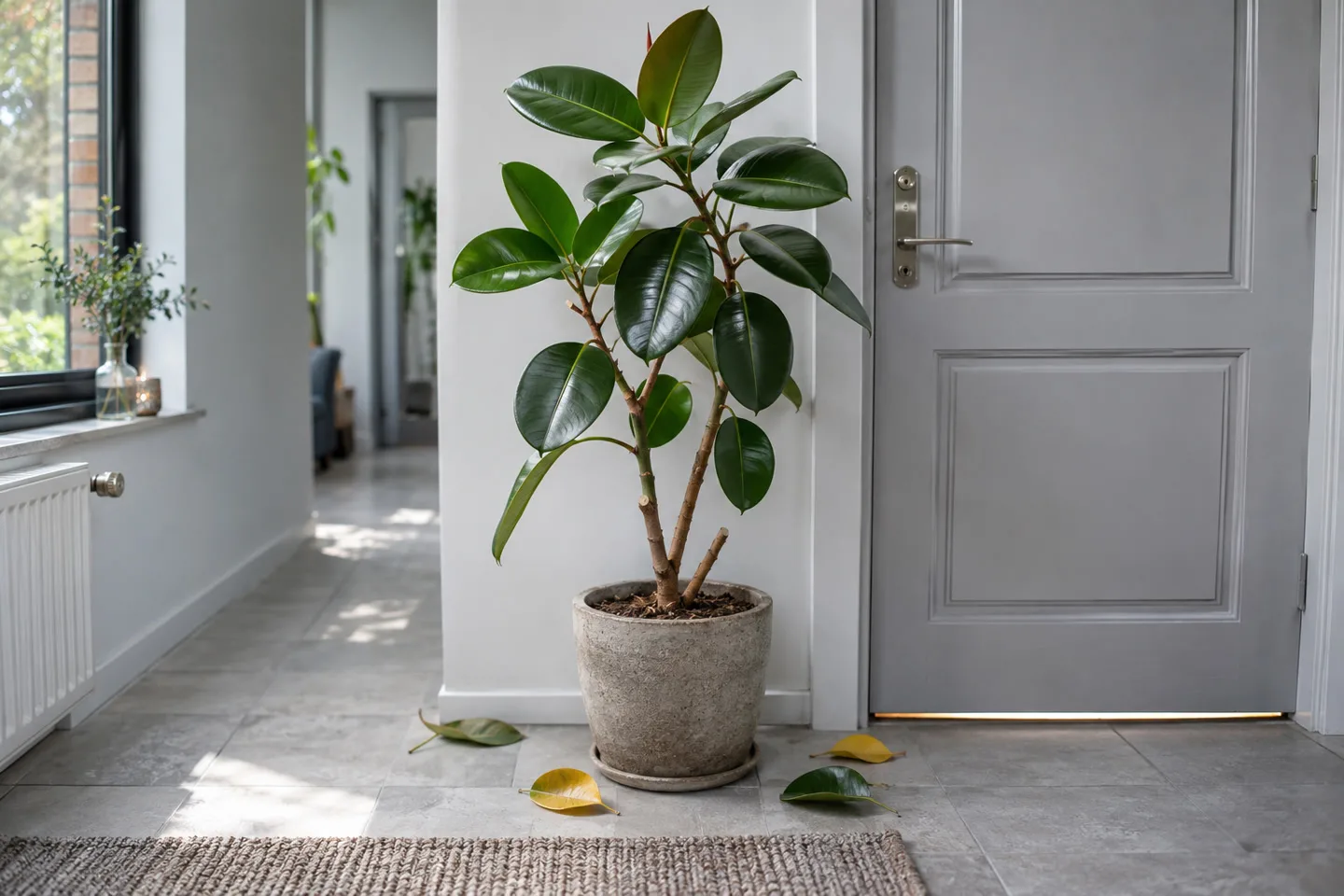
A rubber plant drops leaves for one of a few reasons, and the first question is always what changed in the last couple of weeks. NC State lists overwatering, temperature drops and cold drafts as causes of leaf loss. Clemson adds too little light and dry air, and says yellowing happens when the soil stays too wet.
Work through it in this order:
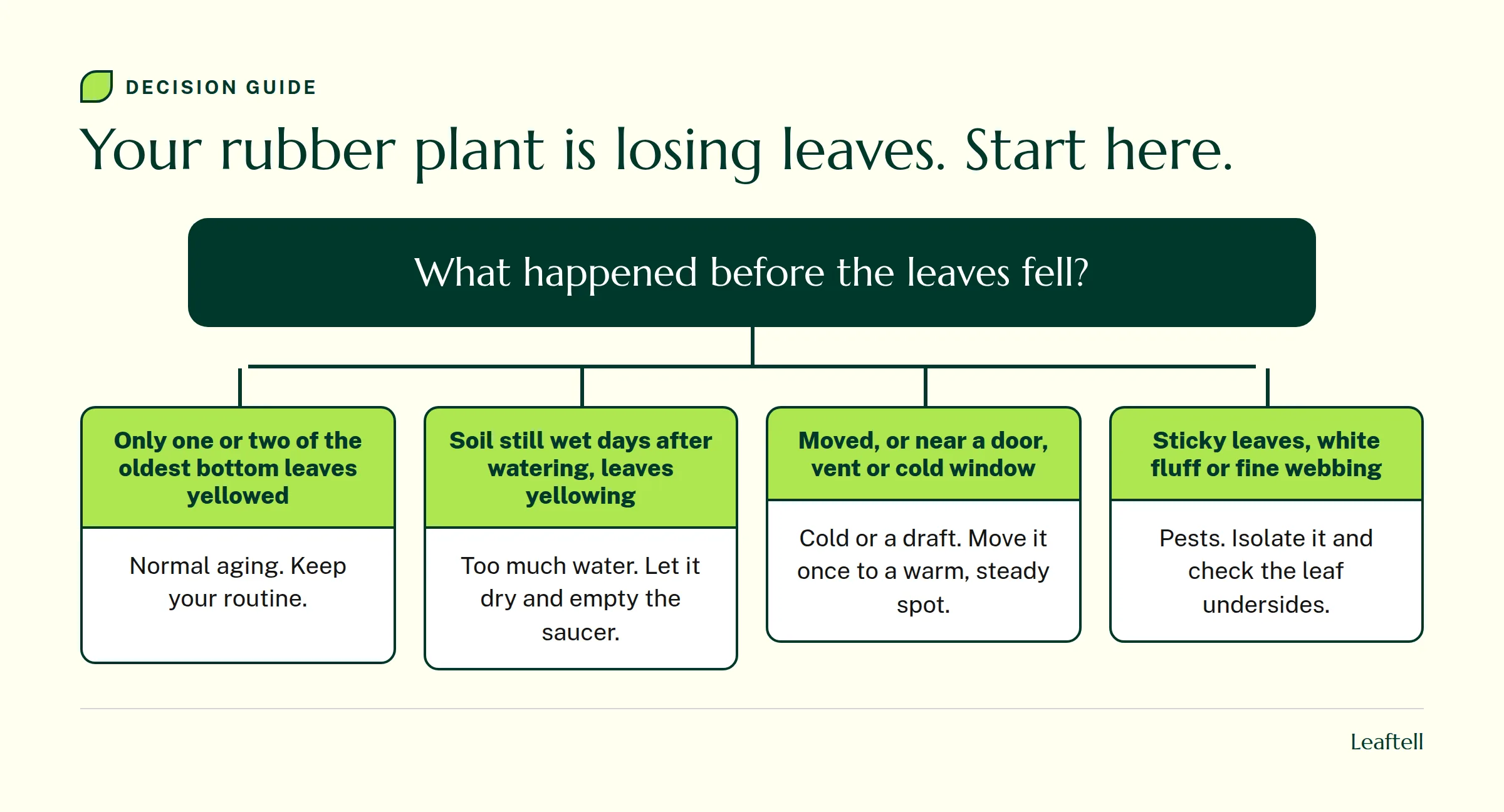
- One or two bottom leaves, nothing else. Normal aging. Do nothing.
- Yellowing leaves and soil that is still wet days after watering. Too much water. Let it dry well, empty the saucer, and check the drainage hole is clear.
- Green leaves falling after a move or a cold snap. Shock. Move it once to a warm, bright spot and then leave it alone; moving it again to "help" restarts the shock.
- Sticky leaves, white cotton or fine webbing. Pests. Clemson names mealybugs, and NC State adds scale and spider mites.
For pests, start with the least toxic fix. Isolate the plant, wipe the leaves top and bottom with a damp cloth, and dab mealybugs off with a cotton swab dipped in rubbing alcohol. Our guide to mealybugs on plants covers the next steps if they come back. Any spray, even an insecticidal soap, should be a product labeled for houseplants, used exactly as the label says and never mixed with another product.
The fiddle leaf fig is a cousin with the same habit of dropping leaves when it is moved. Our guide to fiddle leaf fig leaf drop shows how the same causes play out there.
Rubber plant varieties and what changes
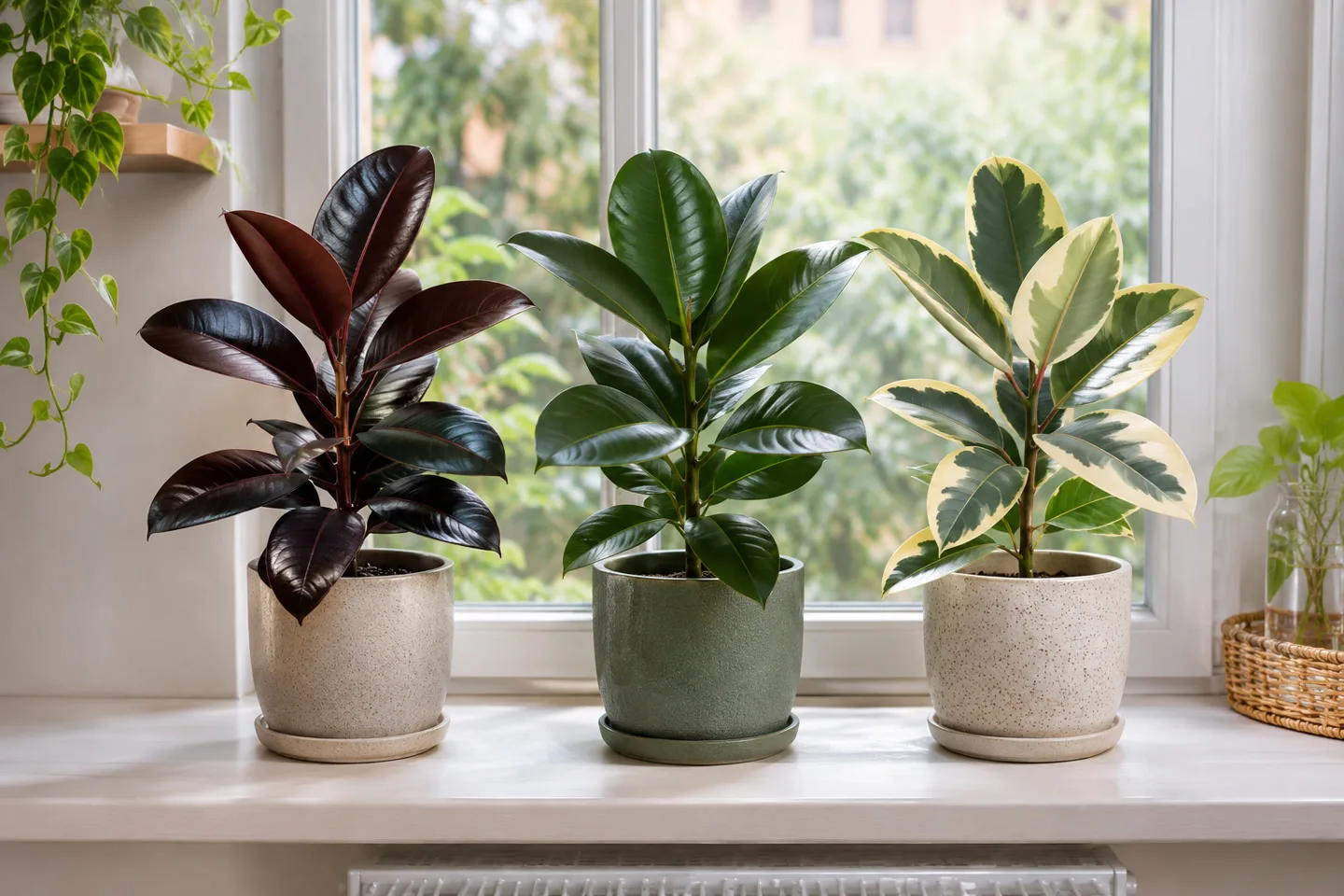
All rubber plants need the same basic care, but leaf color changes how much light they want. Clemson notes that 'Robusta', the common deep green type, does well in low light. Variegated types such as 'Tineke' and 'Tricolor', and the dark burgundy types, keep their color best in bright light.
| Type | Leaves | Light it wants |
|---|---|---|
| 'Robusta', 'Decora' | Deep green, glossy | Bright indirect, tolerates lower light |
| 'Burgundy' | Very dark green to near black with red | Bright indirect for the deepest color |
| 'Tineke', 'Tricolor' | Green with cream, yellow or pink patches | The brightest indirect light you have, no hot afternoon sun |
If a variegated plant puts out new leaves that are mostly green, it wants more light, not more food.
Feeding a rubber plant
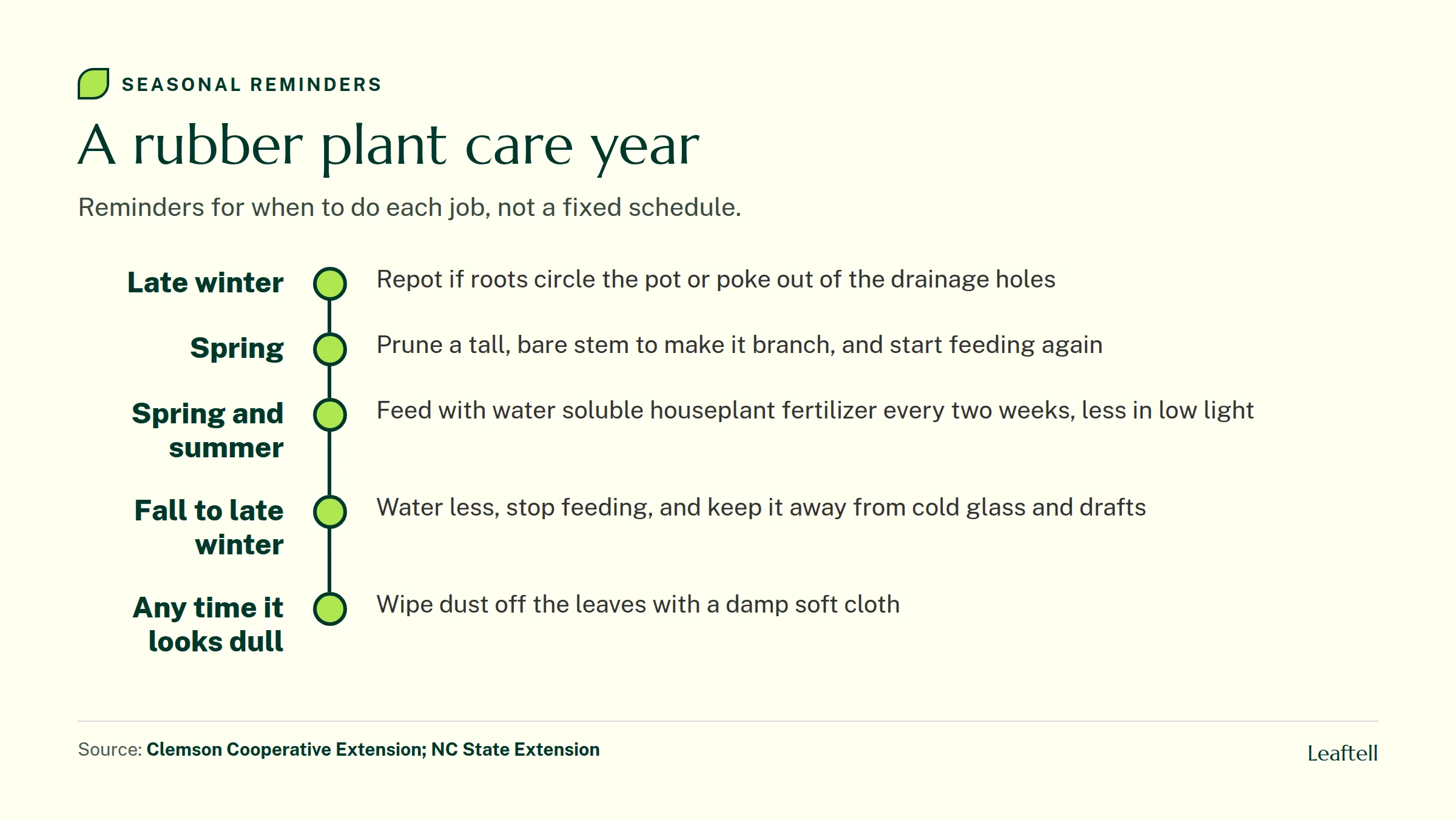
Feed only while the plant is actively growing. Clemson recommends a water soluble houseplant fertilizer every two weeks in spring and summer, and less often for plants in lower light. Follow the label for the dose, water the plant first so you never feed dry roots, and stop in fall and winter.
A plant that is dropping leaves or sitting in wet soil does not need fertilizer. Fix the cause first and wait for a new leaf before feeding again.
Pruning and keeping it in shape
Left alone, a rubber plant grows into one tall, single stem. Clemson notes it can reach 6 to 10 feet indoors, and that you can stake it or prune it in spring to rejuvenate it. NC State adds that pruning the main stems encourages a bushier plant, while leaving them unpruned gives a tall, narrow, tree-like form.
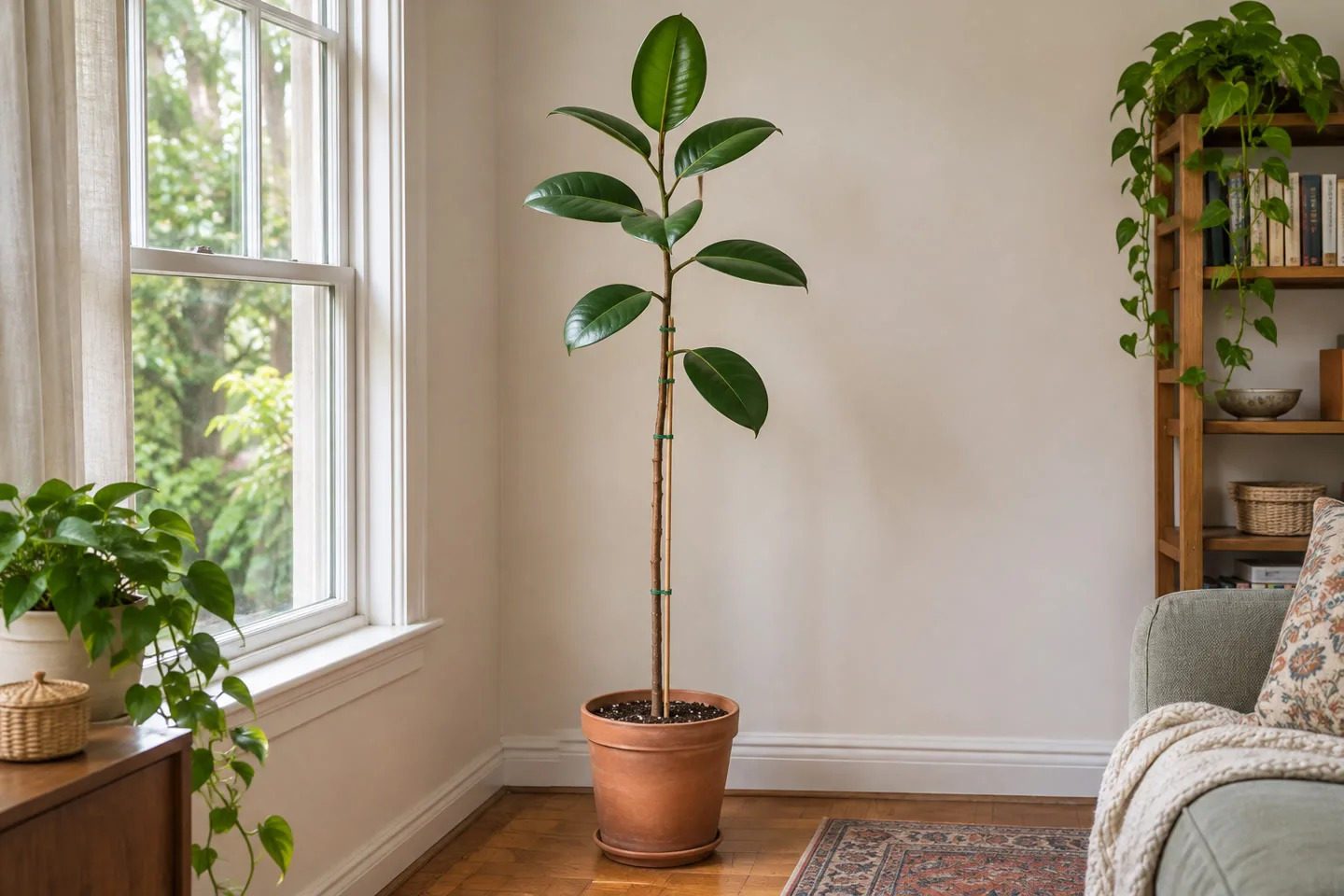
To prune, wear gloves, as the milky white sap may irritate skin (Clemson), and cut with clean shears just above a leaf scar in spring. New shoots usually grow from just below the cut. Do not throw the top away: it roots easily, and our guide to propagating a rubber plant covers cuttings in water or soil and air layering. A plant you want to keep tall can be tied loosely to a stake with soft twine instead.
Soil, pots and repotting
Use a well drained houseplant mix in a pot with drainage holes. That one choice prevents most root rot, which Clemson links to soil that does not drain quickly or to watering too often. If you are mixing your own, our guide to potting mix for indoor plants explains what makes a mix drain well.
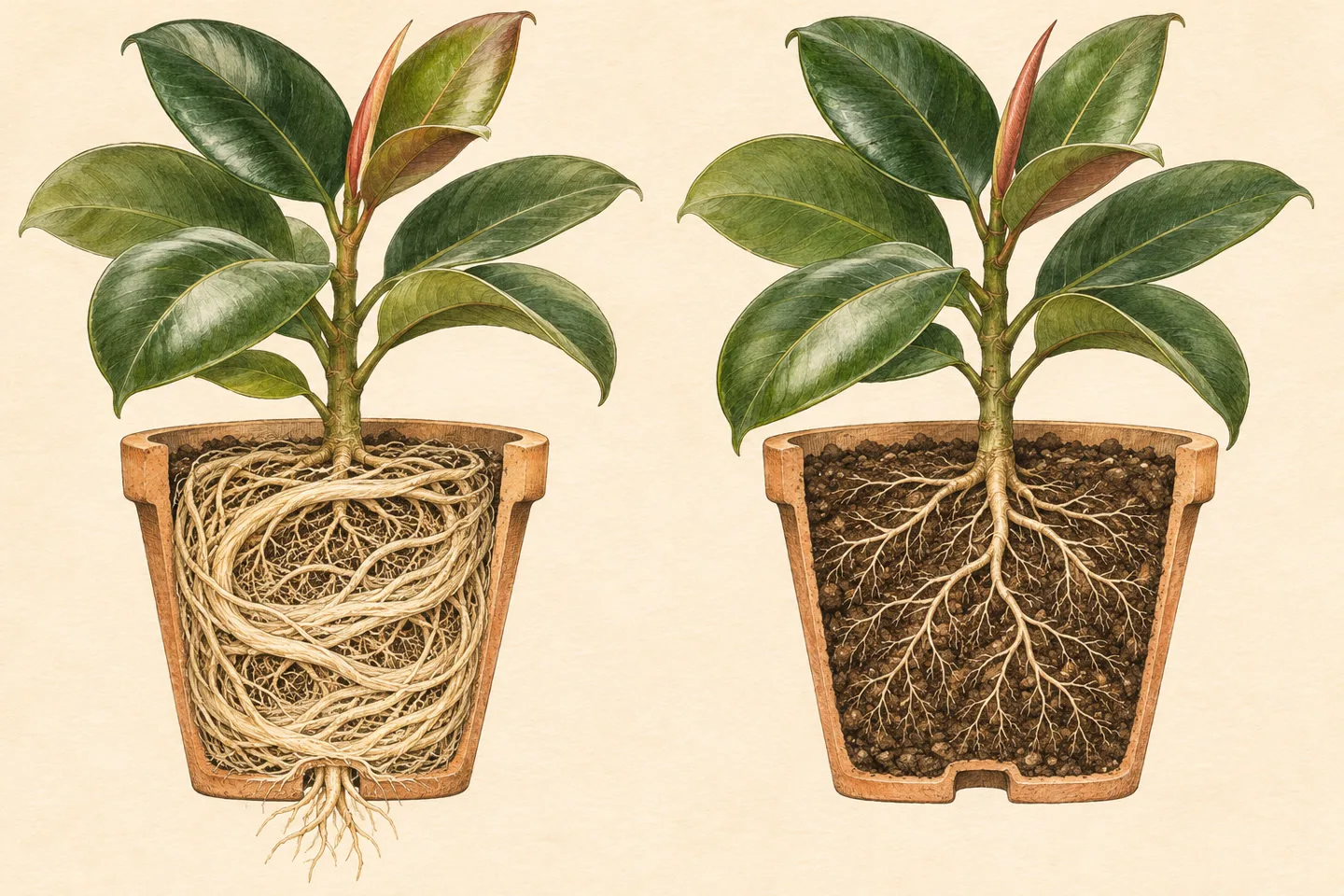
Repot in late winter or early spring, and only when it needs it: roots circling the inside of the pot, roots poking out of the drainage holes, or water running straight through without wetting the soil. Go up just one pot size, about 2 inches wider. A much bigger pot holds more wet soil than the roots can use. Our guide to how to repot plants has the step by step.
Keep it away from pets and kids
The ASPCA lists the Indian rubber plant as toxic to dogs and cats, and Clemson notes the sap may irritate skin or the stomach if eaten. Keep it out of reach of pets and young children who chew plants, clear away fallen leaves, and call your veterinarian or a poison control service if a pet eats part of one.
How to bring a rubber plant back to life
Most struggling rubber plants recover once the cause is fixed. Find what changed (water, light, temperature or pests), fix that one thing, and then hold everything else steady.
- Check the roots if the soil has been wet for weeks. Slide the plant out. Firm, pale roots are fine. Brown, mushy roots need trimming and fresh mix.
- Move it once, not every few days. A bright spot out of drafts, then leave it.
- Skip fertilizer until it grows a new leaf.
- Be patient with bare stems. A stem that has lost its leaves can push new growth from buds along the stem once conditions improve, especially after a spring prune.
A firm, green stem means the plant is alive. A new red sheath at the tip is the clearest sign it has recovered.
The short version
Choose a bright spot out of drafts, ideally near an east window, and leave the plant there. Water thoroughly when the top 2 inches are dry and empty the saucer. Feed in spring and summer, wipe the leaves, and repot only when roots fill the pot. When leaves fall, ask what changed before you change anything else.
If a leaf looks wrong and you cannot tell whether it is water, light or pests, check your rubber plant in Leaftell with a photo of the whole plant, a close-up of the problem leaf and a note on how wet the soil is.
Sources
Check your growing conditions with the plant watering calculator.
Frequently asked questions
It needs bright light, but not hot direct sun. Morning sun from an east window is ideal, according to Clemson Cooperative Extension. Strong afternoon sun through a south or west window can scorch the leaves, so set the plant back from the glass or behind a sheer curtain.
A few feet from an east window, or behind a sheer curtain at a brighter window, in a room that stays between about 60 and 80°F. Keep it away from exterior doors, cold glass and heating or cooling vents, and once it is settled, avoid moving it.
Whenever the top 2 inches of soil are dry, not on a fixed schedule. In a warm, bright room in summer that may be weekly; in winter it is far less often. Water until it drains from the bottom and always empty the saucer.
Find the one thing that changed, usually overwatering, a cold draft, a move to a darker spot or pests, and fix it. Then keep the plant in one warm, bright place, hold off on fertilizer and wait. A firm stem and a new red sheath at the tip mean it is recovering.
There is no fixed lifespan to plan around. A rubber plant is a tree, and NC State notes it can reach 100 feet in the wild; indoors it keeps growing for many years as long as it gets light, sensible watering and a bigger pot when the roots fill the old one.
Yes. The ASPCA lists the Indian rubber plant as toxic to dogs and cats, and its milky sap can irritate skin and the stomach. Keep it out of reach and contact your veterinarian if a pet chews it.
Share article
About the author

Keep checking your plant
Plant care reference
Indoor plant care
Build a routine around your plant, light and potting mix.
Plant care reference
Why is my plant dying
Trace leaf and root symptoms before choosing a care change.
Plant care reference
Pothos plant care
Choose a growing spot and prune a trailing pothos for fuller growth.
Plant care reference
How to fix root rot
Inspect root firmness and drainage, then decide whether to repot.