How Often to Water a Money Plant (Which One You Have Matters)
Filip Leszczyński 3 November 2026 12 min read
In this article
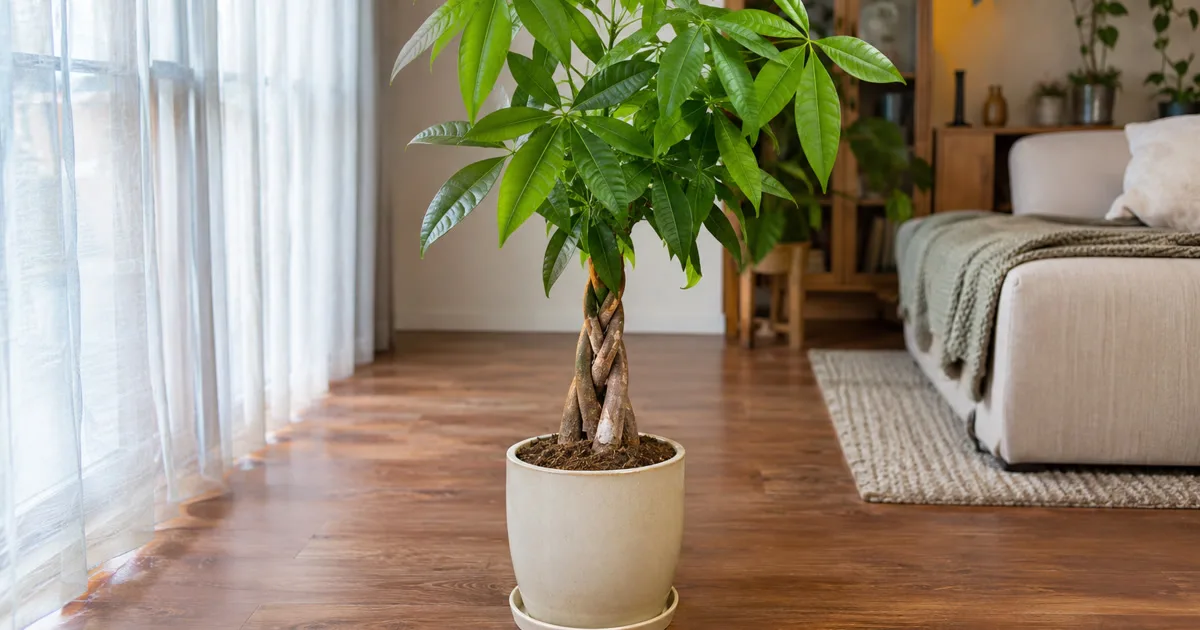
How often to water a money plant depends on which money plant you have, because the name covers at least four different houseplants. For the braided money tree most Americans mean, water when the potting mix is nearly dry, soak it until water runs out of the bottom, and empty the saucer within 15 minutes.
In a bright, warm room that usually works out to a check every week or so, and less often in winter. The surprise is that the money tree's Latin name, Pachira aquatica, means aquatic, yet standing water is exactly what kills it. Most money trees that drop their leaves are sitting in a full saucer, not drying out.
First, which money plant do you have?
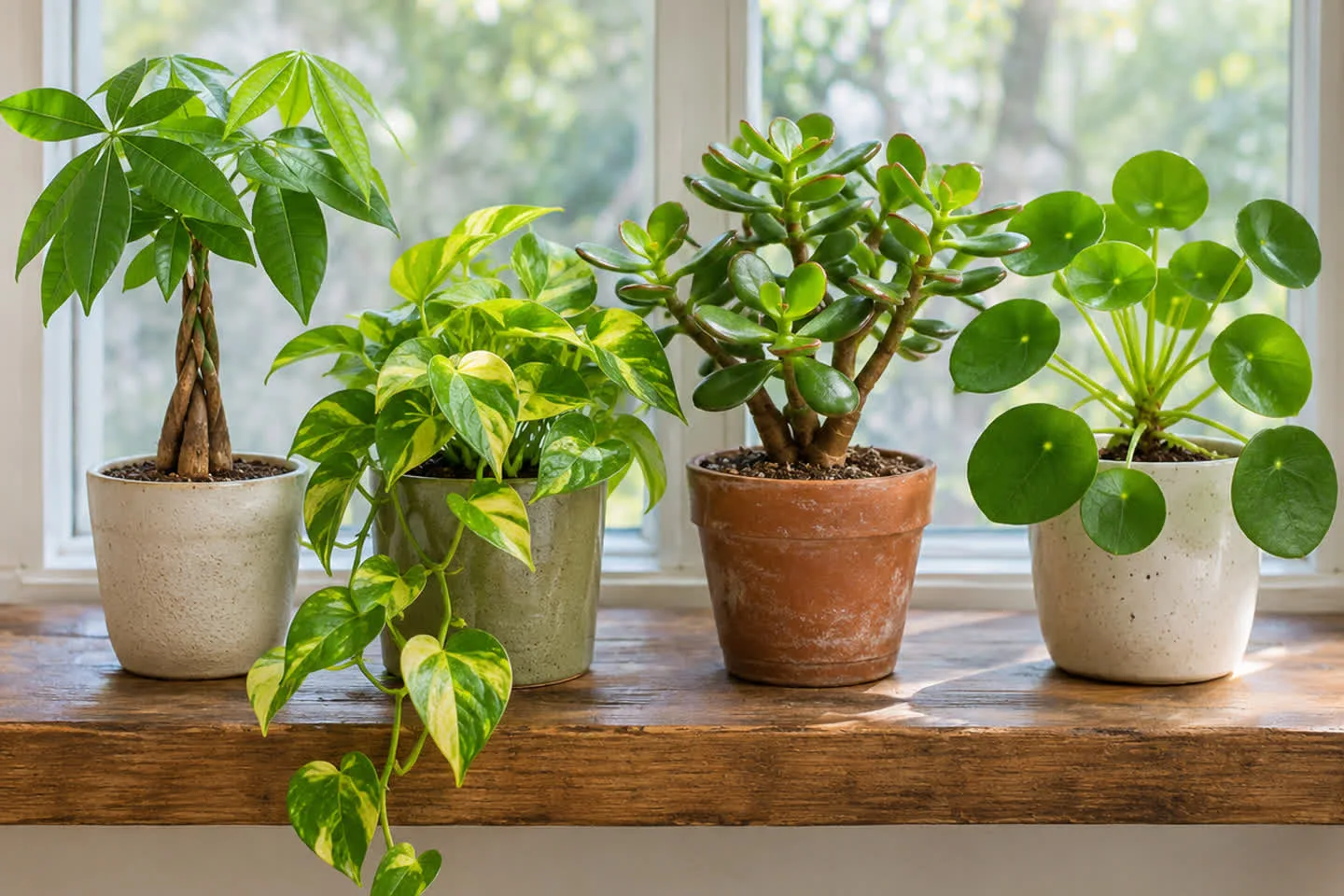
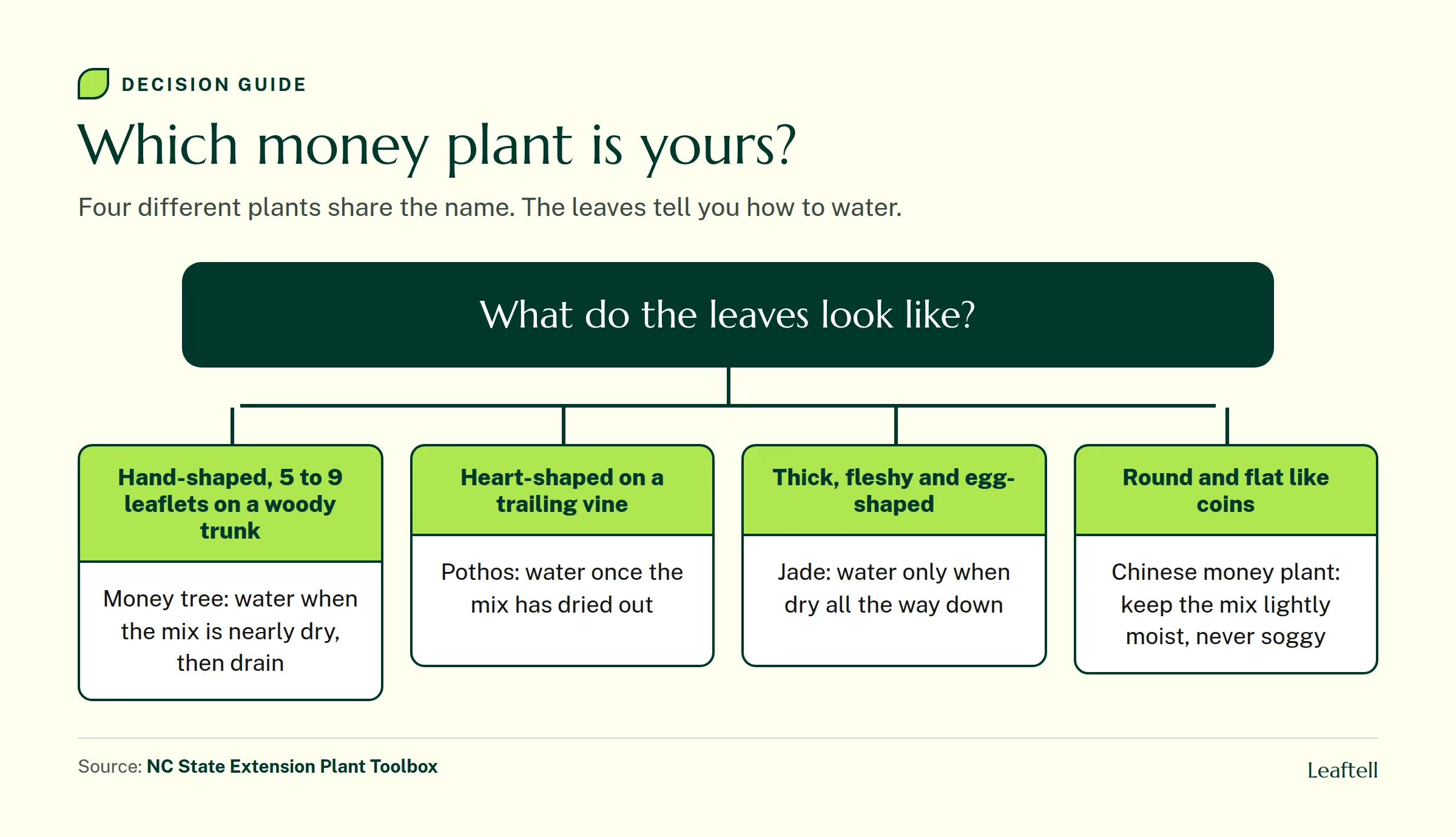
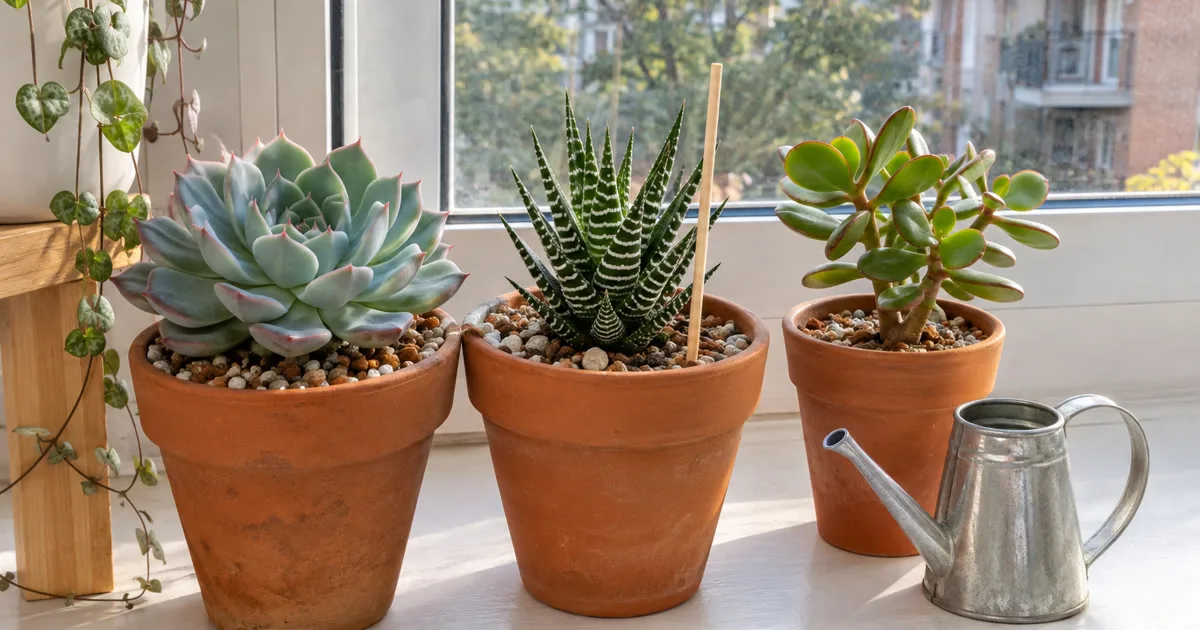
Garden centers sell four unrelated plants under the money plant label, and their water needs run from "keep it evenly moist" to "let it dry out completely". Water a jade plant like a money tree and it rots. Water a money tree like a jade plant and it drops leaves. Look at the leaves before you look at the calendar.
| Plant | How to recognize it | When to water | How often to check (a reminder, not a rule) | Winter |
|---|---|---|---|---|
| Money tree (Pachira aquatica) | Braided or single woody trunk, hand-shaped leaves of 5 to 9 leaflets | When the mix is nearly dry, then soak and drain | Every 5 to 7 days | Check less often; the pot dries more slowly |
| Pothos (Epipremnum aureum) | Trailing vine, glossy heart-shaped leaves, often streaked yellow or white | When the mix has dried out | Every 5 to 7 days | Check less often |
| Jade plant (Crassula ovata) | Thick, fleshy, egg-shaped leaves on a stout stem | When the soil is dry all the way down | Every 10 to 14 days | Water less from fall to late winter |
| Chinese money plant (Pilea peperomioides) | Round, flat, coin-shaped leaves on long stalks from the center | Keep the mix lightly moist, never soggy | Every 5 to 7 days | Check less often |
The check intervals assume a 6 to 8 inch pot with a drainage hole in bright, indirect light. A small pot, a terracotta pot or a sunny window shortens them. A big plastic pot or a dim corner stretches them. If you want a starting point for your other plants too, the plant watering calculator works from pot size and light.
How often to water a money tree
Water a money tree when the potting mix is nearly dry, not on a fixed day. The New York Botanical Garden's advice is to water thoroughly, let the soil nearly dry between waterings, but never let the roots dry out completely, then remove any water left in the saucer after about 15 minutes.
In practice that means pushing a finger into the mix. Dry and crumbly two knuckles down means it is time. Cool and damp means wait two or three days and check again. A pot that feels light when you lift it is another good sign; a heavy pot still holds water. If you are new to reading soil this way, our guide on how to tell if a plant needs water shows what each stage feels like.
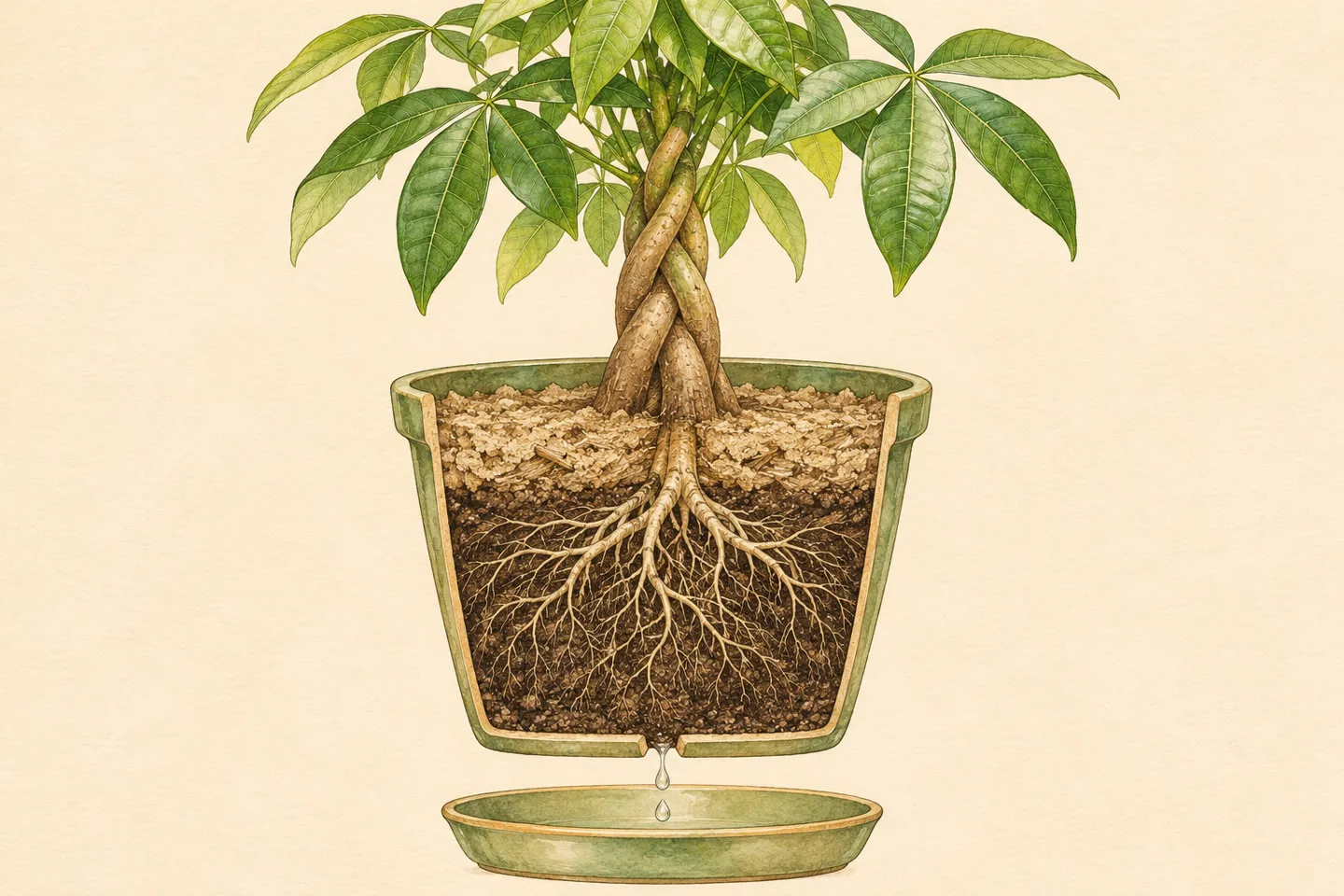
Most money trees are sold in a plastic nursery pot dropped inside a decorative cover pot with no hole. That cover pot is the danger. Water runs through the nursery pot and pools out of sight, so the bottom of the root ball sits in it for days.
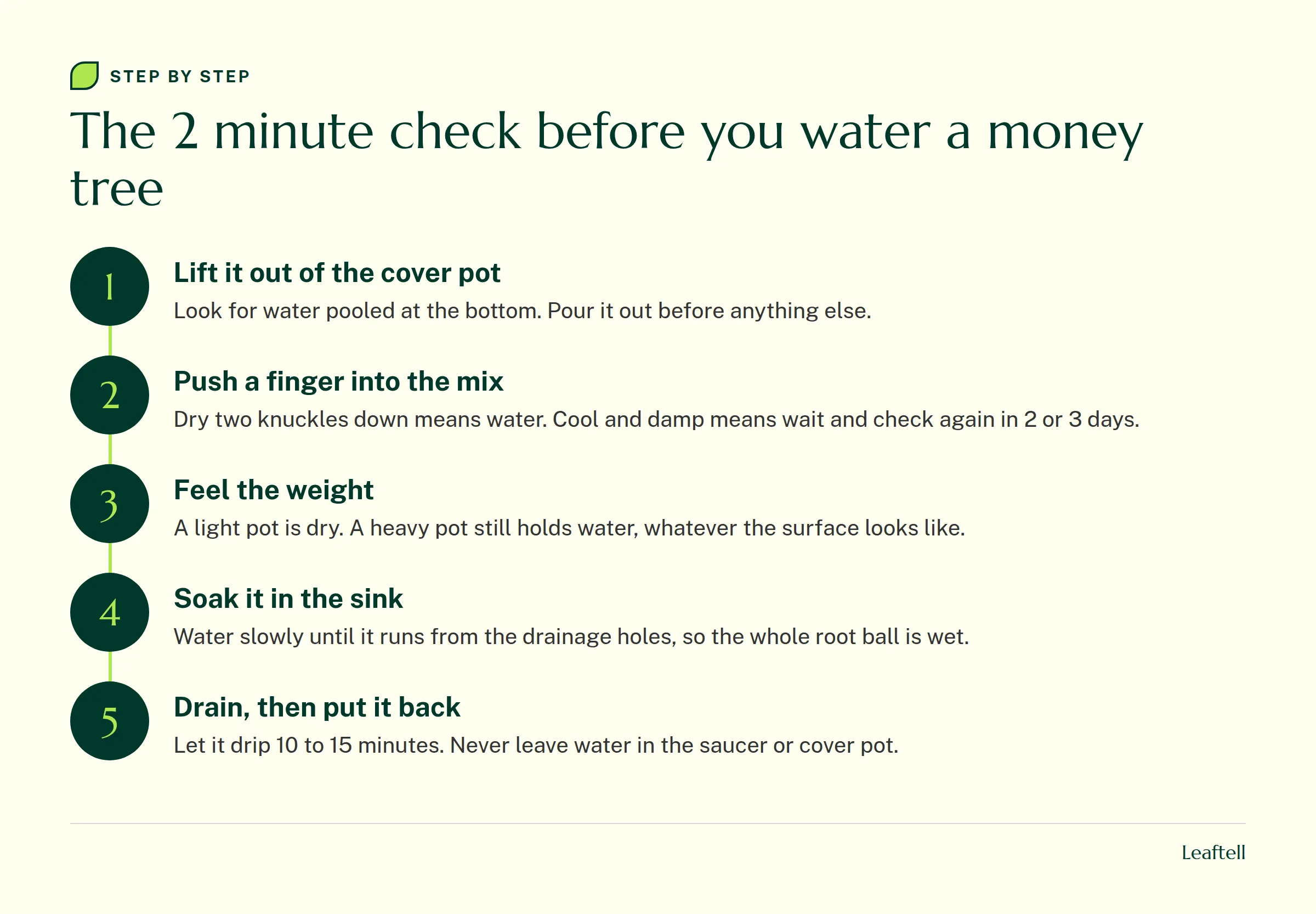
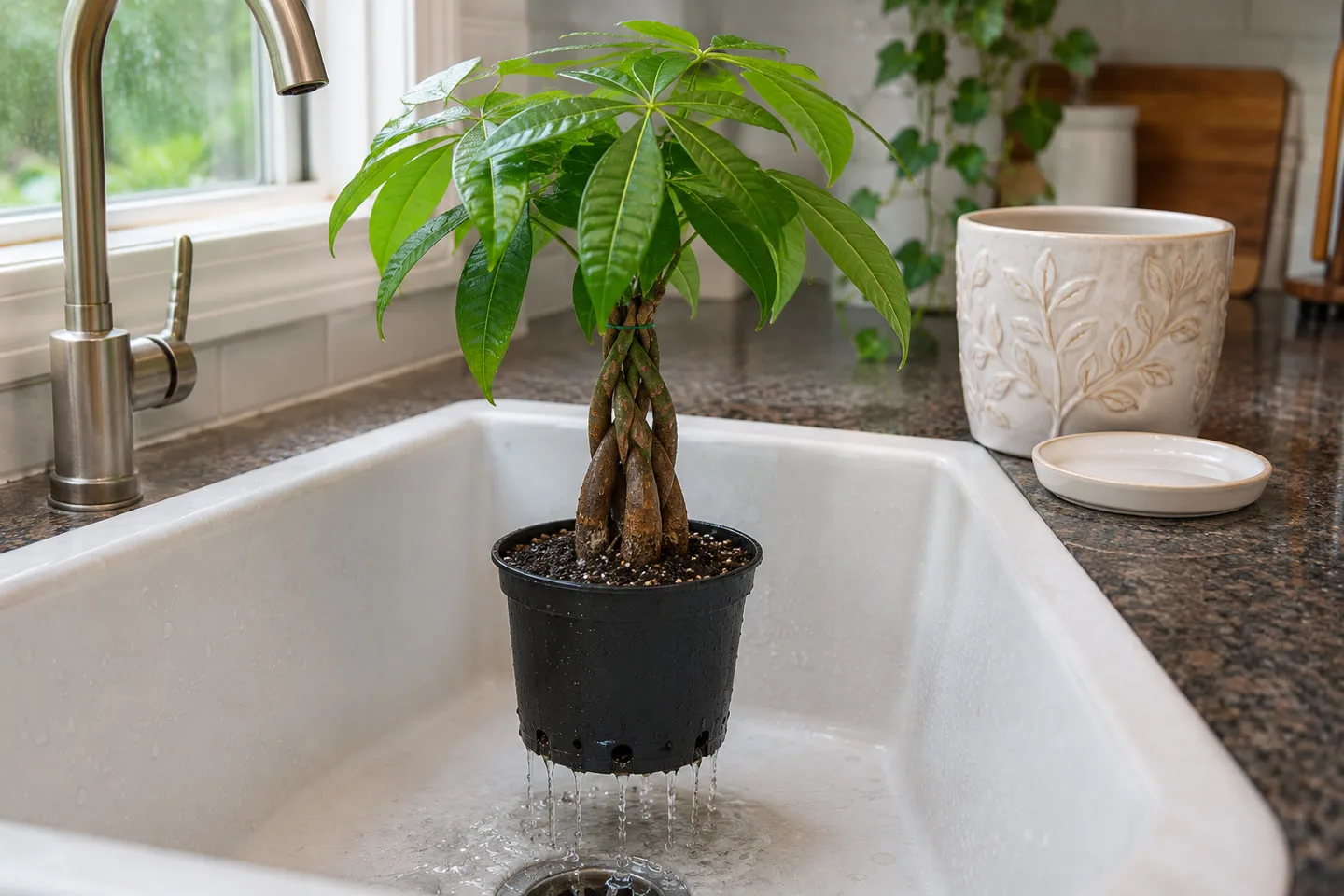
The simplest routine: lift the nursery pot out, water it in the sink until water runs from the holes, let it drip for 10 to 15 minutes, then put it back. It takes two minutes and removes the most common way money trees die.
Why a plant named "aquatic" drowns in a saucer
The money tree is native to southern Mexico through Bolivia and northern Brazil, where it grows in freshwater swamps and along riverbanks. That sounds like a plant that wants wet feet. It isn't. In the wild its roots get heavy rain and then drain into open, airy ground. In a pot, water that cannot drain pushes the air out of the mix and the roots suffocate.
NC State Extension is blunt about it: the money tree does not tolerate standing water, which can cause root rot. The same page notes the opposite problem too: leaf drop can happen when the soil gets too dry. So you are aiming for the middle, and the soil is your only reliable gauge.
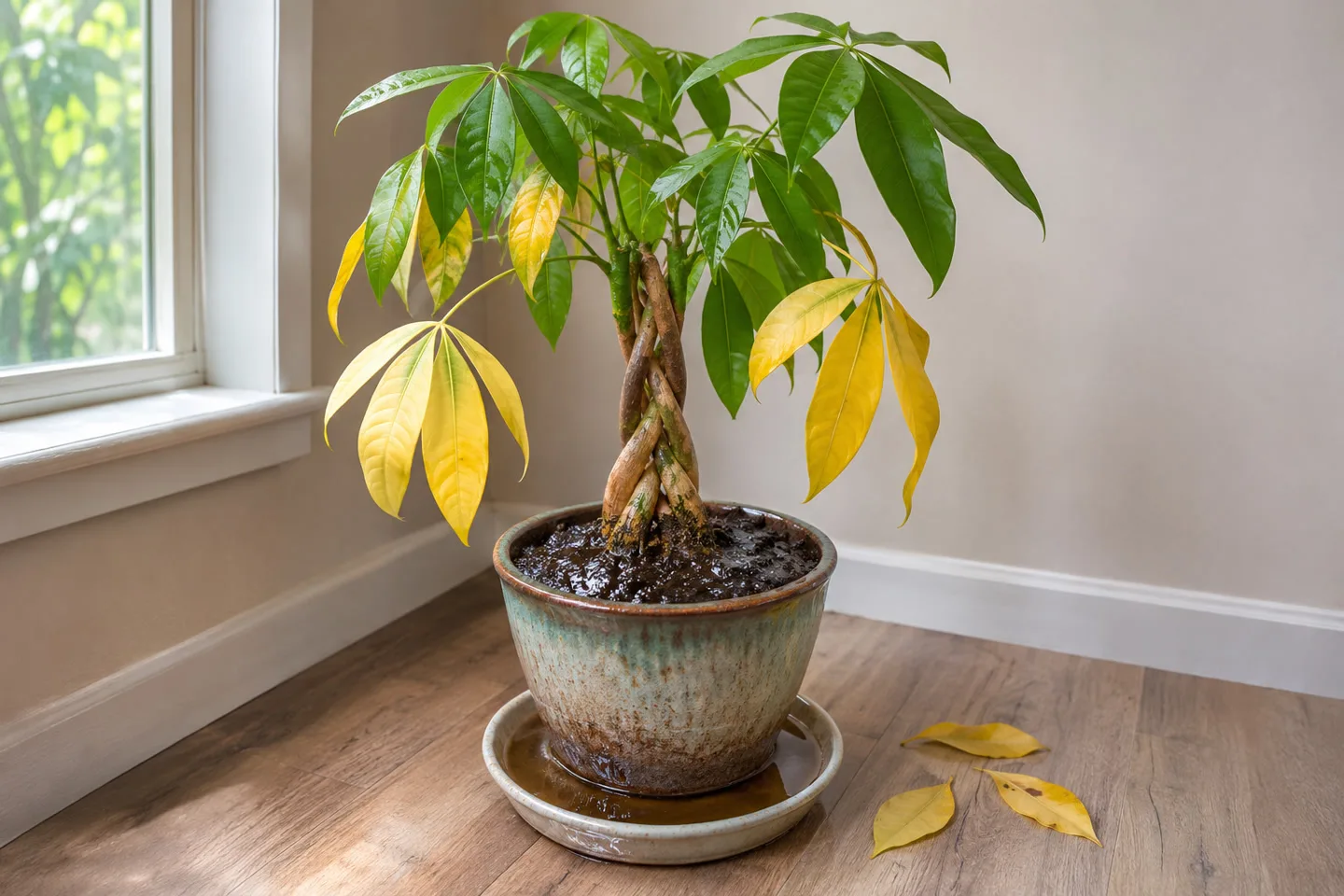
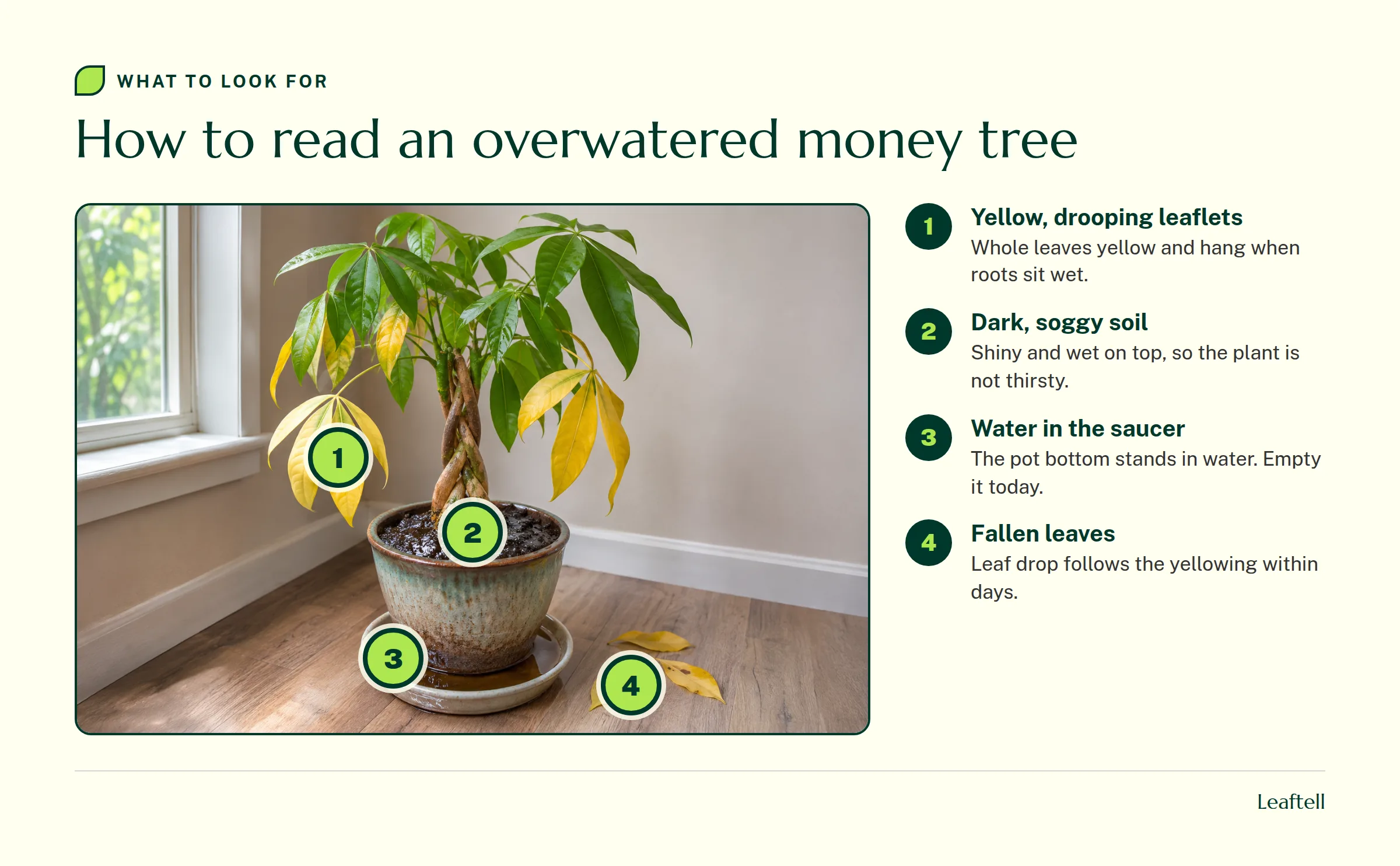
The two problems look alike from across the room, because both end in falling leaves. Up close they are easy to tell apart.
| Clue | Too much water | Too little water |
|---|---|---|
| Soil a knuckle down | Wet, dark, may smell sour | Dry, light, pulling away from the pot edge |
| Leaves | Yellow, soft, drooping, then falling | Curling, crisp edges, then falling |
| Trunk base | Soft or wrinkled at the soil line | Firm |
| Pot weight | Heavy days after watering | Feather light |
| What to do | Empty the saucer, let it dry more, check roots if it keeps declining | Soak until it drains, then return to the nearly dry check |
If the soil stays wet for more than a week and the trunk feels soft at the base, the roots may already be rotting. Slip the plant out of its pot and look: healthy roots are firm and pale, rotten ones are brown and mushy. Our step by step guide on how to fix root rot covers trimming and repotting, and the full list of overwatered plant symptoms helps if you are not sure yet.
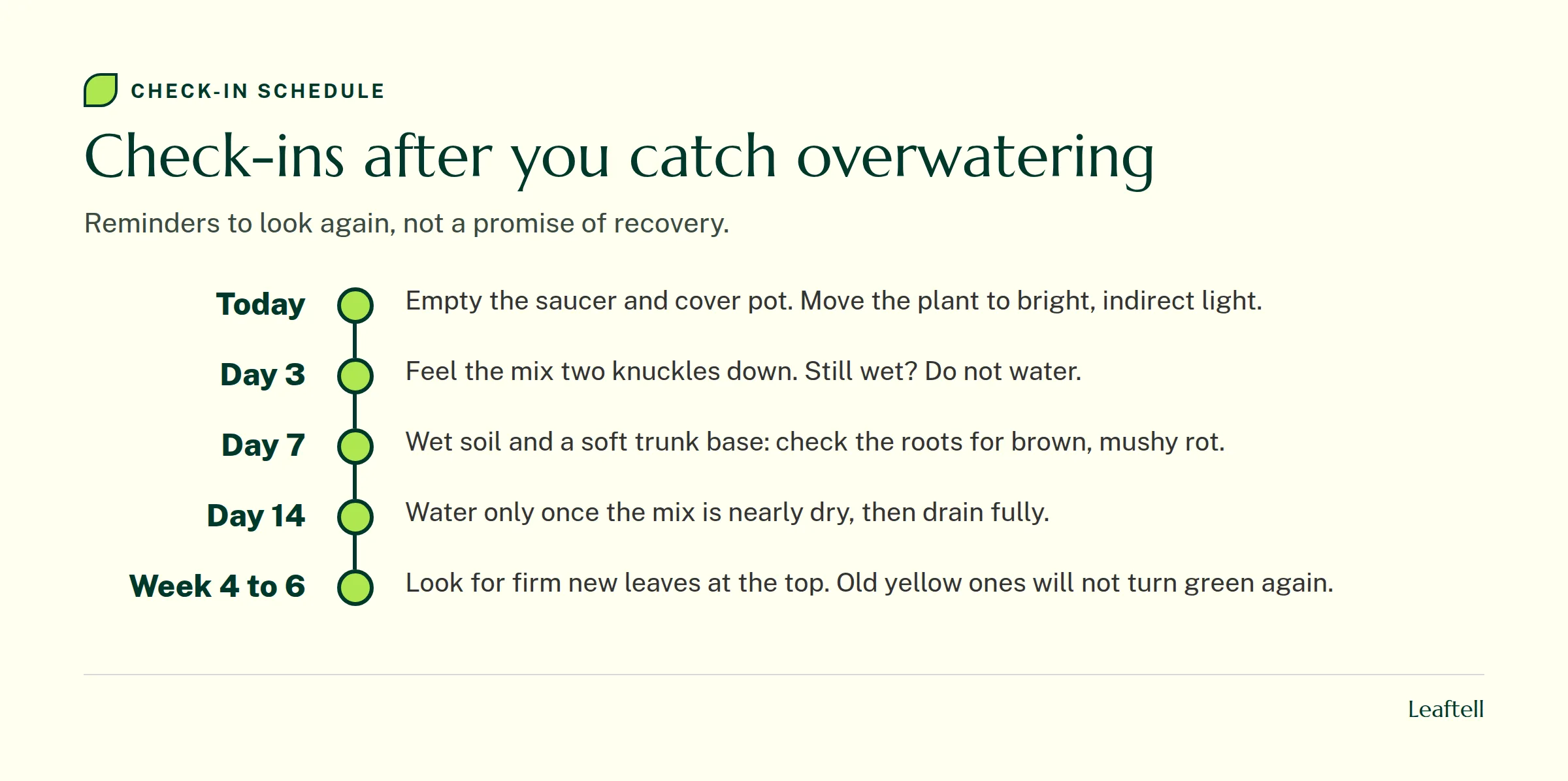
Not sure whether your money tree is too wet, too dry or reacting to a cold draft? A photo of the whole plant, a close-up of the leaves and a note on how the soil feels a knuckle down is a good place to start.
What changes how fast the pot dries
The same money tree can need water twice as often in one home as in another. Four things make most of the difference.
- Light. Money trees like bright, indirect light. More light means faster growth and faster drying. A plant in a dim corner uses little water and is the one most likely to rot.
- Pot. Terracotta wicks water out through its walls; glazed ceramic and plastic hold it. A pot with no drainage hole is the single biggest risk factor.
- Size. NC State notes money trees usually stay 6 to 8 feet tall as houseplants. A big plant in a small pot drinks fast. A small plant in a huge pot sits in damp mix that roots never reach.
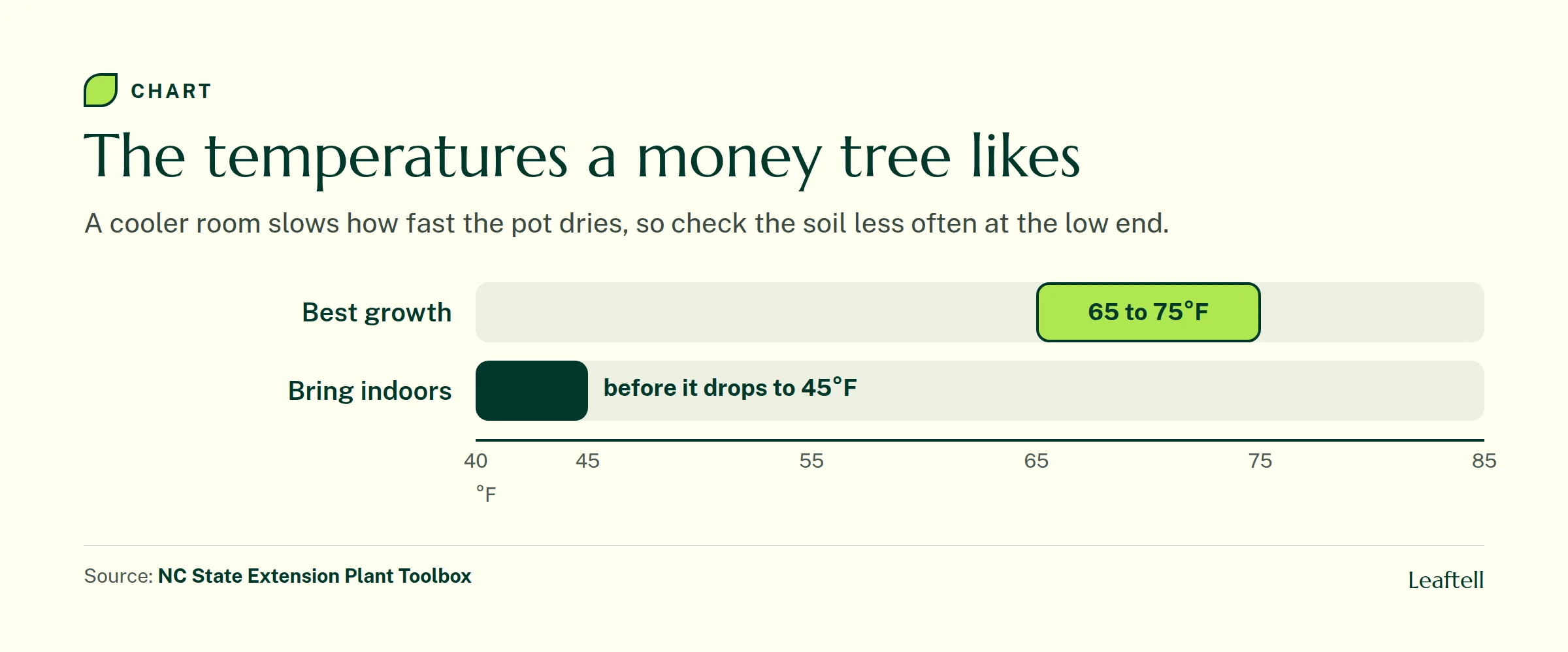
- Season and temperature. Money trees grow best between 65 and 75°F. In winter, short days slow growth, but a heater can also dry the room. Keep checking the soil rather than switching to a winter calendar.
The NYBG adds that money trees like humidity around 50 percent. Dry winter air causes crispy leaf edges even when the watering is right, so a tray of wet pebbles under the pot helps more than extra water.
How often to water a pothos sold as a money plant
In India and much of Asia, "money plant" means golden pothos. Water it when the potting mix has dried out, which NC State recommends for this plant, and expect a check every week or so in bright, indirect light. Pothos forgives a missed watering by drooping, then perks up within hours of a drink. It forgives overwatering much less: NC State lists root rot and blackened leaf edges as the result. Our pothos plant care guide goes deeper on light and soil.
Caring for a money plant kept in water
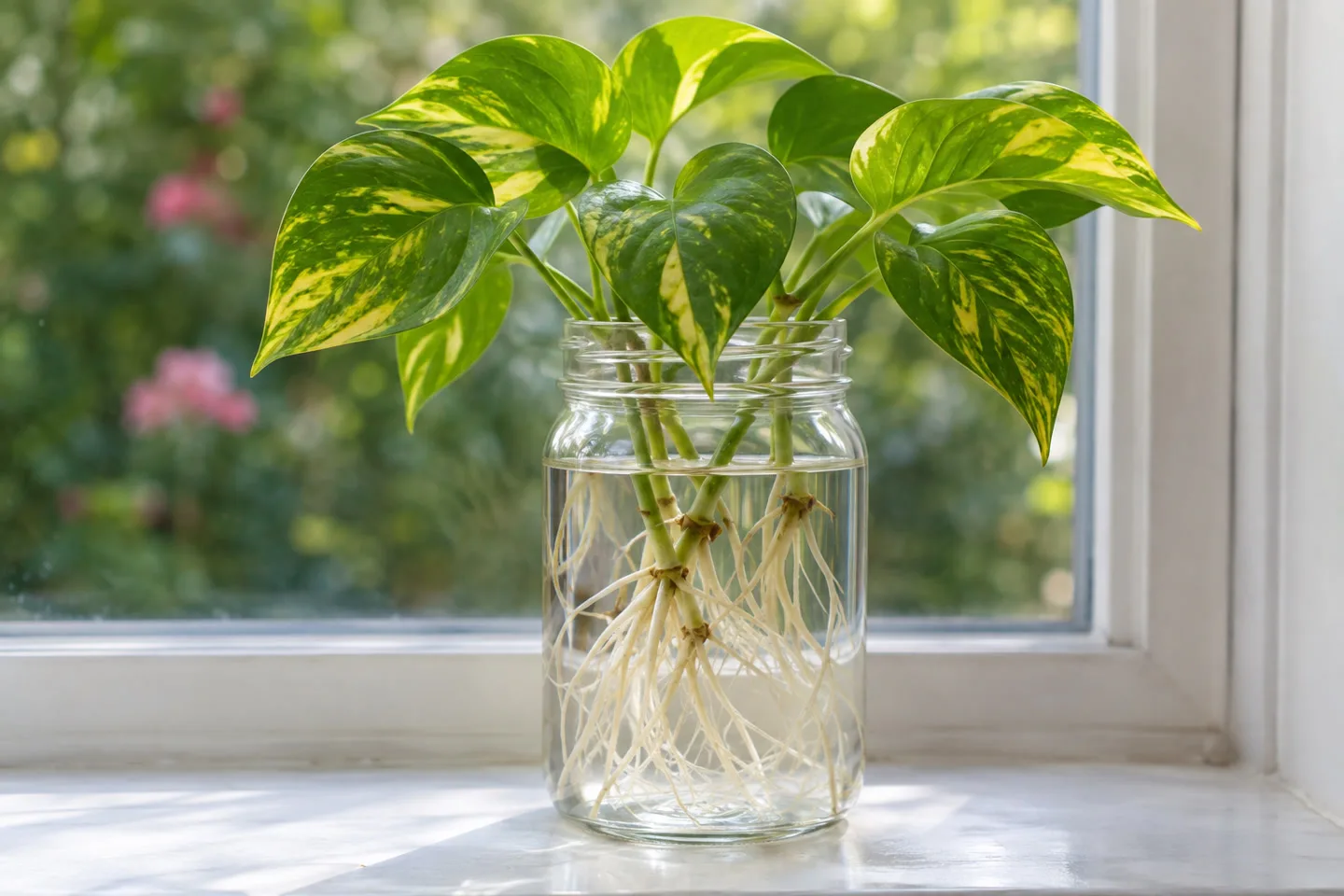
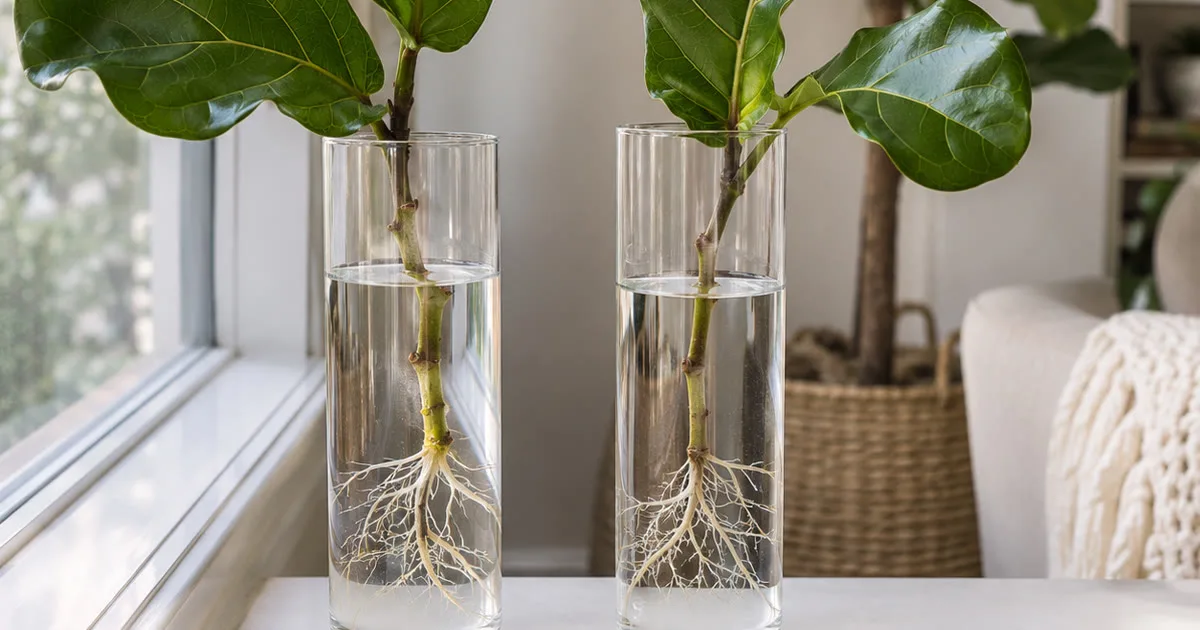
Pothos vines root easily in plain water, and many people grow them that way for months. Keep the leaves above the waterline, change the water every week or two so it stays clear, and rinse the jar when you see slime or a film. Bright, indirect light keeps the leaves colored. A cutting grown in water has water roots; if you later move it to soil, keep the soil a little moister than usual for the first few weeks while new roots form. Our guide to propagating pothos walks through cutting and rooting step by step.
How often to water a jade plant called a money plant
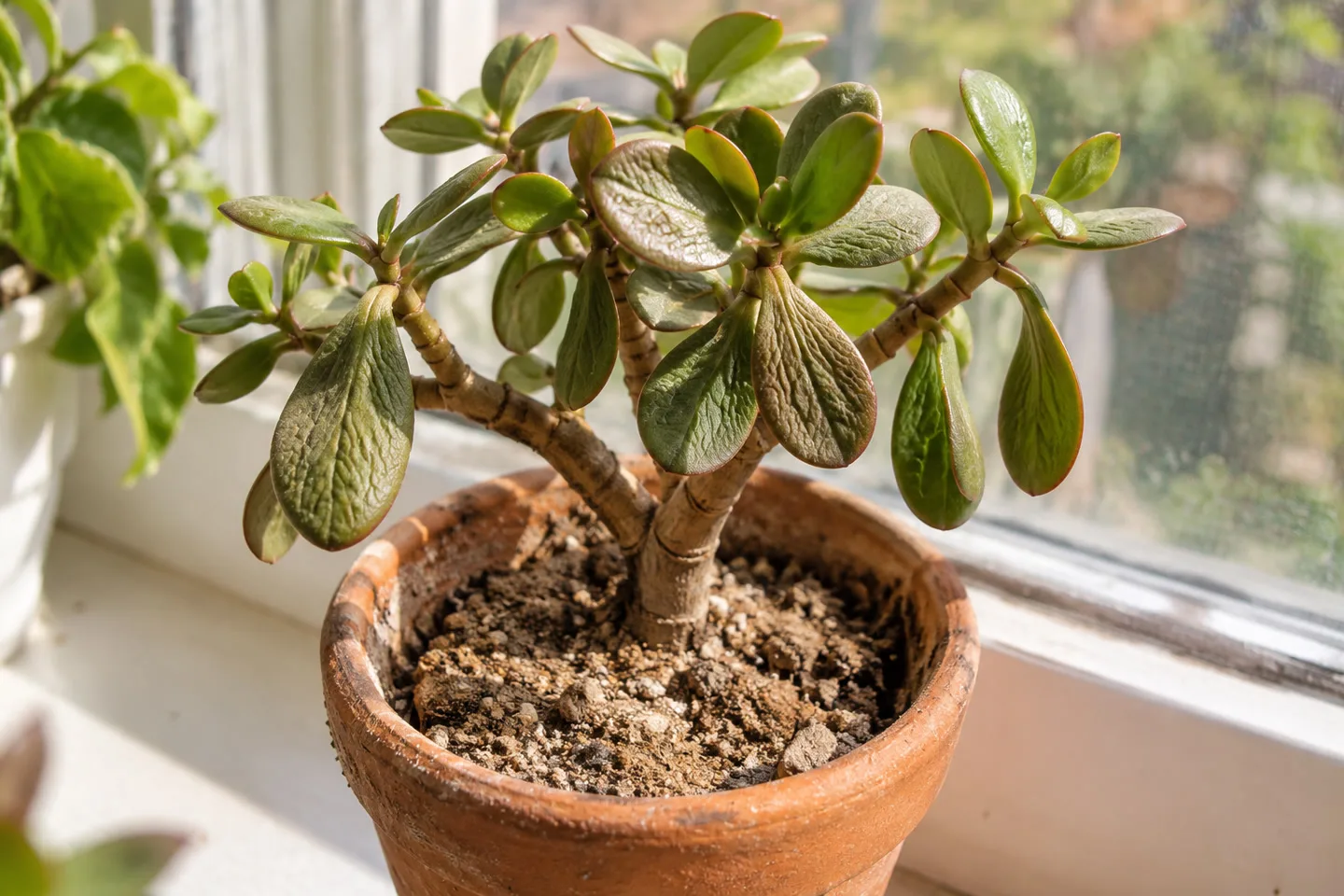
Jade is a succulent, so it wants the opposite of a money tree's steady moisture. NC State's advice is to water in moderation when the soil is dry and reduce watering from fall to late winter. Wait until the soil is dry all the way down, then water thoroughly and let it drain. In winter that can mean once every few weeks.
Thin, wrinkled leaves are a jade asking for water. Soft, yellow, dropping leaves and a mushy stem mean too much. The succulent plant care guide covers the gritty soil mix that makes this much easier. Keep jade out of reach of pets: the ASPCA lists jade plant as toxic to dogs and cats.
For the Chinese money plant, NC State recommends a moist, well-drained mix and warns it is susceptible to root rot if overwatered. Water as the surface starts to dry, let it drain, and keep water off the leaves, which NC State notes can cause leaf spots.
The short answer
Check a money tree about once a week, water it when the mix is nearly dry, soak it until it drains and never leave it standing in water. If your money plant is a pothos, water when the mix has dried out; if it is a jade, wait until the soil is dry all the way down and water even less in winter. The cover pot matters more than the number of days.
If your money tree is yellowing or dropping leaves and you cannot tell whether it wants more water or less, check your money tree in Leaftell with a photo of the whole plant, a close-up of the leaves and a note on how the soil feels a knuckle down. Take a fresh photo about seven days later as a check-in reminder and compare the newest leaves.
Check your growing conditions with the plant watering calculator.
Frequently asked questions
The most common cause is too much water: roots sitting in a full saucer or a cover pot without a drainage hole start to rot, and the plant sheds yellow leaves. Bone dry soil, cold drafts and a sudden move to a darker spot cause leaf drop too. Check the soil a knuckle down first; it tells you which one you are dealing with.
Indoors, a money tree usually stays 6 to 8 feet tall, according to NC State Extension, and many stay much smaller in a modest pot. In its native swamps and riverbanks it can reach 60 feet. A larger plant uses more water, so check it more often as it grows.
A money plant grown in water is usually pothos. Keep the leaves above the waterline, change the water every week or two, rinse the jar when it turns slimy, and give it bright, indirect light. If you move it to soil later, keep the soil a little moister for the first few weeks.
The money tree (Pachira aquatica) is native to southern Mexico through Bolivia and northern Brazil, where it grows in freshwater swamps and along riverbanks. That is why it likes a thorough soak, but in a pot it still needs to drain: standing water causes root rot.
Share article
About the author

Keep checking your plant
Plant care reference
Indoor plant care
Build a routine around your plant, light and potting mix.
Plant care reference
Why is my plant dying
Trace leaf and root symptoms before choosing a care change.
Plant care reference
Pothos plant care
Choose a growing spot and prune a trailing pothos for fuller growth.
Plant care reference
How to fix root rot
Inspect root firmness and drainage, then decide whether to repot.