How to Propagate Fiddle Leaf Fig: 3 Ways and the Bud Rule
Filip Leszczyński 3 November 2026 13 min read
In this article
To propagate a fiddle leaf fig, cut a stem with two or three leaves just below a leaf scar, let the milky sap stop, then root it in a jar of water or a pot of moist, airy mix in bright, indirect light. For a tall plant you don't want to cut yet, air layer the stem instead and only cut it free once roots fill the moss.
The thing that decides success is not water versus soil. It is the bud. A fiddle leaf fig grows new stems only from the buds on its stem, so a lone leaf in a glass can grow a beard of roots and still never become a plant. Take a piece of stem with a bud and almost any method works, given a few weeks of patience.
Read the stem before you cut
Every useful cutting carries a piece of woody stem. Look along it and you'll see two things: rings where old leaves fell (leaf scars) and a small pointed bud tucked where each living leaf stalk meets the stem. Roots form on the buried stem, often near those scars, and the new growth comes from the buds.
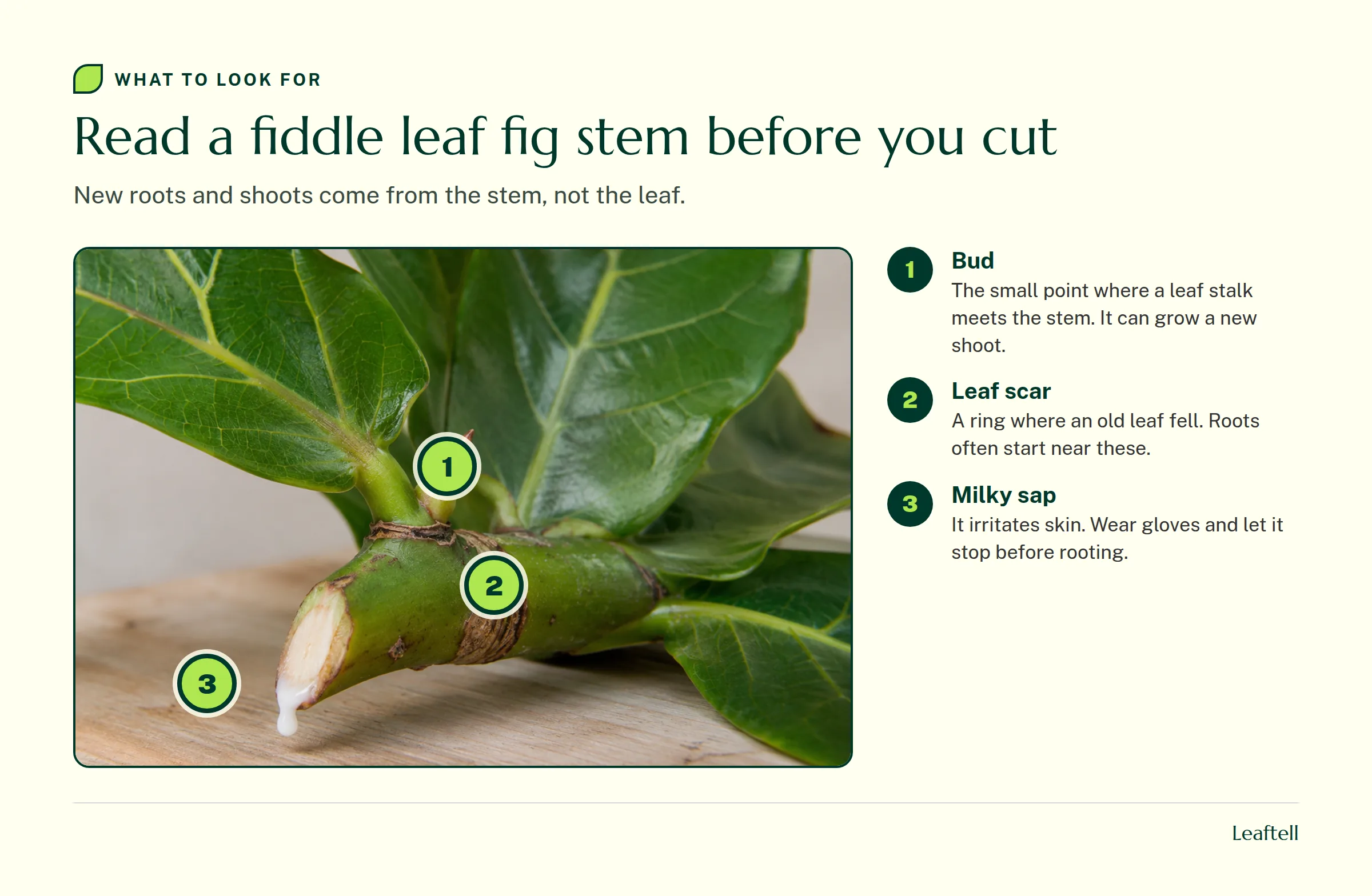
Fiddle leaf figs bleed a white, milky sap from every cut. NC State Extension notes the sap can irritate skin and recommends gloves when pruning or propagating. Wear them, cut over a towel or newspaper, and blot the stem with a damp paper towel until the flow stops before you put it in water or mix.
Only cut a healthy plant. A fig that is dropping leaves or covered in brown patches is short on energy, and its cuttings start weak. Sort out the cause first with our guides to fiddle leaf fig dropping leaves and brown spots on fiddle leaf figs.
Pick your method
There are three ways that work at home and one that mostly doesn't. Choose by what you have and how much of the plant you are willing to cut.
| Method | Best for | Watch out for | Ready when |
|---|---|---|---|
| Stem cutting in water | A leggy top or a pruned branch, seeing roots form | Stale water and rot at the cut end | Several roots are 1 to 2 inches long |
| Stem cutting in moist mix | Skipping the move from water to soil | Mix staying soggy or drying out | New leaves appear and a gentle tug meets resistance |
| Air layering | A tall plant you want to shorten without risk | Moss drying out inside the wrap | Roots are visible all through the moss |
| Single leaf in water | Watching roots grow | It almost never grows a stem | Rarely becomes a plant |
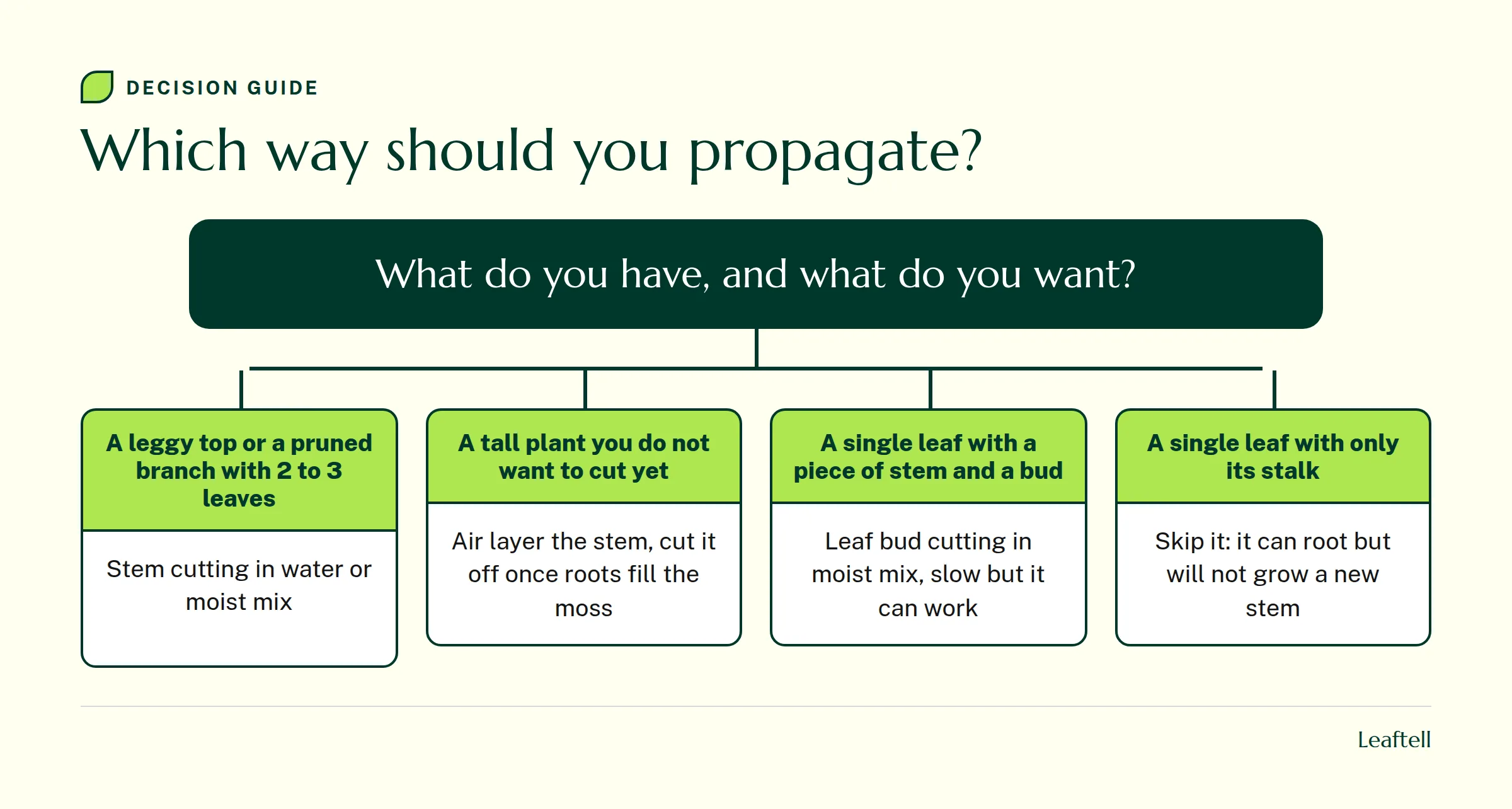
If this is your first try, take a stem cutting from the top of a plant that has grown too tall. You get a cutting, and the plant you cut usually branches below the cut. If the whole plant has grown thin and stretched, it is probably short on light; our guide to leggy plants explains the fix before you cut for numbers.
How to take a fiddle leaf fig cutting
Use clean, sharp pruning shears. Cut the stem just below a leaf scar so the cutting has two or three leaves at the top and a few inches of bare stem below. University of Missouri Extension advises cutting just below a node, removing the lower leaves and taking cuttings from vigorous, healthy shoots. Fiddle leaf fig leaves are large, so a longer cutting than the 4 to 6 inches they suggest for most houseplants is normal.
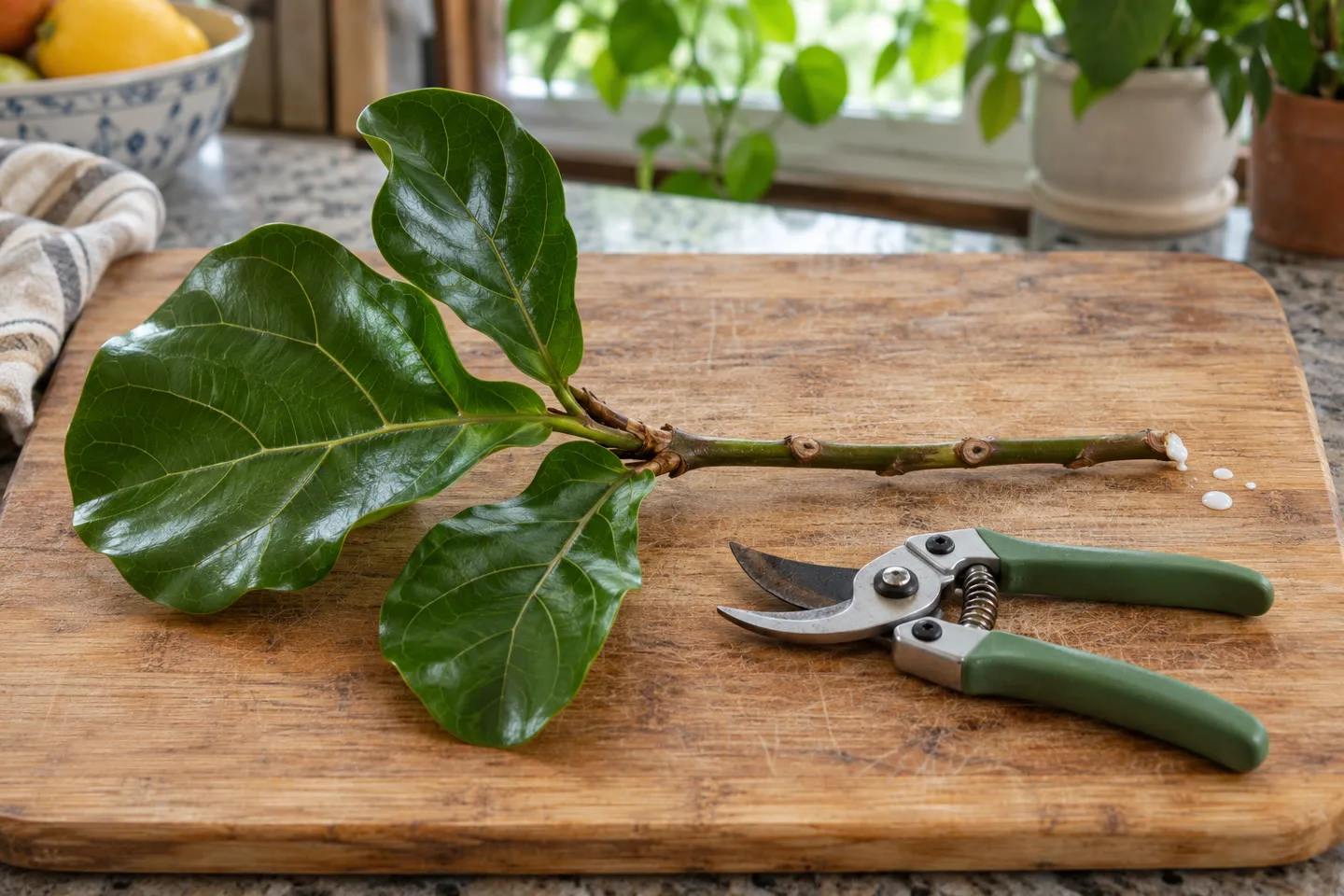
Remove any leaf that would sit in water or touch the mix. Two or three leaves is plenty: each one loses water the young cutting can't replace yet. If the leaves are huge, cutting each one in half across the blade cuts that loss, at the cost of looks. Plain cuttings without rooting hormone often root in water, but a cutting going straight into mix benefits from a dip of powder or gel at the cut end. Follow the label.
How to propagate a fiddle leaf fig from a stem cutting
- Cut below a leaf scar
Wear gloves. Cut a stem with two or three leaves just below a leaf scar, using clean, sharp shears.
- Stop the sap
Blot the cut end with a damp paper towel until the white sap stops running.
- Strip the lower stem
Remove any leaf that would sit below the waterline or touch the mix.
- Set the stem in water or moist mix
Stand it in a clear jar of room temperature water, or push the bare stem into a small pot of moist, airy potting mix.
- Keep it warm and bright
Place it in bright, indirect light, away from cold drafts and hot direct sun.
- Refresh and check
Change the water whenever it looks cloudy, at least once a week, and look at the stem end each time.
- Pot it up once roots form
When several roots are 1 to 2 inches long, plant the cutting in a small pot of moist, airy mix with drainage holes.
Rooting a cutting in water
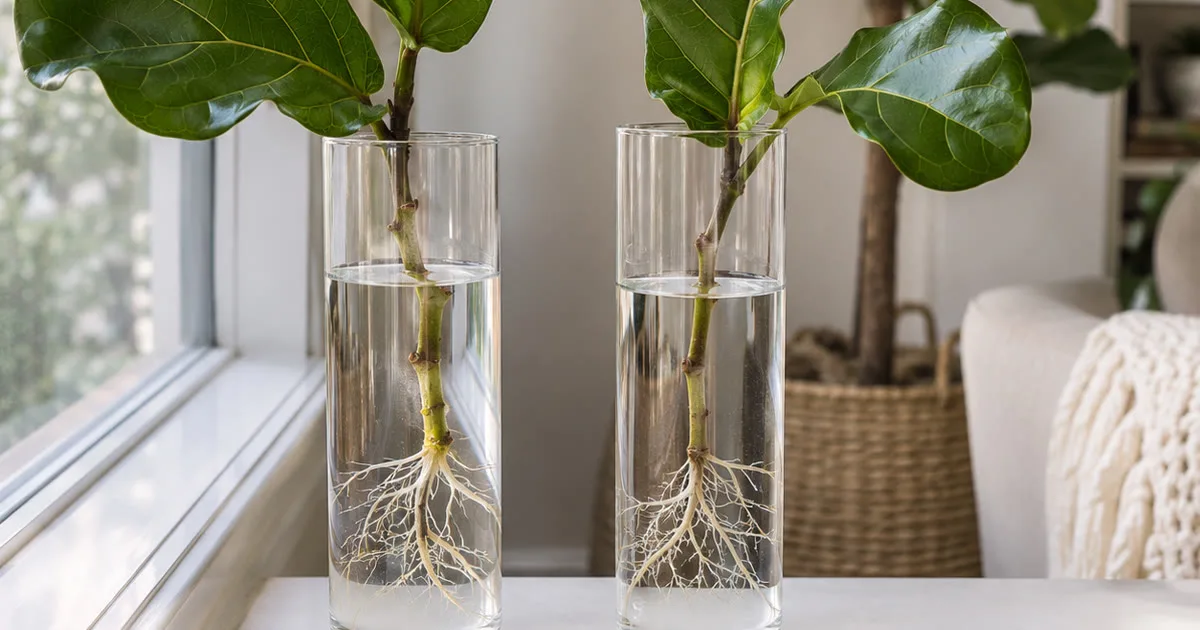
Water is the easiest place to start because you can see what is happening. Use a clear glass jar or vase that holds the stem upright, fill it so a few inches of bare stem sit under water, and keep every leaf above the rim. Place it near a bright window without hot sun on the glass, which heats the water and grows algae.
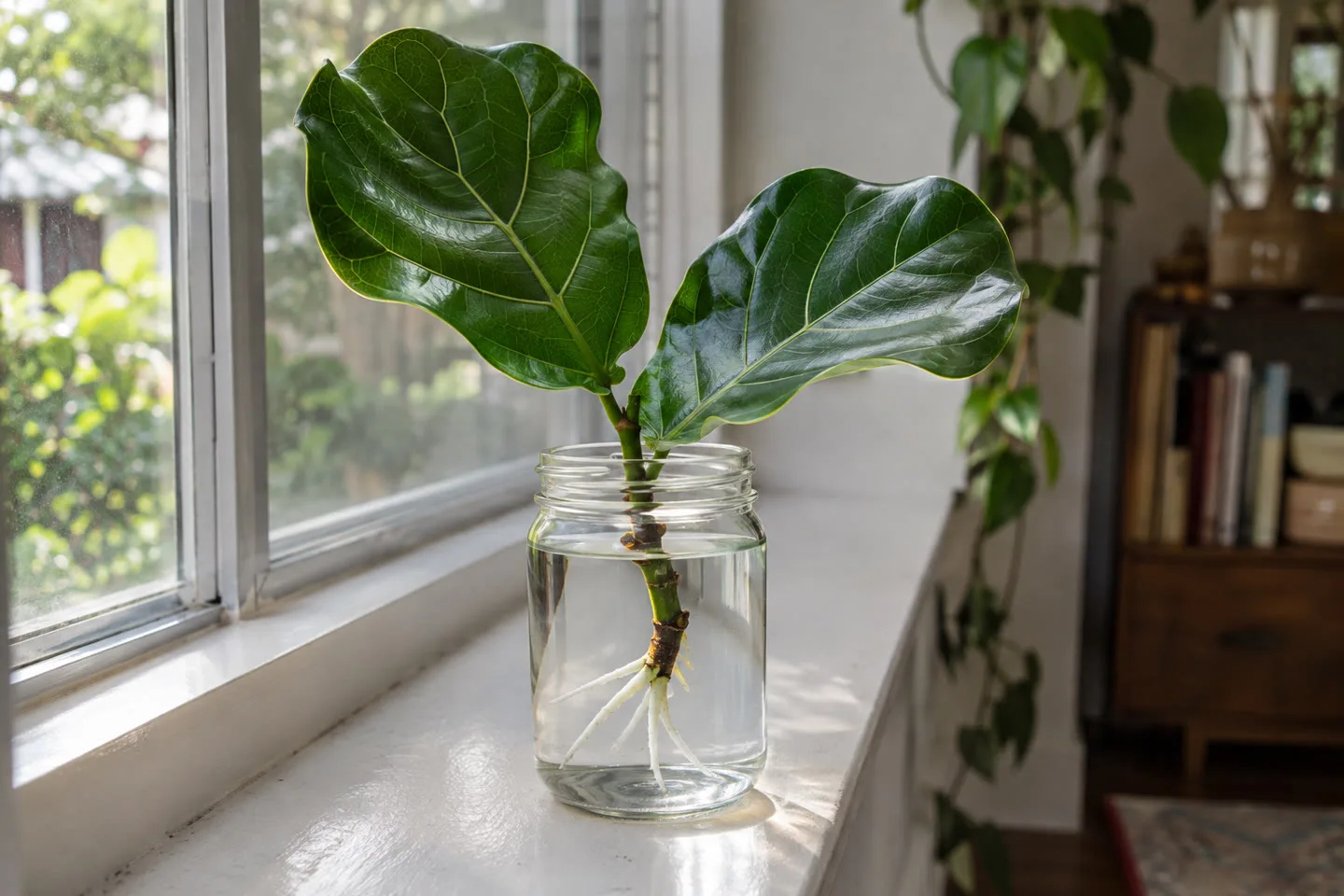
Be patient. Iowa State University Extension says roots on air layered figs take several weeks to appear, and cuttings in water are no quicker. Small white bumps on the stem usually come first, then roots. A cool apartment in winter is slower still, and NC State lists this plant as happiest above 55°F. If the stem end is still firm and green, the cutting is still working.
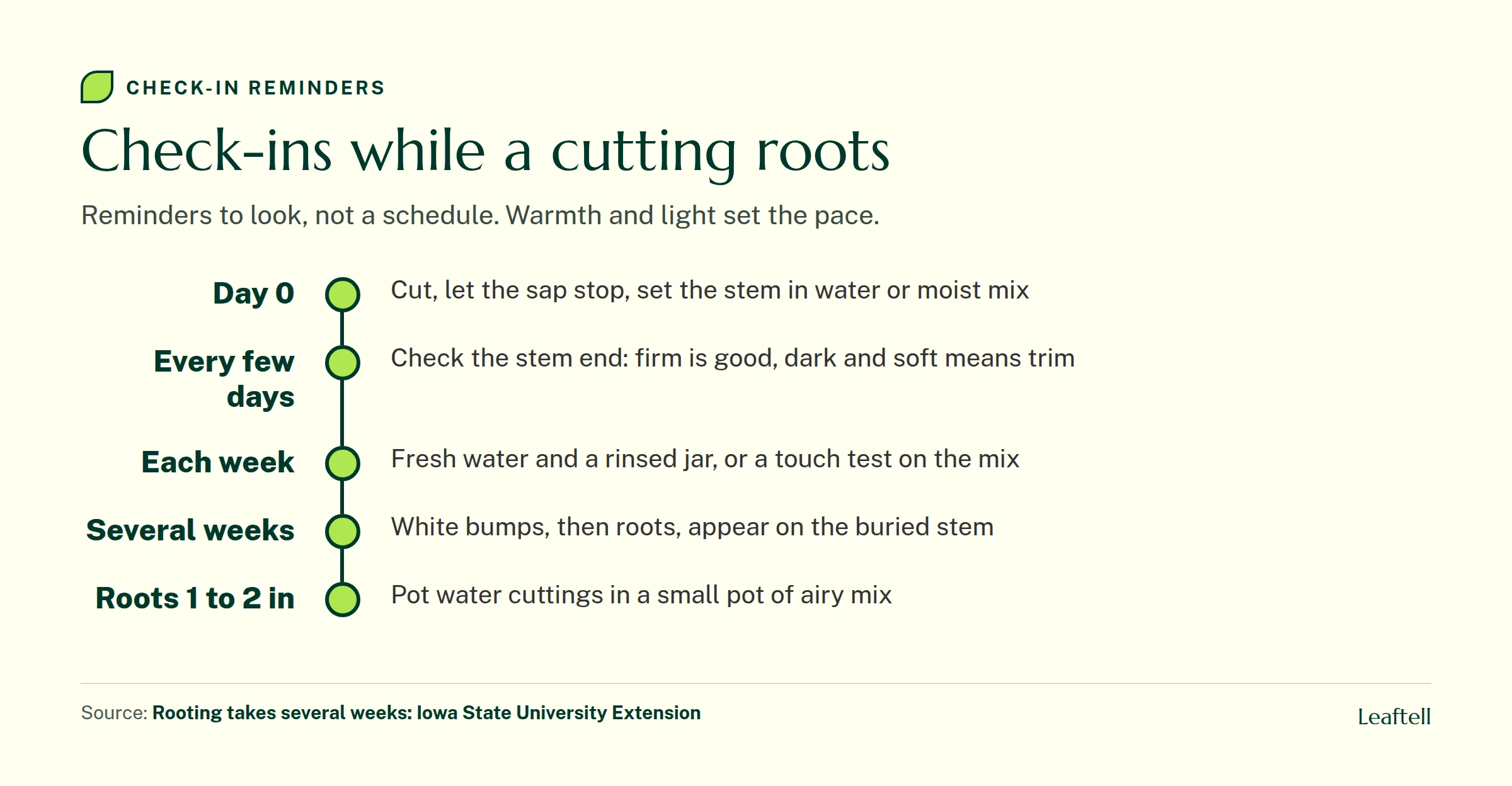
When several roots reach 1 to 2 inches, move the cutting into a small pot of fresh, airy potting mix. Water roots are tender, so keep the mix lightly moist for the first couple of weeks rather than letting it dry out the way you would for an established fig. A leaf may droop while the roots adjust. New growth at the tip means it has settled. The pothos propagation guide walks through the same water to soil move in more detail.
Rooting a cutting straight in soil
Fill a small pot with drainage holes with moist, airy potting mix. Make a hole with a pencil, dip the cut end in rooting hormone if you have it, and set the stem in deep enough to stand on its own. Firm the mix around it and water it through.
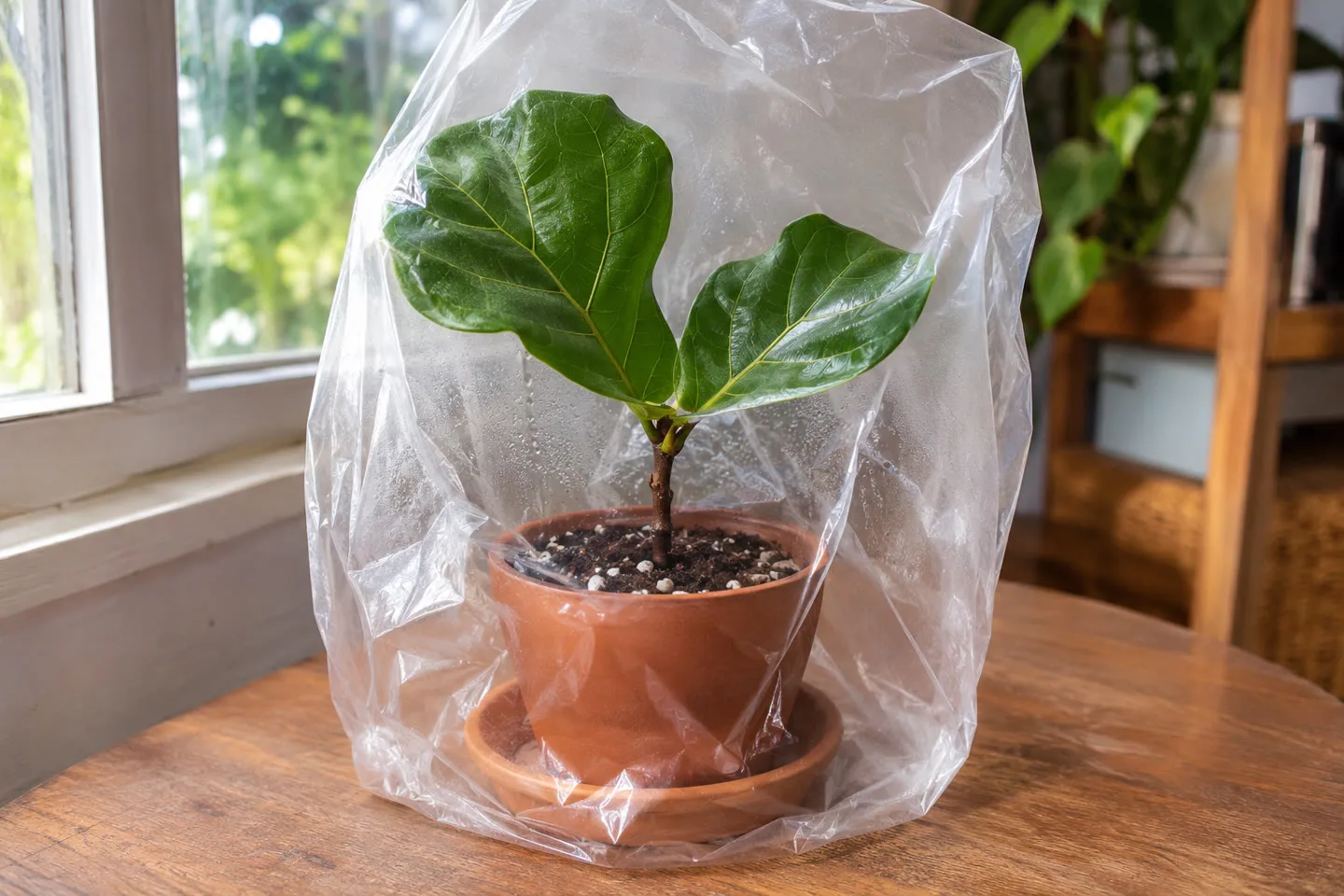
Fiddle leaf fig cuttings lose a lot of water through their big leaves before they have roots. A clear plastic bag tented over the pot holds humidity in; open it every day so condensation does not sit on the leaves. Keep the mix lightly moist, never soggy, and check it by touch. Our soil moisture checks show how to tell wet mix from dry without guessing.
You can't see roots in soil, so read the top. A new leaf, or resistance when you tug the stem gently, means roots have taken hold. A cutting that wilts while the mix is still wet needs less water, not more.
Air layering a tall fiddle leaf fig
Air layering grows roots on a stem while it is still attached to the plant, so the parent keeps feeding it the whole time. That makes it the safest option for a tall plant you want to shorten or a thick branch you don't want to gamble on.
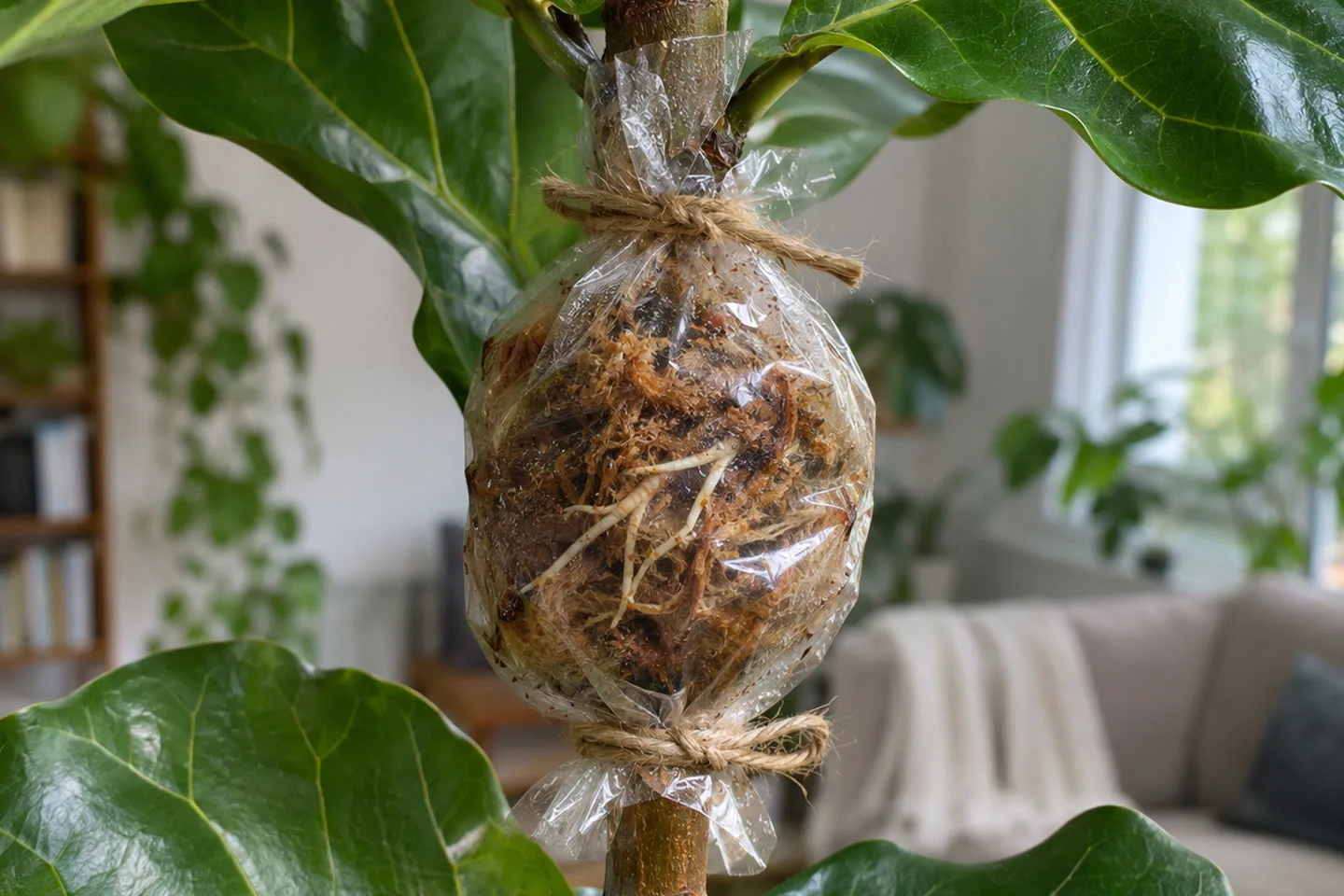
Iowa State University Extension describes the method for woody figs:
- Pick a point on the stem about 12 to 18 inches below the tip and remove the leaves right there.
- Make two cuts around the stem one inch apart, connect them with a third cut and peel away the ring of bark.
- Scrape the exposed wood clean and dust it with rooting hormone. It roots without hormone too, just more slowly.
- Pack one or two handfuls of moist sphagnum moss around the wound and wrap it in clear plastic, tied above and below.
- Wait for roots to fill the moss, then cut the stem just below the lower tie and pot it in well drained mix.
Check the moss through the plastic every week. If it looks pale and dry, open the top tie and add a little water. The plant below the cut usually pushes new shoots, so you end up with two plants instead of one.
Can you grow a fiddle leaf fig from a leaf?
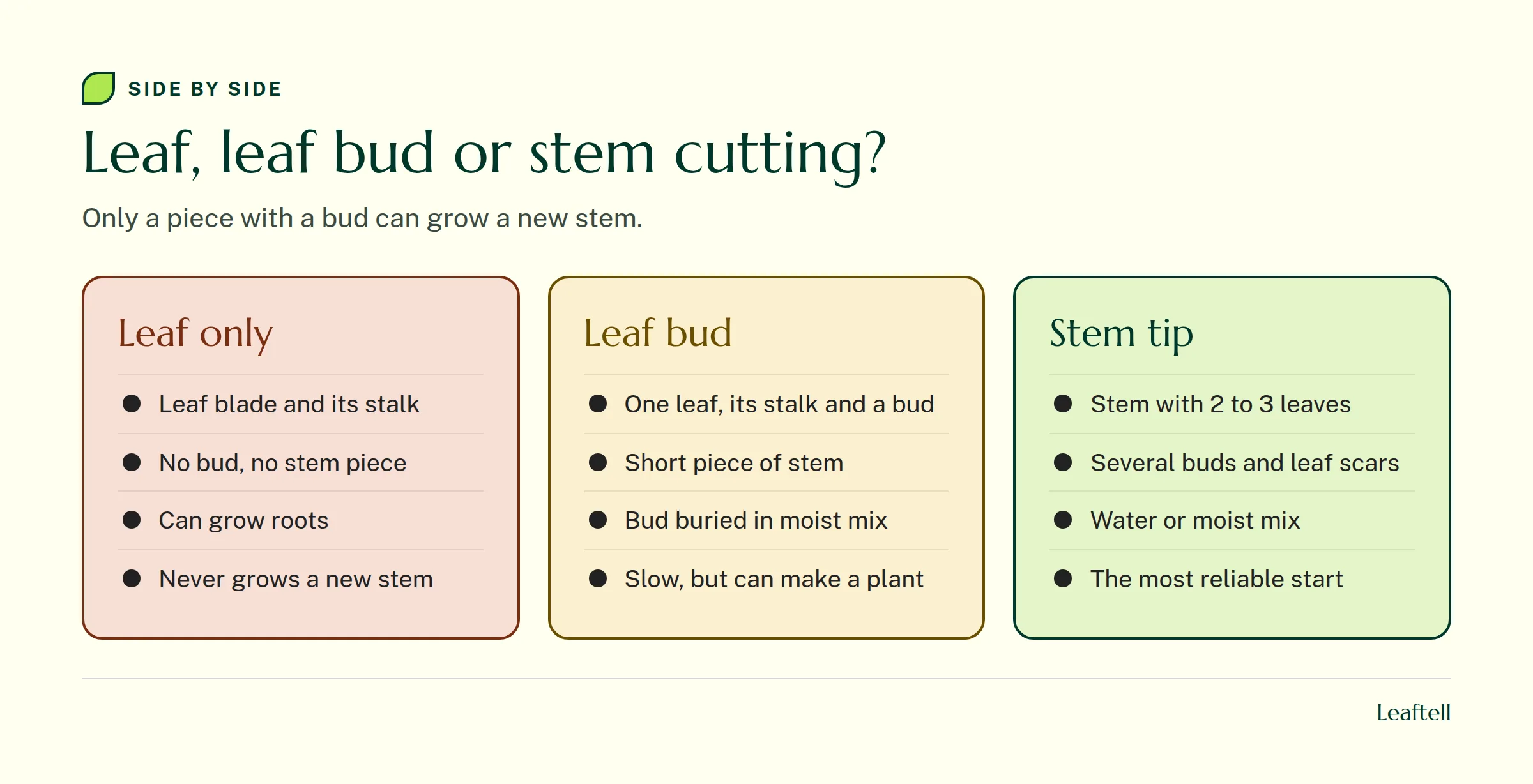
Not from a leaf on its own. A single leaf with only its stalk can grow plenty of roots in water, but it has no bud, so it cannot grow a new stem. It stays one rooted leaf until it gives out.
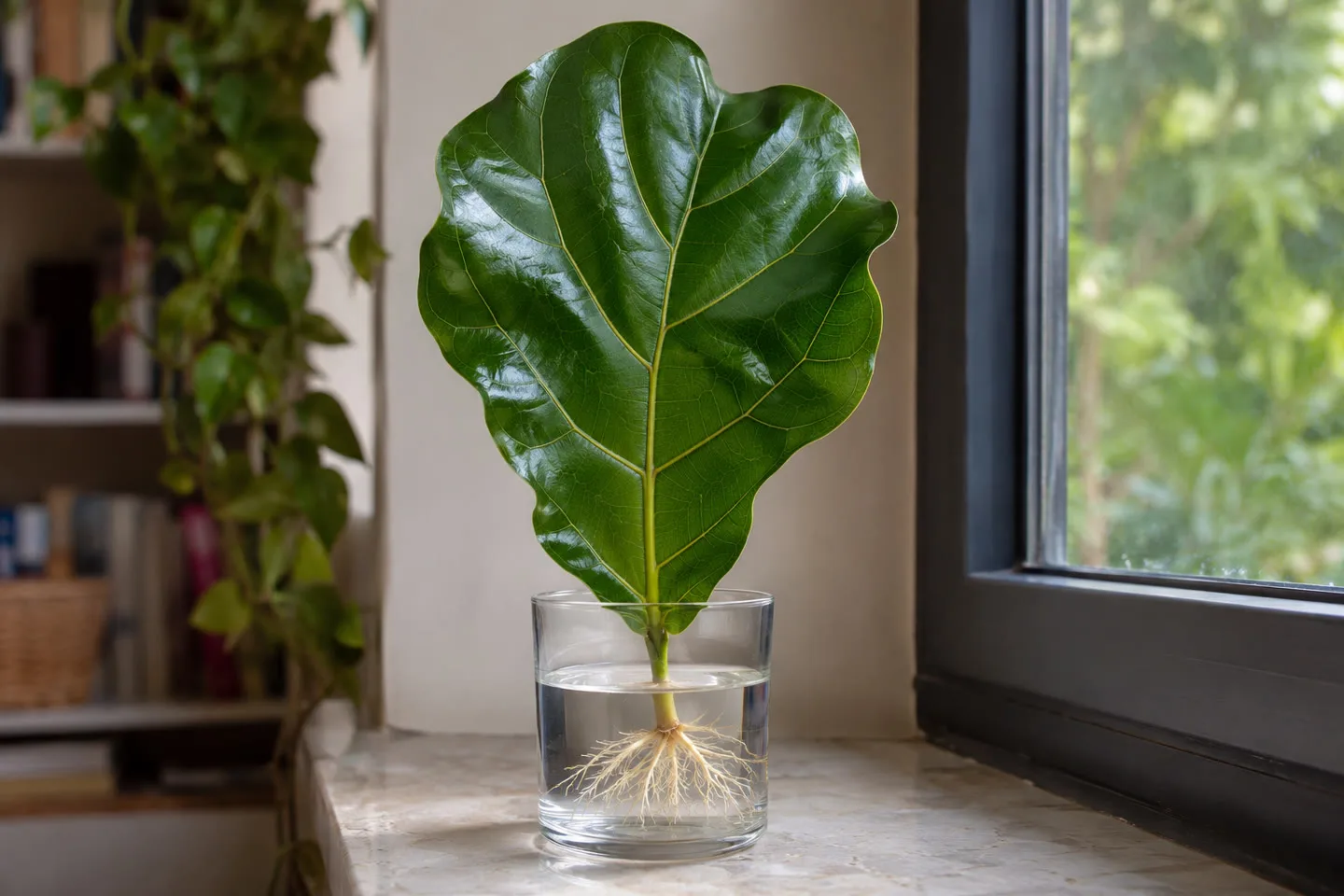
A leaf with a short piece of stem and the bud at its base is different. Purdue University describes these leaf bud cuttings: the stem piece makes roots and a new shoot grows from the bud, so set the bud just below the surface of the rooting mix with the leaf in the light. It is slower than a stem cutting, but it is a fair way to use a branch you had to remove.
Propagation mistakes and what they cost
Most failed cuttings fail for one of a few reasons. Catch them early and you lose one cutting, not the whole try.
- A leaf with no bud. Roots grow, a plant never does. Cost: months of waiting.
- Rooting while the sap still runs. The cut seals poorly and the water clouds fast. Cost: a slimy stem end.
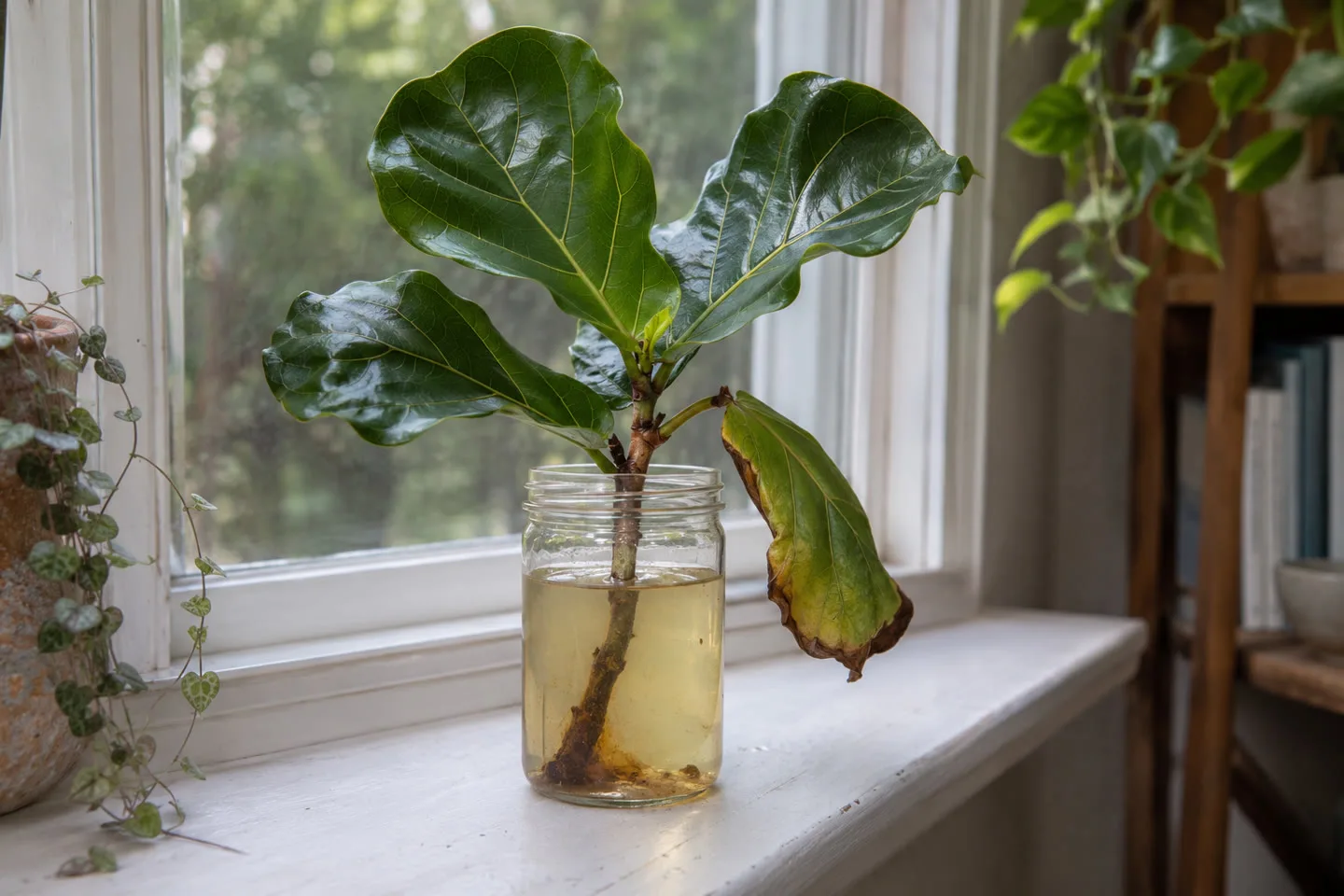
- Leaves under water. Submerged leaves rot and foul the jar. Cost: rot moving up the stem.
- Stale water. Cloudy water that is never changed grows bacteria. Cost: a dark, soft cut end.
- Soggy mix. A cutting needs moisture and air. Cost: rot before roots form. Our root rot guide covers the same problem in rooted plants.
- Cold, dark spots. Rooting slows to a crawl. Cost: a cutting that sits for weeks doing nothing, then drops its leaves.
- Bringing pests along. Check leaf undersides and stem joints first with the houseplant pest checklist. Cost: pests in every new pot.
If the stem end turns dark and mushy, take the cutting out, trim back to firm, pale wood above the rot, let the sap stop, rinse the jar and start again.
Keep cuttings away from pets and kids
Fiddle leaf fig is toxic to people, cats and dogs if eaten, according to NC State Extension, with drooling, mouth irritation and vomiting listed as symptoms. A row of jars on a low sill is easy for a cat to reach. Keep cuttings up high, clear away trimmed leaves, and call your veterinarian or a poison control service if a pet chews one.
The one thing that decides whether a cutting roots
A piece of stem with a bud, in water or lightly moist mix, kept warm in bright, indirect light, does most of the work. The rest is housekeeping: let the sap stop, change the water, and check the stem end every few days. Air layer when the plant is tall and you'd rather not risk a cut, and skip single leaves unless they come with a bud. Good light also decides how quickly the new plant grows once it has roots, so read our guide to the light at your window before you pick a spot.
If a cutting or the mother plant looks wrong and you are not sure why, check your fiddle leaf fig in Leaftell with a photo of the whole plant, a close-up of the problem and a note on how wet the water or mix is.
Sources
Check your growing conditions with the plant watering calculator.
Frequently asked questions
Only if the leaf comes with a short piece of stem and the bud at its base. A leaf with just its stalk can grow roots in water, but it has no bud, so it never grows a new stem. For a real new plant, use a stem cutting or air layering.
Both work. Water lets you see roots form and is the easiest start, but the roots need a gentle move into soil later. Moist, airy mix skips that move but hides the roots, so you judge progress by new leaves. Pick water for your first try.
Not when they are young. Pot a newly rooted cutting into a small pot only a little wider than its roots. A big pot holds wet mix the roots can't reach and dries slowly, which invites rot. Move up one size once roots fill the pot.
Yes. Cut a healthy branch with two or three leaves just below a leaf scar, let the sap stop, and root it in water or moist mix in bright, indirect light. The plant you cut usually branches below the cut.
Share article
About the author

Keep checking your plant

Plant care reference
Indoor plant care
Build a routine around your plant, light and potting mix.
Plant care reference
Why is my plant dying
Trace leaf and root symptoms before choosing a care change.
Plant care reference
Pothos plant care
Choose a growing spot and prune a trailing pothos for fuller growth.
Plant care reference
How to fix root rot
Inspect root firmness and drainage, then decide whether to repot.