How Often to Water a Christmas Cactus (It Is Not a Desert Cactus)
Filip Leszczyński 3 November 2026 12 min read
In this article
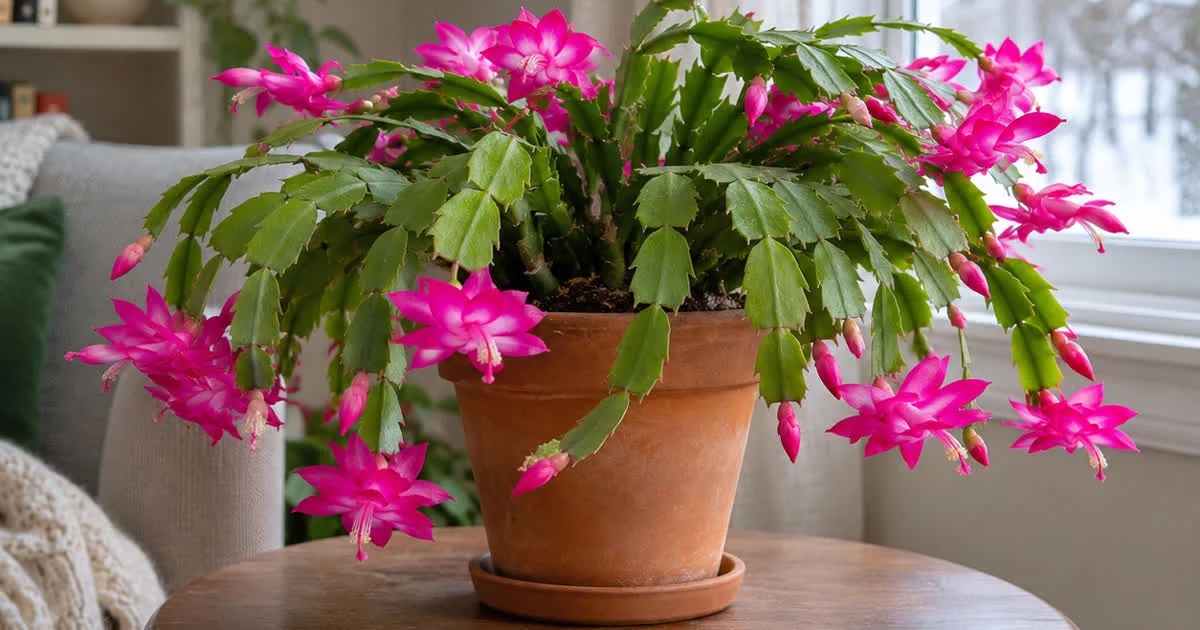
Water a Christmas cactus when the top inch of soil feels dry, soak it until water runs out of the bottom of the pot, and never leave it sitting in the runoff. In a warm room during spring, summer and while it is in flower, that usually means checking every few days and watering whenever the top is dry. In the cool autumn and late winter rest periods, it needs water less often.
The mistake most people make is the name. It is called a cactus, so it gets watered like one: a splash once a month and a lot of hope. A Christmas cactus is a rainforest plant that grows on tree branches, and it wants far more regular water than the cactus on your desk. The other mistake is the opposite one: a decorative pot with no hole that quietly holds every drop until the roots rot. Get those two right and the calendar barely matters.
How often to water a Christmas cactus, by situation
The soil decides, not the date. What changes from home to home is how fast the soil gets from wet to dry, so use this table to set how often you check. When you check and the top inch is dry, water.
| Your situation | How fast the pot dries | Check about every | What to do differently |
|---|---|---|---|
| In bud or flower, warm room | Medium | 3 to 4 days | Keep it evenly moist; a dry spell now drops buds |
| Spring and summer growth | Medium to fast | 3 to 5 days | Water whenever the top inch is dry |
| Autumn rest, cool room around 55 to 59°F | Slow | 7 days | Let the top inch or so dry out, but never the whole pot |
| Rest after flowering | Slow | 7 days | Water less until new segments appear in spring |
| Small terracotta pot | Fast | 2 to 3 days | Clay wicks water out of the mix, so expect to water more |
| Plastic pot inside a cover pot with no hole | Slow, and hides water | 5 to 7 days | Lift it out to water and tip out whatever collects underneath |
| Outdoors in summer shade | Fast | 1 to 2 days in hot spells | Wind and warmth dry pots far faster than indoors |
These intervals are reminders to look, not a watering schedule. Illinois Extension sums up the rule simply: despite being a cactus, holiday cacti are watered when the top inch of soil is dry to the touch, alongside your other houseplants.
Why it is not watered like a desert cactus
In the wild, Christmas cactus grows as an epiphyte: perched on rainforest trees in dappled shade, its roots tucked into moss and bark that catch frequent rain and then drain almost at once. The RHS puts it plainly: unlike desert cacti, these plants need regular water and, ideally, humid air.
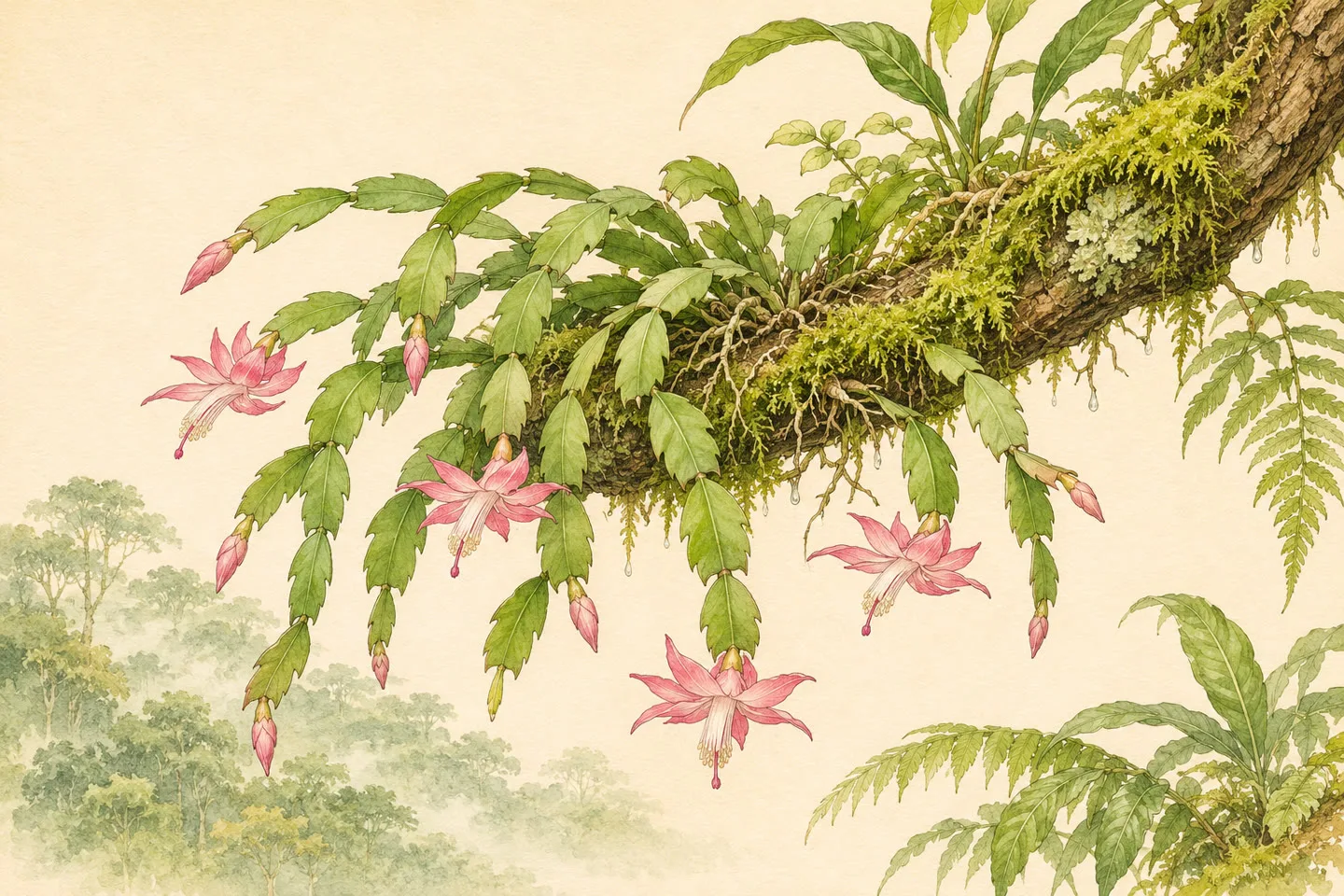
That habitat explains both halves of the rule. The roots want water often, so a month without it leaves the segments thin and wrinkled. They also want air, so soil that stays wet for days suffocates them. Moist, then nearly dry, then moist again is the rhythm the plant evolved for.
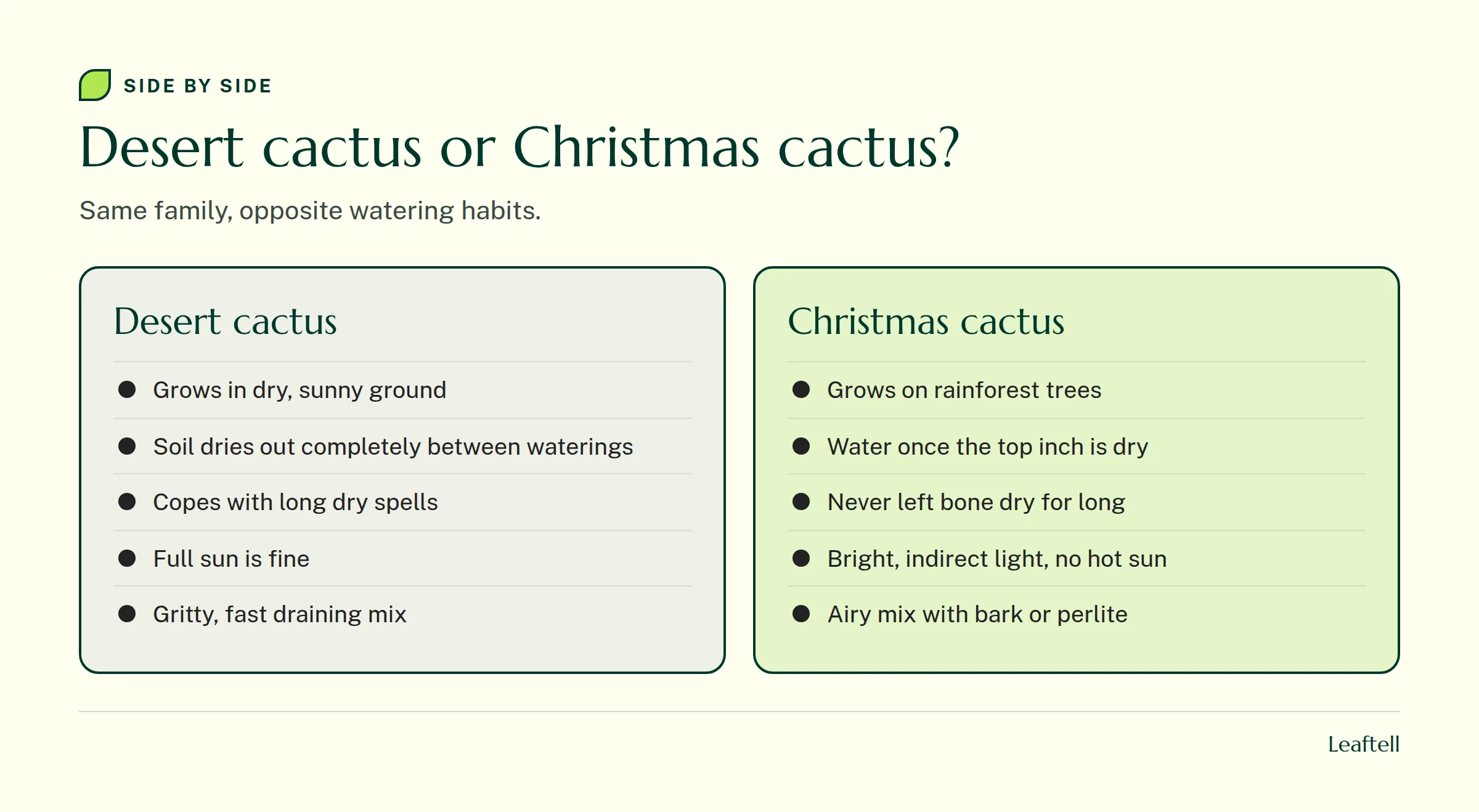
If you grow true desert cacti or succulents as well, keep them on a separate routine. Our succulent plant care guide covers the soak and dry method that suits them and would slowly starve a Christmas cactus.
How to water a Christmas cactus properly
Water thoroughly and then leave it alone until the top inch dries again. Small daily sips keep the surface damp and the bottom of the pot soggy, which is the worst of both.
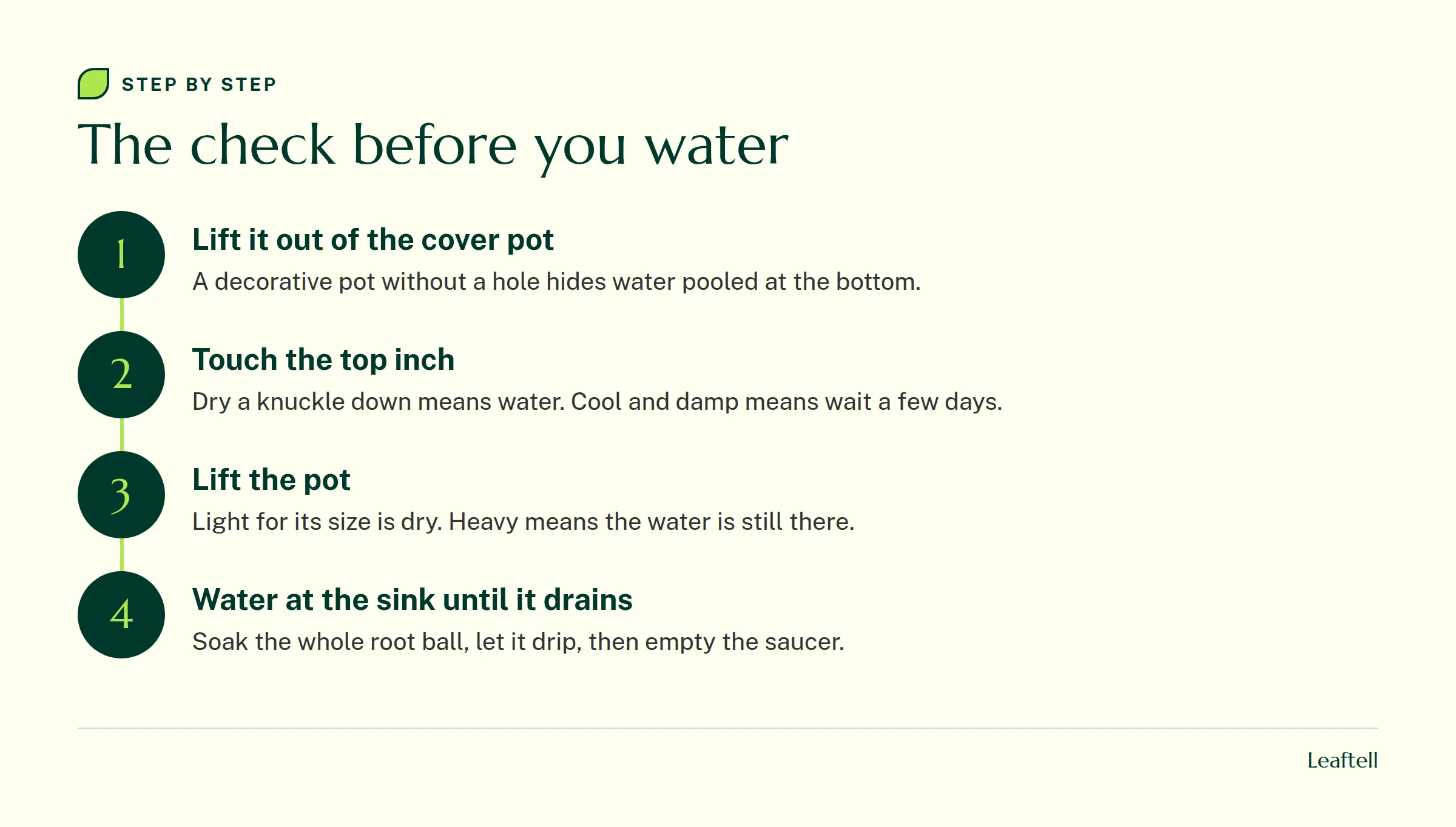
How to water a Christmas cactus
- Check the top inch first
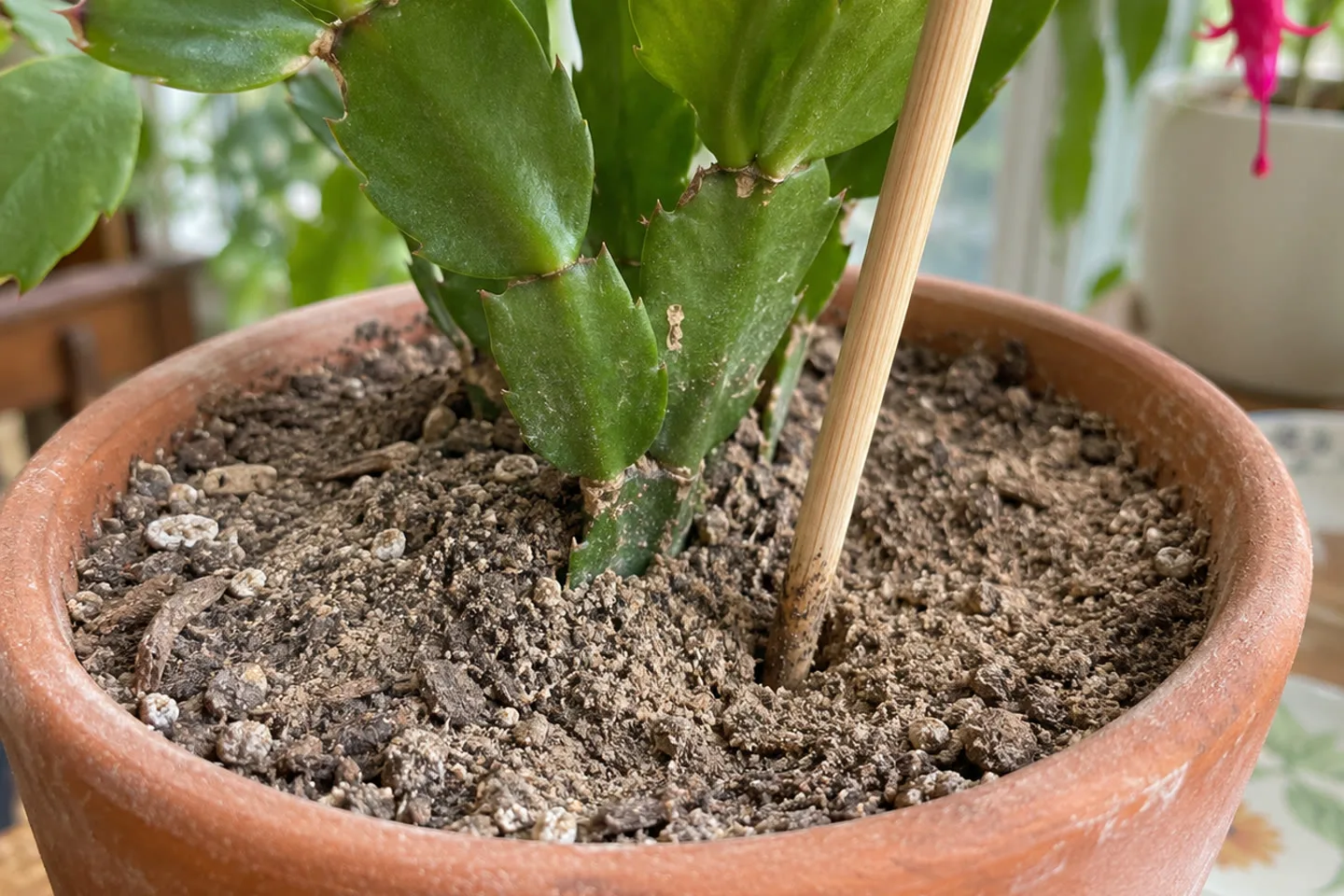
Push a finger or a wooden chopstick an inch into the mix. Dry and crumbly means water today. Cool, dark and damp means wait and check again in a few days.
- Take it out of the cover pot
Most holiday plants come in a thin plastic nursery pot hidden inside a ceramic pot with no drainage hole. Lift the nursery pot out so the water has somewhere to go.
- Water at the sink until it drains
Pour room temperature water slowly over the whole surface until it runs out of the holes at the bottom. A single soak wets the whole root ball; a splash only wets the top.
- Let it drip, then put it back
Leave it in the sink for 10 to 15 minutes until it stops dripping. Return it to its cover pot or saucer and empty any water that collects there later.
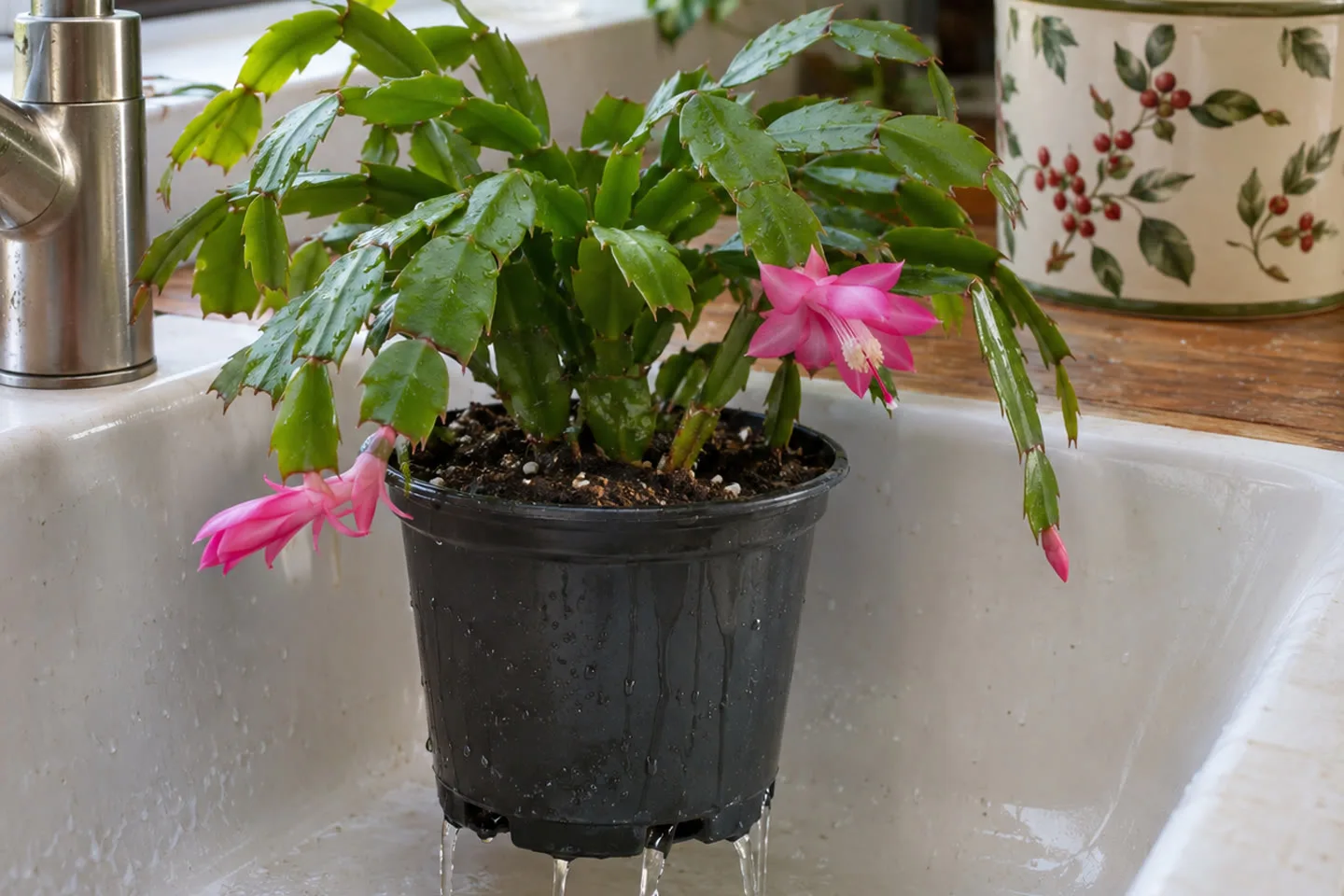
A useful habit: lift the pot right after watering so you learn what "wet" weighs, then lift it again a few days later. Once you know the difference, the weight tells you more than the surface does. Our guide on how to tell wet soil from dry before watering walks through the finger, weight and color checks in more detail.
Watering through the year
A Christmas cactus does not want the same amount of water in every season. The RHS describes two short rest periods with less water: one in autumn before the buds form and one after flowering. Between them it wants regular water, and while it is in bud and bloom it should never dry out completely.
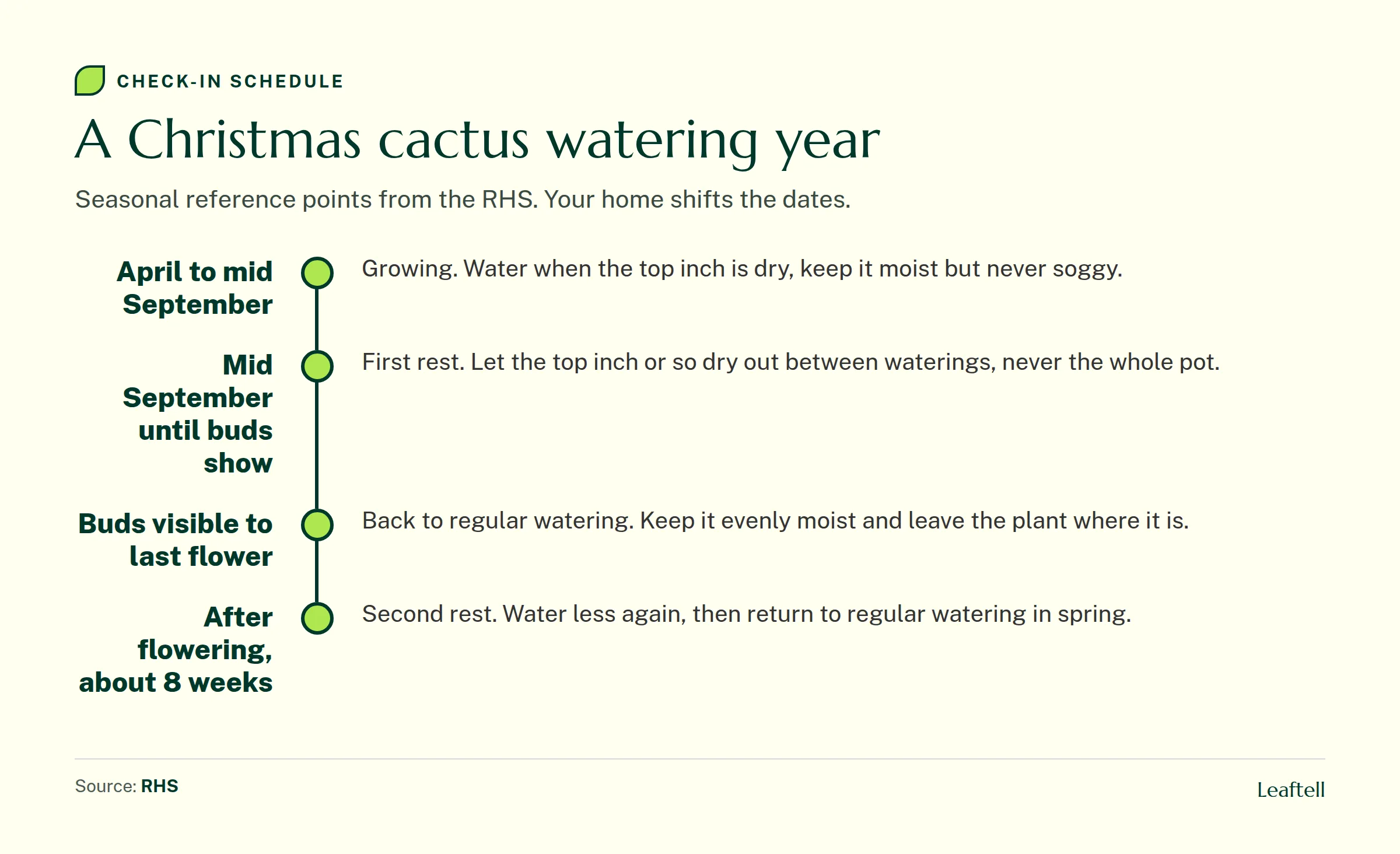
- Spring and summer. This is the growing season. Water whenever the top inch is dry and keep the mix moist but never soggy. If it summers outdoors in shade, check it far more often.
- Mid September until buds appear. Let the top inch or so dry out between waterings while long nights and cooler temperatures set the buds. Reduce, never stop: our Christmas cactus care guide explains why "stop watering" advice backfires.
- In bud and in flower. Go back to regular watering. Keep it evenly moist and keep it where it is. Buds are the most watering-sensitive stage of the whole year.
- After flowering. Water less again for about eight weeks while the plant rests in a cooler spot, then return to regular watering when new growth starts.
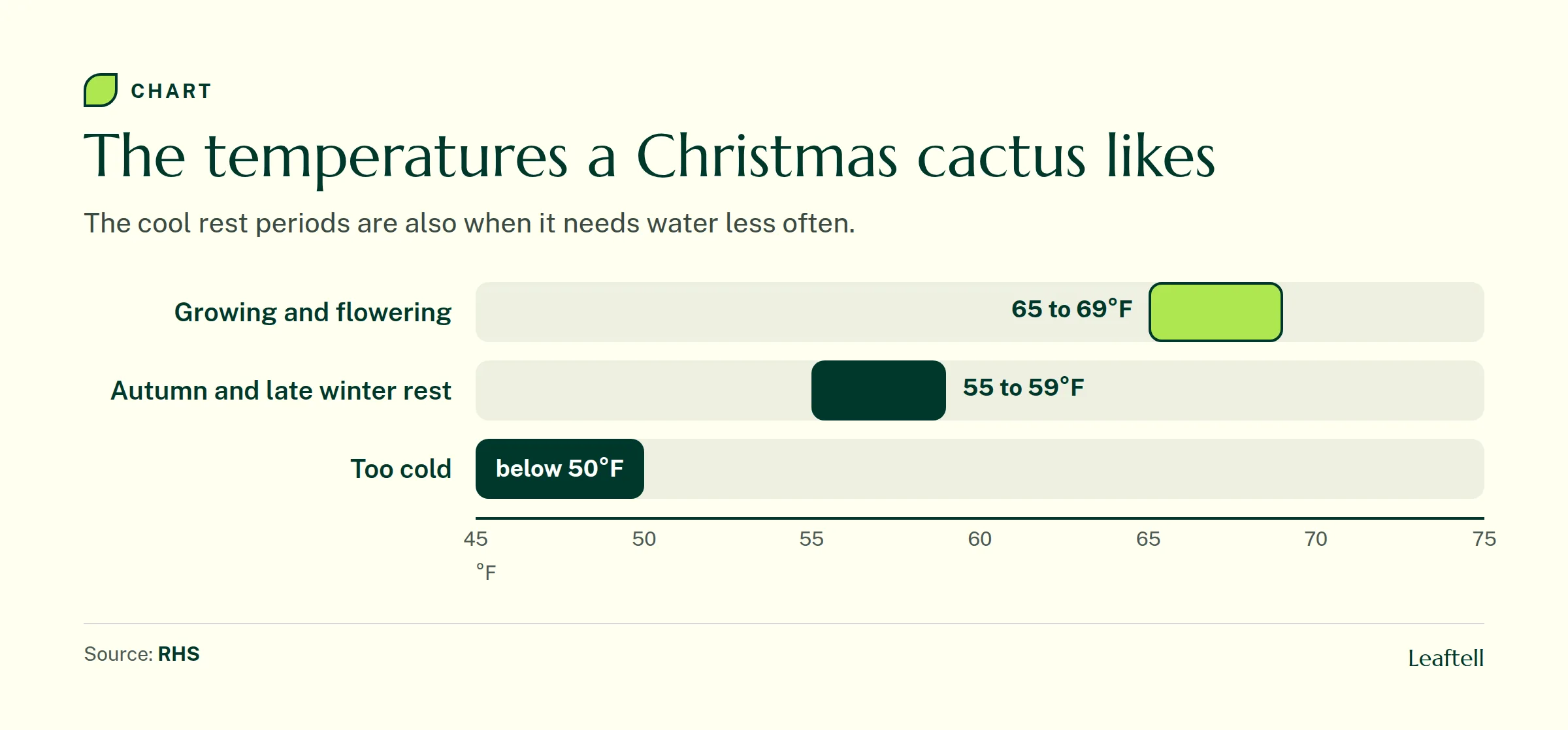
Temperature drives this. A plant resting at 55 to 59°F uses much less water than one in a 68°F living room, so it needs checking less often. Do not chase warmth by parking it near a radiator: heat dries the pot unevenly and dries the buds with it.
Why the buds drop
Bud drop is the classic December complaint, and watering is half the story. NC State Extension lists sudden temperature changes, drafts, low humidity and improper watering as the causes. In practice, the pattern is usually a plant that was allowed to go bone dry once its buds formed, or one that was moved from a cool bright window to a warm, dry spot.
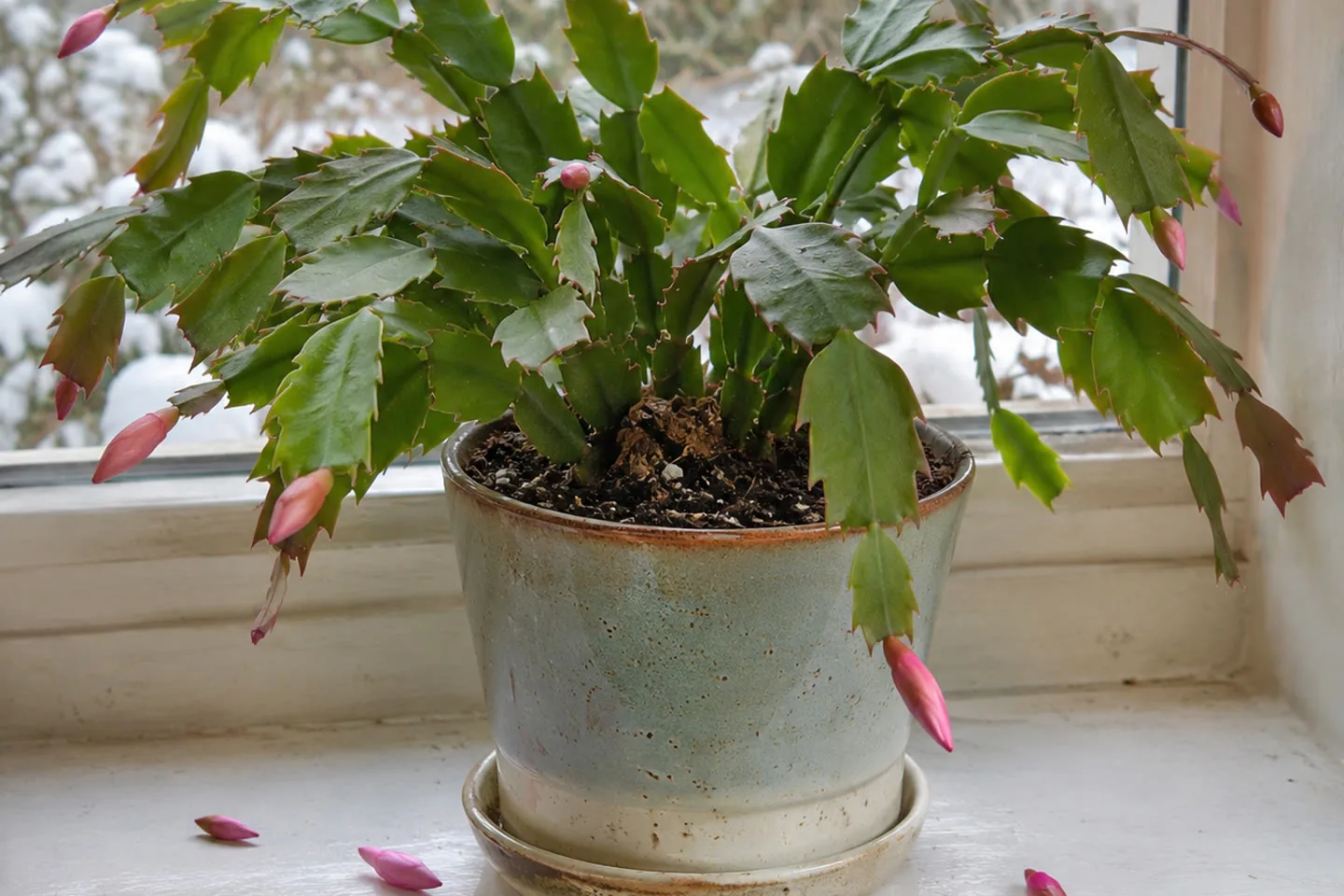
Keep the mix evenly moist from the moment you see buds, keep it out of drafts and away from heat vents, and leave it in the same place until it finishes flowering. If buds have already dropped, the remaining ones usually still open once the conditions settle.
Signs you are watering too much or too little
Both problems make the segments limp, so the plant alone will not tell you which one you have. The soil and the texture of the segments will.
Overwatered Christmas cactus
Segments turn soft, yellowish and slightly see-through, then drop off at the joints. The mix stays dark and wet for days and often smells sour, and water sits in the saucer or cover pot. In a bad case the base of the stems goes mushy.
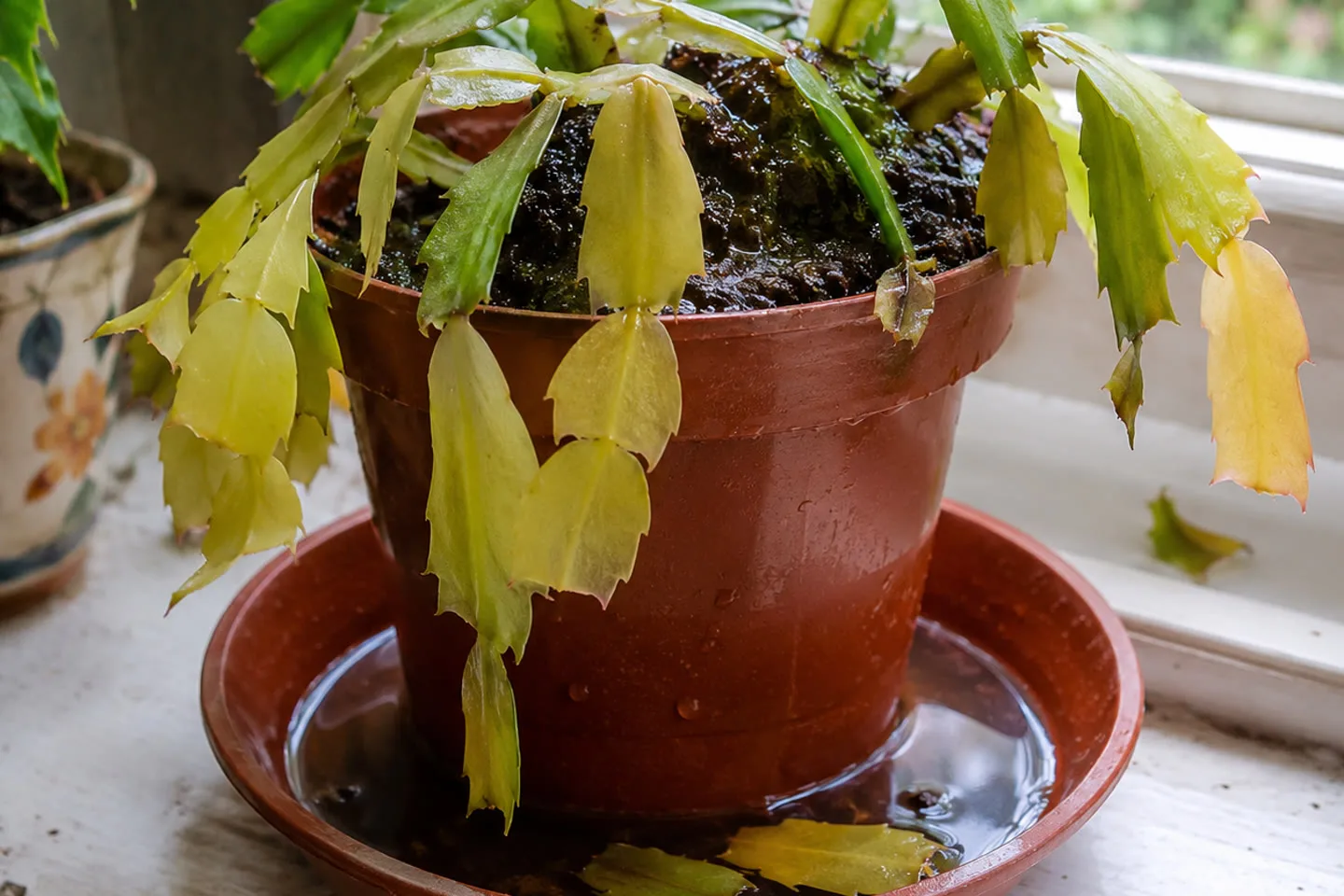
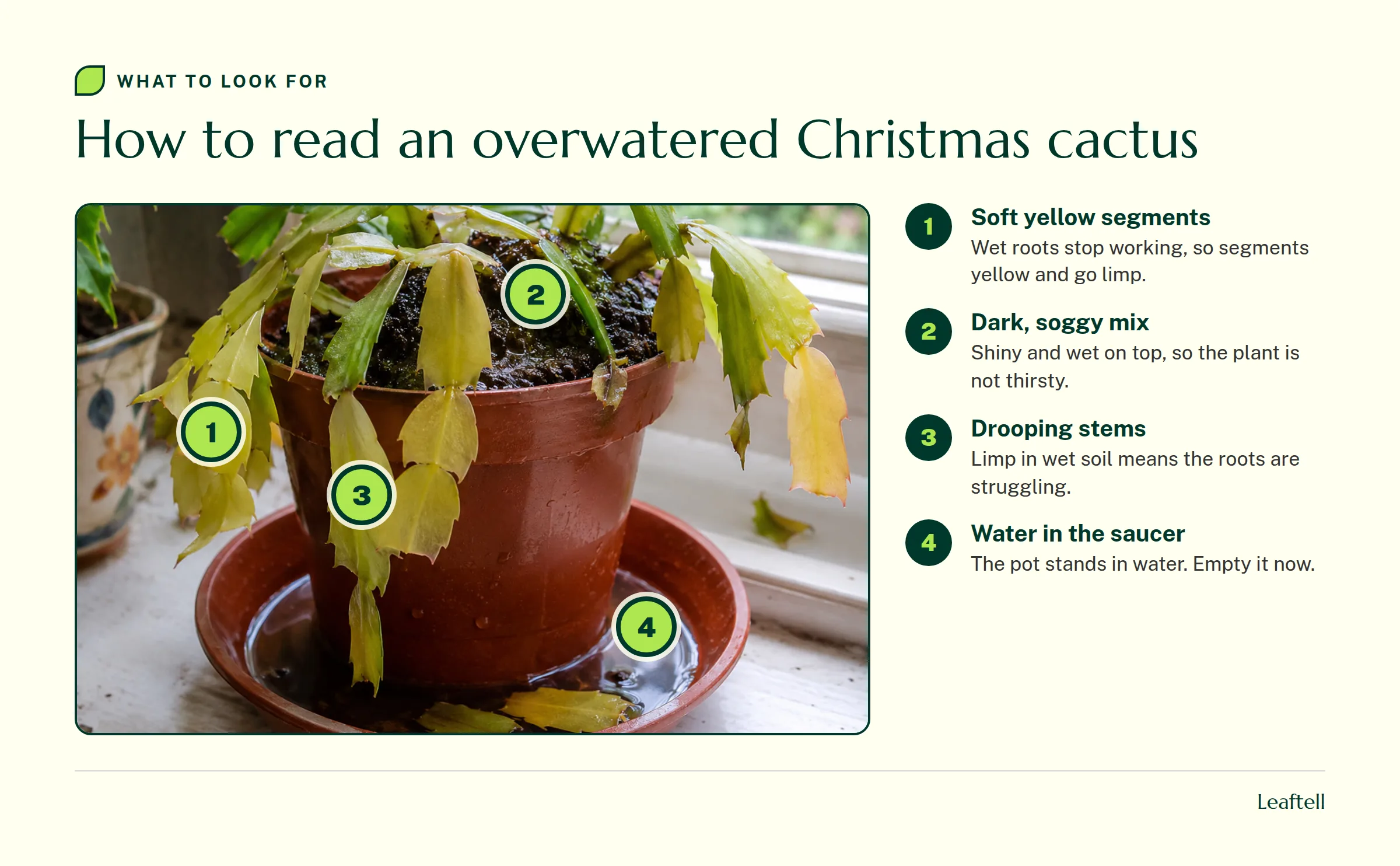
Stop watering, take it out of any cover pot and let the top inch dry before you water again. If it keeps collapsing, slide it out of the pot: firm, pale roots are fine, brown and mushy ones are rot. Our step by step guide on how to fix root rot covers trimming and repotting, and the wider list of overwatered plant symptoms helps if you are not sure.
Underwatered Christmas cactus
Segments go thin, wrinkled and limp, sometimes with a reddish or purple tinge. The pot feels light, and the mix looks pale and pulls away from the side of the pot. A thirsty plant usually firms up within a day or two of a good soak at the sink.
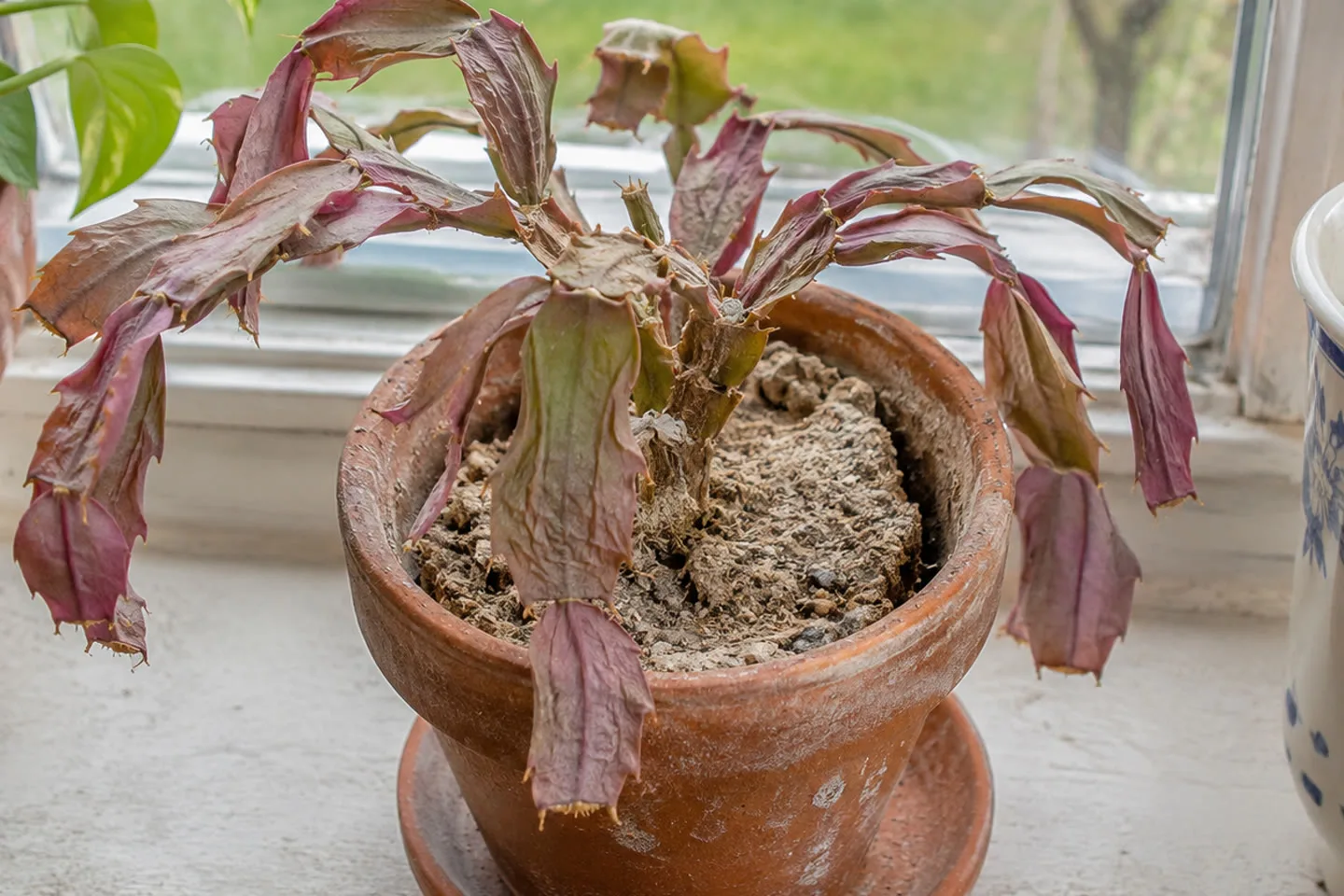
A reddish tinge on its own can also come from too much direct sun or cold, so check the soil before you change anything. If the soil checks out and the plant still sags, the guide to drooping plants walks through the other causes.
Not sure if your Christmas cactus is too wet, too dry or reacting to a draft? A photo of the whole plant and a close-up of the limp segments is a good place to start.
Soil and pot change everything
How often you need to water depends as much on the pot as on the plant. NC State recommends a moist, well-drained, airy potting medium, and the RHS suggests cactus or loam-based compost with added grit. A dense, peaty mix in a big pot holds water for a week or more, which is exactly the condition that rots epiphytic roots.
- Keep it snug. Christmas cacti like a small pot. A pot much bigger than the roots holds wet mix the roots cannot reach.
- Drainage hole, always. If you love a cover pot without a hole, use it as a sleeve only and tip it out after every watering.
- Clay or plastic. Terracotta dries faster and suits heavy-handed waterers. Plastic holds water longer and suits people who forget.
If you want a fuller, bushier plant, the best moment is after flowering: twist off one to three segments from the stem tips once the rest period ends. Each break point tends to branch, and the pieces root easily in barely moist mix. Watering the cuttings follows the same rule, only lighter. The poinsettia watering guide covers the other holiday plant on the windowsill, which is far less forgiving of wet soil.
The short answer
Check a Christmas cactus every few days, water when the top inch of soil is dry, soak it until it drains and never leave it standing in water. Keep it evenly moist while it is in bud and flower, and give it less water during the cool autumn and late winter rests. The pot matters more than the date: a drainage hole and a snug, airy mix prevent most problems.
If your plant is limp or dropping segments and you cannot tell whether it wants more water or less, check your Christmas cactus in Leaftell with a photo of the whole plant, a close-up of the limp segments and a note on how the soil feels an inch down. Take a fresh photo about seven days later as a check-in reminder and compare the newest segments.
Check your growing conditions with the plant watering calculator.
Frequently asked questions
Push a finger or wooden chopstick an inch into the mix. If it comes out dry and clean, water. If it is cool, damp or has soil sticking to it, wait a few days. A light pot and thin, wrinkled segments also point to thirst.
Stop watering, empty the saucer or cover pot and let the top inch of mix dry out before the next drink. If segments keep going soft and dropping, check the roots and trim any brown, mushy ones before repotting into fresh, airy mix with a drainage hole.
Yes. Keep the mix evenly moist while it is in bud and in flower, watering whenever the top inch dries. Letting it go bone dry at this stage is a common reason buds drop before they open.
They like humid air, and the RHS suggests misting and a tray of damp gravel. Misting only raises humidity briefly, so a gravel tray with the pot sitting above the water lasts longer. Neither one replaces watering the soil.
After it finishes flowering and rests, twist off one to three segments from the stem tips. The stems usually branch at the break, and the removed pieces root easily, so you can tuck them back into the same pot for a fuller plant.
Share article
About the author

Keep checking your plant
Plant care reference
Indoor plant care
Build a routine around your plant, light and potting mix.
Plant care reference
Why is my plant dying
Trace leaf and root symptoms before choosing a care change.
Plant care reference
Pothos plant care
Choose a growing spot and prune a trailing pothos for fuller growth.
Plant care reference
How to fix root rot
Inspect root firmness and drainage, then decide whether to repot.