Why Is My Spider Plant Drooping? Check the Roots First
Filip Leszczyński 6 November 2026 13 min read
In this article
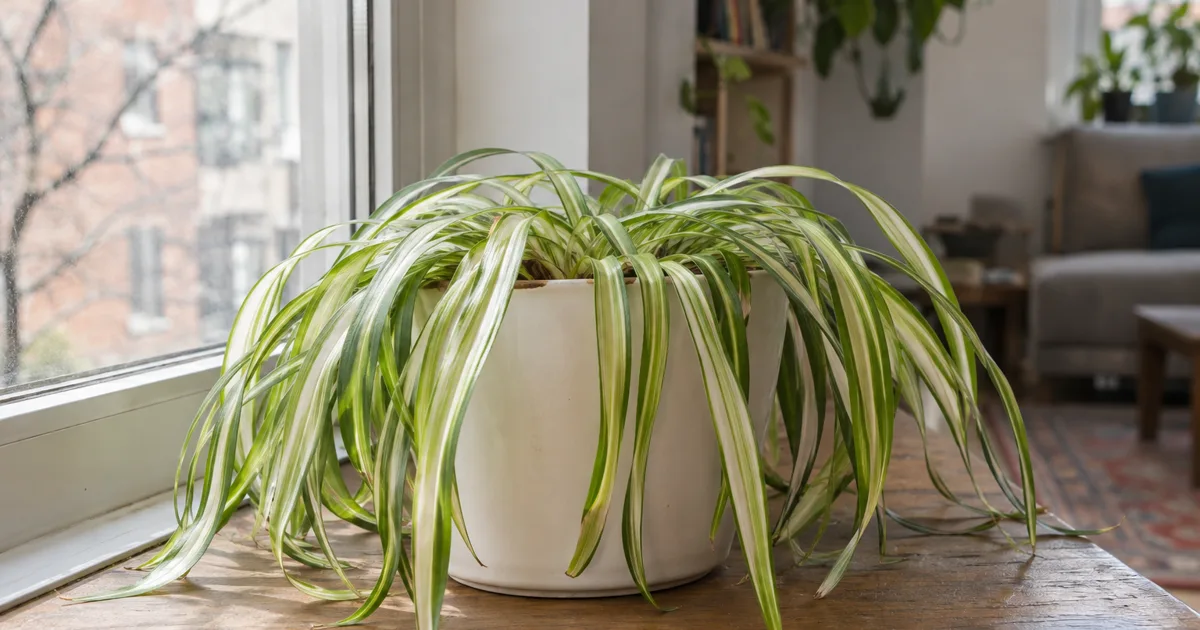
A drooping spider plant is usually short of water at the roots, even if you have been watering it. Either the soil has dried out completely, or the pot is so packed with thick white roots that there is no soil left to hold water. Soggy soil, harsh sun, a dark corner, cold and a fresh repot cause the rest.
The thing most guides miss: spider plants store water in fleshy, tuber-like roots, so they droop late. By the time the leaves go limp, the plant has been dry for a while, or its roots cannot take up water at all. That makes the roots, not the leaves, the place to look first. Lift the pot, feel the soil, and if that does not explain it, slide the plant out and look.
Start with the pot: weight, soil and roots
Three checks sort almost every drooping spider plant in under five minutes. Do them in this order, because each one is quicker than the next.
- Lift the pot. A pot that feels light for its size is dry. One that feels heavy and the leaves still droop points away from thirst.
- Push a finger 2 inches into the soil. Dry, damp or soggy tells you most of the story. Our guide to checking whether a plant needs water shows the finger test in detail.
- Look at the drainage hole and the roots. White roots poking out of the hole, or a plant that sits higher in the pot than it used to, means it is root-bound.
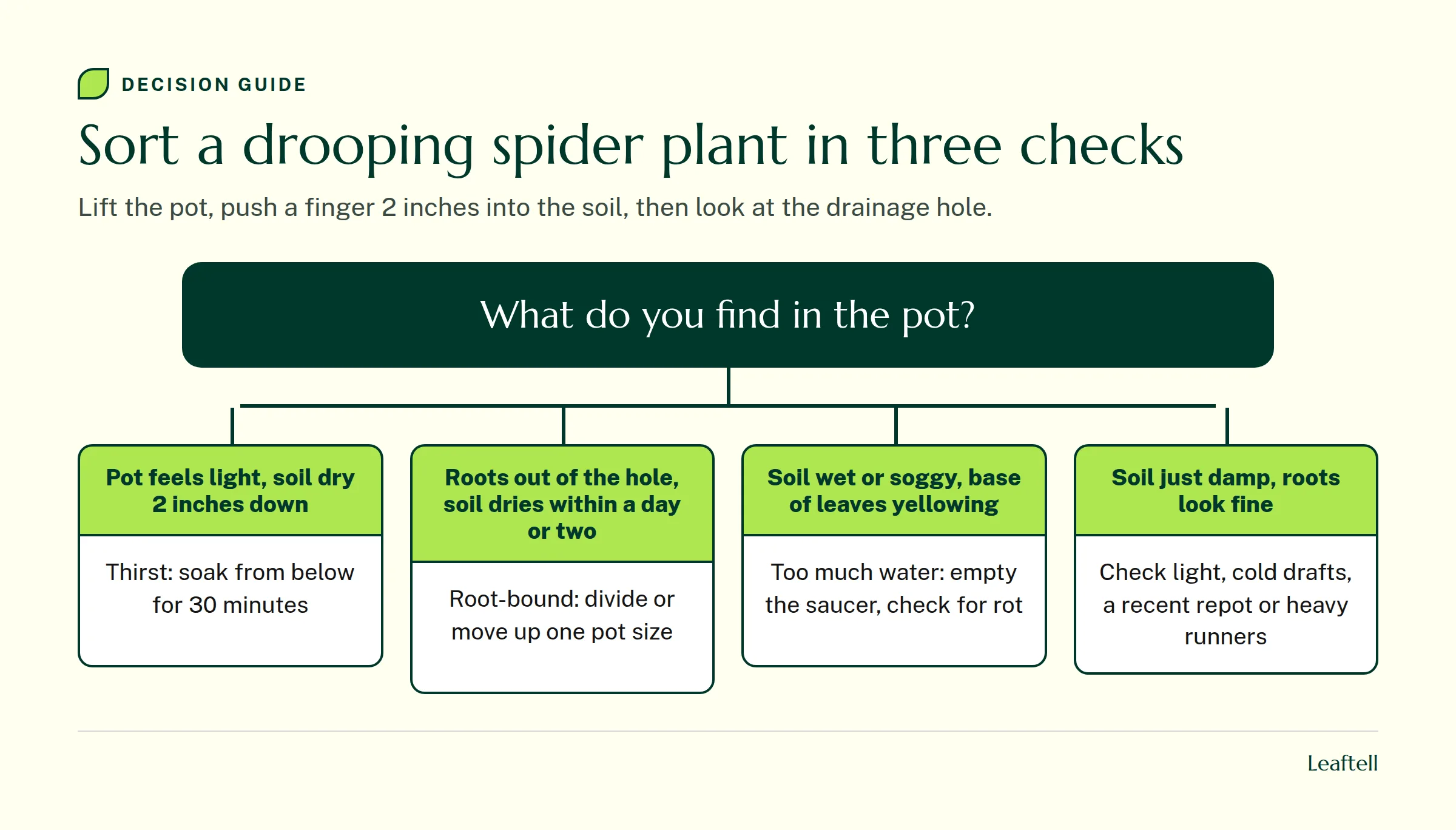
Why is my spider plant drooping? The causes at a glance
The table pairs each cause with what the soil and roots look like, so you can match your plant before you change anything.
| Cause | Soil at 2 inches | Leaves | Roots | First move |
|---|---|---|---|---|
| Thirst | Dry, pulling from the pot edge | Limp, flat, dull, may crease | Firm, white | Soak the pot from below |
| Root-bound pot | Dries within a day or two of watering | Limp soon after watering | Solid mat of thick white roots | Divide or move up one pot size |
| Too much water | Wet or soggy | Limp, yellowing at the base | Brown, soft, smelly | Stop watering, check for rot |
| Harsh direct sun | Often dry | Pale, washed out, bleached patches | Usually fine | Move back from the glass |
| Too little light | Damp for a long time | Long, thin, pale, floppy | Usually fine | Move closer to a bright window |
| Cold or a draft | Damp | Limp, darker, sometimes glassy | Usually fine | Move away from cold glass or vents |
| Fresh repot | Damp | Limp for a few days | Recently disturbed | Bright shade, steady moisture |
| Heavy runners | Any | Whole plant leans one way | Fine | Turn the pot, trim or root babies |
Thirst: the slow, late droop
A thirsty spider plant does not wilt overnight. Its roots hold water, so it keeps going on its own reserves, then the leaves go limp, flatten out and lose their shine all at once. Leaves often fold at a crease partway along. The soil is dry well below the surface and has usually shrunk away from the side of the pot.
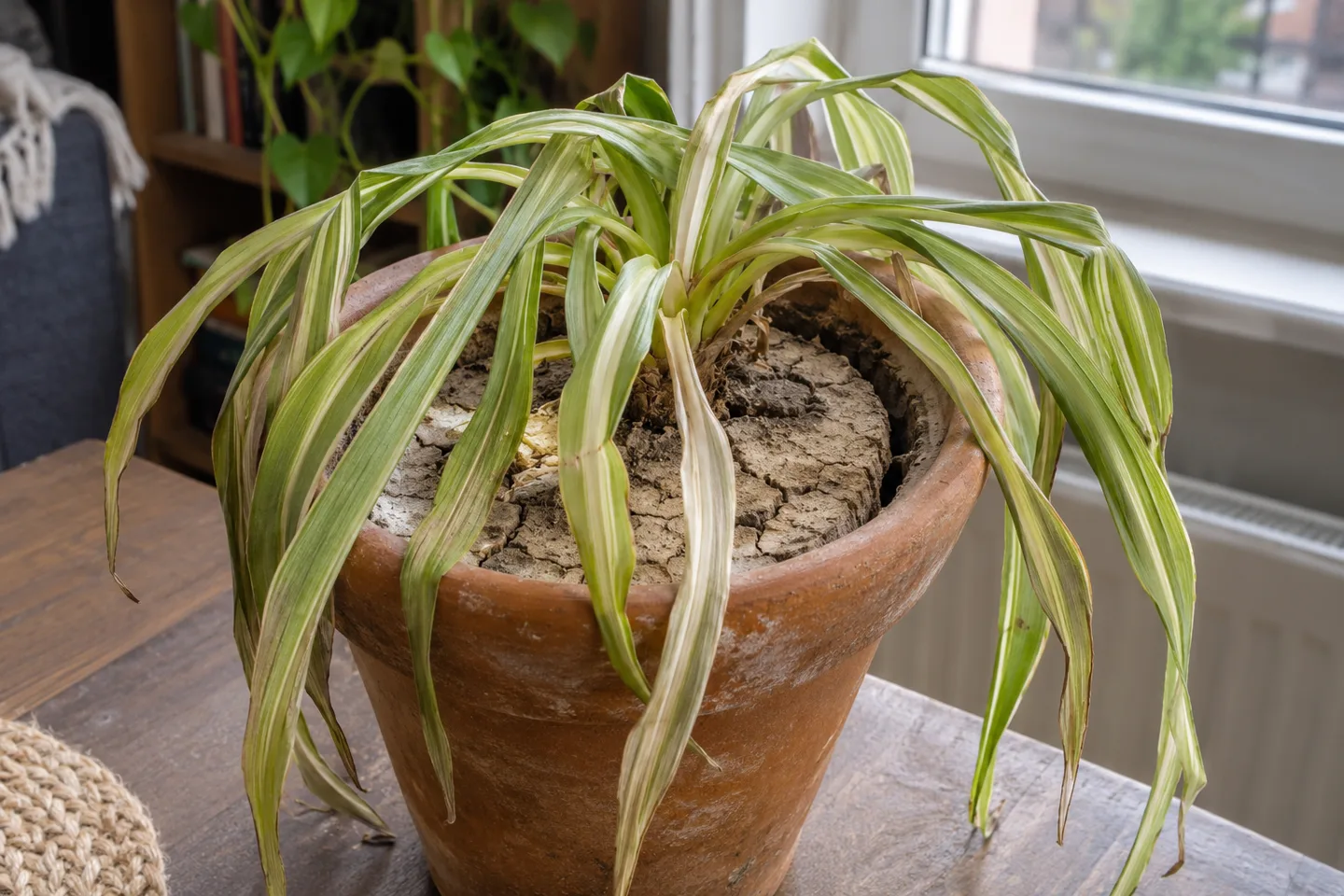
The fix is a slow, thorough soak. Dry potting mix repels water at first, so a quick splash runs straight down the gap at the edge and out of the hole.
- Stand the pot in a bowl or sink with 2 to 3 inches of room-temperature water.
- Leave it for about 30 minutes, until the surface of the soil darkens.
- Lift it out and let it drain fully. Never leave it sitting in the water.
Most thirsty spider plants firm up within a day. If yours is still limp after two days in damp soil, thirst was not the whole story, so move on to the root check below.
Root-bound: watered regularly and still drooping
This is the cause people miss most. Spider plants fill their pots with thick, white, water-storing roots faster than most houseplants. Over time those roots push the soil out until the pot is mostly roots. Water then runs straight through, the plant dries out within a day or two, and it droops even though you water on time.
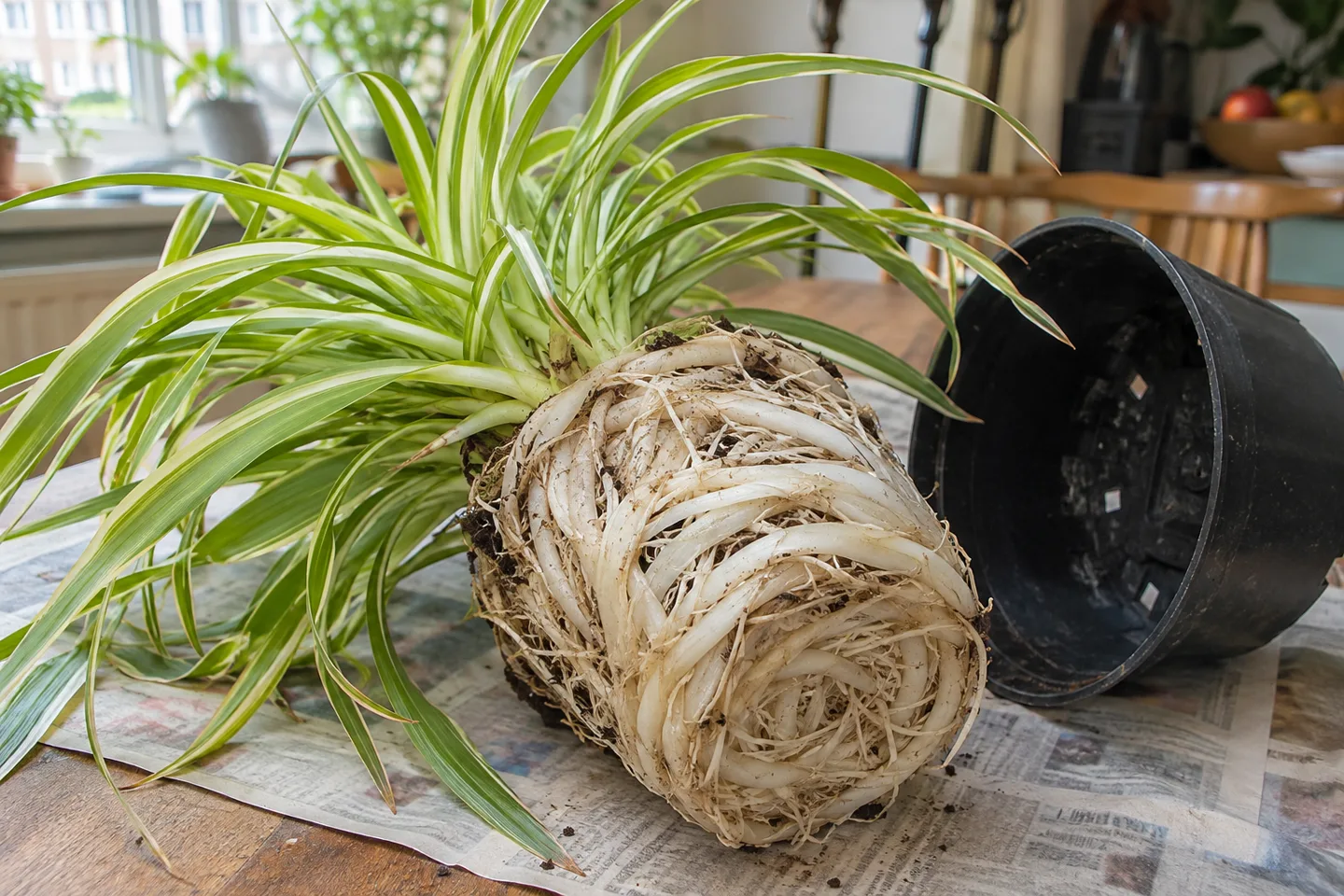
Signs your spider plant is root-bound:
- White roots growing out of the drainage hole or across the soil surface.
- The crown sitting higher in the pot than it used to, or a plastic pot bulging or splitting.
- Water pouring out of the hole almost as fast as you add it.
The fix is to give the roots soil again. Either move the plant up one pot size (about 2 inches wider), or divide it into two or three clumps and pot each one separately. Use a free-draining potting mix; our potting mix guide for indoor plants covers what to look for. Our spider plant care guide explains when a spider plant actually needs a bigger pot, so you do not repot one that is merely a little snug.
How to check and fix a drooping spider plant's roots
- Water the day before
Lightly moist roots slide out of the pot more easily and tear less than dry ones.
- Ease the plant out
Tip the pot on its side, hold the base of the leaves and squeeze or tap the pot until the root ball slides free. Cut a cracked plastic pot away rather than pulling hard on the leaves.
- Read the roots
Healthy spider plant roots are firm, white or cream and plump. Brown, soft roots that smear or smell sour are rotting.
- Trim and loosen
Cut off any mushy roots with clean scissors. Tease apart the outer roots of a tight root ball with your fingers so they can grow into new soil.
- Repot at the same depth
Set the plant in fresh mix at the same depth it grew before, in a pot with a drainage hole. Water once so the soil settles, then let the top inch dry before you water again.
Too much water: drooping in soggy soil
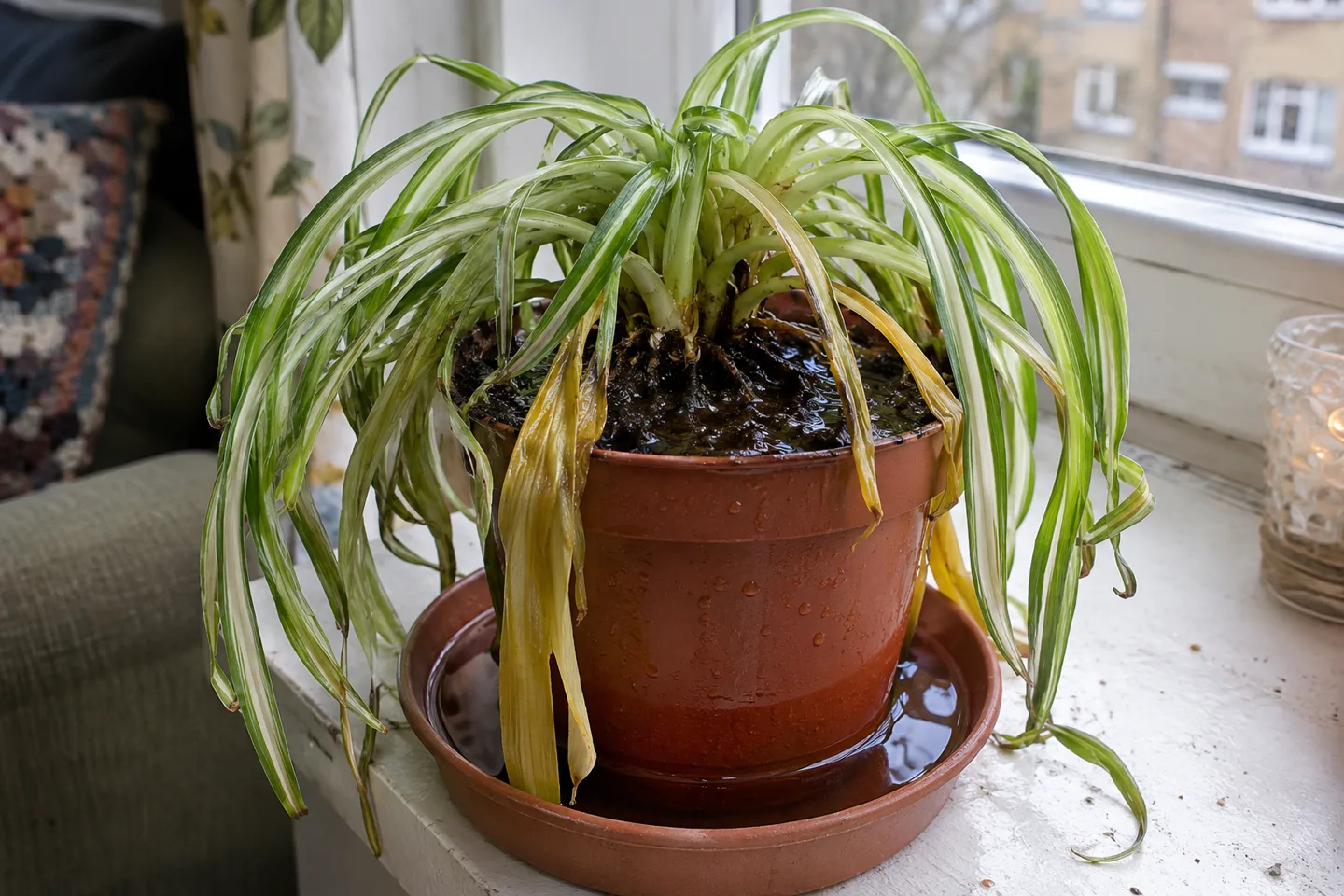
If the soil is wet and the leaves still droop, the roots are short of air, not water. Waterlogged soil suffocates them, and rotting roots cannot move water up to the leaves, so the plant looks thirsty while it sits in a puddle. Leaves usually yellow or turn glassy near the base first, and the soil may smell sour.
What to do:
- Empty the saucer and stop watering until the top 2 inches are dry.
- Check the pot has a drainage hole. A decorative pot without one is the most common cause of soggy roots.
- Slide the plant out if it is still limp once the soil has started to dry. Firm white roots will recover. Brown, mushy ones need trimming and fresh mix.
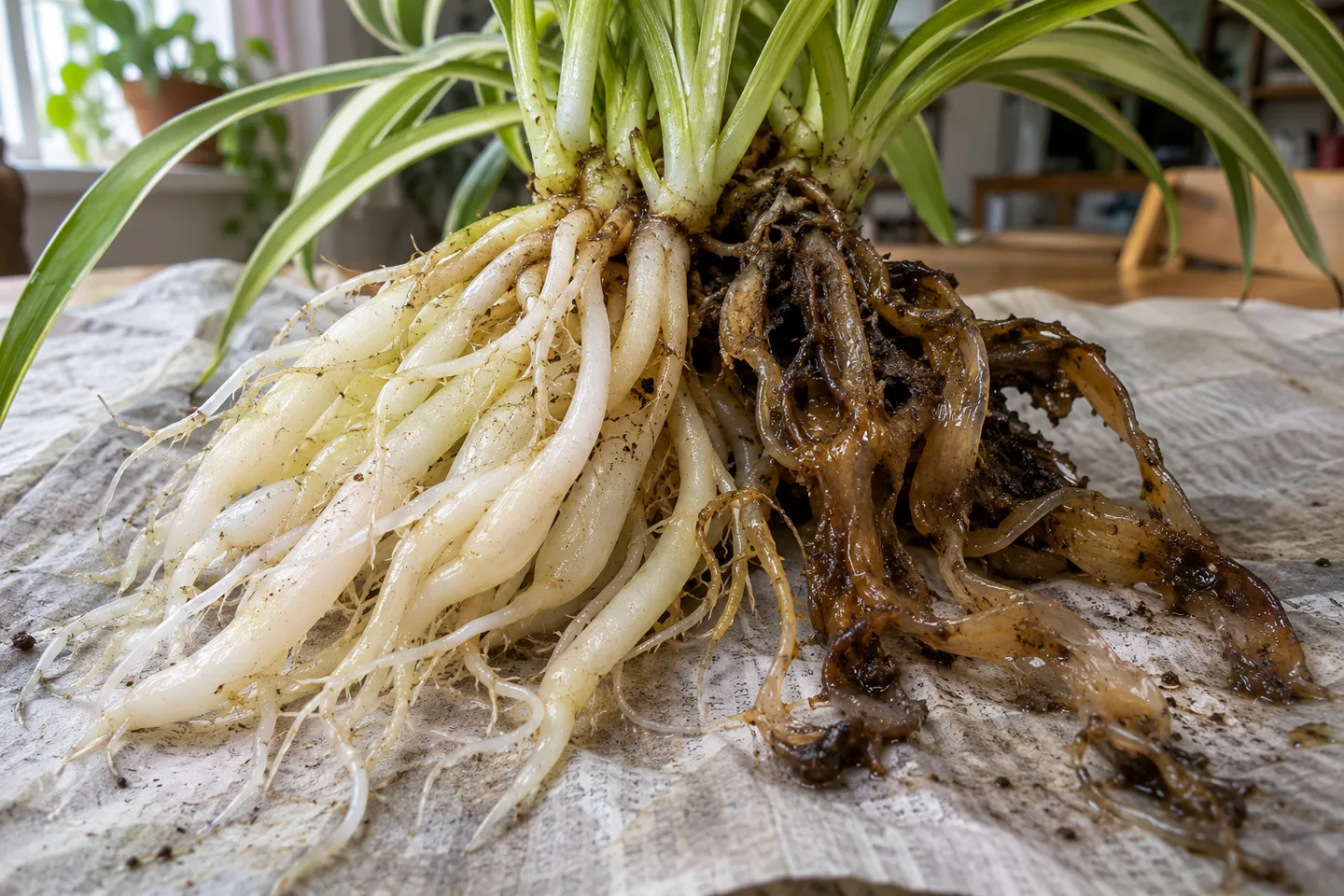
Our guide to overwatered plant symptoms explains the other signs, and the root rot rescue guide walks through trimming and repotting a badly rotted plant.
Light: too much sun or too little
Spider plants like bright, indirect light. They tolerate shade, but they do not handle hot direct sun well, and both ends of the range can make them droop in different ways. NC State Extension's plant profile describes spider plant as preferring medium light and being intolerant of direct sunlight.
Harsh direct sun
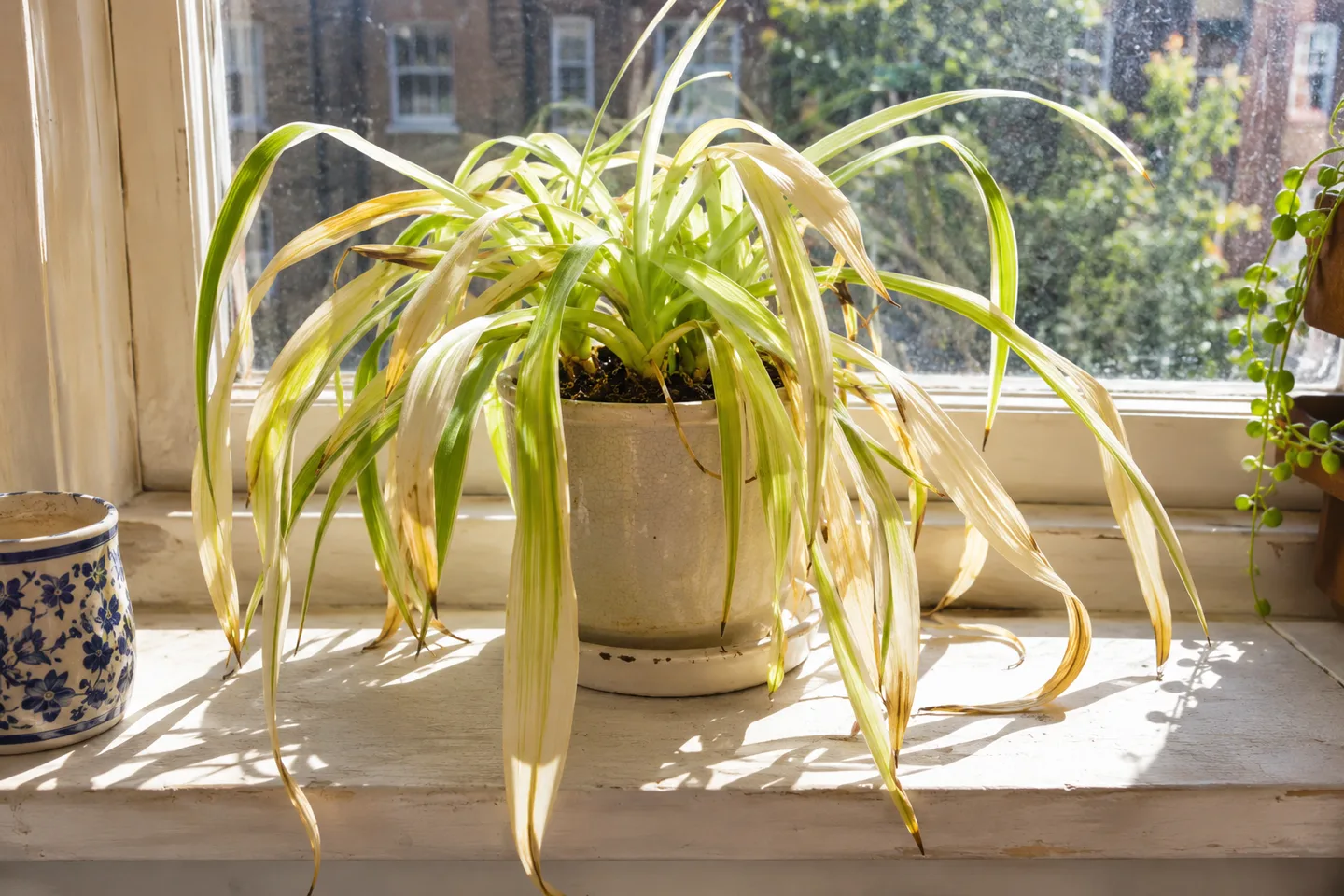
On a sunny windowsill behind hot glass, the leaves fade, bleach in patches and hang limp as the soil dries far faster than you expect. Move the plant a few feet back from the glass or behind a sheer curtain, water it if the soil is dry, and trim leaves that have bleached badly. They will not green up again, but new leaves will grow in normally.
Too little light
In a dim corner the droop looks different: leaves grow long, thin and pale, the white stripes fade, and the leaves flop over the rim because they are too weak to arch. The soil also stays wet for a long time, which adds the risk of rot. Move the plant closer to a bright window. Our guide to reading the light your plants get shows how to judge a spot without a meter.
Cold and drafts
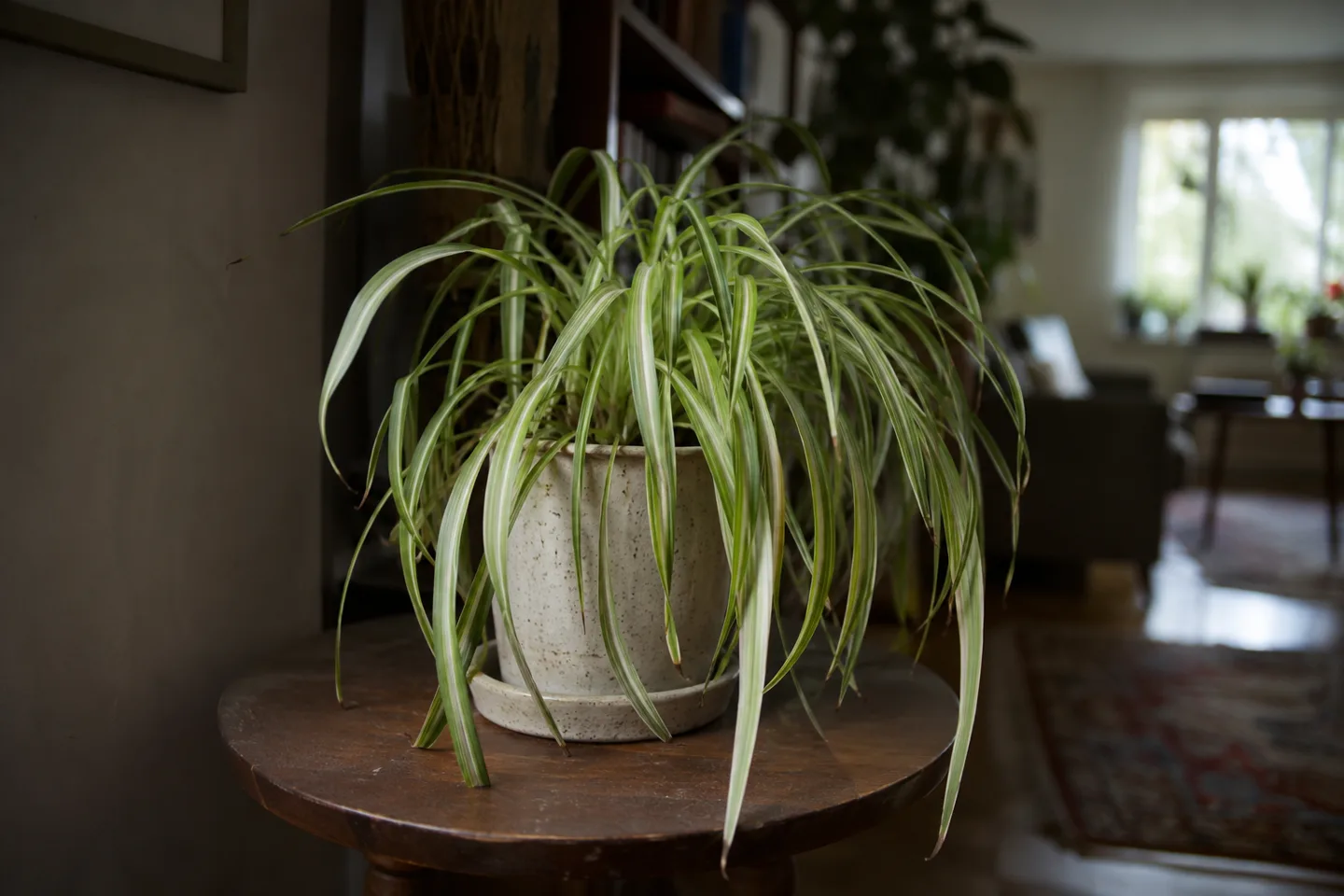
Spider plants are tropical, and NC State advises keeping them above 45°F. A plant pressed against a winter window, beside an outside door or in the path of an air conditioner can go limp and slightly glassy, often within a day or two of a cold snap. Move it somewhere steadier and let the soil dry a little more between waterings while it recovers. Leaves that went soft and translucent will not recover, so trim them once new growth appears.
Leaning to one side: runners and babies
A spider plant that suddenly flops to one side is often top-heavy rather than sick. Mature plants send out long runners carrying baby plants, and a cluster of them on one side can pull the whole plant over, especially in a light plastic pot. The leaves stay green and firm; it is the angle that has changed.
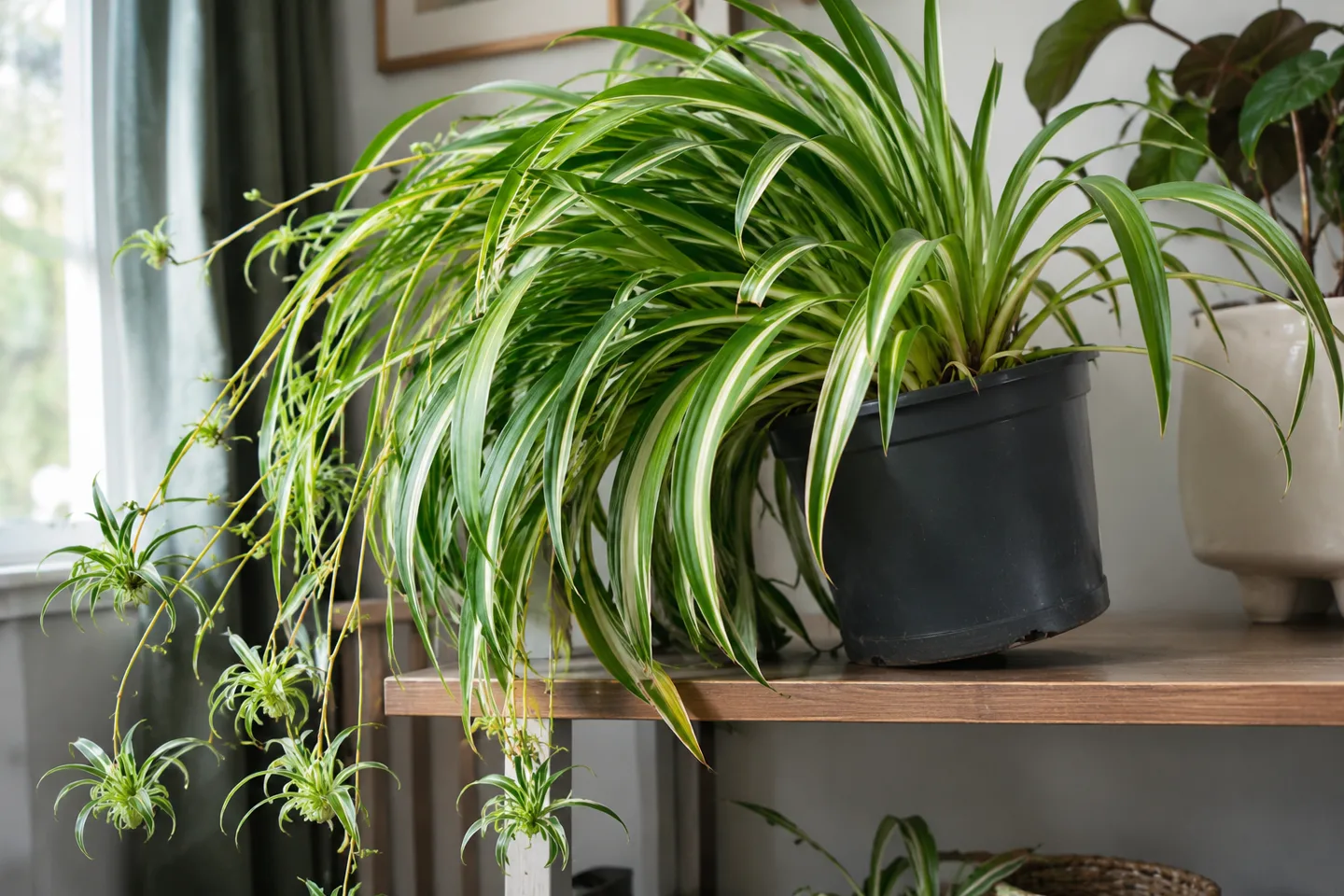
Turn the pot so the runners hang evenly, move it into a heavier pot or a hanging basket where the runners can cascade, or cut some runners off. Babies with small roots can be rooted into their own pots, which takes a few weeks in damp mix.
Drooping after repotting
A droop for a few days after repotting is normal. Some fine roots always break, and the plant needs time to grow new ones into the fresh mix. Keep it in bright, indirect light out of direct sun, keep the soil lightly moist but never soggy, and do not fertilize until it is standing up again.
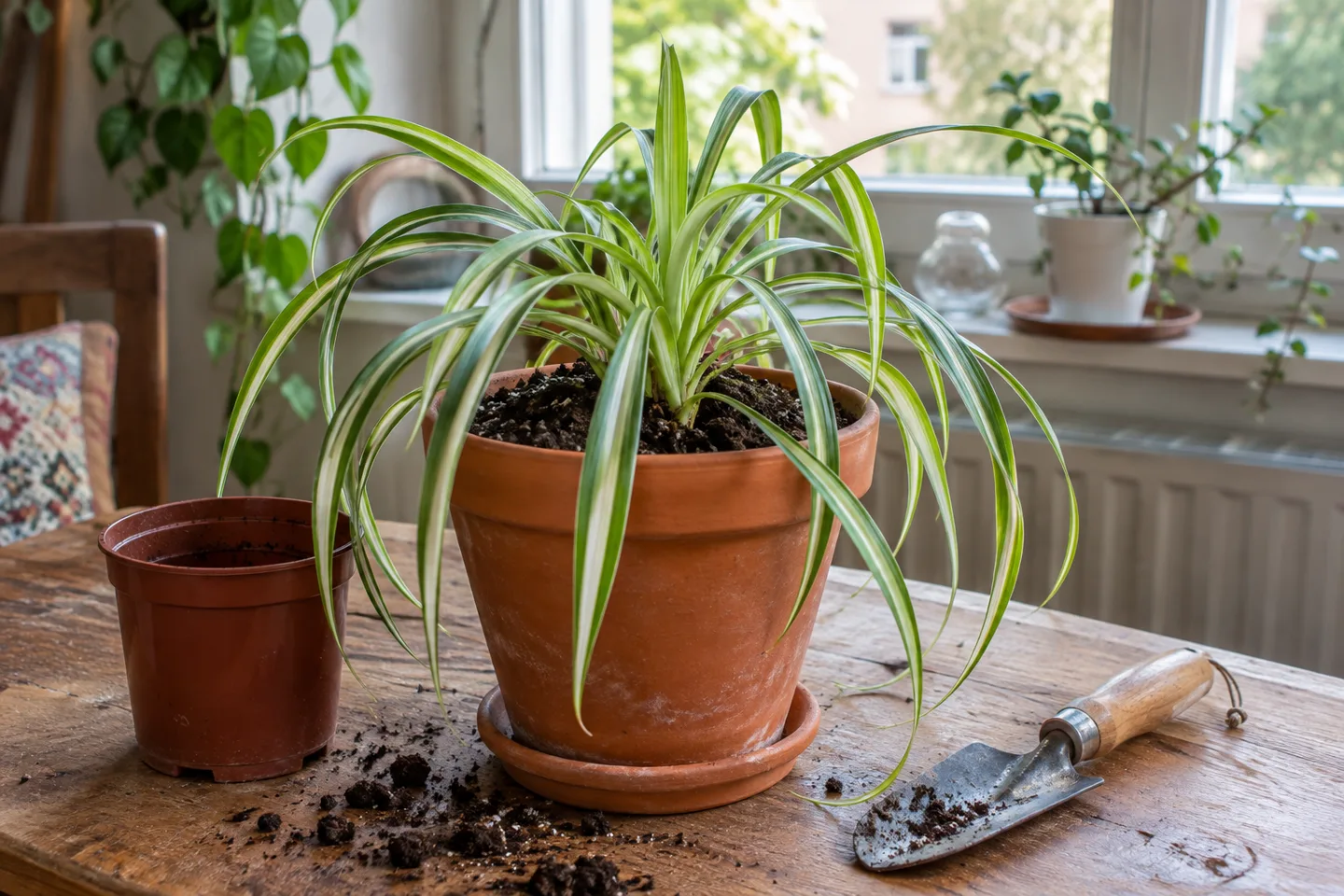
The mistake is drowning it. A newly repotted plant uses less water than before, because it has fewer working roots, and fresh mix in a bigger pot stays wet longer. If it is still limp after two weeks, slide it out and check the roots for rot.
Not a problem: normal arching and old leaves
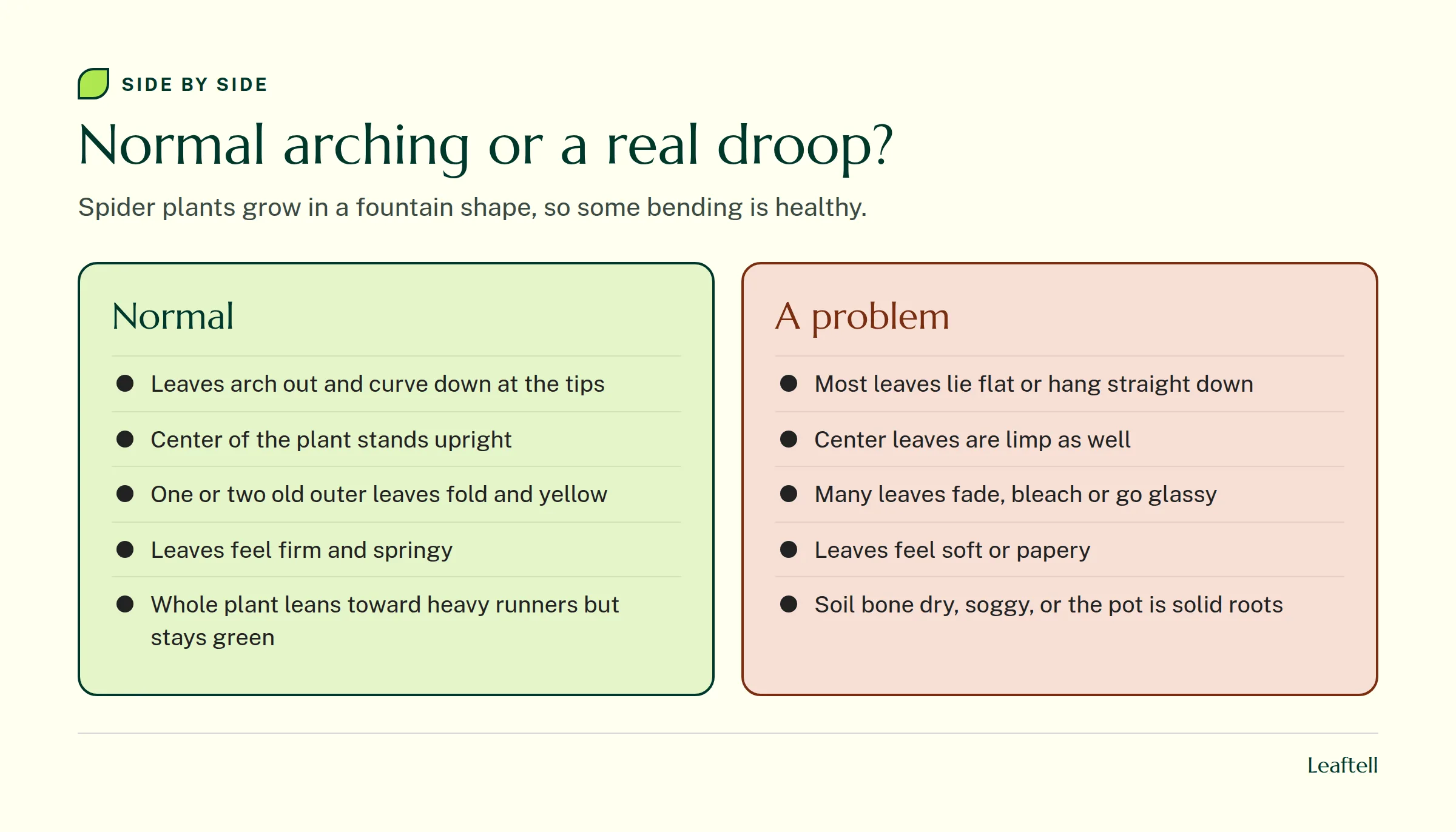
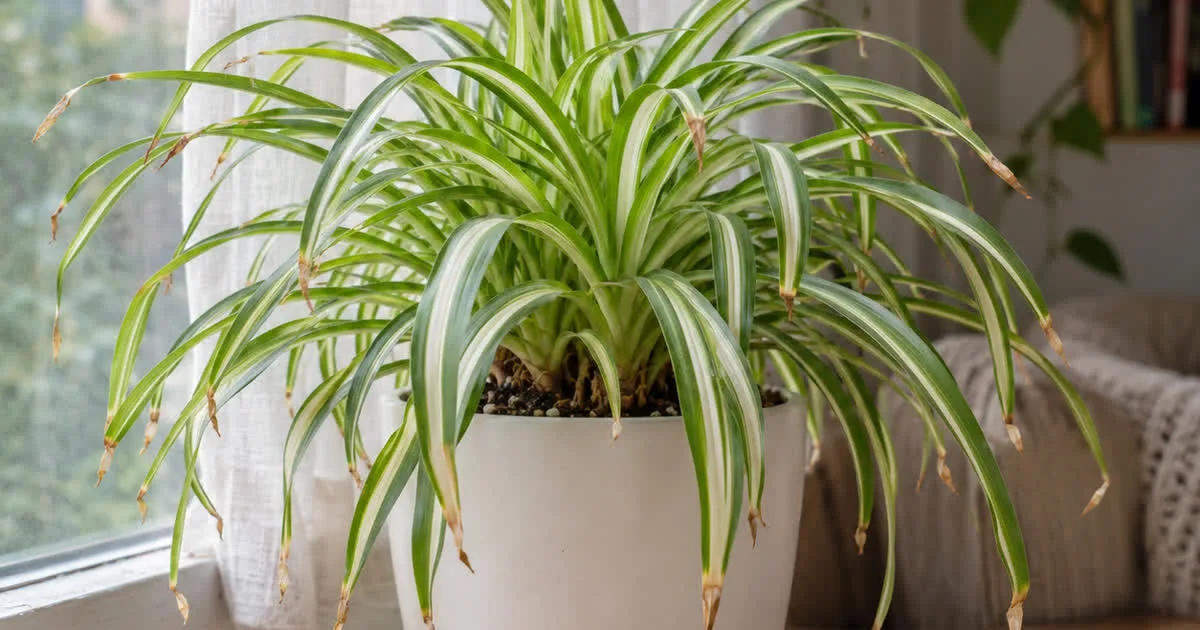
Not every bend is a droop. Spider plants naturally grow in an arching fountain, so long leaves curve down at the tips, and older outer leaves eventually fold, yellow and die back. One or two old leaves lying flat on the rim while the center of the plant stays upright is normal aging. Pull or cut those leaves off at the base.
If what you are seeing is brown, dry tips rather than limp leaves, that is a separate problem with its own causes; our guide to brown tips on leaves covers the patterns.
Is a drooping spider plant safe around pets?
Yes. Spider plant is listed as non-toxic to cats, dogs and horses on the ASPCA plant list. Cats often chew the leaves, and a chewed plant can look ragged, but the plant is not dangerous to them. Keep any fertilizer or potting mix additive out of reach, and follow the label.
Can a drooping spider plant recover?
Almost always. Spider plants are among the toughest houseplants, and their water-storing roots carry them through a lot. As long as the roots are still firm and white, the plant can recover, though leaves that have bleached, browned or gone glassy will not turn green again and are best trimmed.
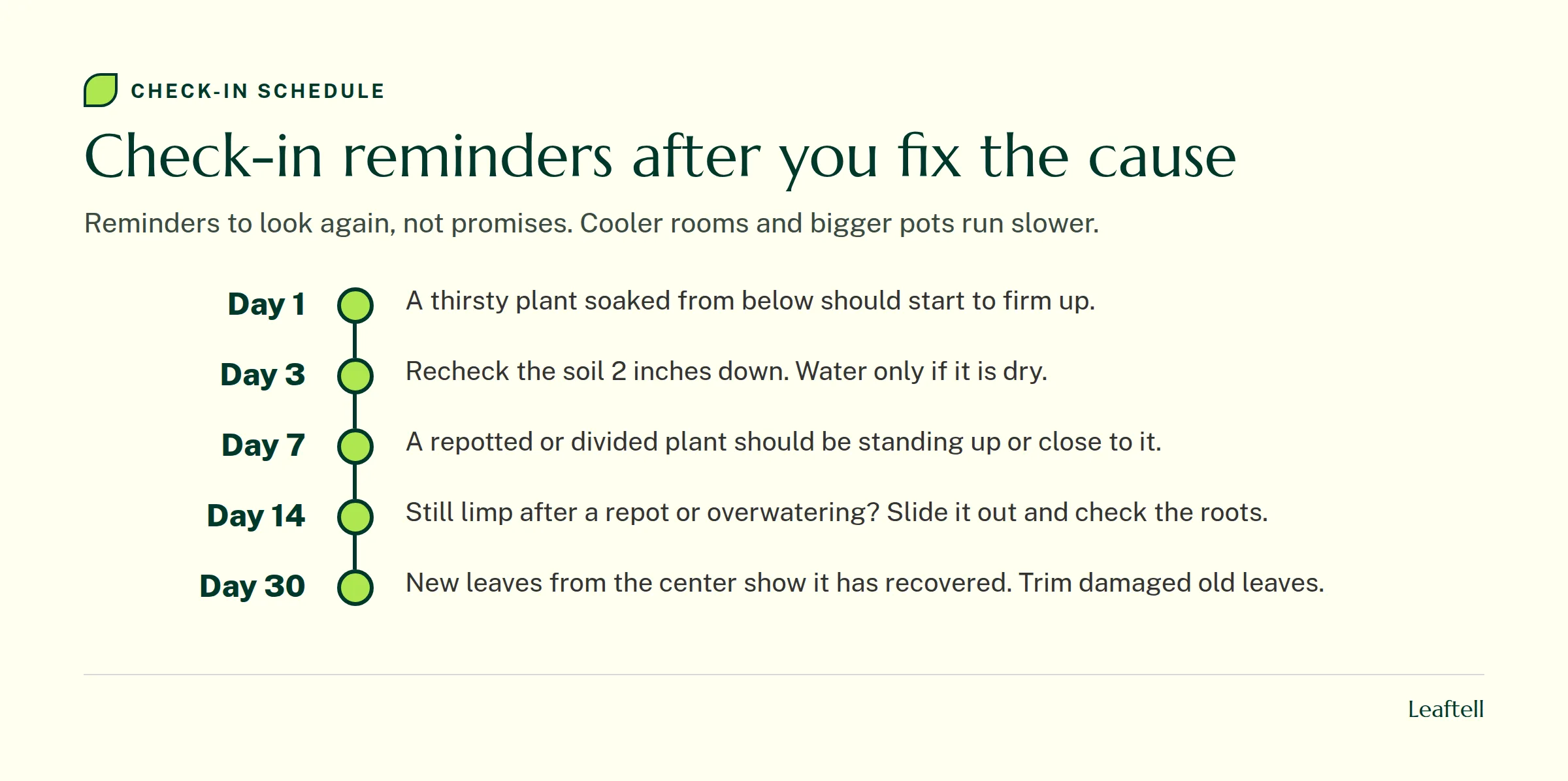
How fast it bounces back depends on the cause. A thirsty plant usually firms up within a day of a soak. A root-bound one perks up over the following week or two once it has fresh soil. An overwatered or rotted one is slowest, because it has to grow new roots first. Treat the dates below as check-in reminders, not promises.
Check your spider plant in Leaftell
If you cannot tell thirst from crowded roots, soggy soil or light trouble, check your spider plant in Leaftell. Send a photo of the whole plant, a close-up of the leaves near the base and one of the drainage hole, and note how the soil felt 2 inches down, since a photo cannot feel the soil. Then take a fresh photo in about a week as a check-in reminder and compare.
Check your growing conditions with the plant watering calculator.
Frequently asked questions
An unhealthy spider plant has limp or flat leaves instead of an arching fountain, faded or yellowing color, or leaves that are soft and glassy near the base. Look at the soil and roots as well: soggy soil and brown, mushy roots mean rot, while bone-dry soil or a pot packed with white roots means the plant is short of water.
Usually water, given properly: a 30 minute soak from below if the soil is dry, then full drainage. If the soil is already damp, do not add water or fertilizer. Check for a root-bound pot or rotting roots instead, and fix the light or temperature if those are the cause.
A thirsty spider plant usually firms up within a day of a thorough soak. After repotting or dividing, expect a week or two. An overwatered plant with root damage takes longest, because it needs to grow new roots before the leaves stand up again.
Yes, water once right after repotting so the fresh mix settles around the roots, and let the excess drain away. Then wait until the top inch of soil is dry before watering again, because a plant with freshly disturbed roots uses less water and is easy to overwater.
A spider plant that flops to one side with firm green leaves is usually top-heavy from runners and baby plants on that side, or it has outgrown a light pot. Turn the pot, move it into a heavier pot or trim some runners. If the leaves are limp as well, check the soil and roots for thirst or rot.
Share article
About the author

Keep checking your plant
Plant care reference
Indoor plant care
Build a routine around your plant, light and potting mix.
Plant care reference
Why is my plant dying
Trace leaf and root symptoms before choosing a care change.
Plant care reference
Pothos plant care
Choose a growing spot and prune a trailing pothos for fuller growth.
Plant care reference
How to fix root rot
Inspect root firmness and drainage, then decide whether to repot.