Prayer Plant Care Tips: Light, Water, Humidity and Brown Tips
Filip Leszczyński 13 November 2026 12 min read
In this article
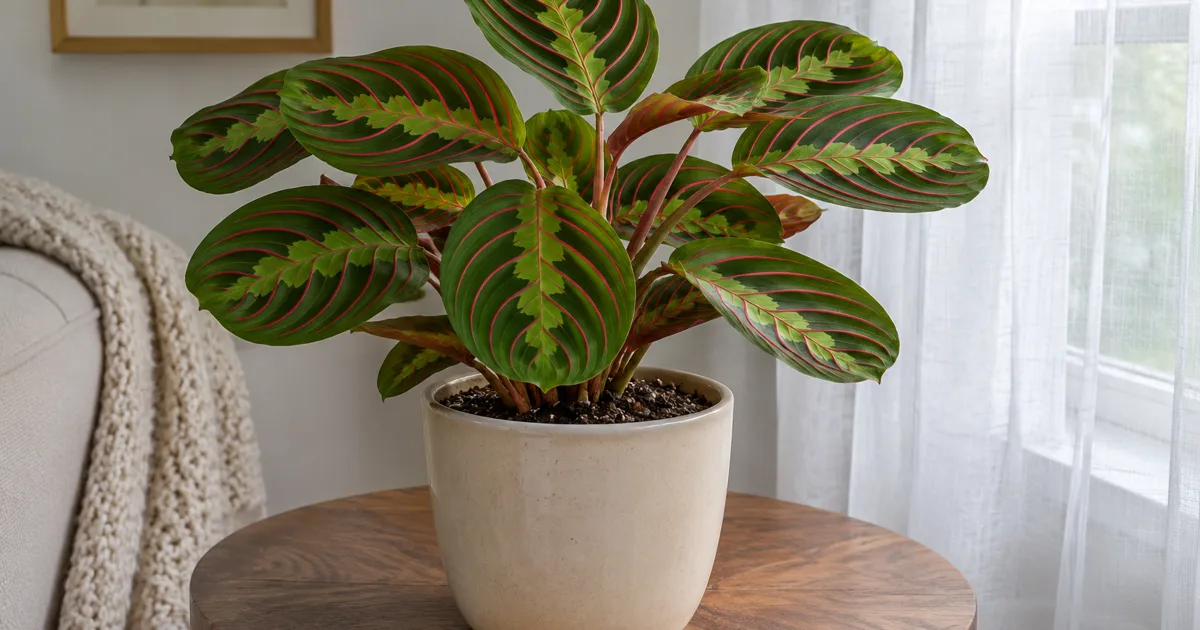
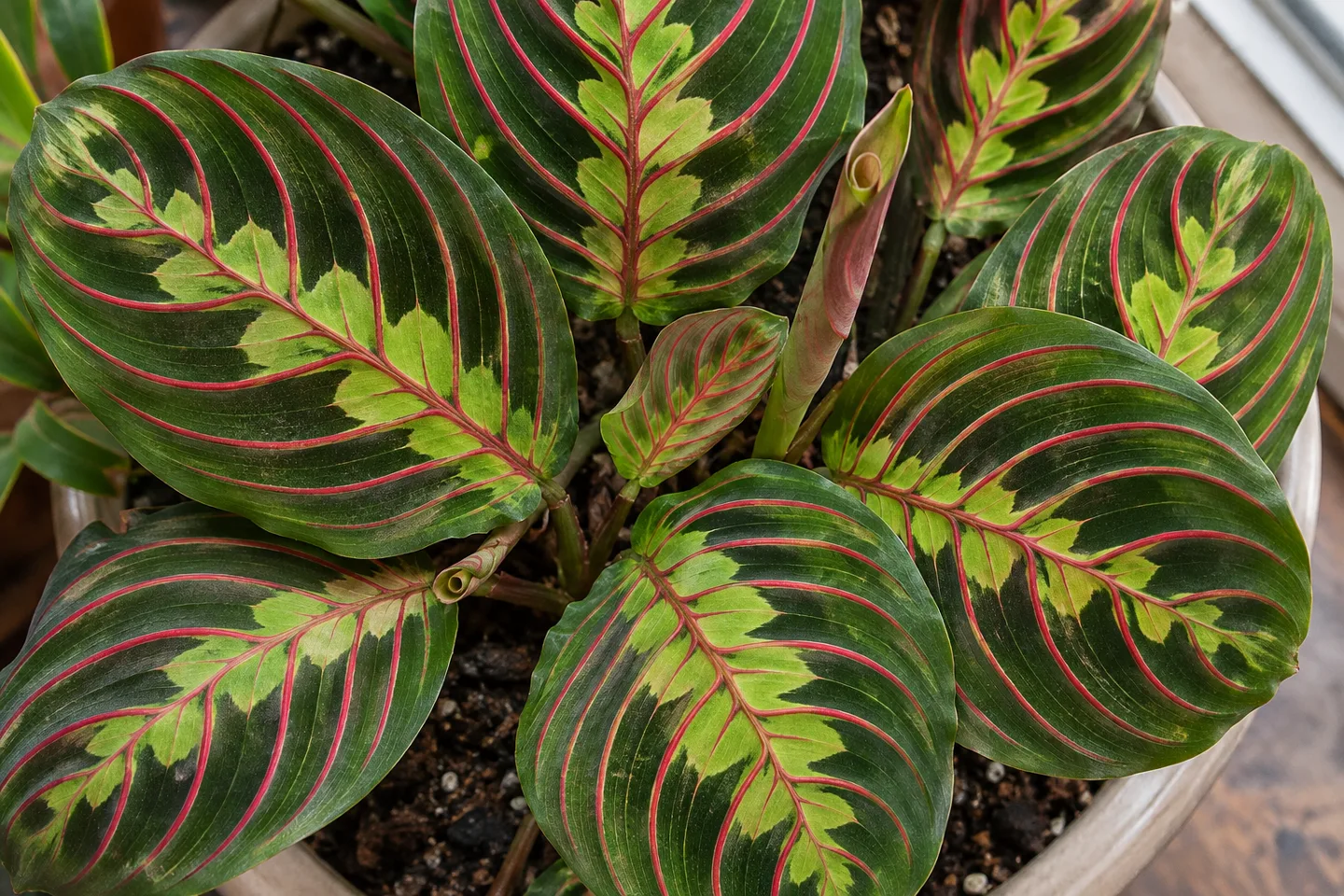
The best prayer plant care tips come down to three things: bright light that never hits the leaves directly, a mix that stays evenly moist instead of drying out, and air that is more humid than most homes. Get those right and a prayer plant (Maranta leuconeura) is easy; miss one and you get brown tips, curled leaves or faded color within a few weeks.
The useful part is that this plant tells you how it is doing. Its leaves lie flat by day and fold up at night, and when that daily rhythm breaks, or the tips start to crisp, you can usually read the cause straight off the leaf. This guide covers what to give it, what each warning sign means, and how to repot and propagate it.
Prayer plant care at a glance
| Need | What it wants | Sign it is off |
|---|---|---|
| Light | Bright, indirect; a few feet back from a window or behind a sheer curtain | Faded, bleached leaves (too much sun) or dull color and slow growth (too little) |
| Water | Evenly moist from spring to fall; top inch dries a little in winter | Curled leaves and crisp edges (too dry), yellowing in soggy mix (too wet) |
| Water quality | Rainwater, distilled or filtered water if your tap water is hard | Brown tips even when watering is on time |
| Humidity | Well above 50% | Brown edges, curling, spider mites |
| Temperature | 65 to 70°F, never below 55°F, no drafts | Curling or dropping leaves after a cold spell |
| Feeding | Liquid fertilizer every two weeks, March to September | Scorched tips from too much fertilizer |
| Pot | Shallow pot with a drainage hole, repotted every 1 to 2 years in spring | Water sitting on top, roots circling the pot |
The light, water, humidity, temperature and feeding figures follow the New York Botanical Garden's prayer plant guide. If you only fix one thing on that list, fix the watering rhythm: almost every problem below starts with a mix that swings between soaked and bone dry.
Why your prayer plant folds its leaves at night
A prayer plant raises its leaves to a near vertical "praying" position in the evening and lowers them flat again in the morning. It is normal, not a sign of thirst. A small joint at the base of each leaf blade (the pulvinus) shifts water to move the leaf, following the day and night cycle.
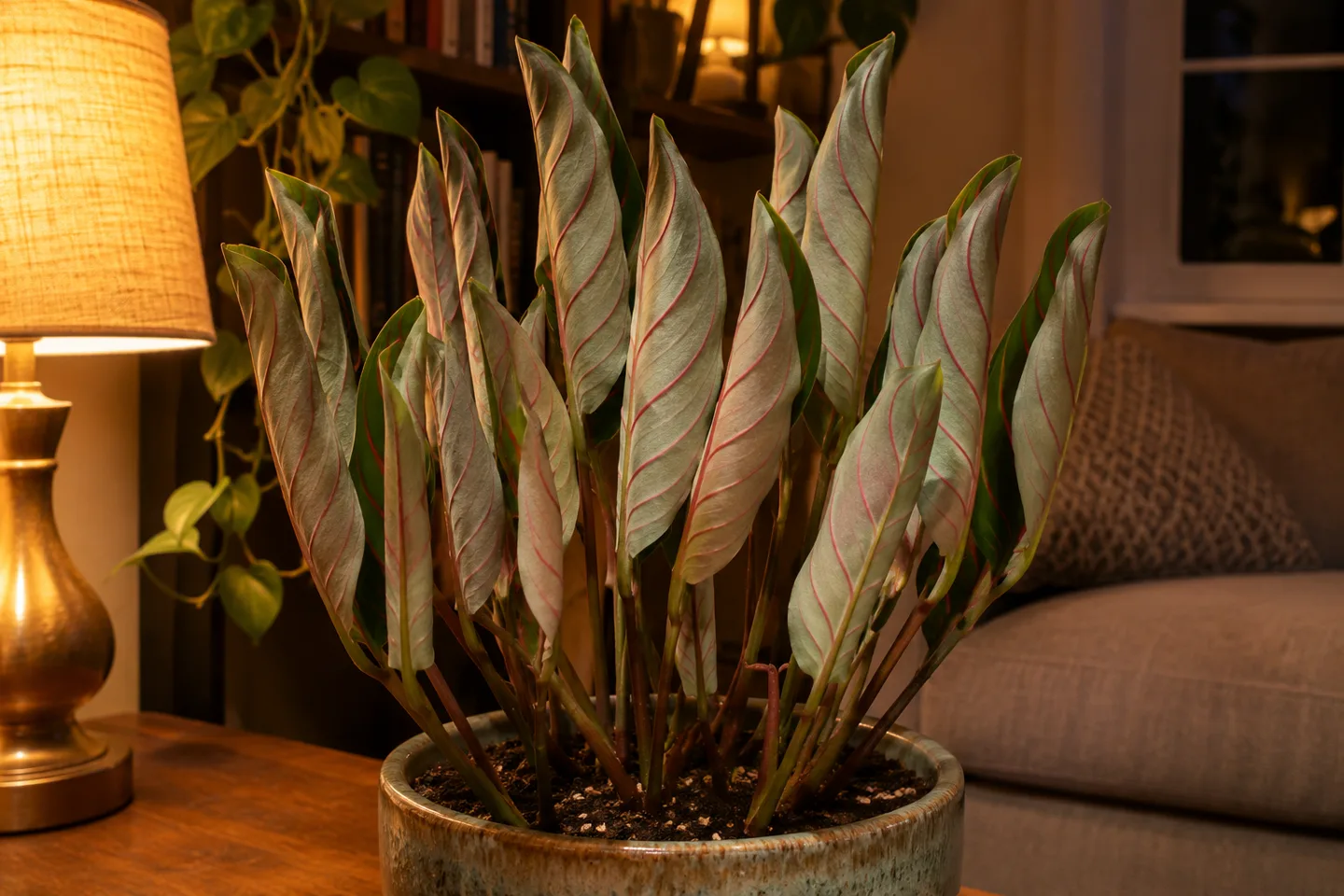
Treat the movement as a free daily check. A plant that still folds at night and opens by day is healthy. Leaves that stay folded or rolled in the middle of a bright day usually mean the plant is thirsty or the air is too dry. Leaves that barely move at all can mean the plant sits too far from the light to keep its rhythm.
Light: bright, but never direct sun
Put your prayer plant where it gets bright, indirect light: a few feet back from an east or north window, or behind a sheer curtain at a south or west one. NC State Extension notes that too much sun bleaches the leaf colors, and that leaves also lose color in low light.
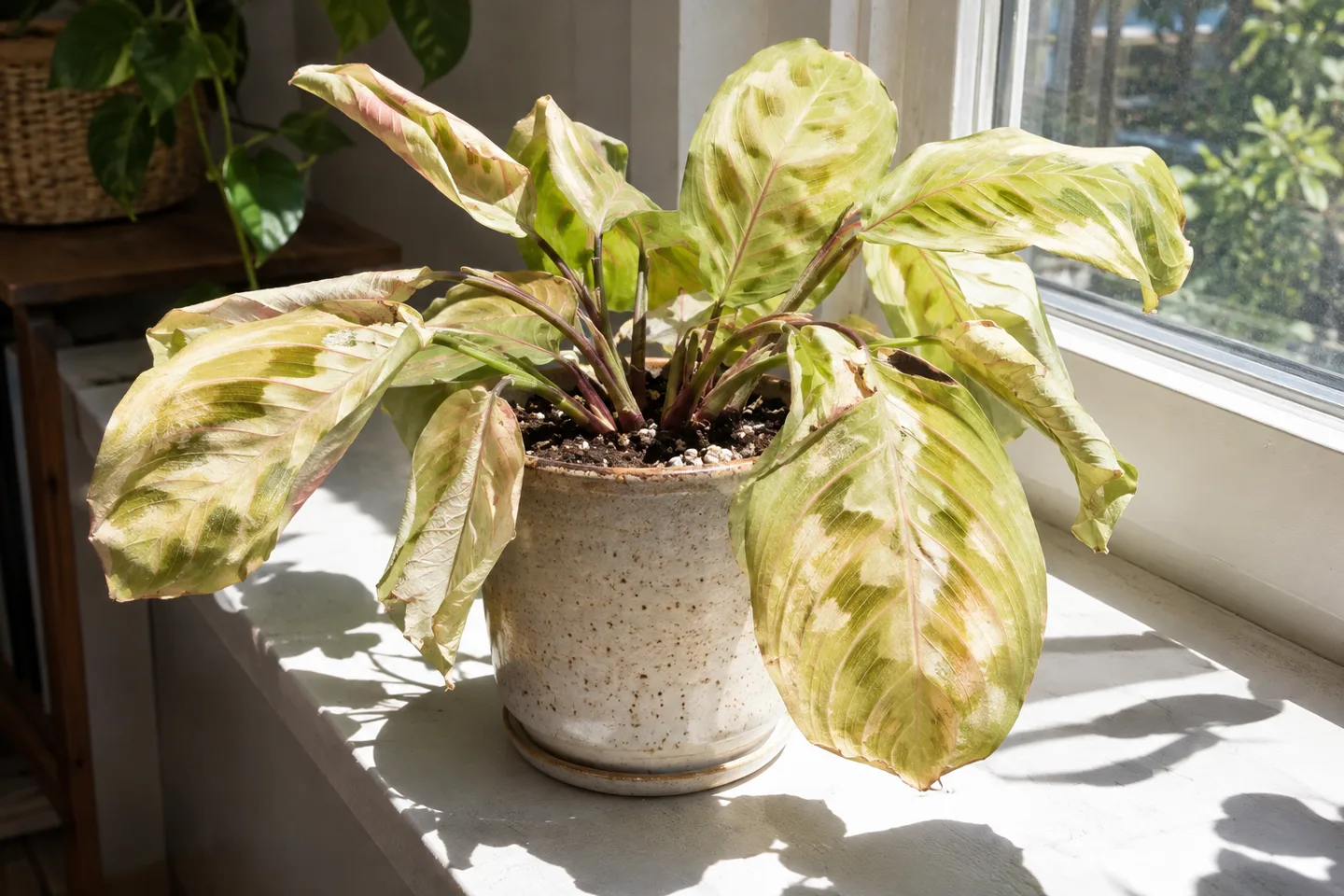
Of the two, direct sun does the faster damage. A week on a hot windowsill can fade the red veins and leave pale, scorched patches that never turn green again. If you are not sure how bright a spot is, our guide to reading your plant's light shows how to judge it without a meter.
Water: evenly moist, never soggy
Prayer plants want more water than most houseplants. From spring to early fall, keep the mix evenly moist: water when the surface just starts to feel dry, slowly, until water runs out of the drainage hole. Empty the saucer about 15 minutes later so the roots never sit in water. In winter, let the top inch of mix dry before you water again.
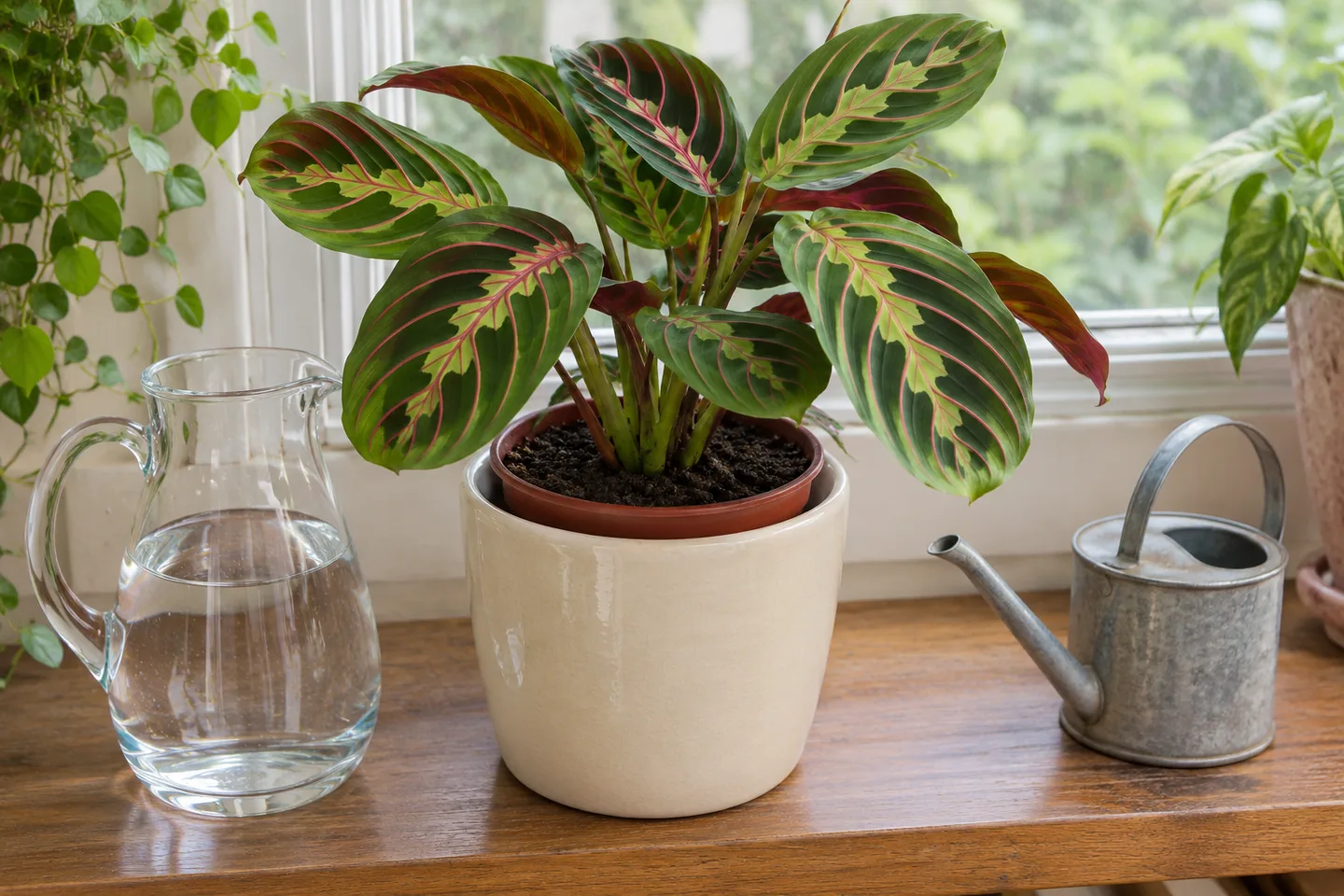
The mistake that costs the most is treating a prayer plant like a pothos and letting it dry out between waterings. Its fine roots dry fast, and the leaves answer with curling and crisp edges within days. The opposite mistake, watering on a calendar into cold, wet mix, rots those same roots. So feel the mix before every watering instead of following a schedule; checking whether the soil is wet or dry takes ten seconds with a finger or a chopstick. For a starting point that fits your pot and room, try the plant watering calculator, then adjust to what your finger tells you.
Use softer water if the tips keep browning
If watering is on time and the tips still brown, look at the water itself. NC State lists fluoride and over-fertilizing as causes of leaf burn, and NYBG advises against hard water, which leaves mineral deposits. Switch to rainwater, distilled water or filtered water and use room temperature water, since cold water can shock the roots.
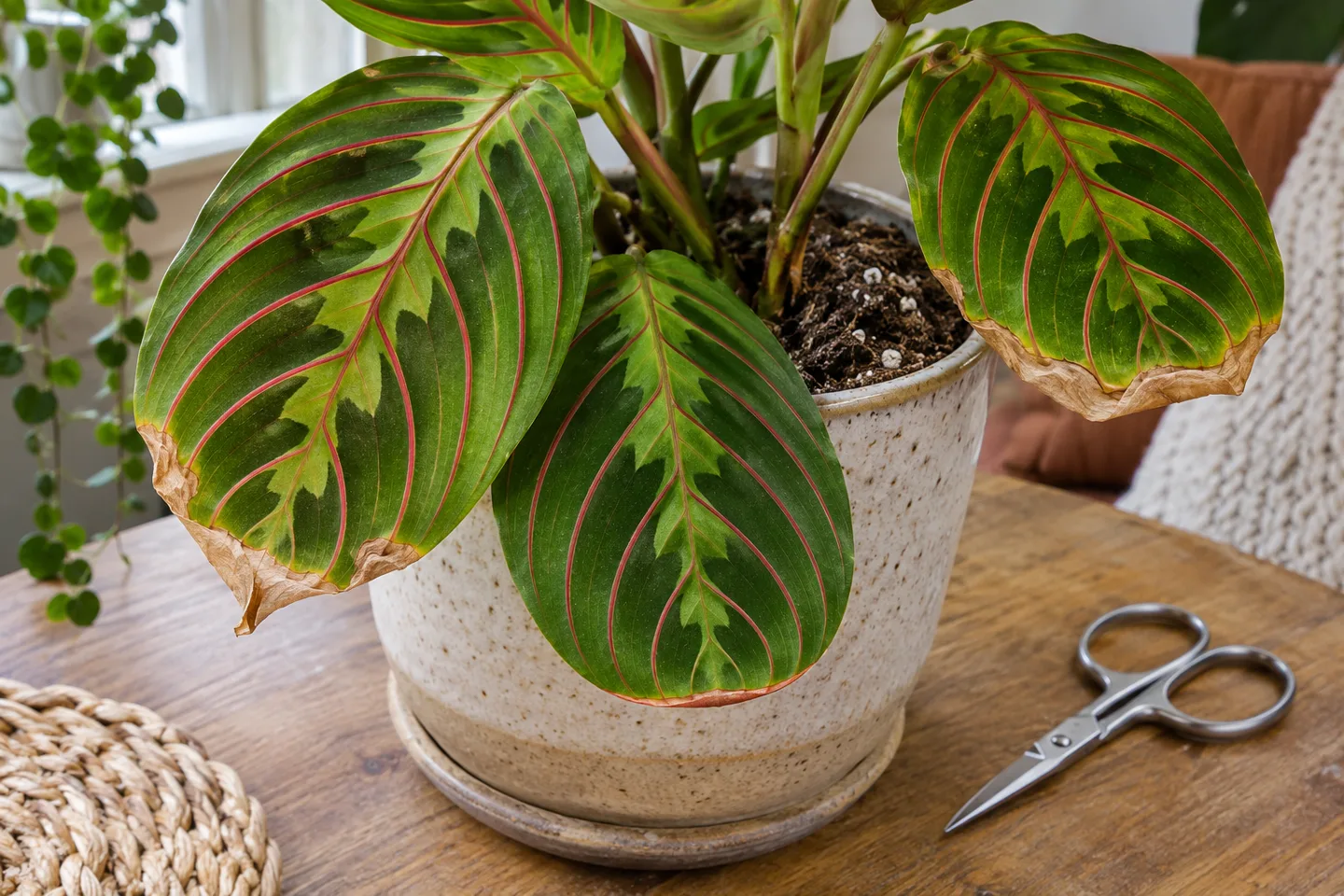
Brown tips will not turn green again. You can trim them off with clean scissors, following the leaf's natural curve and leaving a thin line of brown so you do not cut into healthy tissue. If browning shows up on many of your plants, not just this one, our guide to brown tips on leaves walks through the other causes.
Humidity and temperature
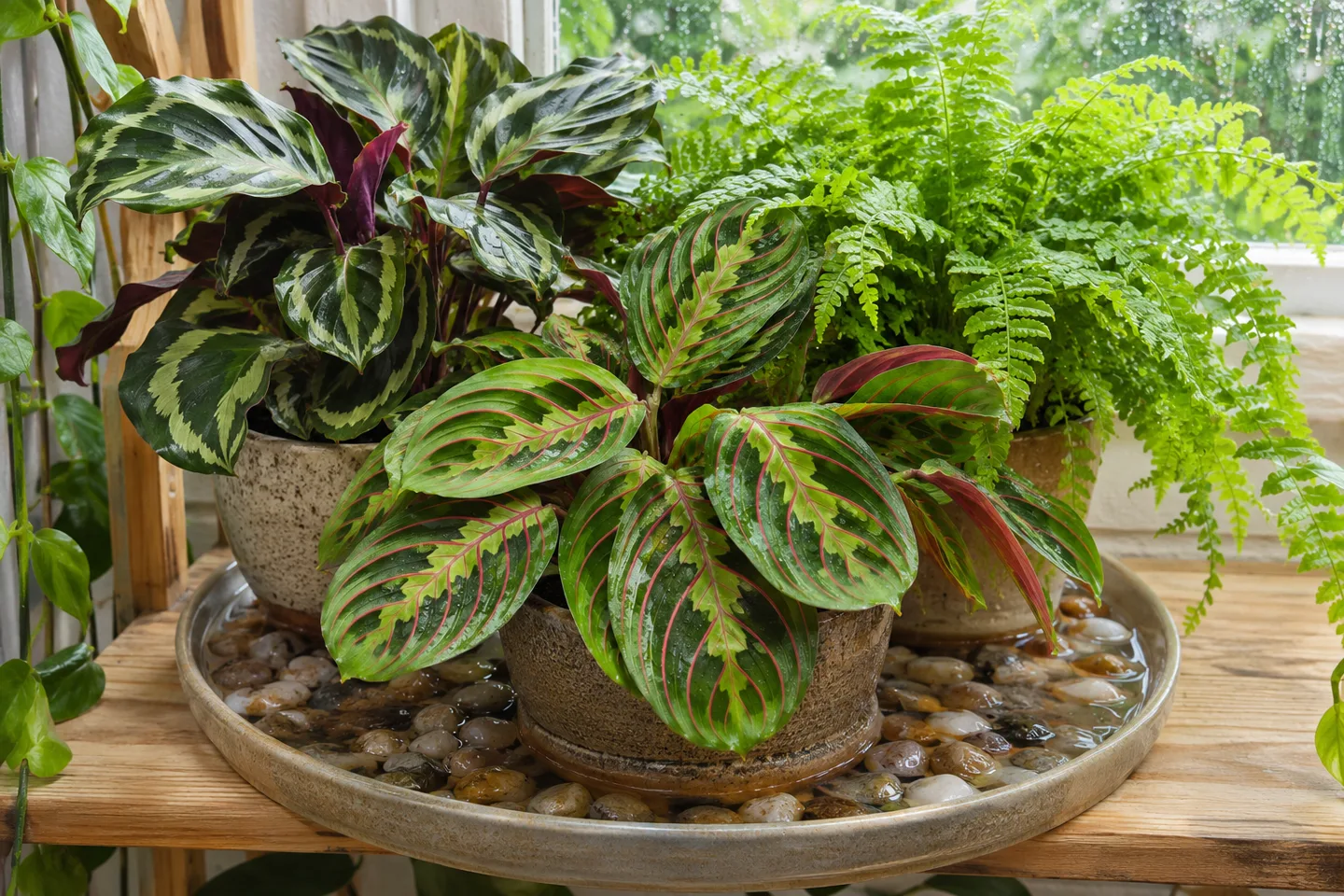
Humidity is where most prayer plants struggle, especially once the heating comes on. NYBG recommends keeping it well above 50% and suggests a hygrometer near the plant to check. A pebble tray and grouping plants together help a little; in a dry winter apartment, a small humidifier near the plant does far more than misting.
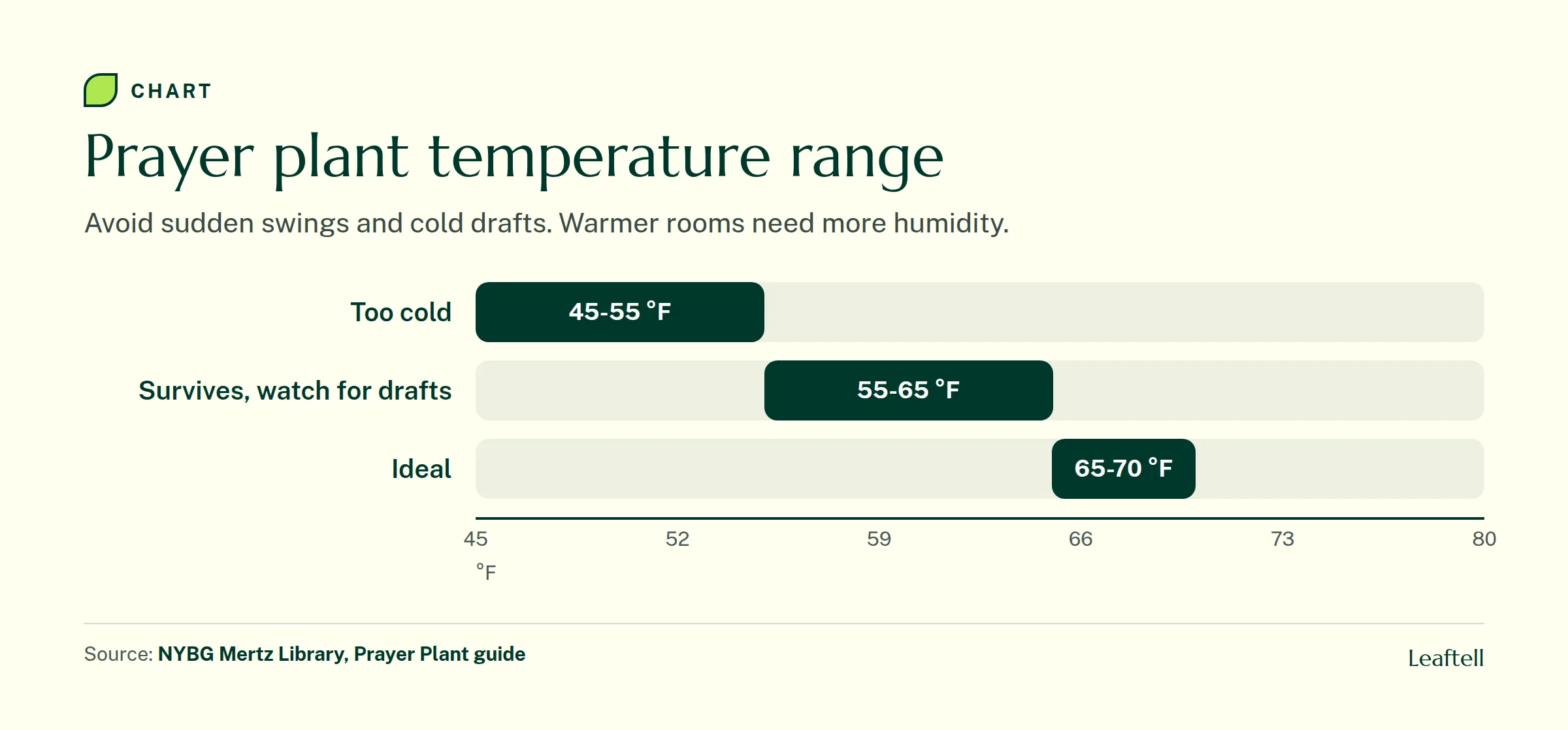
Keep the room between 65 and 70°F and never let the plant drop below 55°F. Sudden changes hurt as much as the number itself: a spot next to a drafty door, an AC vent or a radiator will curl and brown the leaves even when the thermostat reads fine.
What the leaves are telling you
Most prayer plant problems show on the leaves before anything else. Look in daylight, feel the mix an inch down, then match what you see.
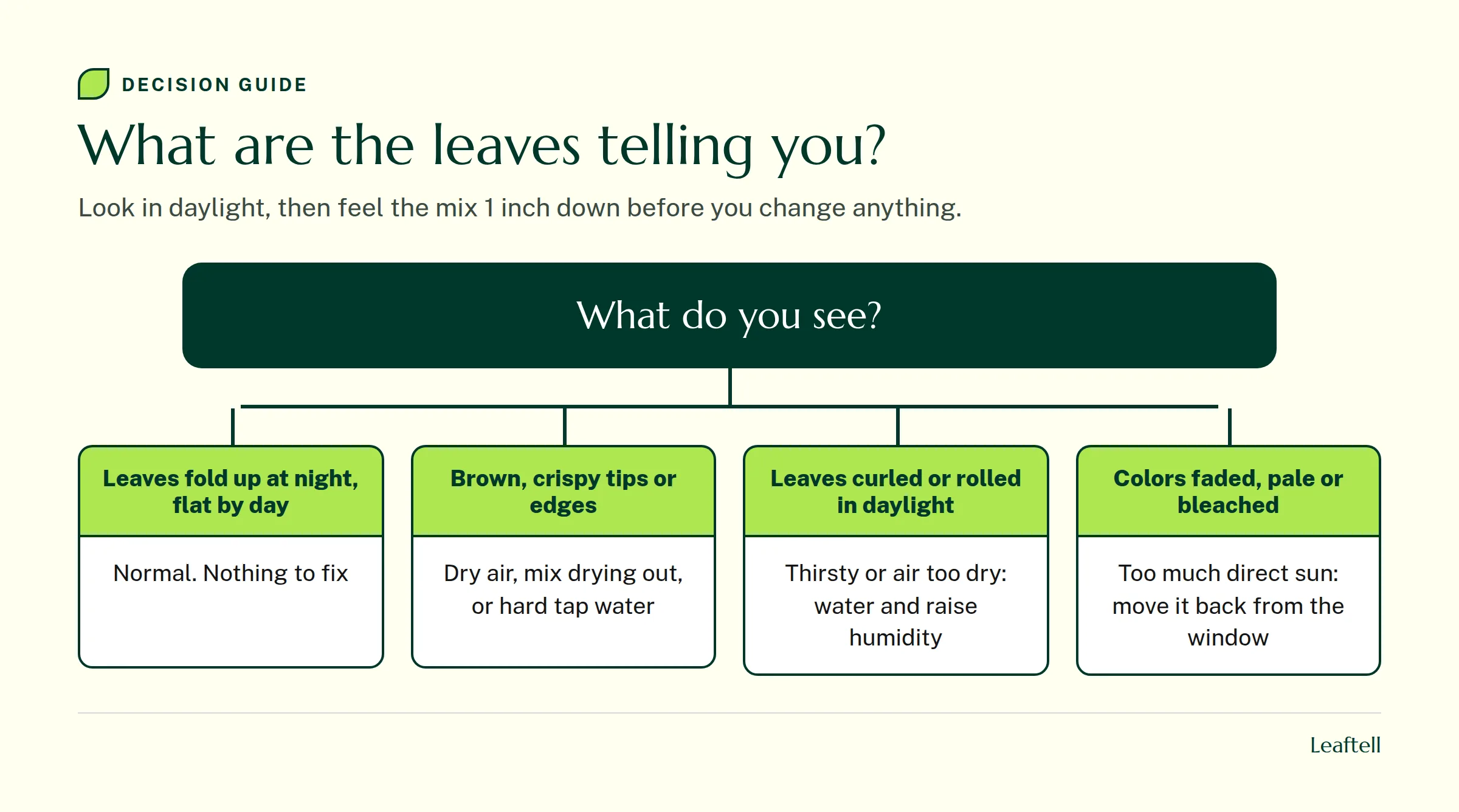
- Curling leaves: usually dry mix or dry air. Water thoroughly, then raise humidity. Our guide to plant leaves curling covers the less common causes.
- Yellow leaves in wet mix: too much water or a pot that does not drain. Let the top inch dry and check the roots for rot.
- Fine webbing and speckled leaves: spider mites, which thrive in dry air. Rinse the leaves in the shower and see our guide to spider mites on plants for next steps.
- Leaves not folding at night: often too little light. Move it closer to a bright window, out of direct sun.
When two signs show up together, say brown tips and curling, it is hard to tell which cause came first from the leaves alone. That is the wall a guide hits: it cannot see your plant, your window or your water.
Feeding
Feed with a standard liquid houseplant fertilizer every two weeks from March to September, as NYBG suggests, and stop in fall and winter. If the tips are browning, dilute it to half strength or feed less often, because extra fertilizer salts burn the leaf edges the same way hard water does. Follow the label and never mix products.
Repotting and dividing a prayer plant
Prayer plants have shallow roots and spread sideways, so they do best in a wide, shallow pot with a drainage hole. Repot every one to two years in spring, when roots circle the pot or poke out of the drainage hole. Use a loose, airy mix that holds moisture but drains; our guide to potting mix for indoor plants explains what to look for.
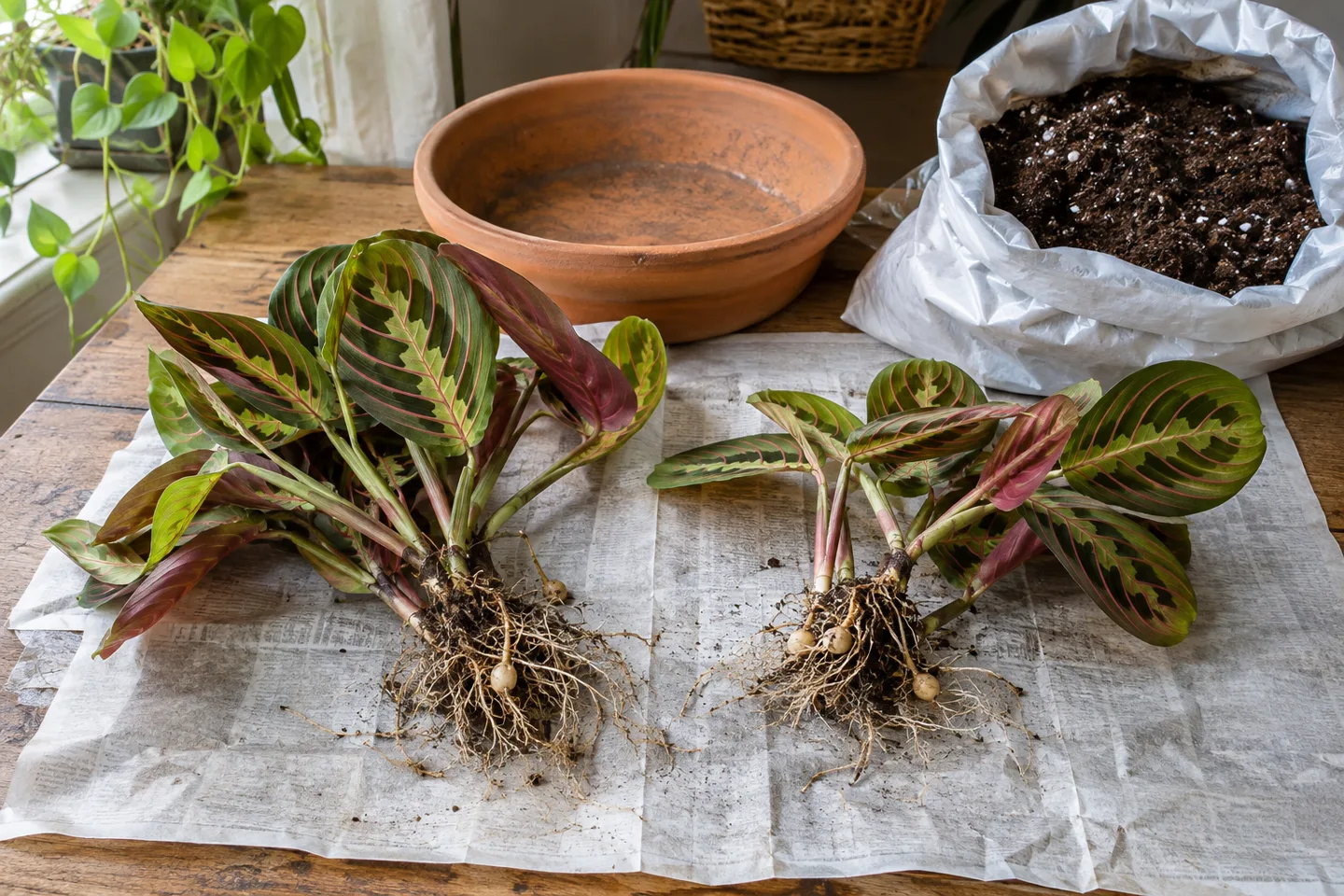
How to repot a prayer plant
- Water the day before
Water the plant a day ahead so the root ball holds together and the roots are not stressed when you move it.
- Ease it out of the pot
Tip the pot on its side and slide the plant out, supporting the base of the stems. Tease the outer roots loose with your fingers.
- Divide it if you want more plants
Pull or cut the clump into two or three sections, each with several stems, leaves and its own roots. This is the easiest way to propagate a prayer plant.
- Set it at the same depth
Put a layer of fresh mix in a shallow pot one size up, set the plant at the same depth it grew before and fill in around it without packing the mix hard.
- Water it in and keep it shaded
Water until it drains, then keep it in bright shade and skip fertilizer for about a month while the roots settle.
A little drooping in the first week after a move is normal. If it lasts, our guide to plants wilting after repotting helps you tell shock from overwatering.
Propagating from stem cuttings
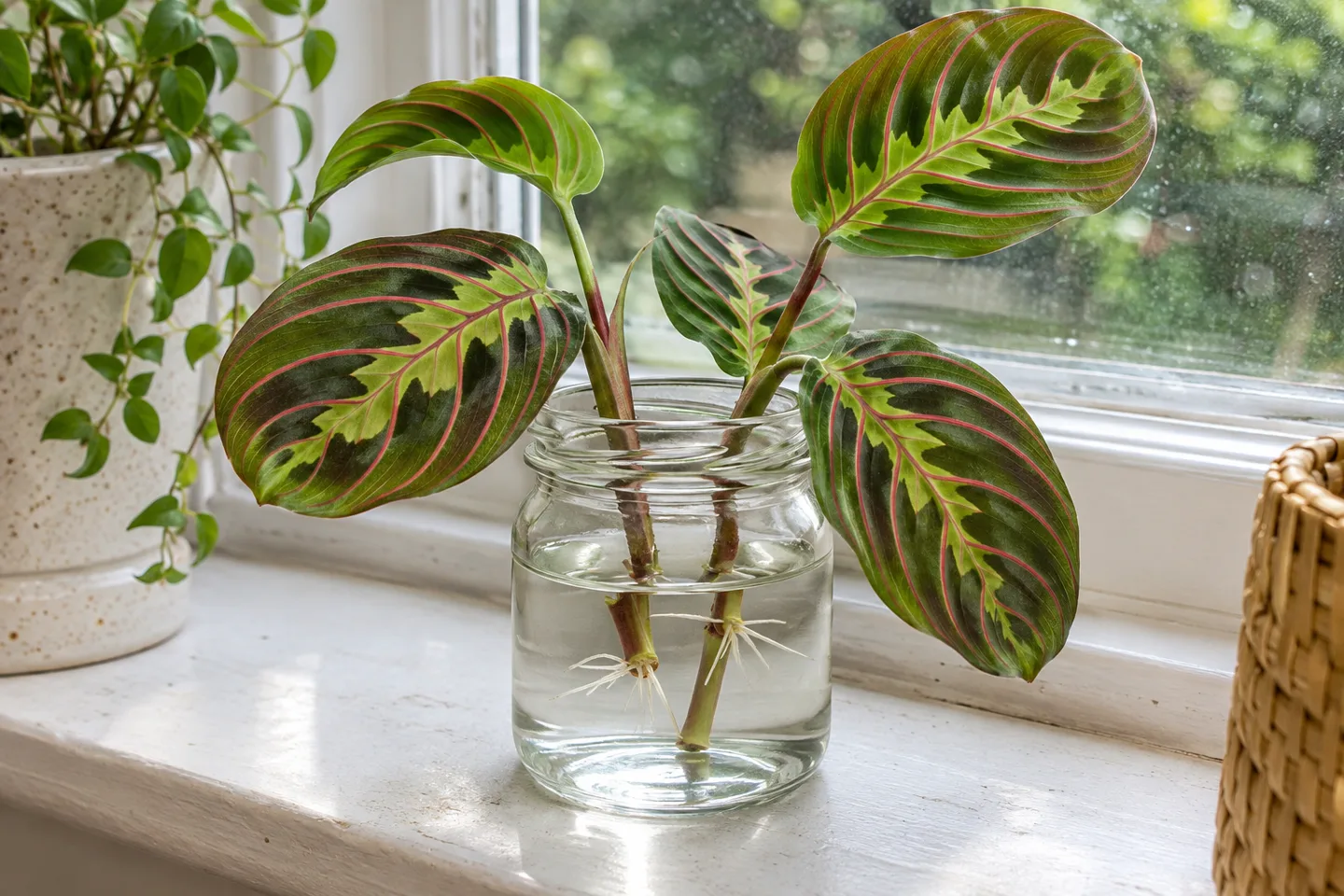
If you do not want to disturb the roots, take a stem cutting instead. Cut just below a node (the slightly swollen joint where a leaf meets the stem), keep two or three leaves and stand it in a jar of water in bright, indirect light. Change the water every few days. Once the new roots are an inch or two long, pot the cutting in moist mix and keep it evenly damp while it settles.
Is a prayer plant safe for pets?
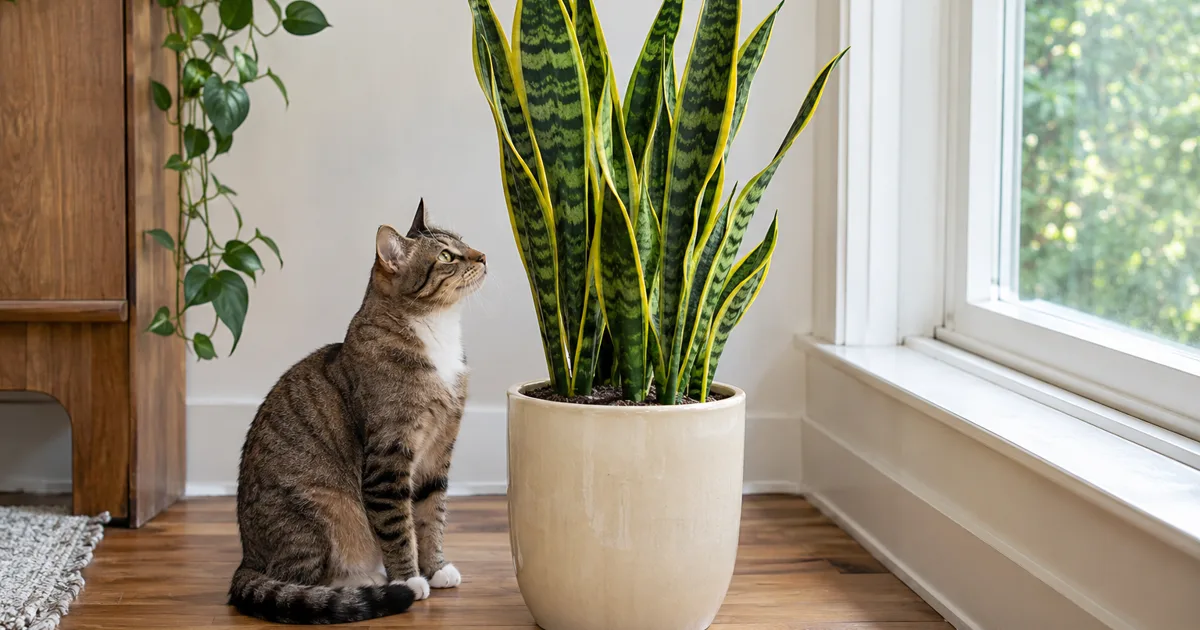
Yes. The ASPCA lists the prayer plant as non-toxic to dogs and cats, which makes it one of the easier patterned plants to keep in a home with pets. A cat chewing the leaves can still leave you with a ragged plant, so a shelf or hanging basket helps. That makes it a good pick for a pet home where a toxic snake plant would need to live on a high shelf.
The short version
Keep your prayer plant in bright light without direct sun, keep the mix evenly moist with soft, room temperature water, and give it more humidity than feels necessary. Then watch the leaves: flat by day and folded at night means it is happy. When the tips brown or the leaves stay curled, change one thing at a time and give it a week or two before you judge the result.
Check your growing conditions with the plant watering calculator.
Frequently asked questions
Bright, indirect light, mix that stays evenly moist but never soggy, humidity well above 50% and a steady temperature of about 65 to 70°F. A happy prayer plant lies its leaves flat during the day, folds them up at night and keeps putting out new rolled leaves in spring and summer.
You can. Brown tips will not turn green again, so trimming them only improves the look. Use clean, sharp scissors, follow the natural shape of the leaf and leave a thin edge of brown so you do not cut into healthy tissue. Then fix the cause, usually dry air, mix that dries out or hard tap water, or new tips will brown too.
No. A prayer plant is a low, spreading plant that grows from underground rhizomes, not a climbing vine. Its stems do lengthen and spill over the edge of the pot as it matures, which is why it is often grown in hanging baskets, but it will not climb a pole or a trellis.
Repot in spring into a wide, shallow pot one size up with a drainage hole and a loose, airy mix. Water the day before, ease the plant out, loosen the outer roots, set it at the same depth as before and water it in. You can divide the clump into two or three sections at the same time to get new plants.
Share article
About the author

Keep checking your plant
Plant care reference
Indoor plant care
Build a routine around your plant, light and potting mix.
Plant care reference
Why is my plant dying
Trace leaf and root symptoms before choosing a care change.
Plant care reference
Pothos plant care
Choose a growing spot and prune a trailing pothos for fuller growth.
Plant care reference
How to fix root rot
Inspect root firmness and drainage, then decide whether to repot.