Tomato Plant Care Tips: Sun, Water, Feeding and Support
Filip Leszczyński 14 November 2026 14 min read
In this article
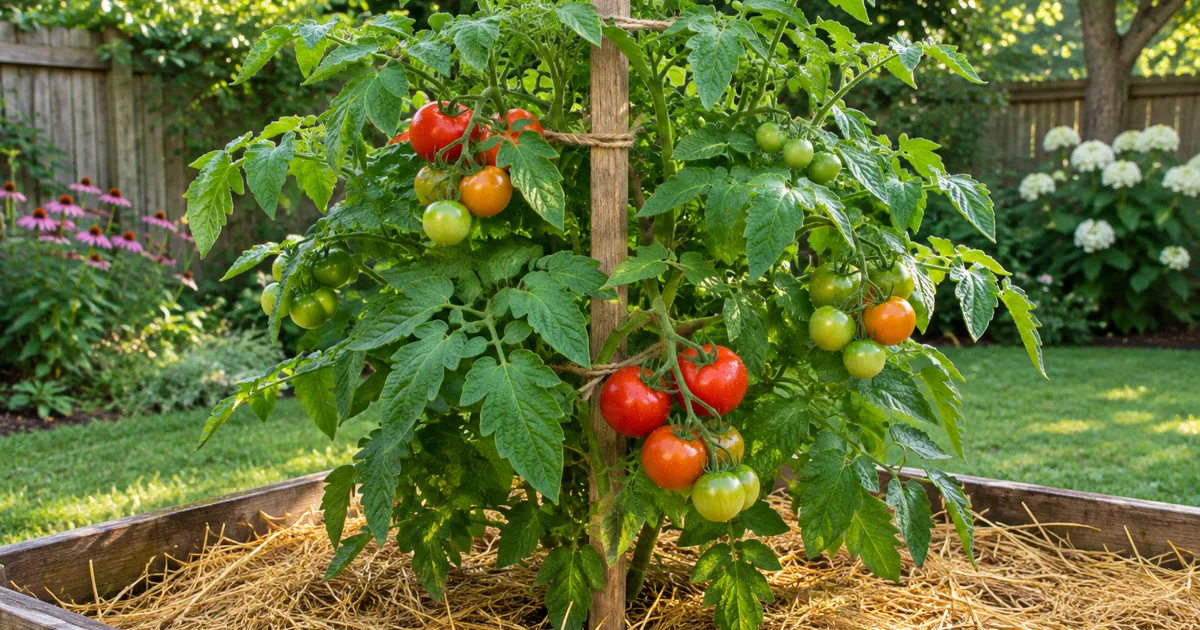
The tomato plant care tips that matter most fit in one line: full sun, deep and steady watering, a thick mulch, a strong support, and almost no fertilizer until the first fruit sets. Get those five right and most of the problems people search for later, from cracked fruit to curled leaves, never show up.
The counterintuitive part is that tomatoes rarely fail from too little care. They fail from uneven care: a dry week followed by a soaking, or a big dose of fertilizer meant to "help" a plant that was already fine. This guide covers what to give a tomato from planting to the last pick in fall, how care differs in a bed and in a pot, and what the leaves tell you when something slips.
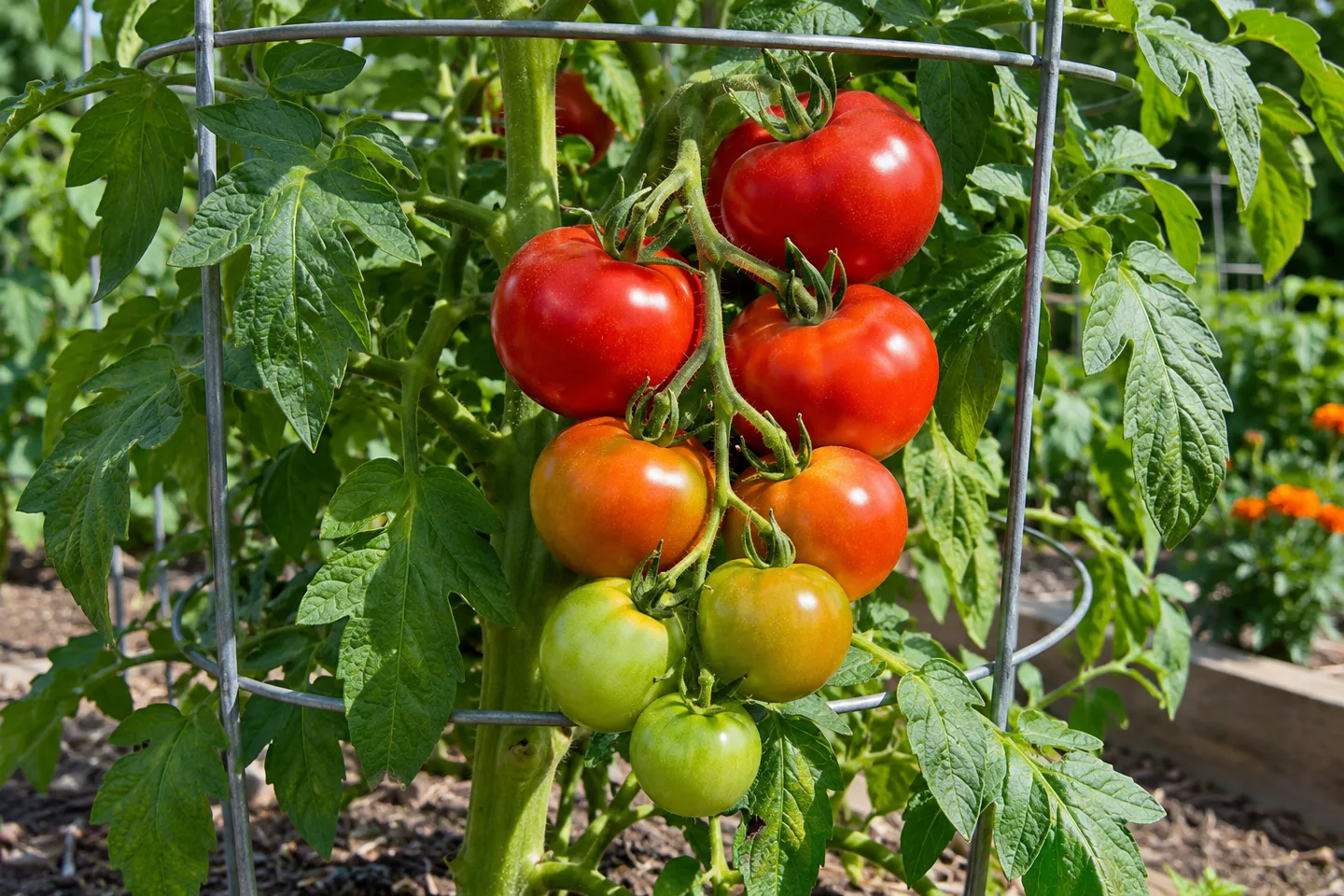
Tomato plant care at a glance
| Need | What to give it | Sign it is off |
|---|---|---|
| Sun | At least 6 hours of direct sun a day, 8 to 10 is better | Tall, thin stems, few flowers, slow ripening |
| Water | Deep, regular soakings at the base; about 1 inch a week in the ground, often daily in a pot in summer | Wilting by midday, cracked fruit, dark sunken spots on the blossom end |
| Mulch | 2 to 3 inches of straw or shredded leaves once the soil is warm | Soil that crusts, dries fast or splashes onto the lower leaves |
| Fertilizer | Starter fertilizer at planting, then side-dress once the first fruits appear | Huge leafy plant with few tomatoes (too much nitrogen early) |
| Support | A 6 to 8 foot stake or a sturdy cage, set at planting | Stems flopping onto the soil, fruit rotting where it touches the ground |
| Spacing and airflow | Several feet between plants; lower leaves kept off the soil | Spotted lower leaves after wet weather |
| Temperature | Plant out after the last frost once the soil has warmed | Purple, stalled seedlings in cold soil; frost kills the top growth |
The sun, spacing and watering figures come from the University of Maryland Extension tomato guide and the UC Master Gardeners guide to growing tomatoes. If you only fix one row, fix watering: it drives more of the problems below than any other line in that table.
Give tomatoes the sunniest spot you have
Tomatoes are warm-season plants. The University of Maryland Extension asks for at least 6 hours of direct sun a day and says they prefer 8 to 10. Less than that and you get a tall, stretched plant that flowers late and ripens slowly. If your yard has one spot that gets sun from late morning through the afternoon, the tomatoes go there, even if it is not the prettiest bed.
Wait until the danger of frost has passed and the soil has warmed before you plant out. A tomato set into cold soil sits still for weeks, and frost injures the top growth outright.
Plant them deep
A tomato is one of the few plants you should bury deeper than it grew in the pot. Roots form along any part of the stem that goes underground, so a deep planting gives you a bigger root system and a sturdier plant. Maryland Extension suggests covering the main stem so only two or three sets of true leaves stay above the soil.
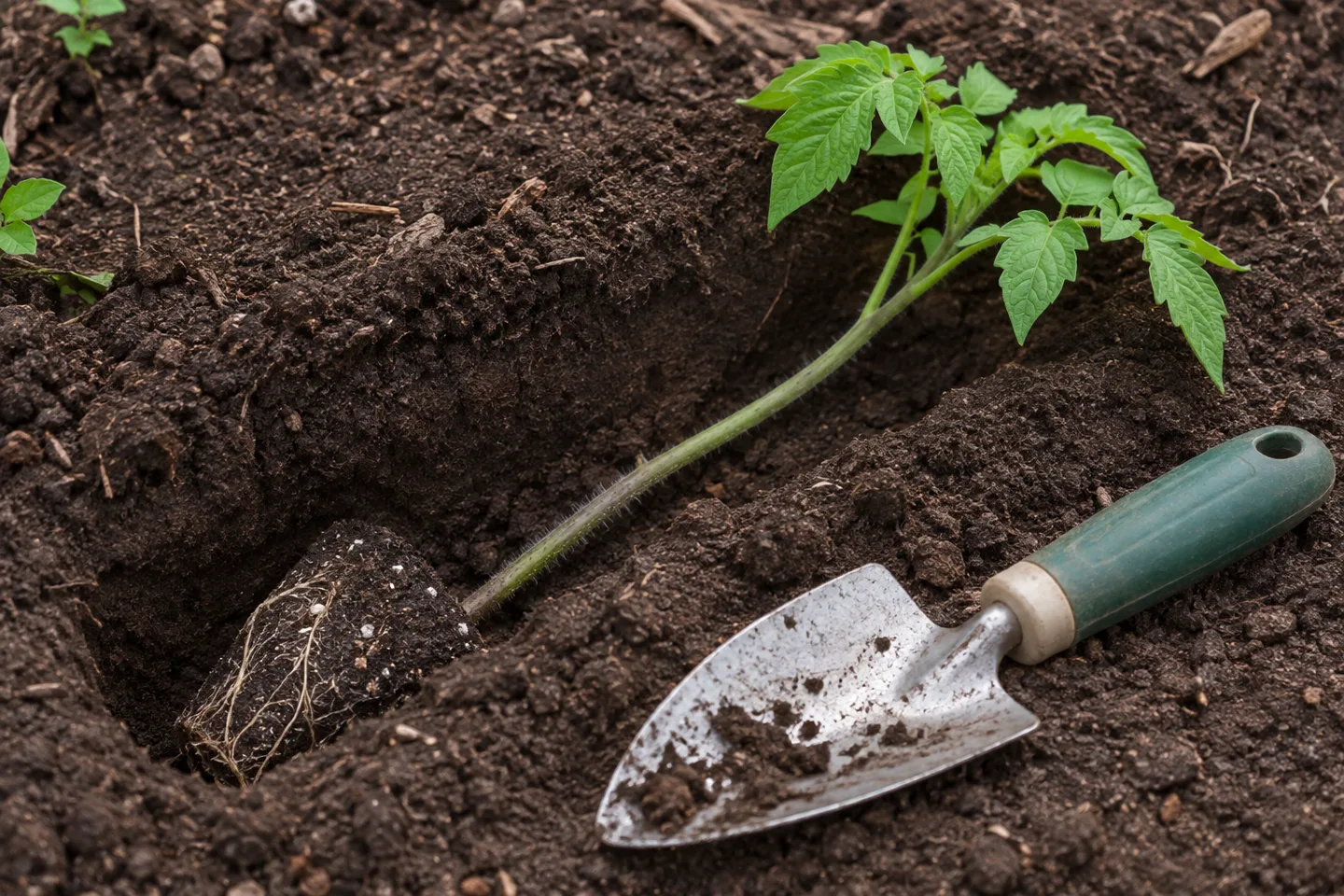
For a tall, leggy transplant, dig a shallow trench, pull off the lower leaves and lay the stem on its side, then bend the top gently upright and cover the rest. It roots along its whole length. One caution: keep the root ball itself in the warmer top few inches of soil rather than sinking it deep into cold ground.
Water deeply and on a rhythm
Consistency matters more than the exact amount. The University of Minnesota Master Gardeners put the target at about 1 inch of water a week from rain and watering combined, and warn that a cycle of drying out and then soaking leads to blossom end rot. UC Master Gardeners add that big swings in moisture also crack the fruit.
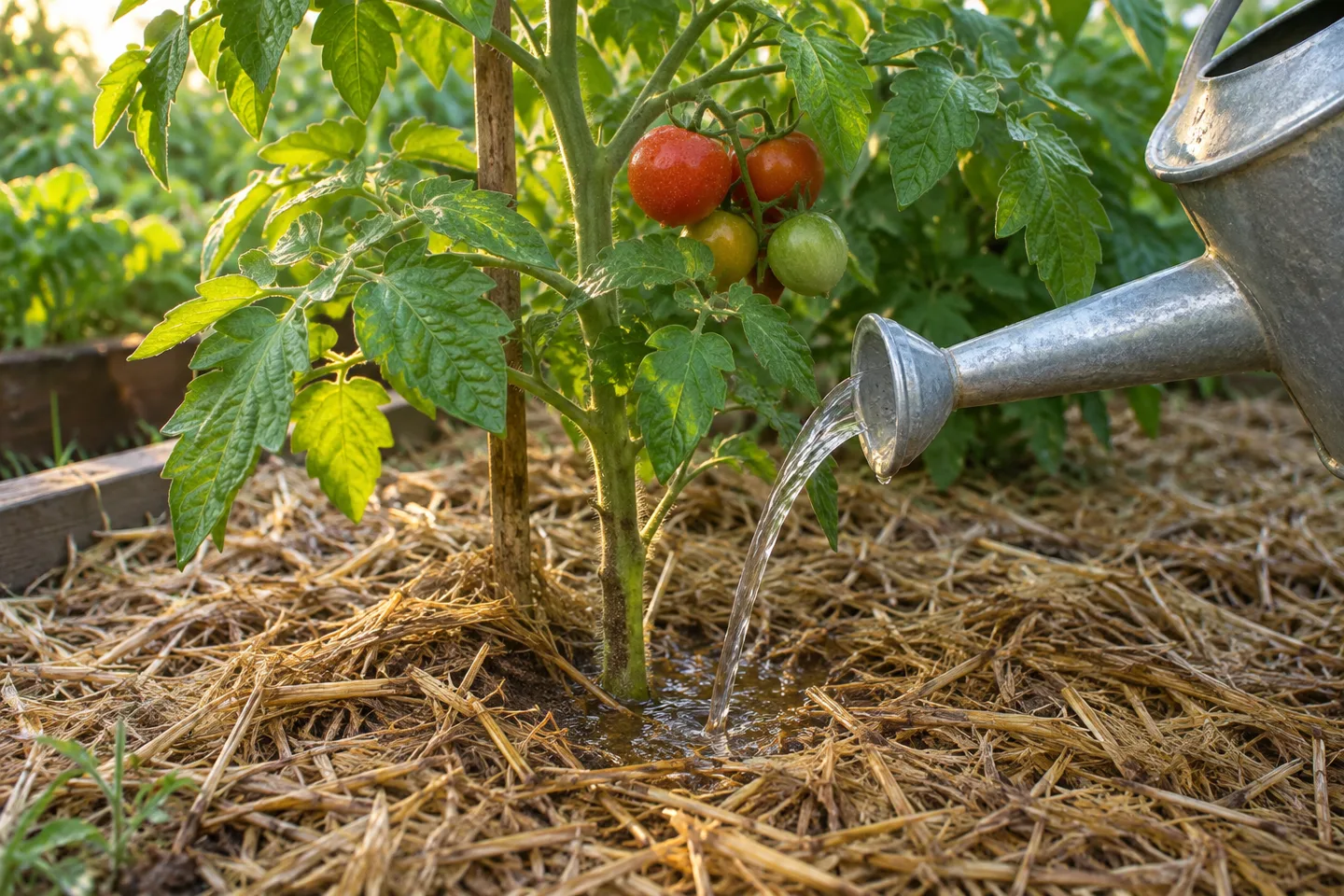
So water less often and more deeply. Soak the soil at the base of the plant until a trowel pushed in beside it comes out wet several inches down, then wait until the top 2 to 3 inches have dried before the next soaking. A light daily sprinkle keeps the roots near the surface, where they cook on the first hot afternoon. Water the soil, not the leaves: wet foliage, especially foliage splashed with soil, is where leaf diseases start. Our full guide to how often to water tomatoes covers beds, raised beds and pots in detail.
Mulch once the soil is warm
Mulch is the cheapest way to make watering even. Two to three inches of straw, shredded leaves or untreated grass clippings slows evaporation, stops soil from splashing onto the leaves and keeps weeds down. That last point matters because tomato roots are shallow and fibrous, so hoeing close to the stem tears them.
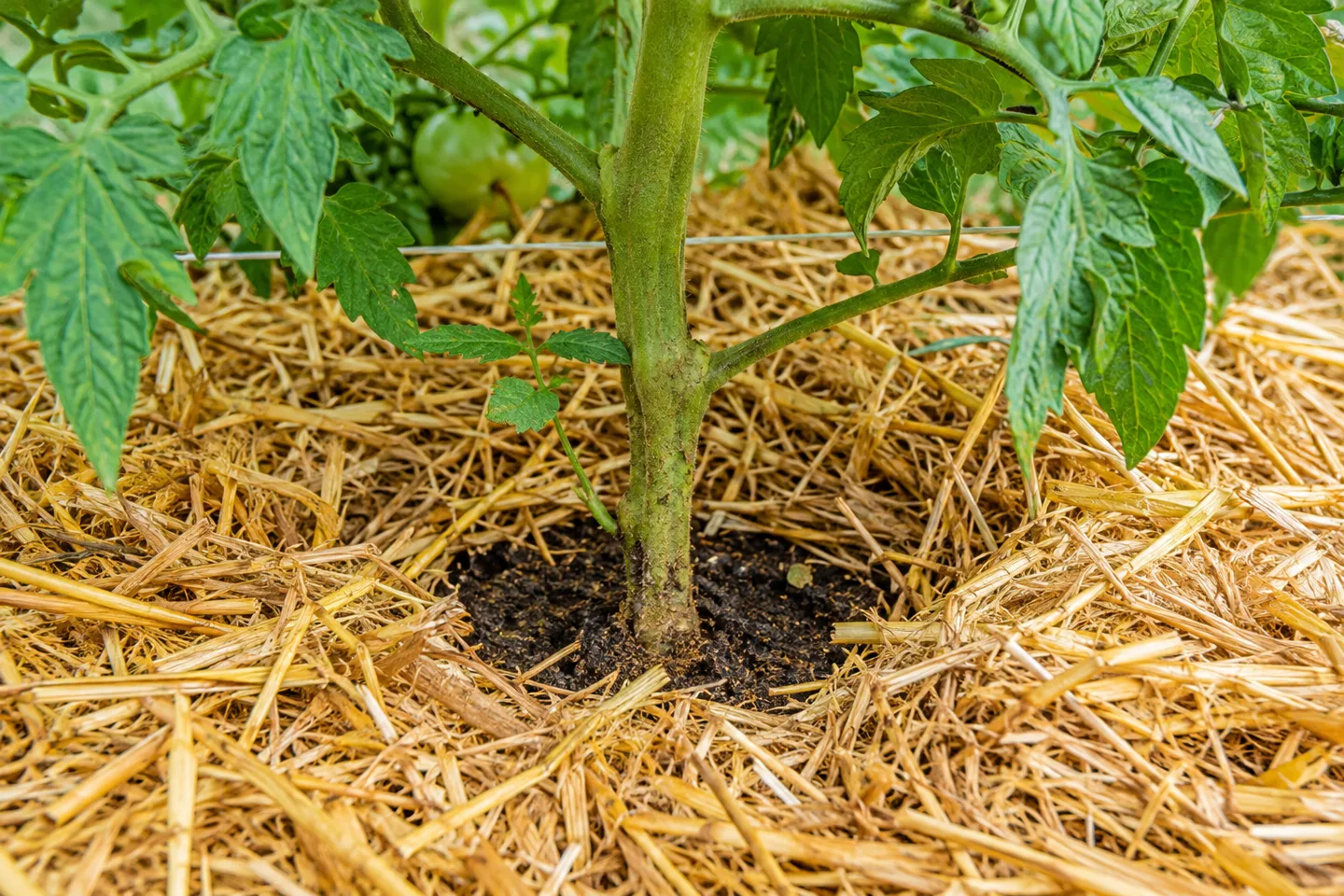
Spread the mulch after the soil has warmed in late spring, not on the day you plant, or it keeps the ground cold. Leave a small gap of bare soil right around the stem.
Go easy on fertilizer
This is where well-meaning gardeners do the most damage. UC Master Gardeners say healthy, vigorous plants should not need extra fertilizer until they have set fruit, and that too much nitrogen early on causes a flush of leaves that can delay flowering and fruit set. You end up with a huge green plant and very few tomatoes.
A sensible pattern:
- Mix aged compost into the bed before planting and use a starter fertilizer when you set the transplants.
- Leave them alone until the first small fruits appear.
- Then side-dress with a vegetable fertilizer, following the label, and repeat every 4 to 6 weeks if growth or fruit load calls for it.
Skip the Epsom salt trick unless a soil test shows a magnesium shortage; Maryland Extension says the same. Too much fertilizer also burns leaf edges, which is one of the causes we cover in brown leaf tips on tomato plants.
Support the plant from day one
Every tomato needs a stake, cage or trellis, and it goes in at planting so you do not spear the roots later. Fruit that sits on the ground rots, and leaves that touch the soil pick up disease. Maryland Extension recommends stakes 6 to 8 feet long driven a foot into the soil, 4 to 6 inches from the plant, with the stem tied loosely to it as it grows. Cages need less work but take more room: space them at least 4 feet apart and stake them down so a summer storm cannot tip them.
Should you remove suckers?
Suckers are the side shoots that grow in the angle where a leaf branch meets the main stem. They will flower and fruit if you leave them, so pruning is a choice, not a rule. On a staked indeterminate tomato (the kind that keeps growing until frost), Maryland Extension suggests keeping one to three main stems and pinching the rest off weekly with your fingers, which gives bigger fruit and earlier ripening. Caged plants and compact determinate varieties need little or no sucker pruning.
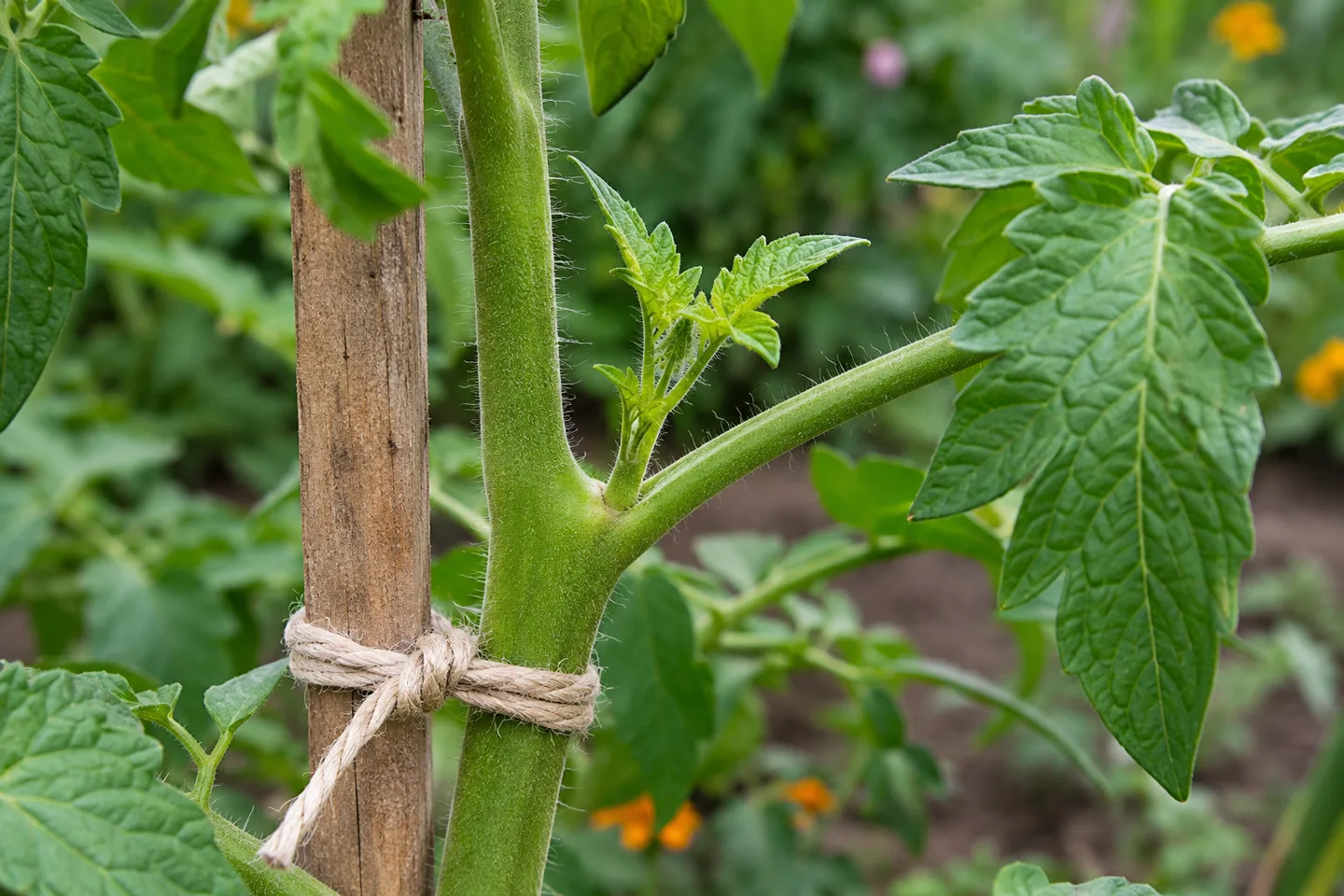
Always remove suckers that sprout from the base of the plant, and pinch them while they are small. A sucker the thickness of a pencil leaves a big wound.
Tomatoes in pots need more of everything
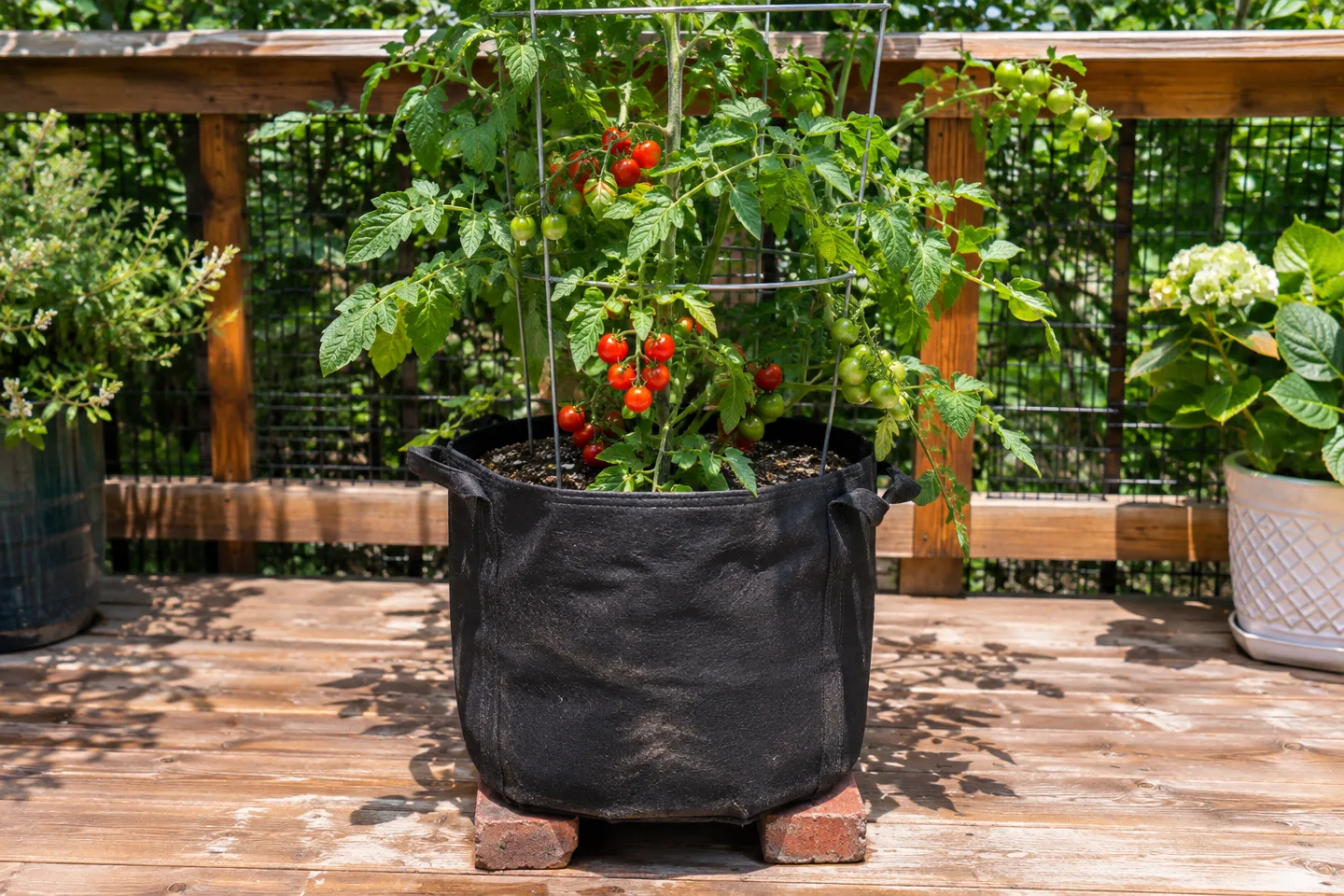
A container tomato lives on a small amount of soil, so it dries out far faster than one in the ground. The Minnesota Master Gardeners say container tomatoes need watering at least once a day in summer, and morning and evening in a heat wave. That single fact is why pot-grown tomatoes crack and get blossom end rot more often: one missed day is a dry spell.
| Care | In the ground or a raised bed | In a container |
|---|---|---|
| Watering | Deep soak about 1 inch a week, more in heat | At least daily in summer, check twice in heat |
| Best varieties | Any, including tall indeterminate types | Patio, dwarf, determinate or cherry types |
| Feeding | Side-dress after first fruit | Nutrients wash out faster, so follow the label for container feeding |
| Main risk | Uneven water after rain, soil-borne disease | Drying out between waterings |
Pick the biggest pot you can manage, with drainage holes, and a compact or cherry variety. Patio and dwarf types are bred for this.
Keep the leaves dry and the air moving
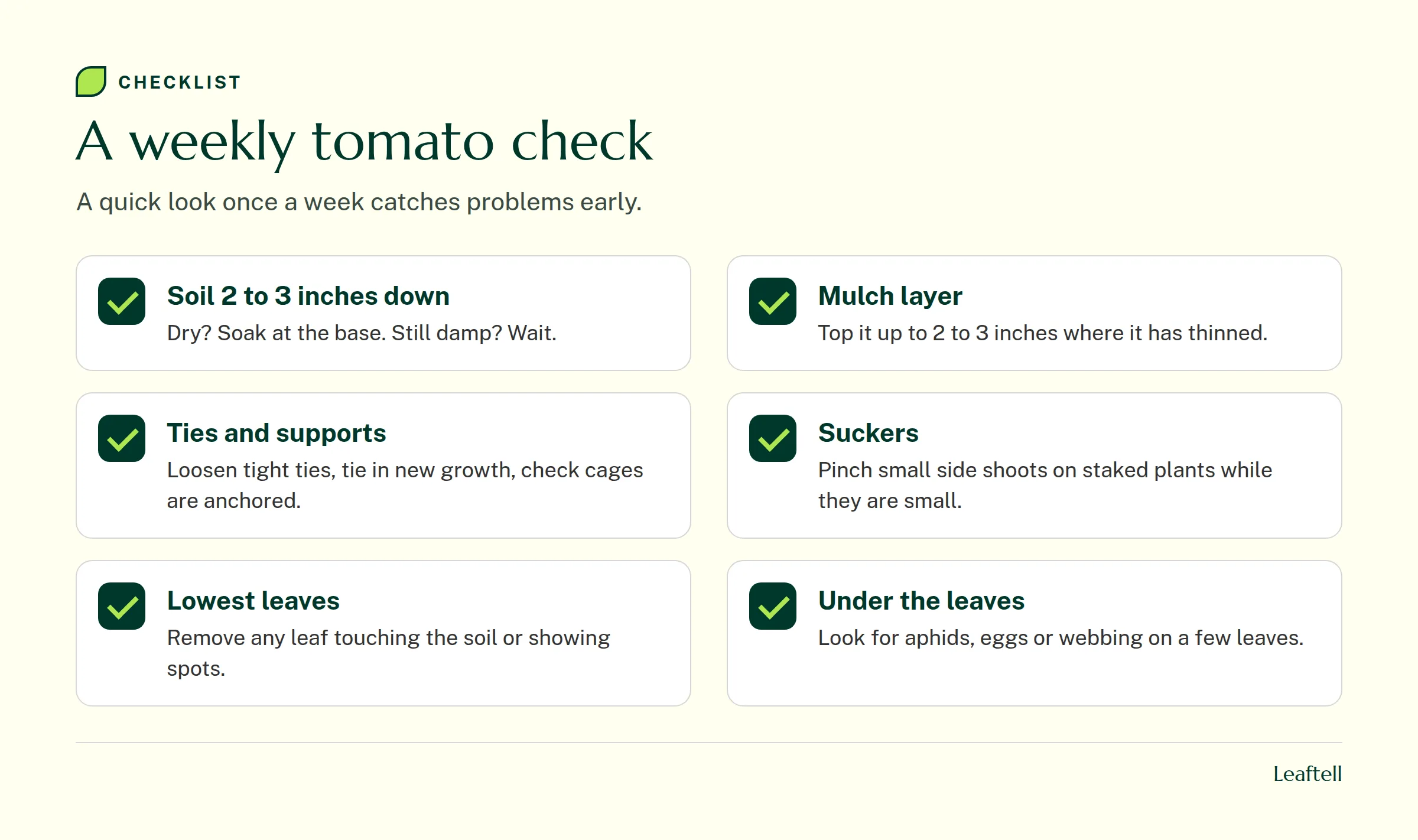
Most tomato leaf diseases need wet leaves and soil splash to get started. Four habits cut the risk a lot:
- Space plants several feet apart so air moves between them.
- Prune off the lowest leaves once the plant is a couple of feet tall, so nothing touches the soil.
- Water at the base in the morning, never over the top in the evening.
- Rotate the bed. UC Master Gardeners suggest growing tomatoes in the same spot for no more than 2 years in a row, and not following them with peppers, eggplant or potatoes, which are in the same family.
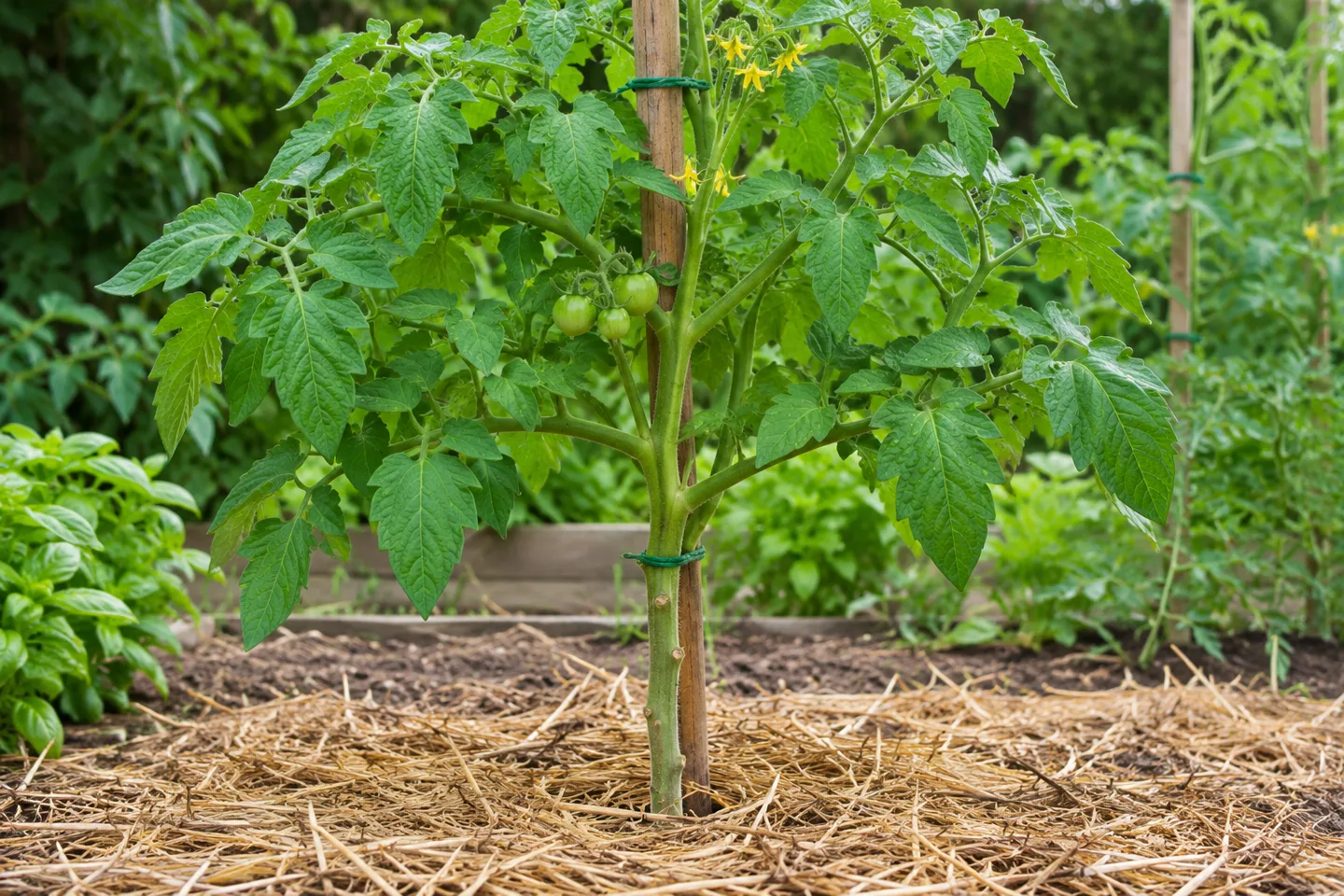
If spots or rings appear anyway, pull the affected leaves, bag them and check our guide to common tomato plant diseases before you reach for any spray. Follow the label on any product and never mix products.
Read the leaves when something goes wrong
Tomatoes tell you quickly when care slips. These are the common signals and where to look next:
- Lower leaves turning yellow: often age, uneven watering or a nitrogen shortage late in the season. See tomato leaves turning yellow.
- Leaves rolling or cupping: heat, wind, heavy pruning or herbicide drift. See why tomato leaves curl.
- Whole plant wilting: check the soil first, then the stem. Our guide on a drooping tomato plant separates thirst from wilt diseases.
- Crisp brown leaf edges: dry spells, fertilizer salts or sun after planting out.
- Clusters of tiny insects under the leaves: usually aphids. Rinse them off with a strong spray of water first; our guide to getting rid of aphids has the next steps.
The hard part is when two signals show up at once, say yellowing and curling after a heat wave. A guide cannot see your plant, your soil or how the leaves changed over the week, and that is exactly where a photo of the actual leaves helps.
Late season: is it too late to plant?
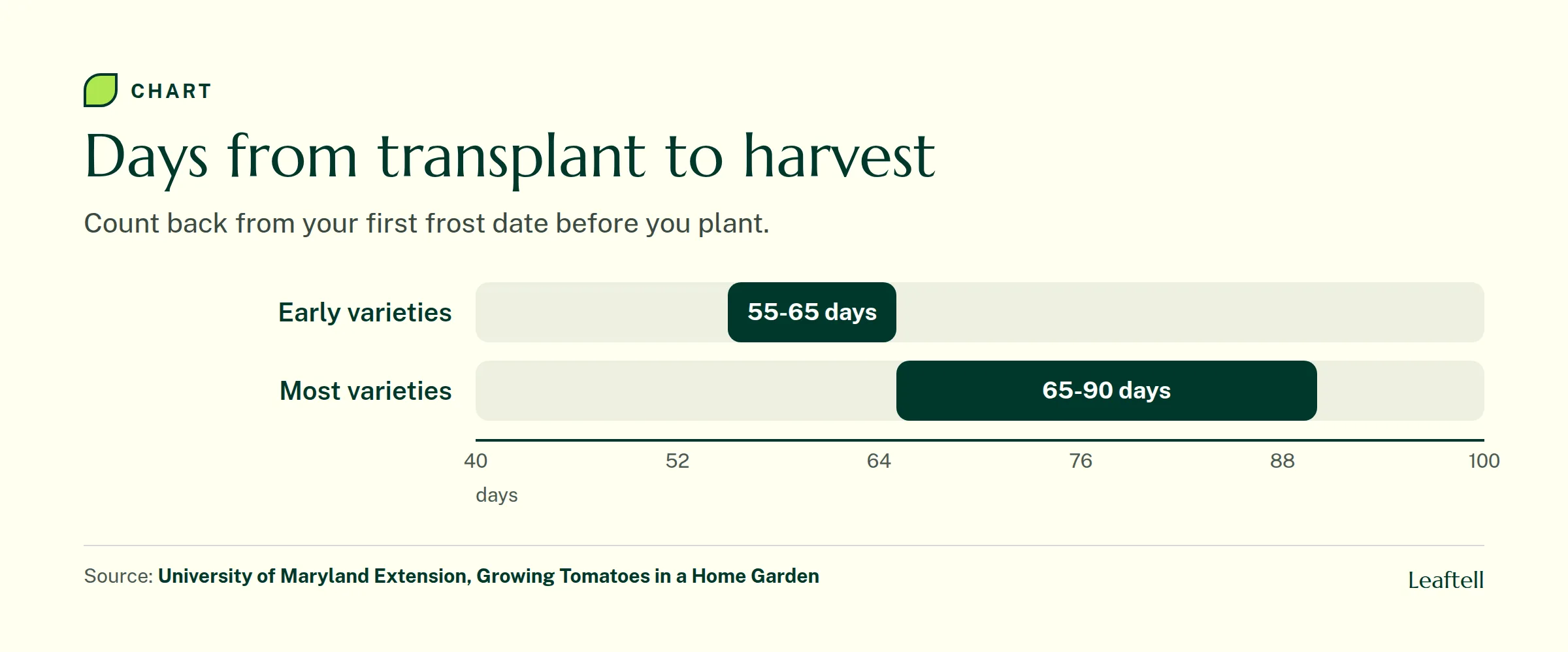
For most of the US, yes, by early fall it is too late to set out new tomatoes. Maryland Extension puts most varieties at 65 to 90 days from transplant to harvest, and even early varieties need 55 to 65. A plant set out in October would need two to three months of frost-free, warm weather it will not get. Only frost-free areas, such as the warmest parts of Florida, Texas and the desert Southwest, can still plant tomatoes for a fall and winter crop.
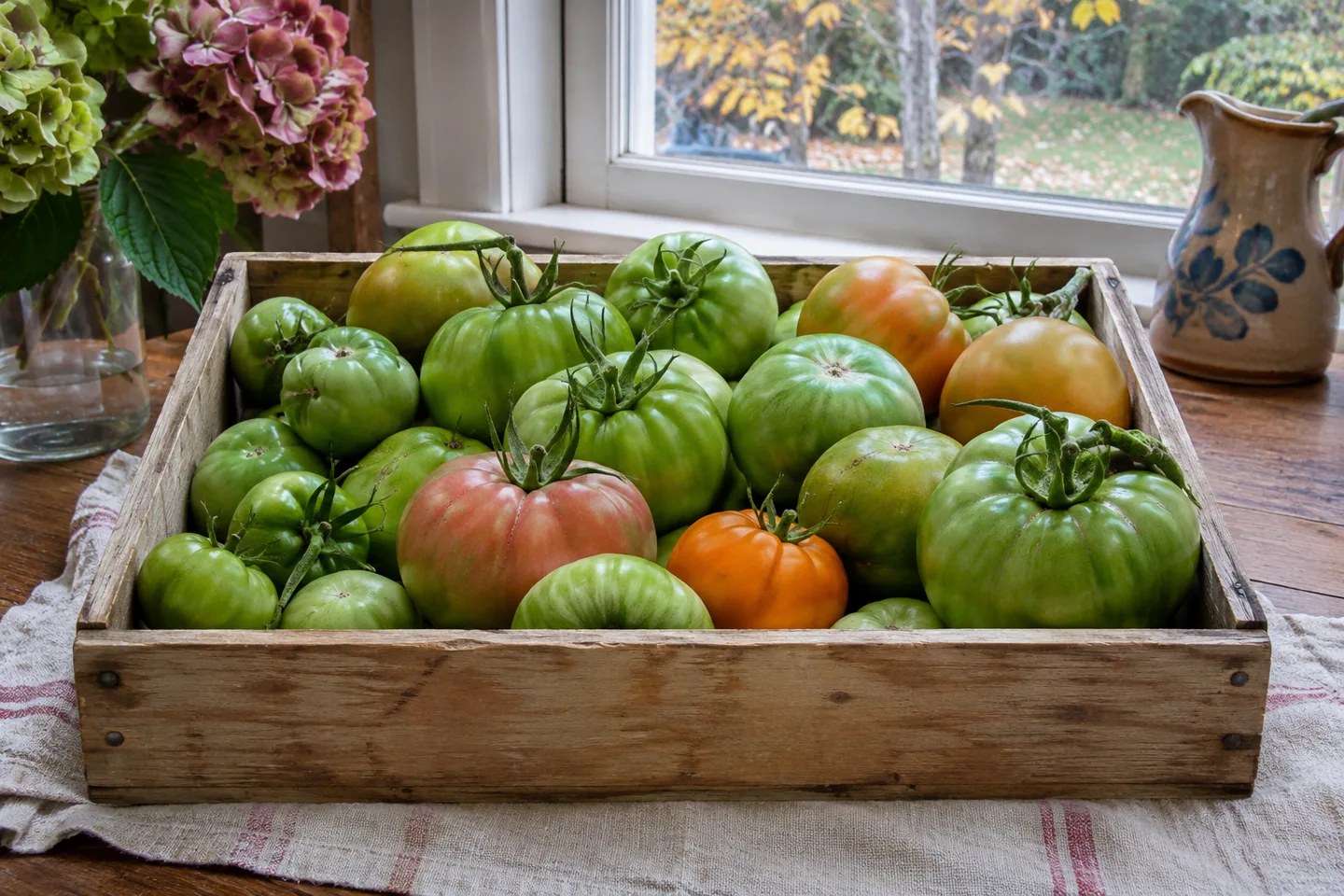
What you can do in fall is finish the season well. Once nights cool, pick fruit as soon as it starts to change color; it ripens just as well indoors. Before the first killing frost, pick the mature green tomatoes too. Maryland Extension says they keep for 1 to 3 weeks in a cool spot between 50 and 70°F and ripen at about 70°F. Light is not needed for ripening, and the fridge is the wrong place for them.
Then pull the plants, bag any diseased leaves rather than composting them, and note where the tomatoes grew so next year's bed is somewhere else.
Are tomato plants safe for pets?
The leaves and stems are not. The ASPCA lists the tomato plant as toxic to dogs, cats and horses because of solanine, with signs such as drooling, stomach upset and weakness. Ripe fruit is non-toxic. If your dog chews on the vines, fence the bed, and call your vet or the ASPCA Animal Poison Control Center if you think a pet has eaten the leaves.
The short version
Put tomatoes in the sunniest spot you have, plant them deep, and water deeply on a steady rhythm under a layer of mulch. Support them at planting, keep the lower leaves off the soil, and hold back the fertilizer until the first fruit sets. When a leaf changes, change one thing at a time and give the plant a week before you judge the result.
Check your growing conditions with the plant watering calculator.
Frequently asked questions
In the ground, aim for about 1 inch of water a week from rain and watering combined, given as one or two deep soakings rather than daily sprinkles. Water again when the top 2 to 3 inches of soil are dry. Tomatoes in containers dry out much faster and usually need water at least once a day in summer, sometimes twice in a heat wave.
They need nutrients, but usually less fertilizer than people give them. Work compost into the soil and use a starter fertilizer at planting, then wait until the first fruits appear before you side-dress. Too much nitrogen early on grows a big leafy plant that sets few tomatoes. Follow the label and do not add Epsom salt unless a soil test calls for it.
The idea is that baking soda lowers soil acidity and makes the fruit sweeter. We found no university extension guidance that supports it. Sweetness comes mainly from the variety, full sun and steady watering, and baking soda adds sodium that builds up in the soil, so leave it in the kitchen.
In most of the US, yes. Most tomato varieties need 65 to 90 days from transplant to harvest, and frost kills them, so a fall planting will not have time to ripen. Only frost-free areas can plant this late. In October, focus on picking mature green fruit before the first frost and ripening it indoors.
Share article
About the author

Keep checking your plant
Plant care reference
Indoor plant care
Build a routine around your plant, light and potting mix.
Plant care reference
Why is my plant dying
Trace leaf and root symptoms before choosing a care change.
Plant care reference
Pothos plant care
Choose a growing spot and prune a trailing pothos for fuller growth.
Plant care reference
How to fix root rot
Inspect root firmness and drainage, then decide whether to repot.