Brown Tips on Pothos Leaves: Read the Tip, Then Fix the Cause
Filip Leszczyński 25 November 2026 13 min read
In this article
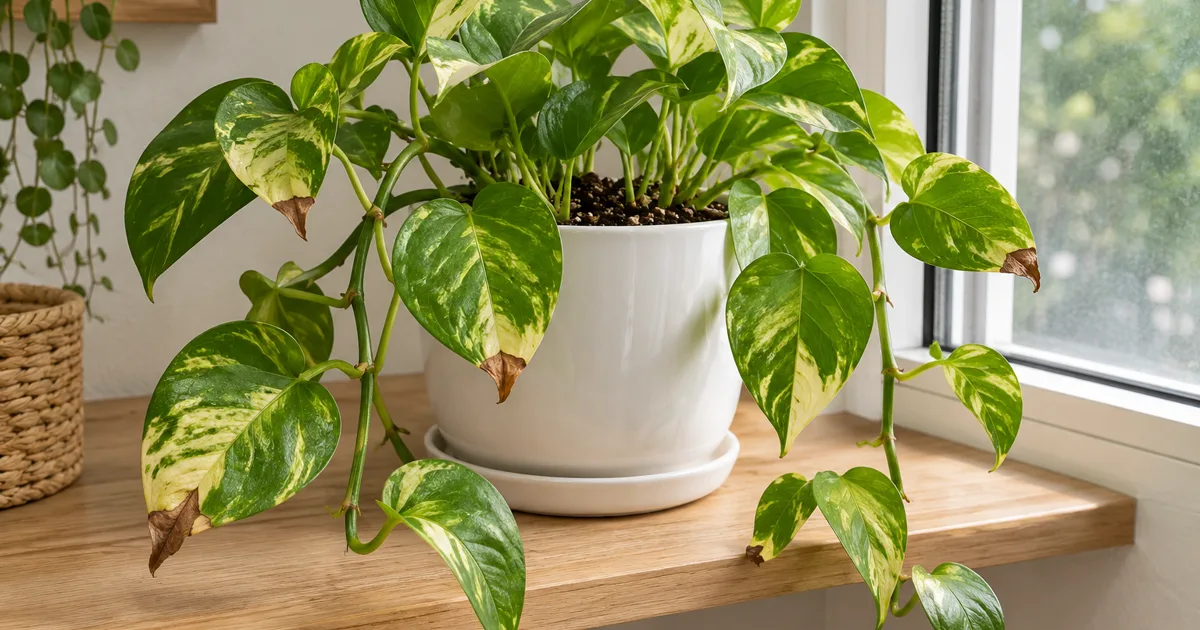
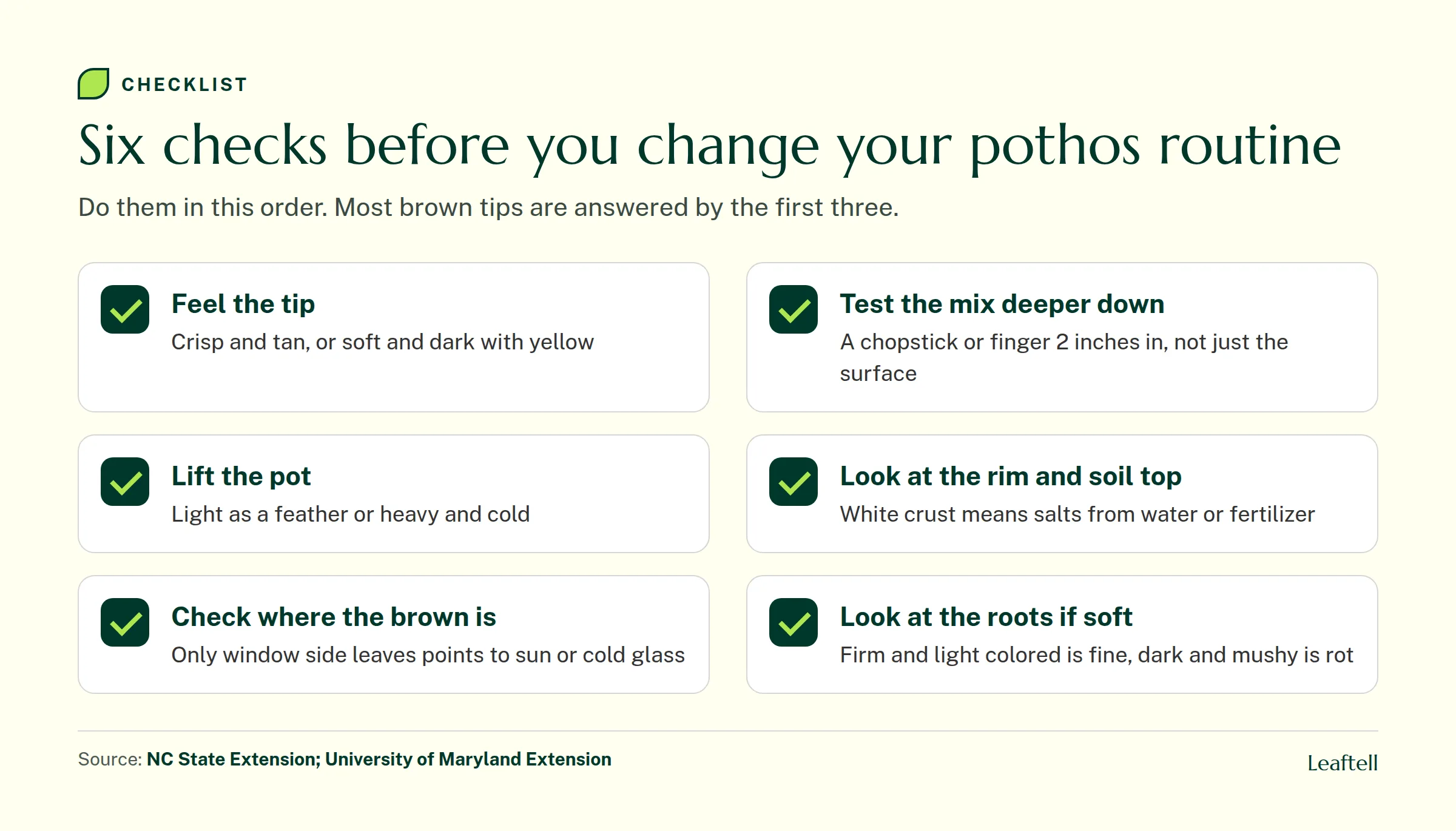
Brown tips on pothos leaves almost always come from the roots, not the air: the soil dried out too far, stayed wet too long, or built up salts from fertilizer and tap water. Feel the brown tip and test the soil 2 inches down before you change anything, because a crisp tan tip and a soft dark one need opposite fixes.
That is the part most answers get backwards. Pothos is one of the most forgiving houseplants there is, so when its tips brown, the usual advice is "raise the humidity". Misting rarely touches the real cause. The tip is simply the part of the leaf farthest from the roots, so it is the first place to run short when water stops arriving, whatever the reason. Once a tip has gone brown it stays brown. The goal is to stop the next leaf from doing the same, and to know within a couple of weeks whether your fix worked.
Feel the brown before you change anything
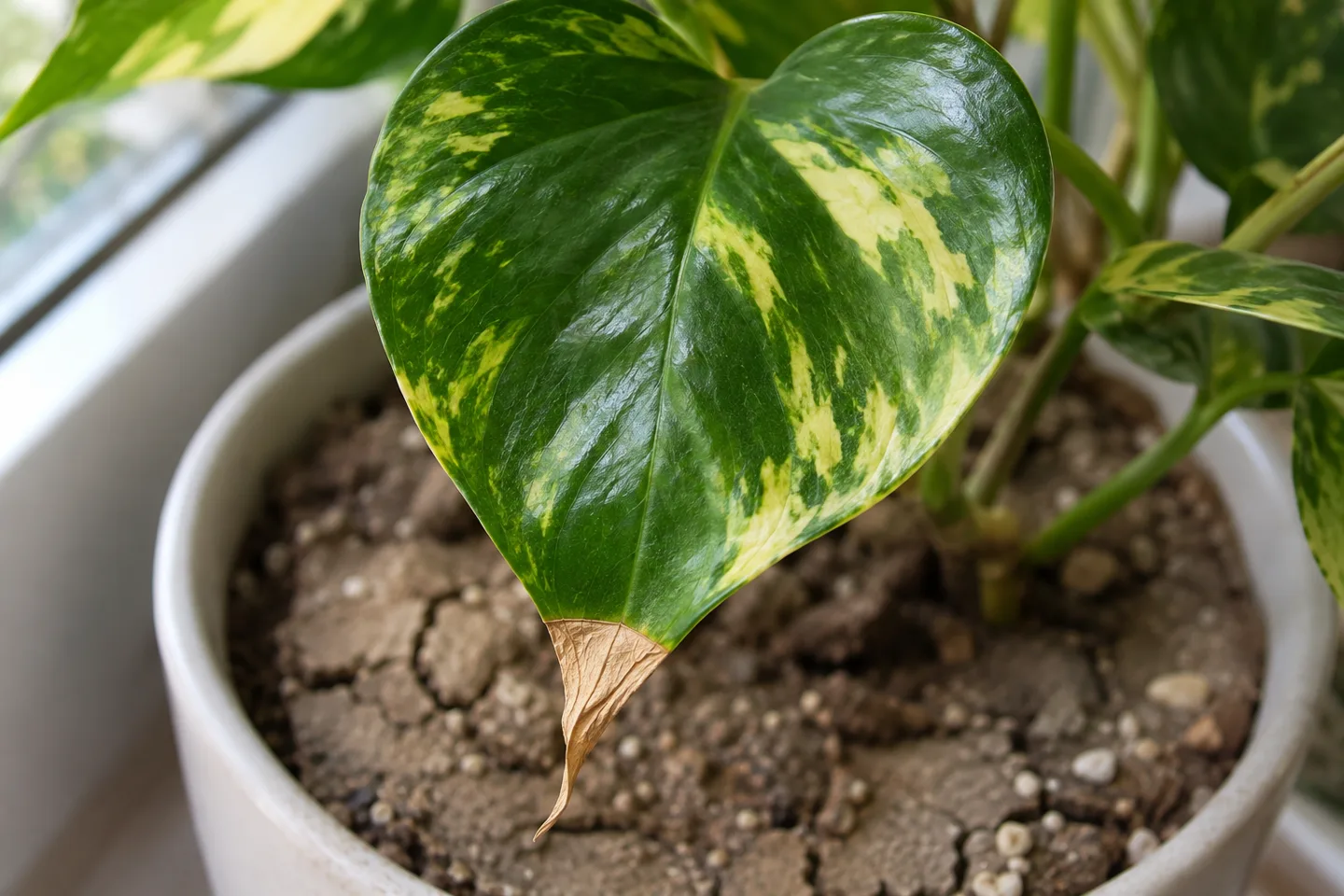
Pick one browned leaf and look closely at two things: the texture of the brown part, and the edge where brown meets green. That edge tells you more than the color does.
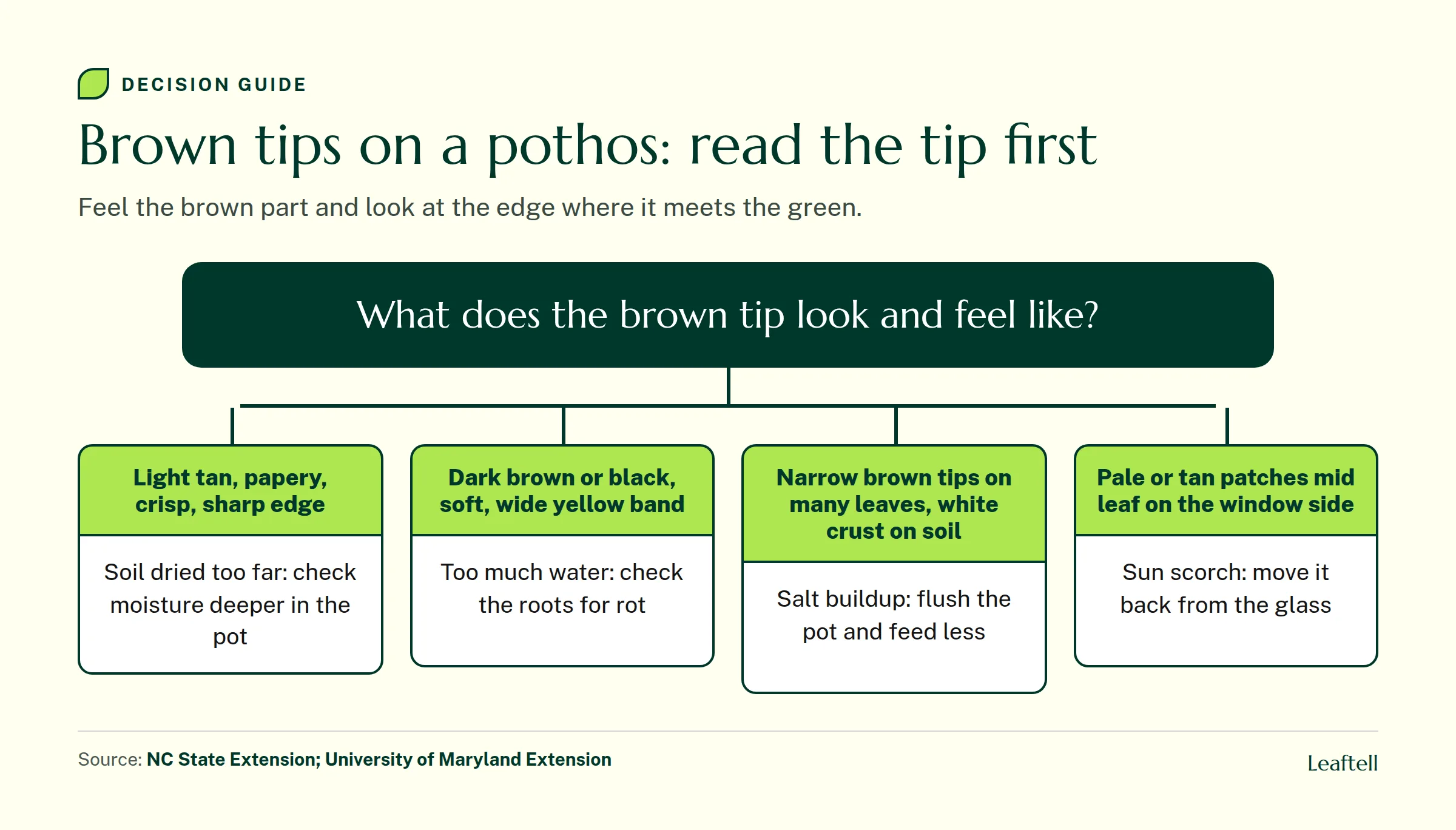
| What you see on the tip | What the soil and pot show | Most likely cause | First thing to do |
|---|---|---|---|
| Light tan, papery, crisp, sharp line to the green | Mix dry 2 inches down, pot light, mix pulling away from the pot wall | Soil drying out too far between waterings | Soak the pot thoroughly, then check deeper before the next watering |
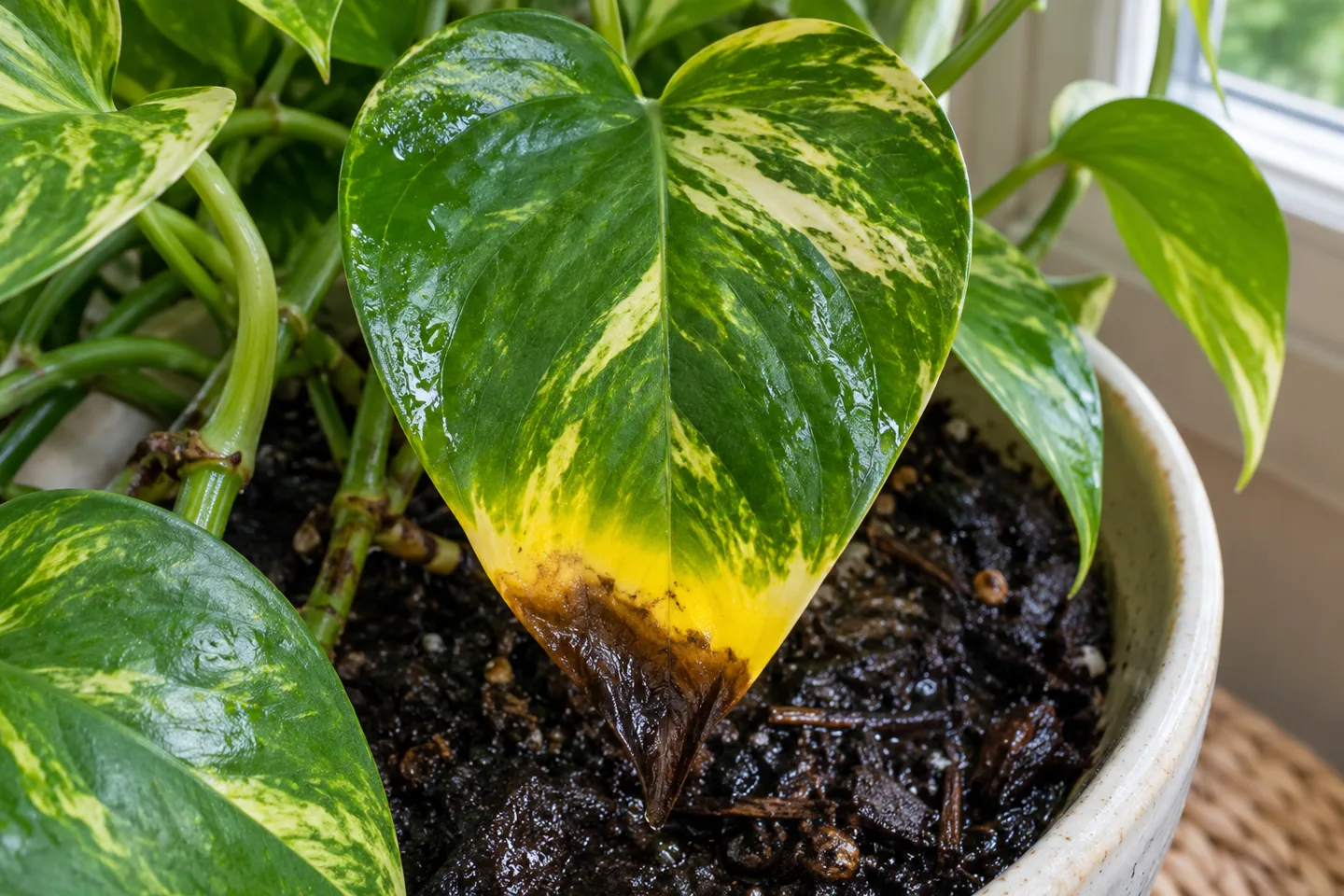
| Dark brown or black, soft, wide yellow band behind it | Mix still damp days after watering, sour smell, pot heavy | Too much water, roots short of air or rotting | Stop watering, check the roots |
| Narrow brown tips on many leaves at once | White crust on the soil or pot rim, regular feeding | Salt buildup from fertilizer and tap water | Flush the pot with plain water, feed less |
| Tan or pale patches in the middle of the leaf | Leaves touching or close to a sunny window | Sun scorch | Move it a few feet back or behind a sheer curtain |
| Brown tips only on the window side in winter | Leaves touching cold glass or near a vent | Cold or hot drafts | Move it away from the glass and vents |
If two rows seem to fit, trust the soil over the leaf. Our guide to telling overwatering from underwatering walks through the same soil checks for any houseplant.
Cause 1: the soil dries out too far between waterings
This is the most common reason for brown tips on a pothos, and it is easy to miss because the plant does not wilt dramatically. NC State Extension says to let the well drained potting mix dry out between waterings. Many owners take that too far: the top dries, then the whole root ball dries, and the leaf tips pay for it.
The tip of a pothos leaf is the last stop for water. When the mix goes bone dry, the tip loses water first and dies back into a crisp, light tan edge with a clean line against the green. You will often see the potting mix shrunk away from the pot wall, so the next watering runs down the gap and out the drainage hole without wetting the root ball at all.
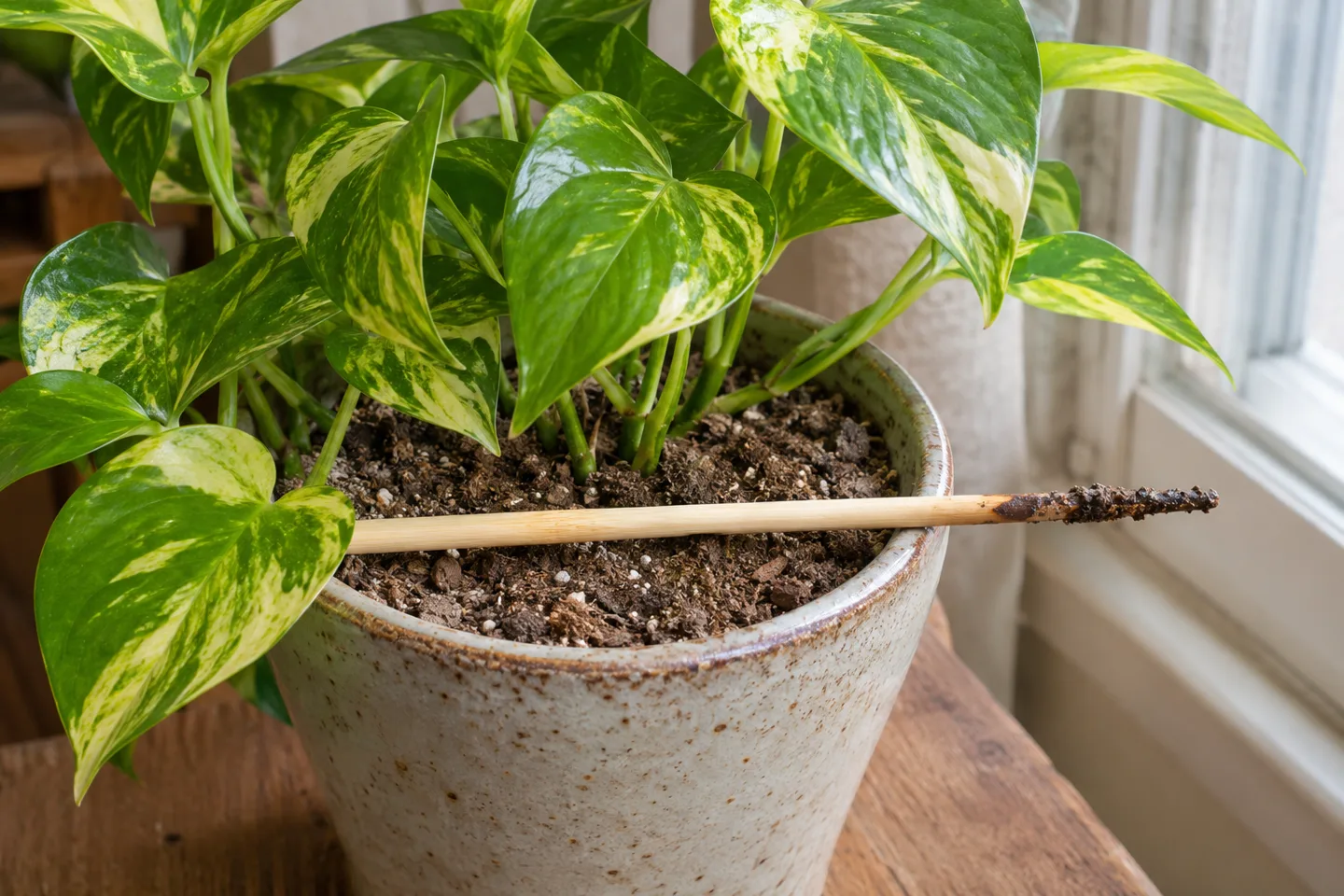
The fix is how you water, not how often. Water until it runs out of the drainage holes, wait ten minutes, then water again so the mix actually takes it up. If the mix has shrunk badly, set the pot in a bowl of water for 20 to 30 minutes so it soaks from the bottom, then let it drain fully. Before the next watering, push a wooden chopstick or a finger about 2 inches into the mix. Water when it comes out dry at that depth, not when the surface looks pale. Our pothos plant care guide covers light and watering in more depth.
Cause 2: too much water, not too little
A brown tip that is dark, almost black, and soft to the touch is a different problem. NC State notes that root rot and blackening of the leaf margins can occur with overwatering. Roots sitting in wet mix run short of air, start to rot, and stop moving water up to the leaves. The leaf ends up short of water even though the pot is wet, which is why this kind of browning often comes with a wide yellow band between the brown and the green.
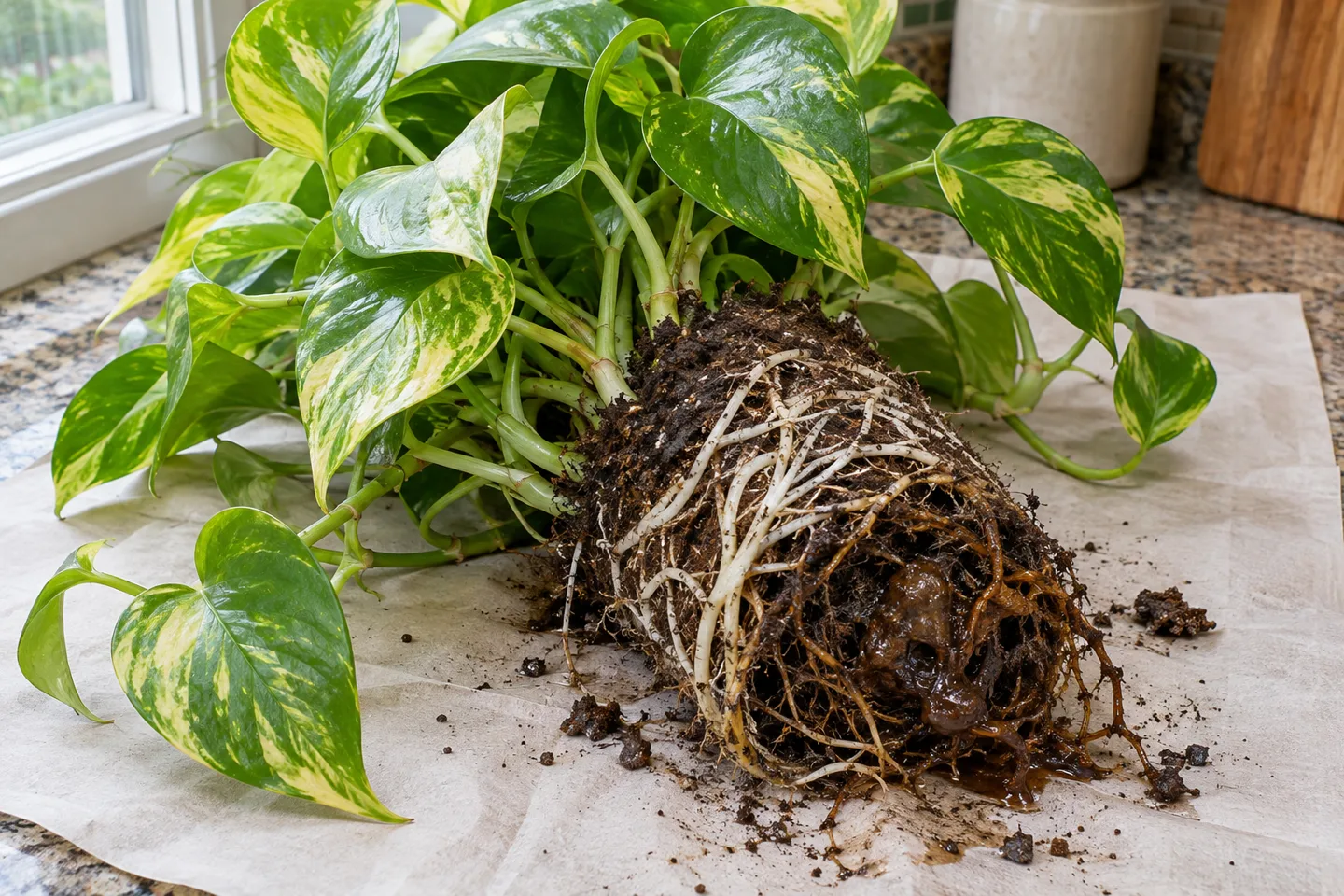
Stop watering and slide the plant out of its pot. University of Maryland Extension describes healthy roots as light colored and firm, and diseased roots as dark and soft. A few dark roots in an otherwise firm root ball mean you caught it early: let the mix dry further before the next watering. A large mushy section needs cutting out and fresh mix, which our root rot guide explains step by step.
If the leaves are turning more yellow than brown, the problem has usually gone a stage further. Our article on pothos leaves turning yellow helps separate old leaf drop from a watering problem.
Cause 3: salts from fertilizer and tap water
When many leaves get narrow brown tips at the same time and you feed regularly, look at the top of the soil and the rim of the pot. A white or tan crust is dissolved minerals and fertilizer salts left behind as water evaporates. The roots draw that salty water up, and the leaf tips are where the salts end up.
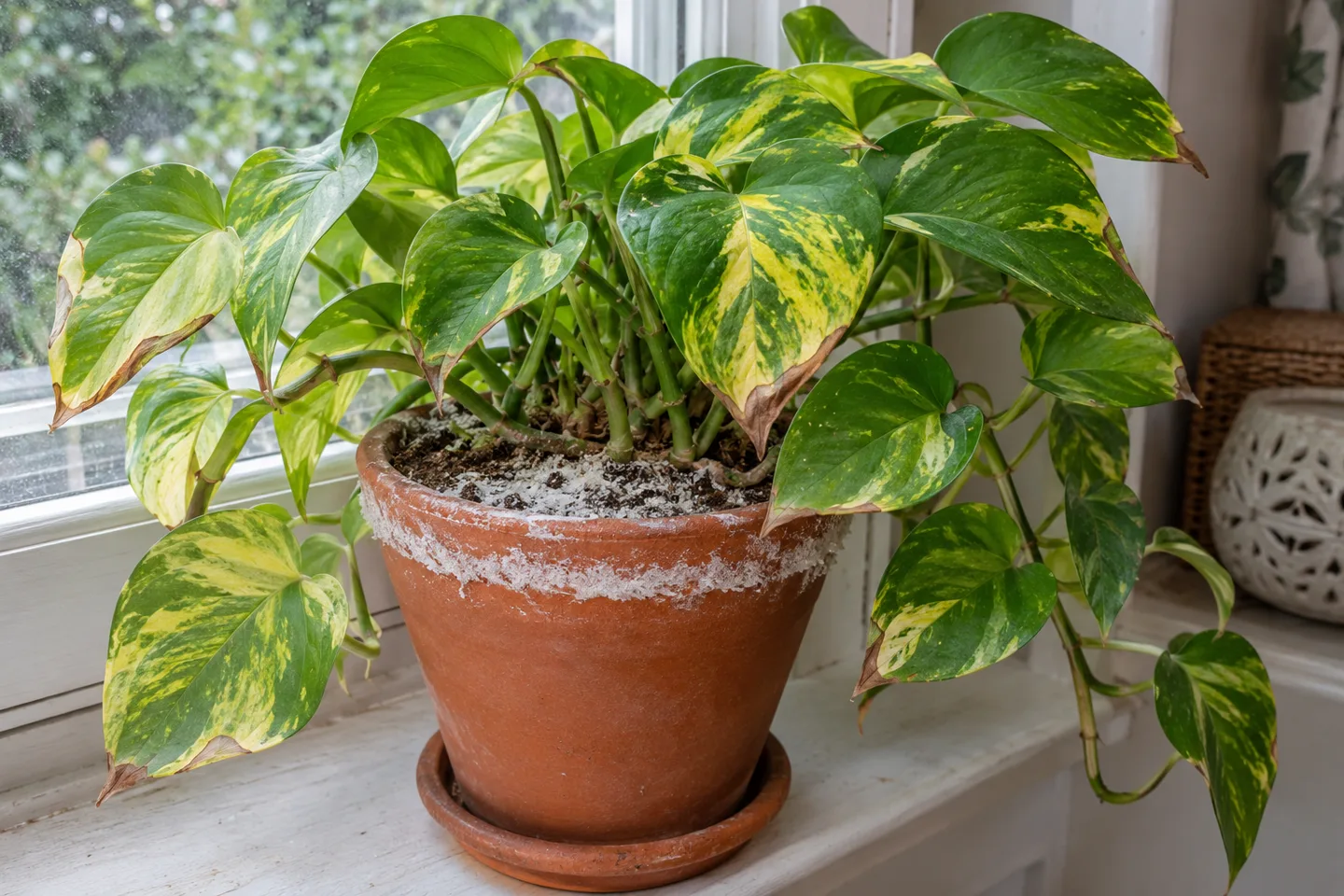
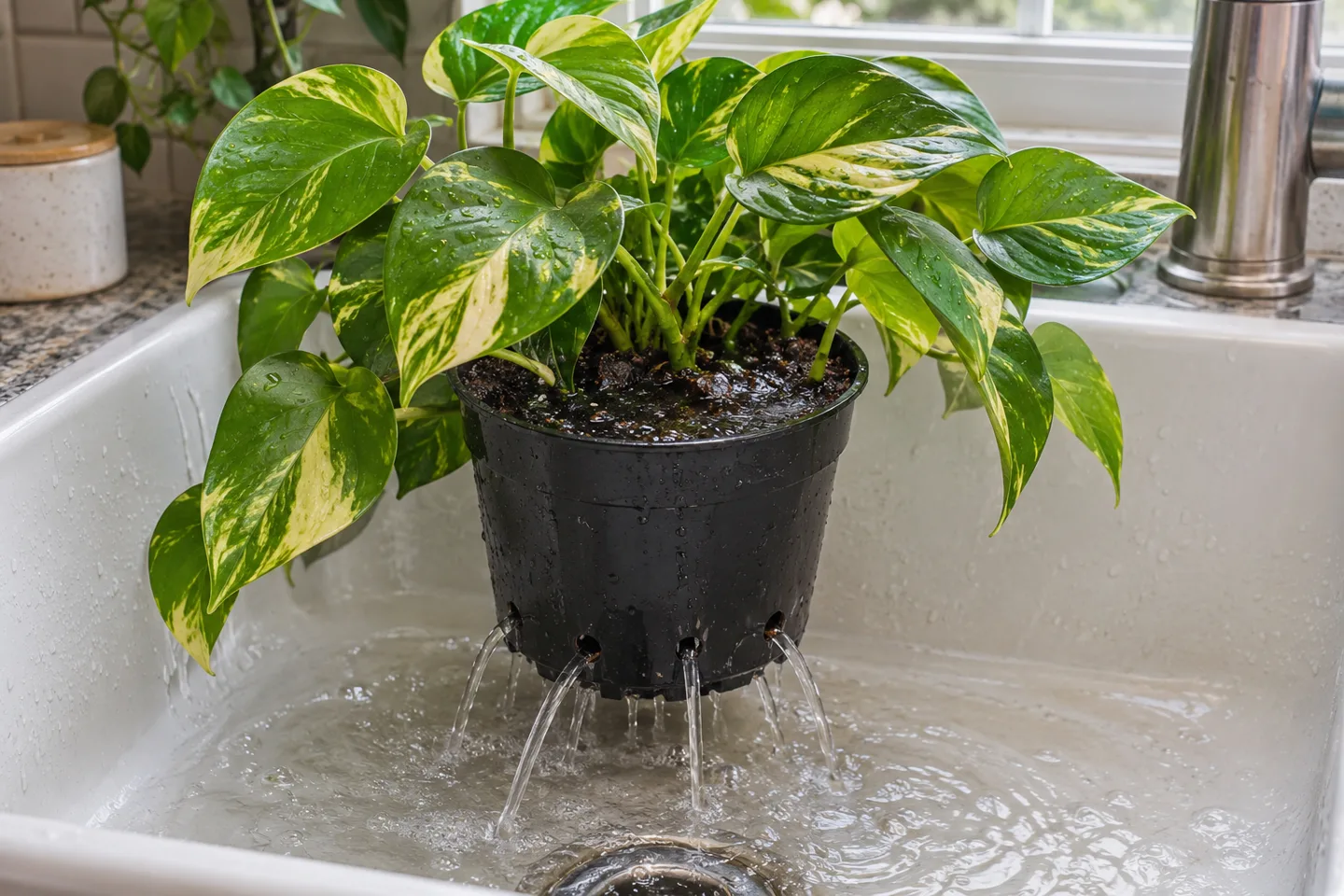
NC State suggests fertilizing pothos every other month and skipping winter, when growth slows. More feed does not mean more growth when the light is low; it means more salt in the pot. UMD's advice for high soluble salts is to leach the soil with fresh water, at least three times the volume of the pot.
How to flush salts out of a pothos pot
- Take it to the sink or shower
Use a pot with drainage holes. If your pothos sits in a cover pot with no hole, lift the inner pot out first.
- Scrape off the crust
Remove the top half inch of crusted mix with a spoon and wipe the white ring off the pot rim.
- Run water through slowly
Pour plain room temperature water through the soil until about three times the pot's volume has drained out the bottom.
- Let it drain fully
Leave it in the sink for 30 minutes so no water sits at the bottom, then top up with fresh potting mix.
- Feed less from now on
Skip fertilizer for a month, then go back to a diluted feed every other month in spring and summer only.
Tap water gets blamed a lot. For pothos it is rarely the main cause on its own; a pot that is never flushed and is fed every week will brown with almost any water. Flushing a few times a year usually solves it without switching to distilled water.
Cause 4: direct sun, heat and cold drafts
Pothos prefers bright, indirect light, according to NC State. Pressed against a south or west window in summer, the leaves nearest the glass can scorch. Sun damage looks different from tip burn: pale, bleached or tan patches in the middle of the leaf, often only on the side facing the window, while leaves further back stay green. UMD lists bleached or whitened leaves as a sign of too much light.
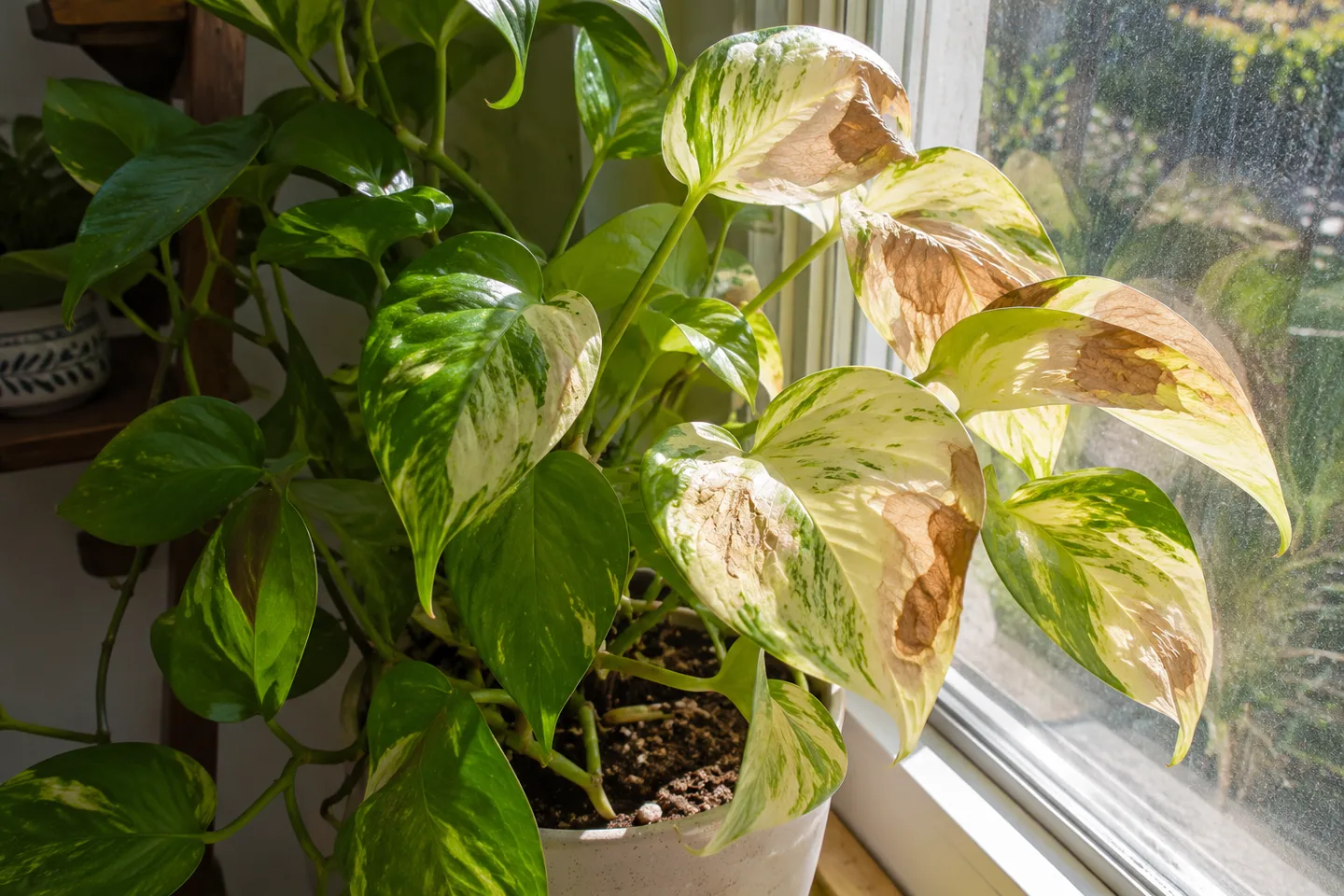
Move the plant a few feet back from the glass or filter the light with a sheer curtain. Winter brings the opposite problem: leaves touching cold glass, or sitting in the dry blast of a heating vent, brown at the edges. If only one side of the plant is affected, look at what that side is touching.
Cause 5: dry air, the cause everyone blames first
Dry indoor air can add to tip browning, especially in winter when the heating runs, and NC State does suggest a humidifier or a tray of wet pebbles to raise humidity around a pothos. But pothos copes with ordinary home air better than most tropical plants. If the soil checks above point to a watering or salt problem, fix that first. Misting the leaves wets them for a few minutes and does little for the roots.
If you have already corrected watering and feeding and new tips still brown in winter, a pebble tray or a small humidifier nearby is a reasonable next step.
Brown tips on pothos cuttings in water
Pothos roots easily in a jar of water, and cuttings kept that way can brown at the tips too. The usual reasons are water that has not been changed for weeks, a jar sitting in hot direct sun, or mineral buildup from evaporating tap water. Change the water every week or so, rinse the jar, and keep it in bright indirect light.
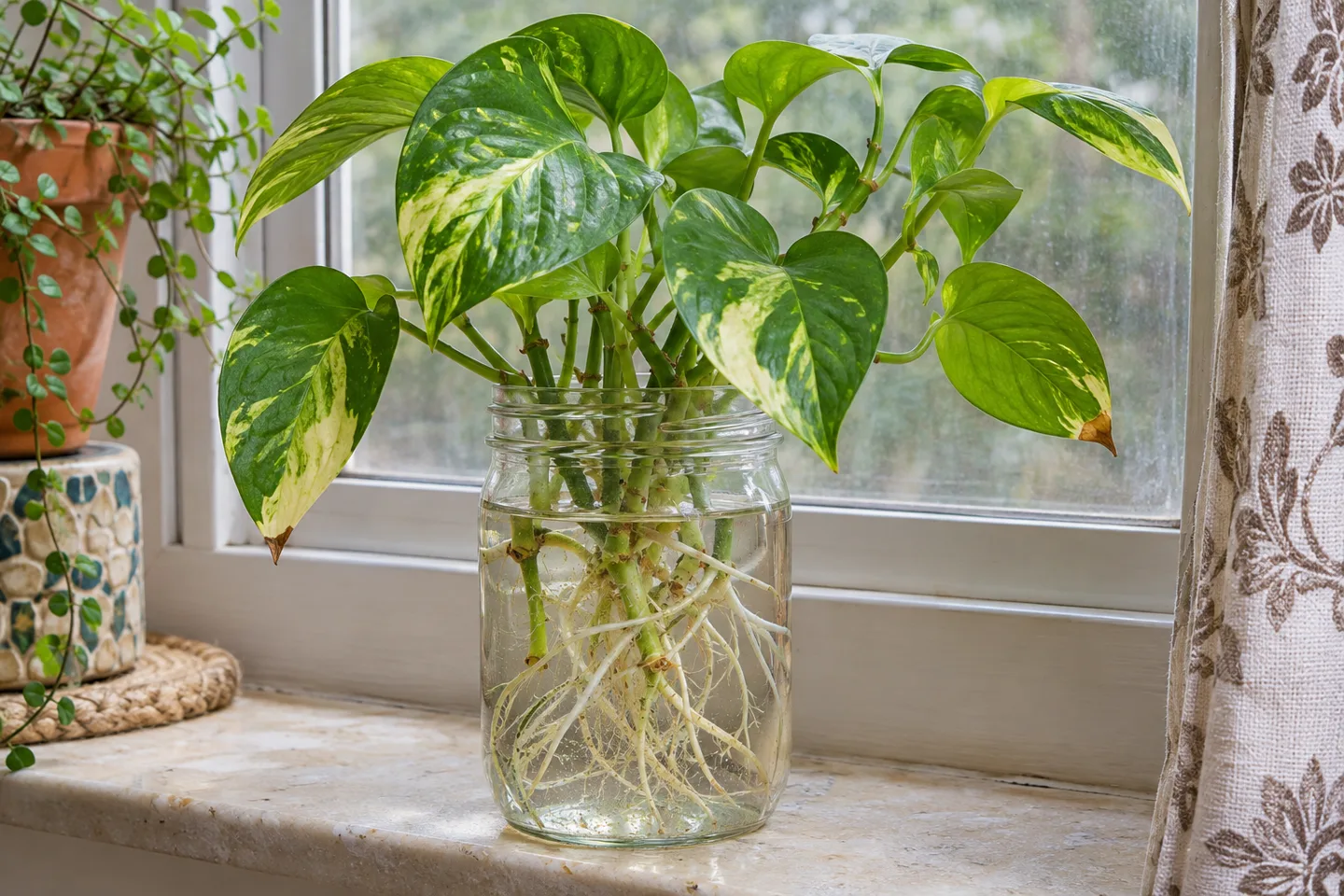
Some tip browning also happens after you move a rooted cutting from water into soil, while it grows roots suited to potting mix. Keep the new mix lightly moist for the first few weeks after potting up. Our guide on how to propagate pothos covers that switch.
Should you cut off brown tips on pothos?
Yes, if they bother you, but only after you have fixed the cause. A brown tip will not turn green again, and it does not spread to the rest of the leaf by itself. Use clean, sharp scissors and cut along the natural shape of the leaf, leaving a thin line of brown so you do not cut into healthy tissue and start a new dry edge.
If more than half of a leaf is brown or yellow, remove the whole leaf at the stem instead. The plant will not miss it, and a fresh potting mix suited to the plant, such as one from our potting mix guide, does more for new growth than an old damaged leaf.
How to tell the fix is working
Mark one browned leaf with a twist tie, or photograph it, on the day you change something. Old tips stay brown, so judge by what happens next. Over the following two to three weeks, check that the brown on the marked leaf has not spread further and that the next new leaf comes out clean. Treat these as check in reminders, not a schedule: growth is slower in winter and in lower light.
If brown tips keep appearing after a month of steady watering and a flush, look again at the roots and the light, and compare notes with our general guide to brown tips on leaves, which covers the same causes across other houseplants, or the monstera version if you keep both.
Pothos is also toxic to cats and dogs: the ASPCA lists its insoluble calcium oxalates as causing mouth irritation, drooling and vomiting. Sweep up trimmed leaf tips so pets cannot chew them.
The short version
Feel the brown tip before you do anything. Crisp and tan means the mix dried out too far, so soak it properly and check 2 inches down next time. Soft and dark with yellow means too much water, so check the roots. Many narrow tips with a white crust means salts, so flush the pot and feed less. Then ignore the old brown and judge the next new leaf.
Sources
- NC State Extension, Epipremnum aureum plant profile
- University of Maryland Extension, Diagnose indoor plant problems
- ASPCA, Golden pothos toxicity
Check your growing conditions with the plant watering calculator.
Frequently asked questions
It usually means water is not reaching the leaf properly. Crisp, light brown tips point to soil drying out too far; soft, dark brown tips with yellow point to overwatering and stressed roots; many narrow brown tips with a white crust on the soil point to salt buildup from fertilizer. Brown patches in the middle of the leaf near a window are usually sun scorch.
An overwatered pothos has leaves that turn yellow and then soft and dark brown, often starting at the tips and edges, while the potting mix stays damp for days. The plant may droop even though the soil is wet, and the roots look dark and feel mushy instead of light colored and firm.
There is no fixed number of days that works in every home. Water when the mix is dry about 2 inches down, then water thoroughly until it drains out the bottom. In bright summer light that can come around quickly; in a dim winter room it can take much longer.
You can, once you have fixed the cause. Brown tips never turn green again. Trim with clean scissors along the leaf's natural shape and leave a thin brown edge, or remove the whole leaf if most of it is damaged.
Cuttings in water usually brown at the tips when the water is not changed often enough, the jar sits in hot direct sun, or minerals build up as tap water evaporates. Change the water about once a week and keep the jar in bright, indirect light.
Not for brown tips. Fresh grounds spread on top of the pot can form a mat that stays damp, which suits mold and fungus gnats, and they are not a complete fertilizer. A diluted houseplant fertilizer every other month in the growing season is the simpler choice.
Share article
About the author

Keep checking your plant
Plant care reference
Indoor plant care
Build a routine around your plant, light and potting mix.
Plant care reference
Why is my plant dying
Trace leaf and root symptoms before choosing a care change.
Plant care reference
Pothos plant care
Choose a growing spot and prune a trailing pothos for fuller growth.
Plant care reference
How to fix root rot
Inspect root firmness and drainage, then decide whether to repot.