Brown Tips on Monstera Leaves: 5 Causes and the Fix for Each
Filip Leszczyński 5 November 2026 11 min read
In this article
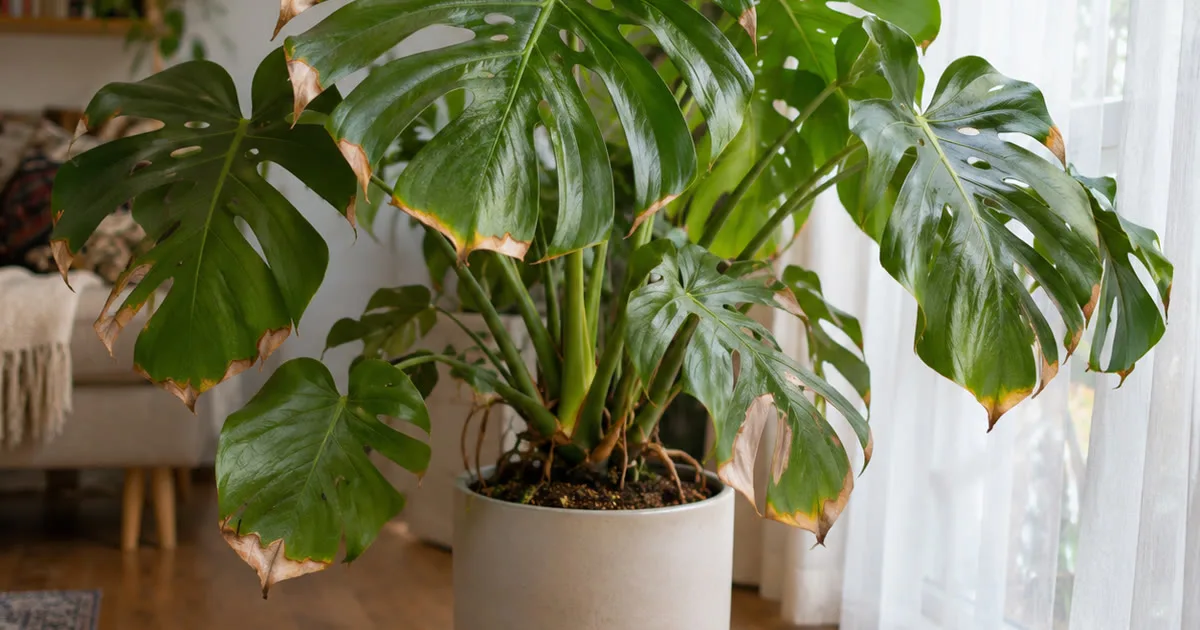
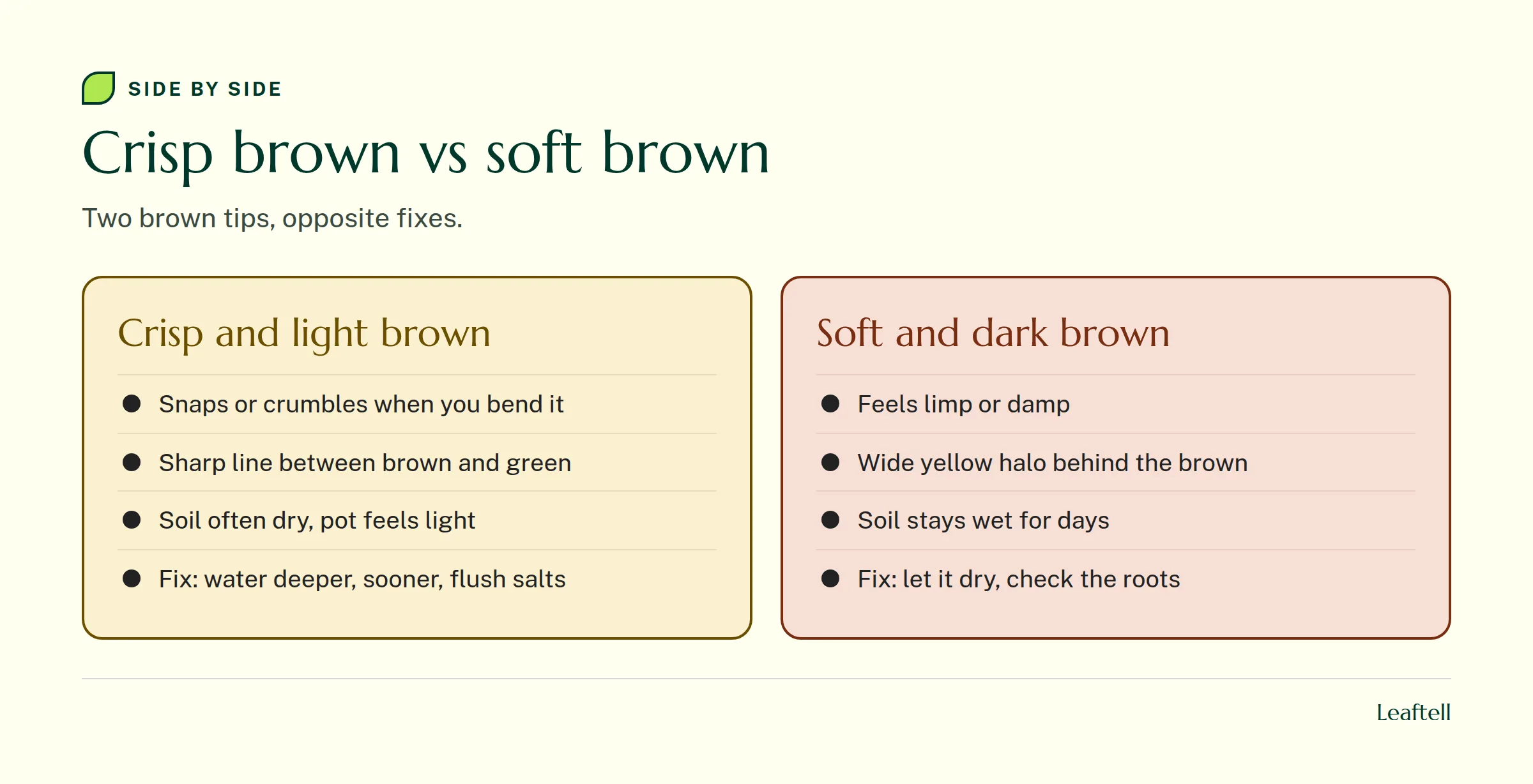
Brown tips on monstera leaves usually mean the roots ran short of water, or of clean water, at some point in the last few weeks. Crisp, light brown tips point to soil that dried out too far or salts building up in the pot. Soft, dark brown tips with a yellow band behind them point the other way: soil that stays wet too long.
That is the part most fixes miss. The same brown tip can come from opposite problems, so touch the brown before you change anything. The brown part will not turn green again, and you judge your fix by the next new leaf.
Feel the brown before you change anything
Bend a brown tip gently between two fingers. Then look at the line where brown meets green, and at which leaves have it. Those three checks narrow the cause more than any care schedule.
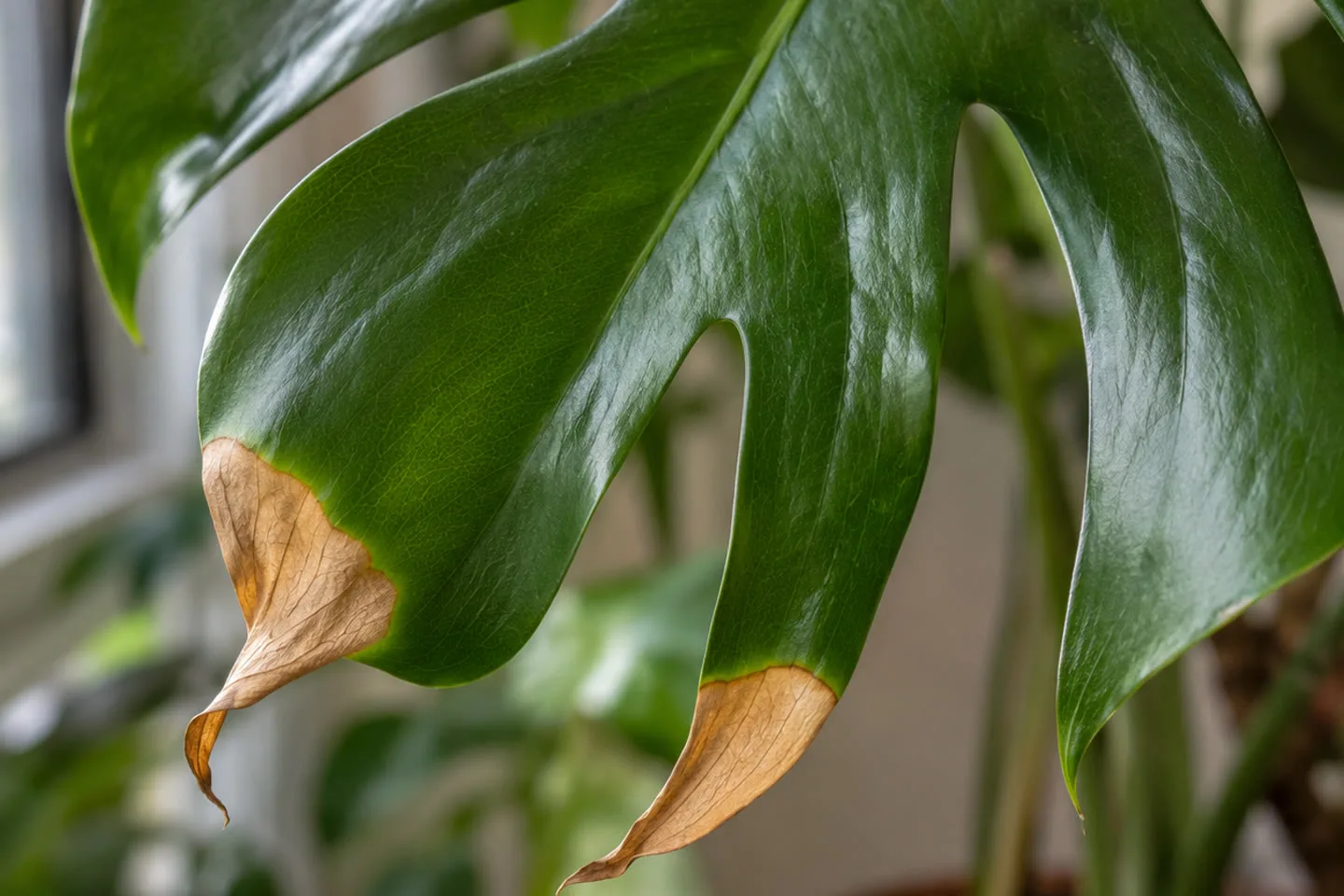
A crisp, papery tip with a clean edge is a dry-root sign. The leaf tips and margins are the furthest point from the roots, so when water runs short they die first. A soft, dark tip with a wide yellow halo behind it means the roots are struggling in wet soil, which belongs with yellowing monstera leaves more than with dry air.
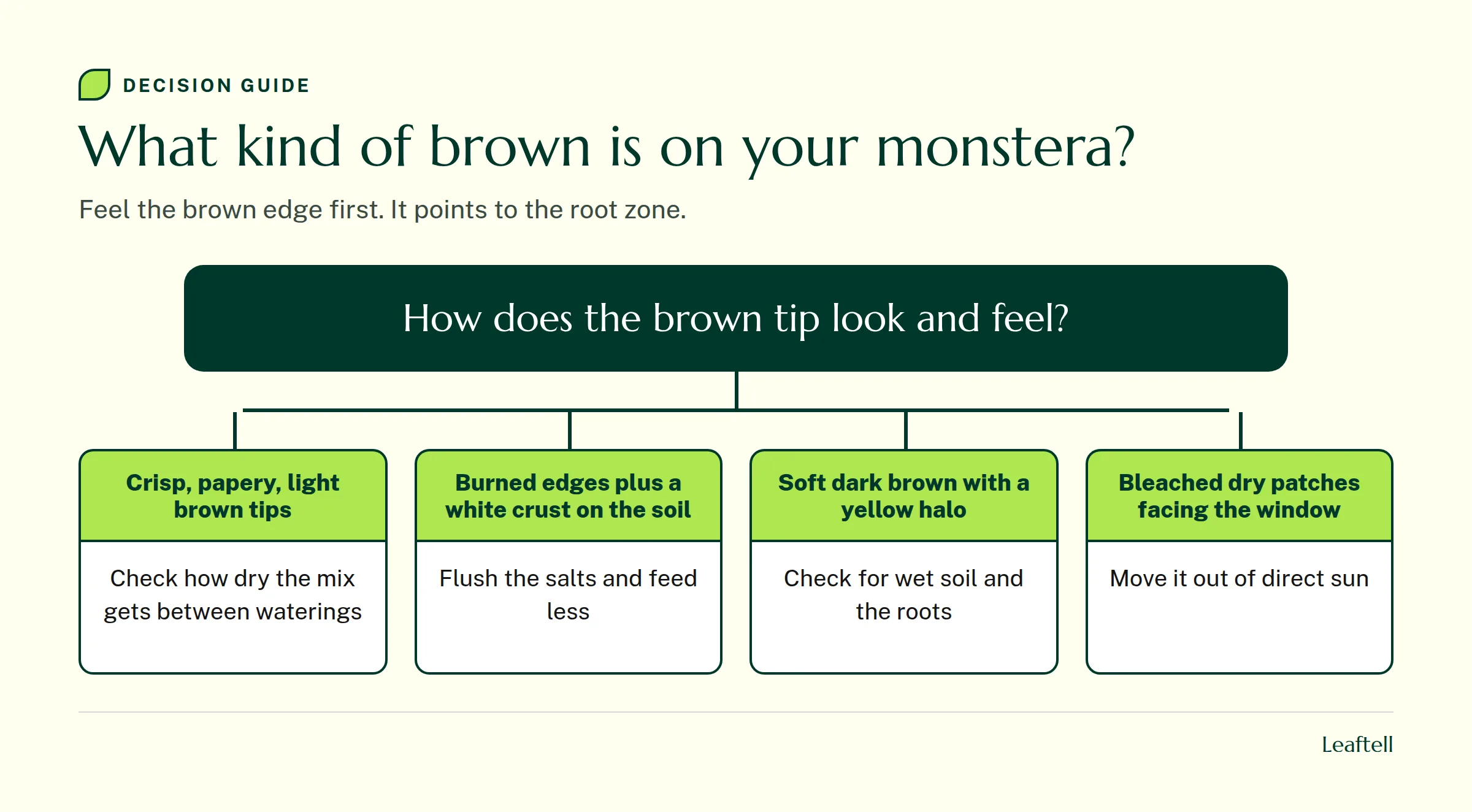
| What you see | Most likely cause | What to check first |
|---|---|---|
| Crisp light brown tips on many leaves, soil often bone dry | Roots drying out between waterings | How deep the mix dries before you water |
| Burned edges plus a white crust on the soil or rim | Fertilizer or tap water salts | When you last fed it and whether water drains out |
| Soft dark brown tips with a yellow halo, wet soil | Too much water, roots short of air | The soil a few inches down, then the roots |
| Bleached, dry patches on leaves facing the window | Direct sun | Whether sun hits the leaves for part of the day |
| Thin brown edges, plant near a heater, vent or cold door | Dry or moving air, temperature swings | Distance from the vent or draft |
Cause 1: the soil dries out too far between waterings
This is the most common reason for crisp brown tips on a monstera. Its leaves are huge, and big leaves lose a lot of water. When the pot goes bone dry, even for a day or two, the leaf edges pay for it.
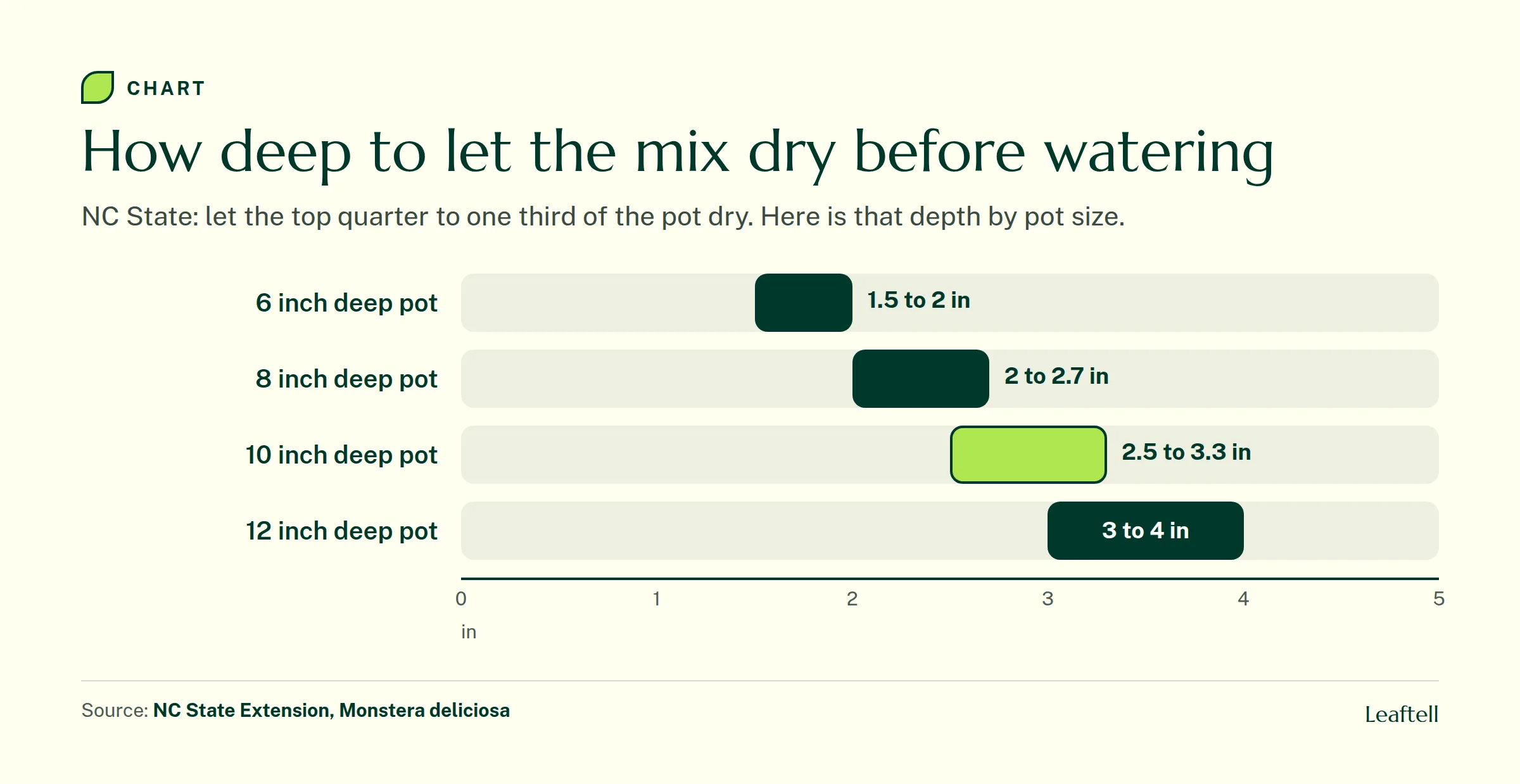
NC State Extension's Monstera deliciosa page says to water thoroughly, then let the top quarter to one third of the pot dry before watering again. That is deeper than the usual "top inch" rule. It also means the bottom two thirds should never go fully dry.
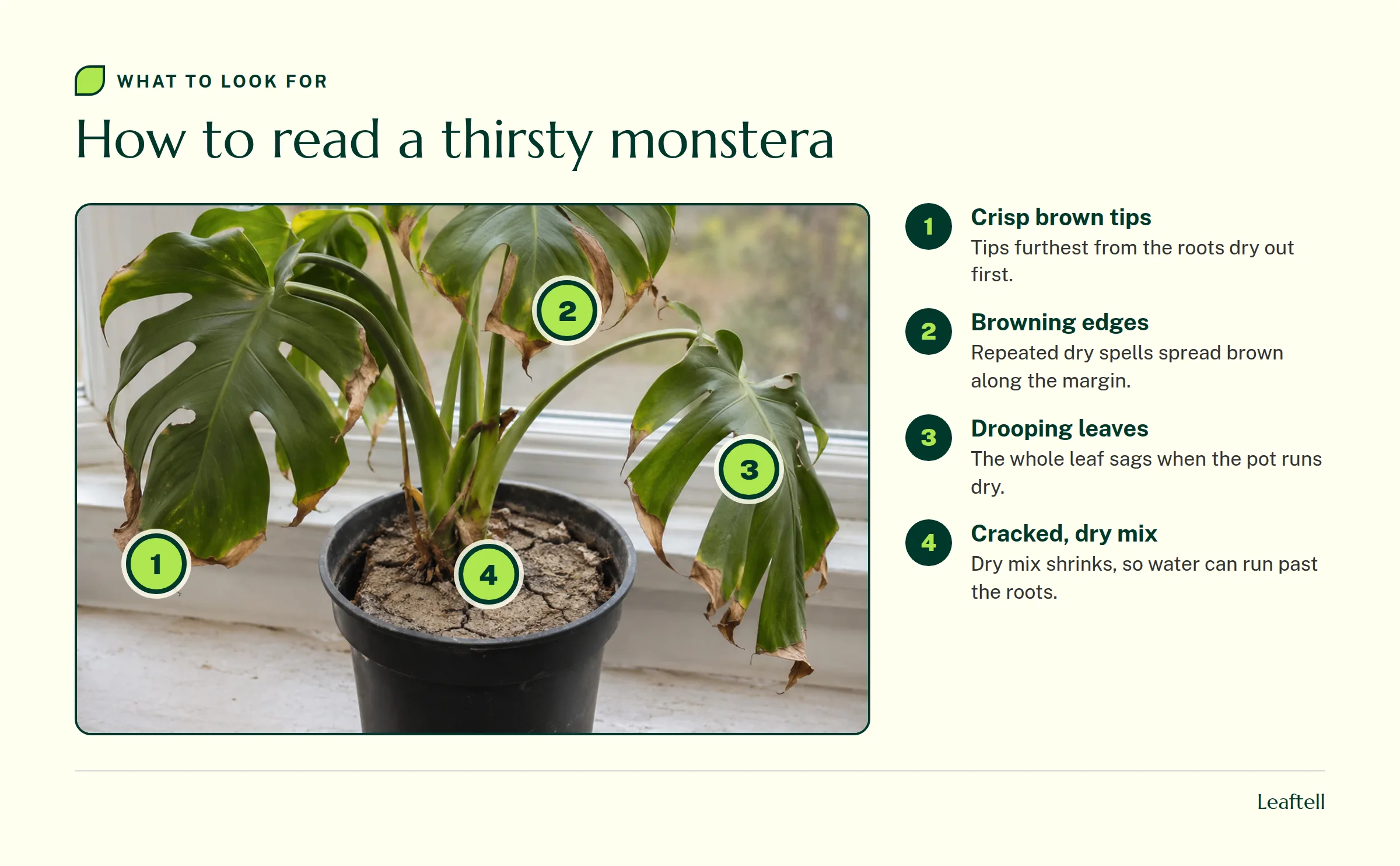
The catch is the word "thoroughly". A small splash every few days wets the top of the mix and never reaches the bottom roots. Water until it runs out of the drainage holes, then let it drain.
To check, push a finger or a plain wooden skewer into the mix. If you are not sure what dry feels like at that depth, this soil check walks through it. If the mix has shrunk away from the pot wall, water runs down the gap and straight out. Soak the whole pot in a bucket for 20 to 30 minutes to rewet it.
Cause 2: salts from fertilizer and tap water
Burned-looking edges plus a white or tan crust on the soil or pot rim mean salt. The University of Georgia's indoor plant guide says excess fertilizer salts build up as a whitish crust on the mix or near the rim, and that salt burn shows up as leaf margin and tip burn.
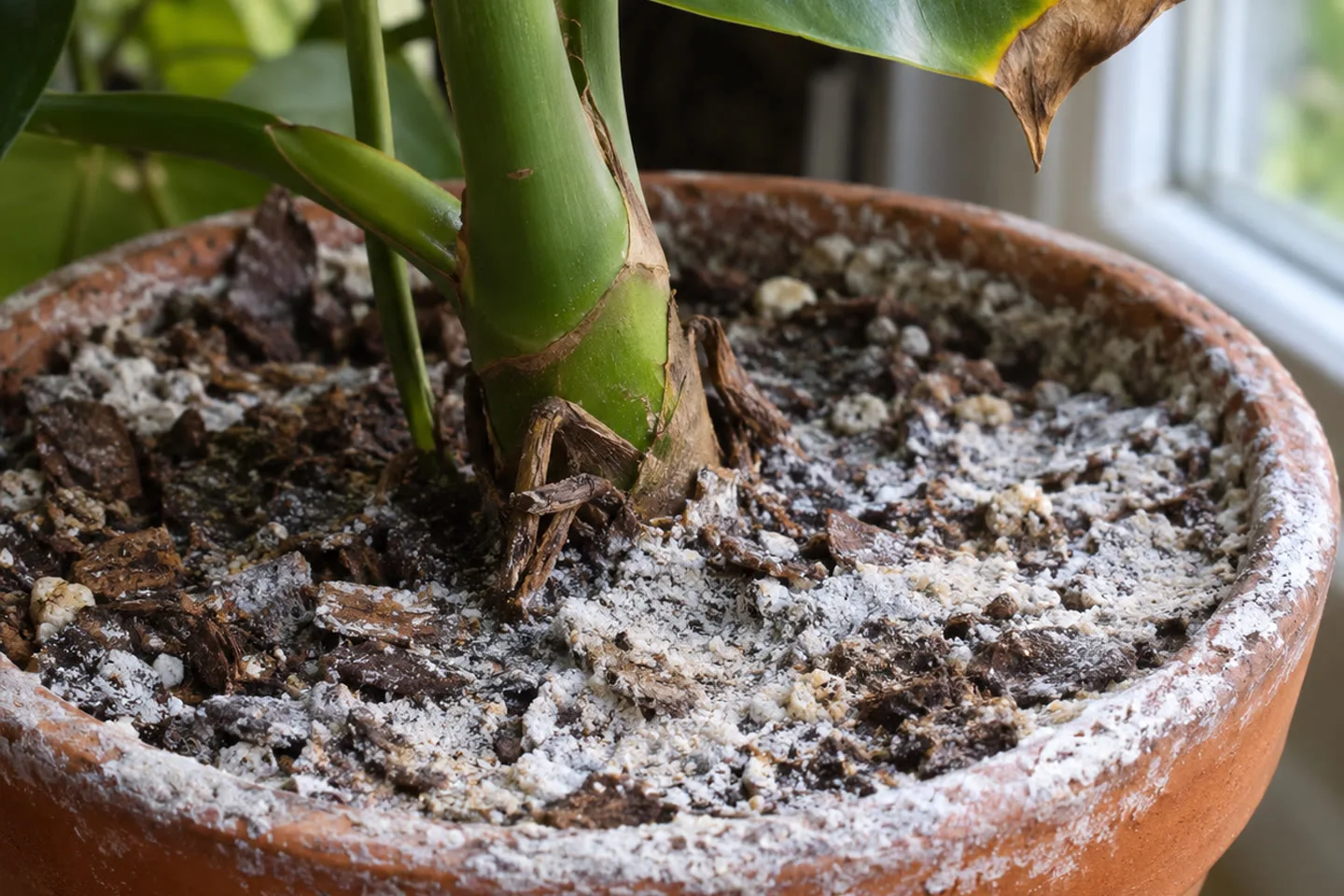
Monsteras grow fast in summer, so people feed them hard. Every feed and every can of hard tap water leaves minerals behind. If water never runs out of the bottom, or the saucer stays full, the salts stay in the pot. UGA's advice is to empty the saucer and run large amounts of water through the soil to leach them out.
How to flush salts from a monstera pot
- Take it to the shower or sink
Move the plant in its nursery pot to a tub or sink. If it sits in a decorative pot with no hole, lift it out first.
- Run water through slowly
Pour room temperature water over the whole soil surface until it drains freely from the holes, then keep going for about as long again.
- Remove the crust
Scrape off the white crust on top of the mix and wipe the pot rim. Top up with fresh mix if the level drops.
- Let it drain fully
Leave it until it stops dripping, then put it back with an empty saucer.
- Feed less from now on
Skip fertilizer for the next couple of months. When you restart in spring or summer, dilute below the label rate and flush every month or so.
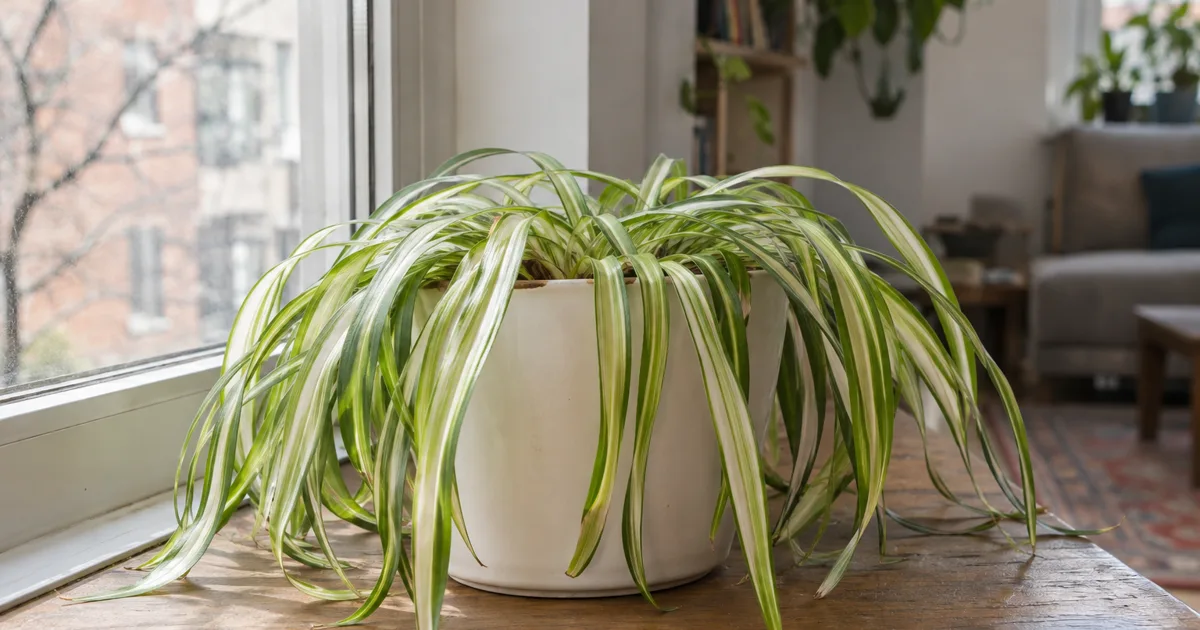
If your tap water is very hard, try rainwater or filtered water for the next couple of leaves and see if the new edges stay clean. That is a test, not a rule. Some plants are touchier about tap water than monstera; with spider plants it is the first suspect, as our brown spider plant tips guide explains.
Cause 3: too much water, not too little
Soft, dark brown tips with a yellow halo are the overwatering version. Roots sitting in soggy mix run out of air, stop taking up water, and the leaf edges brown even though the pot is wet. Watering more makes it worse.
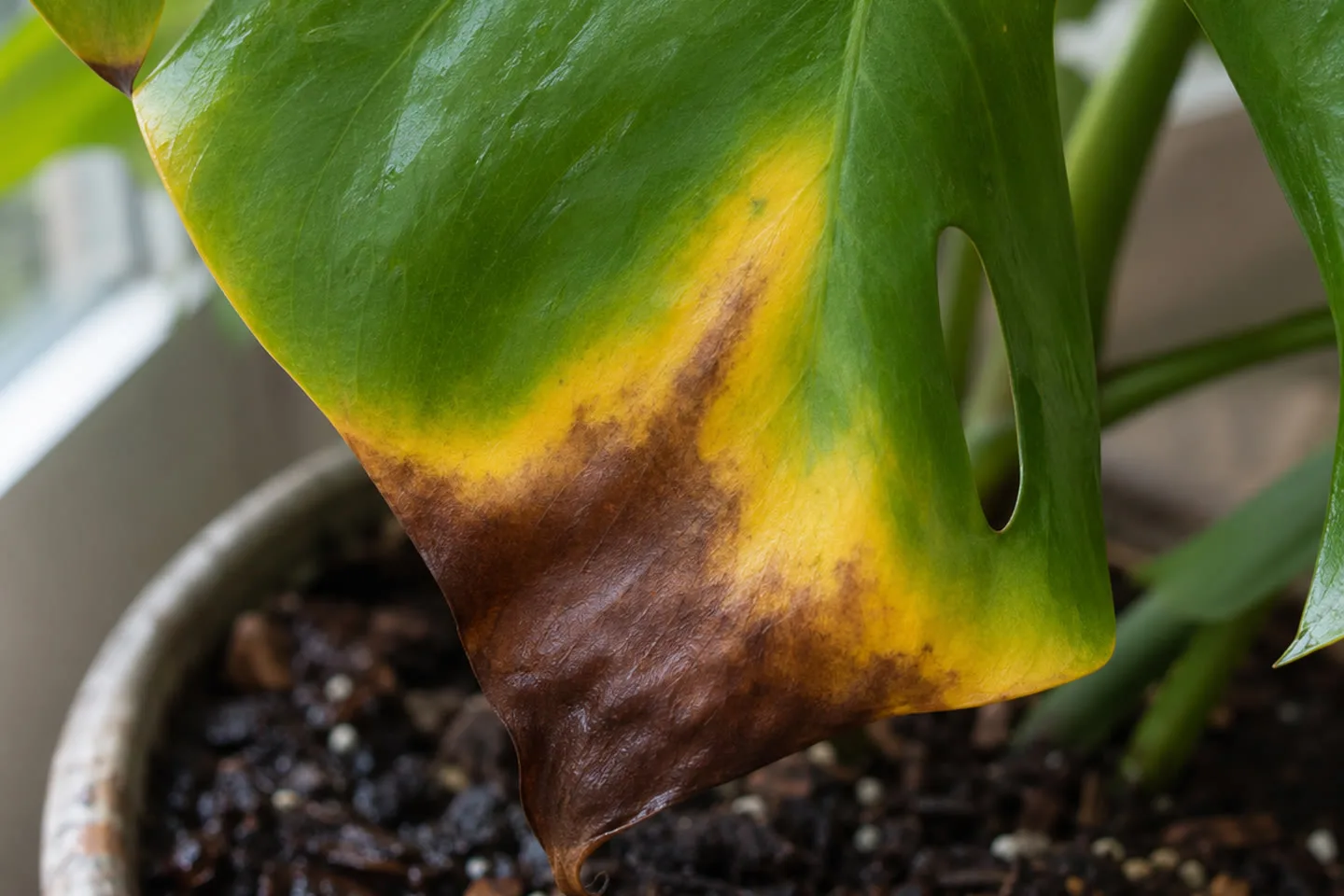
If the soil is still damp a few inches down a week after watering, stop and let it dry to that top third. If the stems are soft near the soil or the mix smells sour, slide the plant out and look at the roots. Healthy roots are firm and pale; rotting ones are brown and mushy. Our overwatered plant symptoms guide covers the other signs, and the root rot rescue walks through trimming and repotting.
Not sure if your monstera is too dry or too wet? A photo of the whole plant, a close-up of one brown tip and a note on how the soil feels a few inches down is enough to start.
Cause 4: direct sun, heat and cold drafts
NC State says monsteras want moderate brightness but not direct sun, at an average 60 to 85 degrees F. Sun damage looks different from the root causes: large bleached or tan patches on the leaves facing the glass, not neat tips all over the plant.
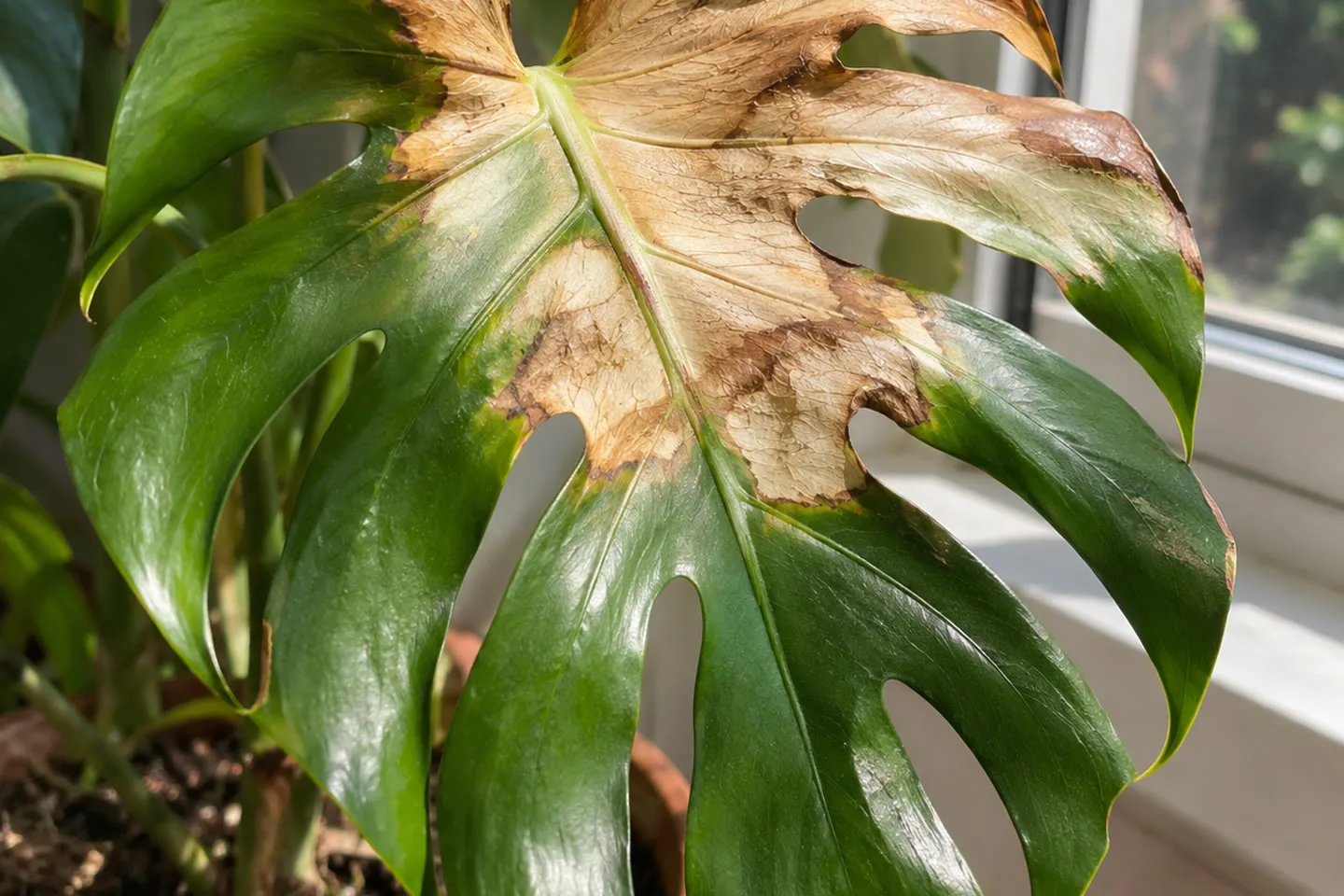
Move it a few feet back from a south or west window, or behind a sheer curtain. Reading your plant's light explains how to tell bright indirect light from direct sun without a meter. A heating vent, a radiator or a cold door that opens all winter dries or chills the leaves too, so give the plant a few feet of space from them.
Cause 5: dry air, the cause everyone blames first
Monsteras like high humidity, and NC State recommends a humidifier or a tray of wet pebbles in dry rooms. UGA notes that most homes sit at 10 to 20 percent relative humidity, while 40 to 50 percent counts as medium. So dry air is a real cause, especially in winter with the heat on.
It is rarely the only one, and the usual fix does not work. UGA says you would need to mist every few minutes for an indefinite amount of time to change the humidity around a plant. A humidifier, or grouping plants together, does more. Fix the watering and salts first. If new leaves still brown at the tips, dry air is the likely cause left.
Trim the brown, but after the fix
You can cut off brown tips. The tissue is dead and will not recover, and trimming does not hurt the plant. Use clean, sharp scissors and follow the natural curve of the lobe.
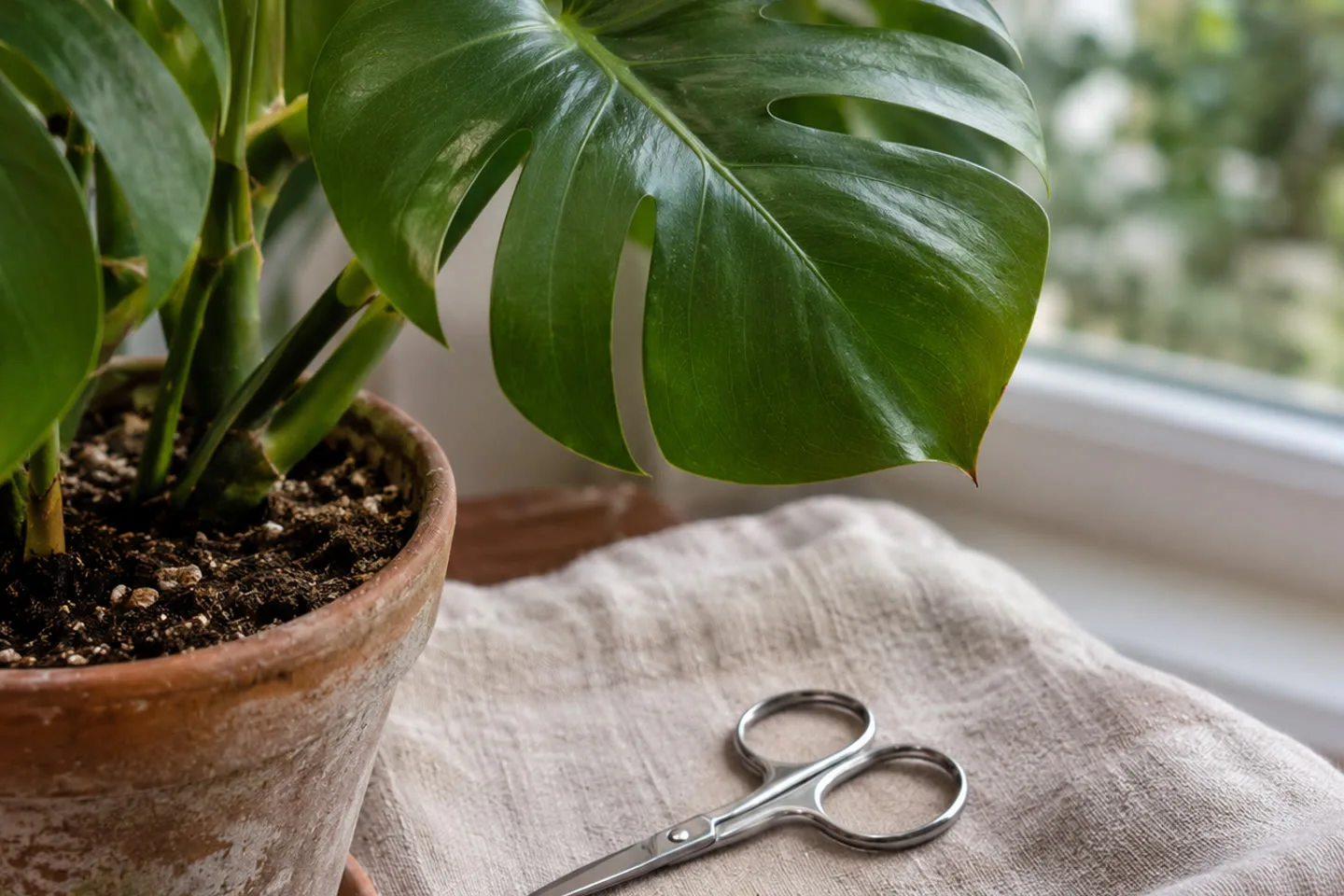
Leave a hair-thin line of brown at the cut. Cutting into green tissue makes a new wound that often browns again, which looks as if the problem came back. Remove a whole leaf only when most of it is brown or yellow, cutting the stalk near the main stem.
How to tell your fix is working
Old leaves are not your scorecard. A brown tip stays brown, and it may dry a little further after the cause is gone. The test is the next leaf that unfurls.
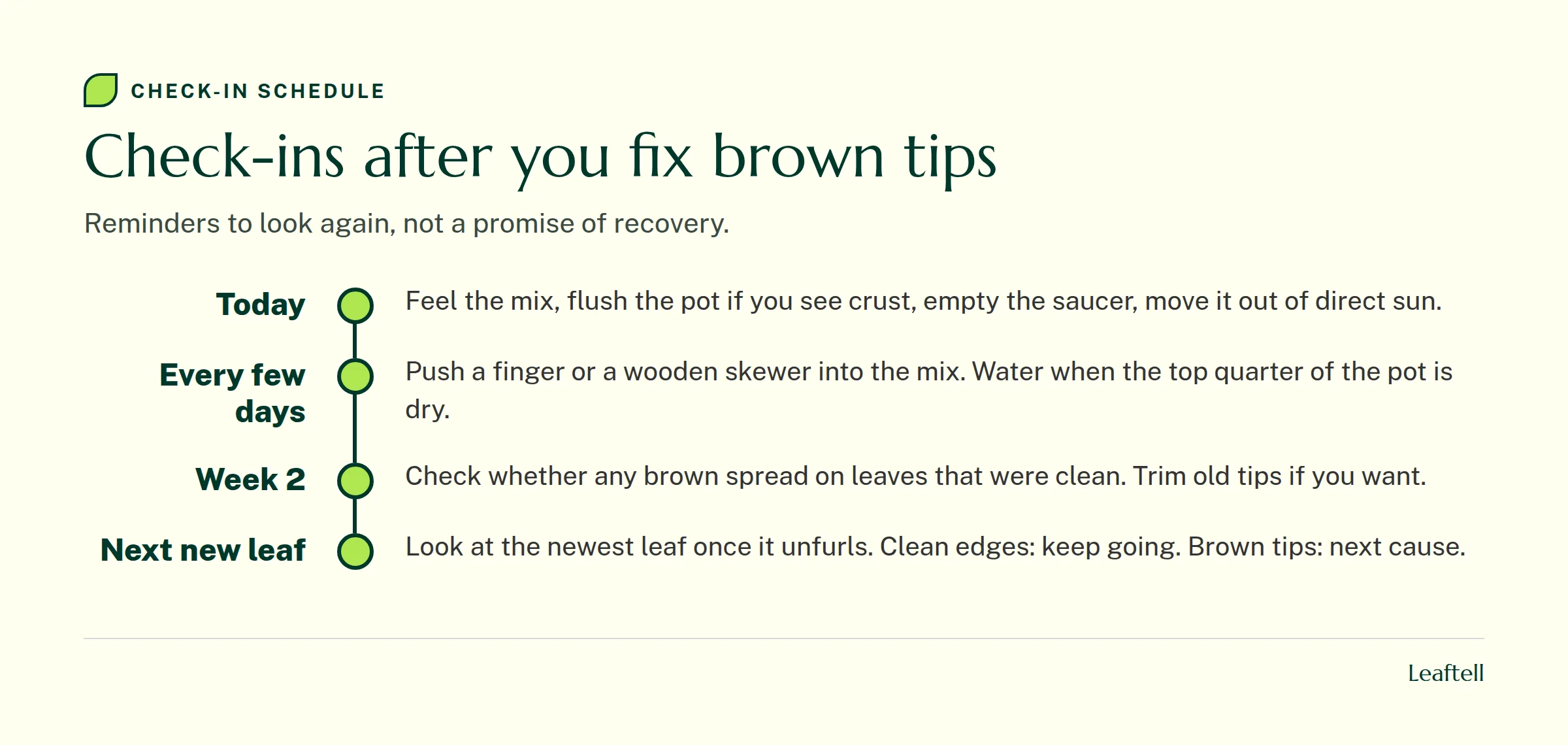
If the new leaf opens with clean edges, keep doing what you are doing. If it browns too, go back to the table above and work through the next cause.
The short version
Feel the brown first. Crisp means the roots ran dry or salty: water deeper, let only the top third dry, and flush the pot. Soft and dark with a yellow halo means too wet: let it dry and check the roots. Then deal with sun, drafts and dry air. For the rest of the routine see the full monstera care guide, and for other houseplants, the general guide to brown leaf tips.
If you still cannot tell which cause it is, check your monstera in Leaftell with a photo of the whole plant, a close-up of one brown tip and a note on how the soil feels. Take a fresh photo when the next leaf opens and compare.
Sources
Check your growing conditions with the plant watering calculator.
Frequently asked questions
An overwatered monstera has yellowing leaves, often the lower ones first, and brown tips or edges that are soft and dark with a yellow halo rather than crisp. The soil stays wet for days and may smell sour. Check the roots: firm and pale is healthy, brown and mushy is rot.
Trim the brown edge, not the whole leaf. Cut with clean scissors along the natural shape of the lobe and leave a thin line of brown so you do not wound green tissue. Remove the whole leaf only when most of it is brown or yellow.
The brown tissue will not turn green again, but the plant recovers fine. Once you fix the cause, new leaves open with clean edges. Judge the fix by the next leaf that unfurls, not by the old ones.
Find the cause first. For crisp tips, water thoroughly and let only the top quarter to one third of the pot dry, and flush out salts if there is a white crust. For soft dark tips, let the soil dry and check the roots. Then trim the old brown for looks.
Share article
About the author

Keep checking your plant
Plant care reference
Indoor plant care
Build a routine around your plant, light and potting mix.
Plant care reference
Why is my plant dying
Trace leaf and root symptoms before choosing a care change.
Plant care reference
Pothos plant care
Choose a growing spot and prune a trailing pothos for fuller growth.
Plant care reference
How to fix root rot
Inspect root firmness and drainage, then decide whether to repot.