Where Do Mealybugs Come From? 5 Ways They Get In
Filip Leszczyński Updated 28 November 2026 13 min read
In this article
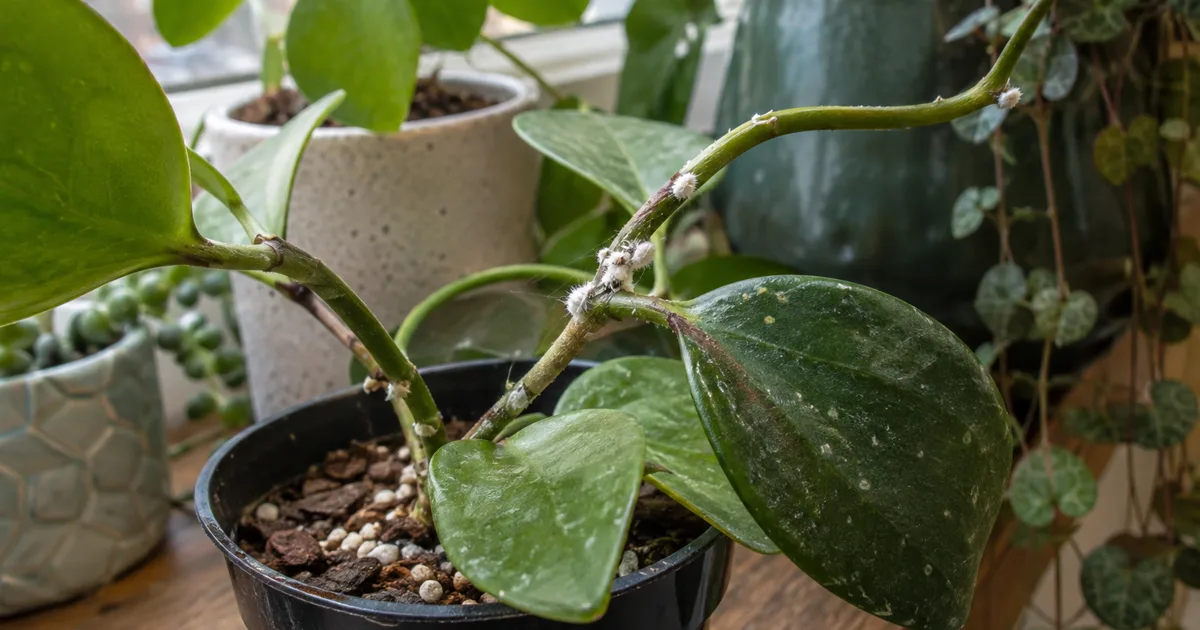
Mealybugs come from other plants. They almost always ride into your home on a new plant, a cutting, a gift or a reused pot, then walk from leaf to leaf to its neighbors. They do not appear out of soil, water or dust, and adult females cannot fly, so every colony started with insects or eggs that were carried in.
The part that surprises most people: the plant that brought them was usually infested well before you noticed. A few insects hide in leaf joints for weeks while they lay eggs, so the newest plant on the shelf is a suspect, not proof. And when mealybugs "come back" after a cleanup, most of the time they never left.
In one line, a mealybug is a small oval insect under white, waxy cotton, usually tucked where a leaf meets the stem. If you are still deciding whether that is what you have, our mealybug guide shows how to confirm it. This post is about where they came from and how to stop the next round.
How mealybugs get into your home
Mealybugs reach a houseplant collection in five main ways, and the first one accounts for most cases. UC IPM names new plants, tools and pots as the usual way they are introduced, because adult females cannot fly and the insects crawl too slowly to spread far on their own.
| Route | How they ride in | Where to check first |
|---|---|---|
| New plant from a store or nursery | Adults and egg sacs hidden in stem joints and the crown | Leaf axils, branch forks, stems near the soil |
| Cuttings, swaps and gifts | Insects or eggs at the nodes of a cutting | The node and the base of each leaf stalk |
| A plant already on your shelf | Crawlers walk across touching leaves | Wherever two plants overlap |
| A summer outdoors | Outdoor colonies, often tended by ants | Stems with ants, sticky leaves, new growth |
| Reused pots, soil, stakes and ties | Egg sacs and root mealybugs left behind | Pot rims, drainage holes, the old root ball |
Start with the plant you added most recently, then work outward to whatever it touches.
New plants: the most common source
A new plant is the most likely source of mealybugs, and the store did not have to be careless for it to happen. Greenhouses are warm, plants sit close together, and a small colony tucked into a stem fork is easy to miss on a quick look at the register.
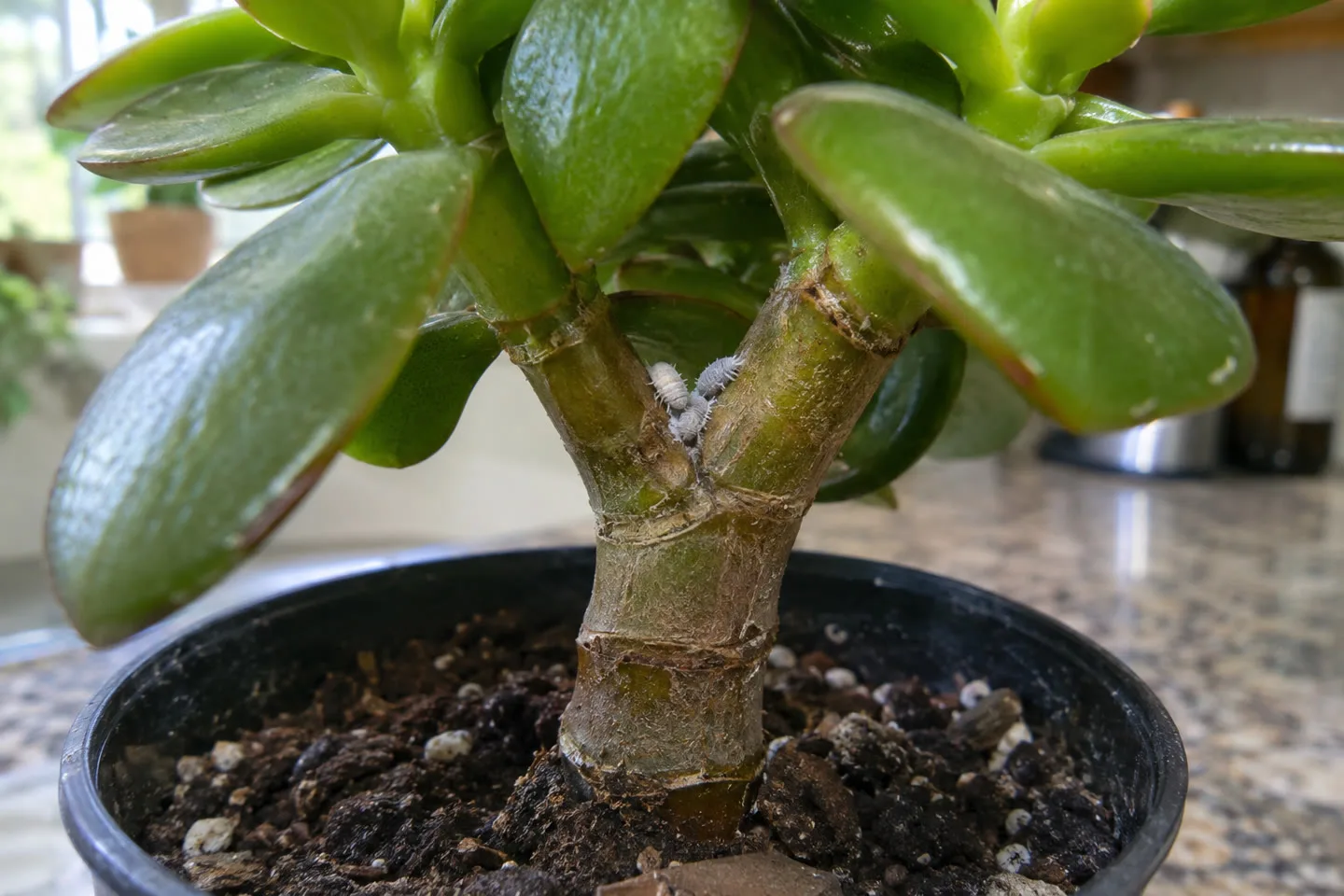
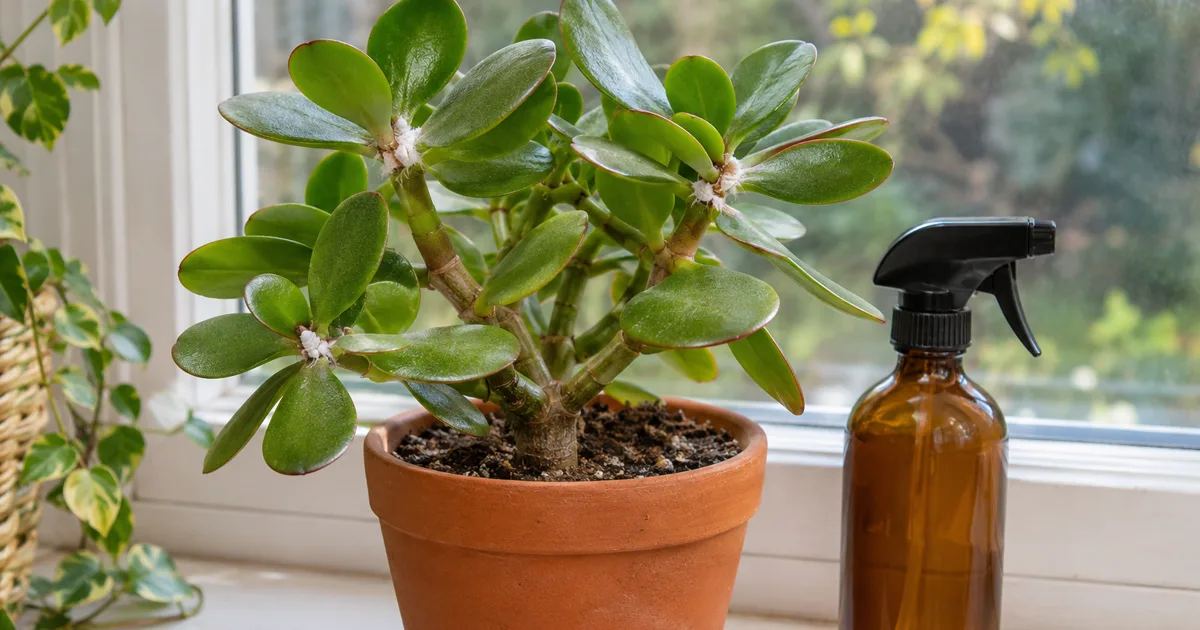
UNH Extension lists the houseplants mealybugs tend to prefer: coleus, cactus, ferns, hoya, jade, orchids, palms, philodendron, ficus, schefflera and citrus. If a newcomer is on that list, give it the slowest inspection of anything you buy. UNH also advises monitoring a new plant closely in the weeks and months after you bring it home, which matches how slowly a small colony shows itself.
The plant that started it may not be the one where you first see them. If you bought a jade in spring and find mealybugs on your hoya in summer, the jade is still worth a careful look.
Cuttings, swaps and gifts
A rooted cutting from a friend can carry mealybugs just as easily as a nursery plant, and it often gets less scrutiny because it looks so small and clean. The insects settle at the node, right where you would cut and root, and egg sacs fit in the gap between a leaf stalk and the stem.
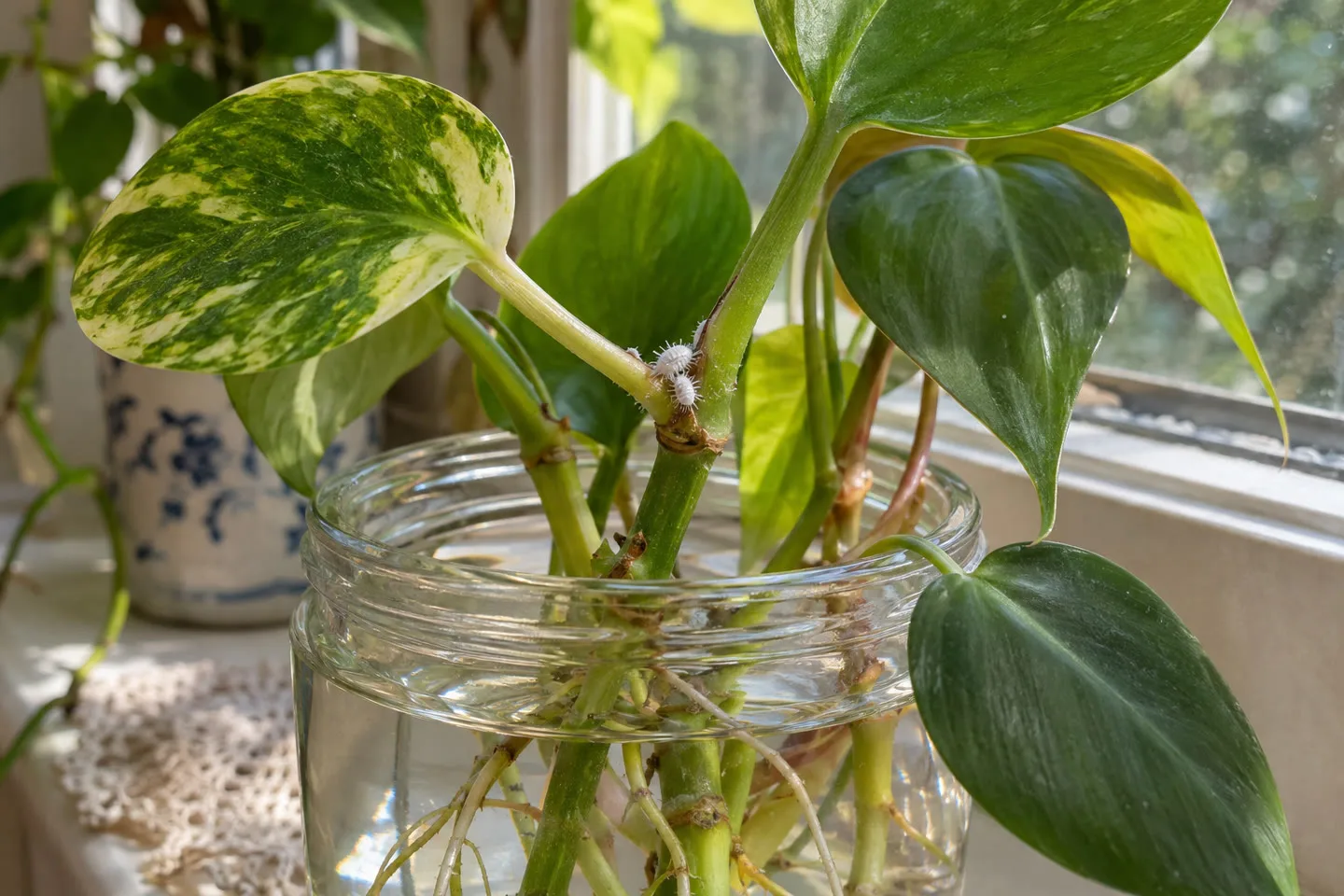
Check every node before a cutting goes into water or mix, and keep it on its own until it has rooted. Our pothos propagation guide covers where the nodes are, which are the same spots to inspect. Plant swaps put dozens of plants from different homes on one table, so treat everything you bring back from one as a new arrival.
From one plant to the next
Once mealybugs are in, they spread by walking. The newly hatched young, called crawlers, are tiny, yellow to pink, have no wax yet and are quite mobile, according to UC IPM. They move until they find a feeding spot, and a leaf touching the next plant is a bridge.
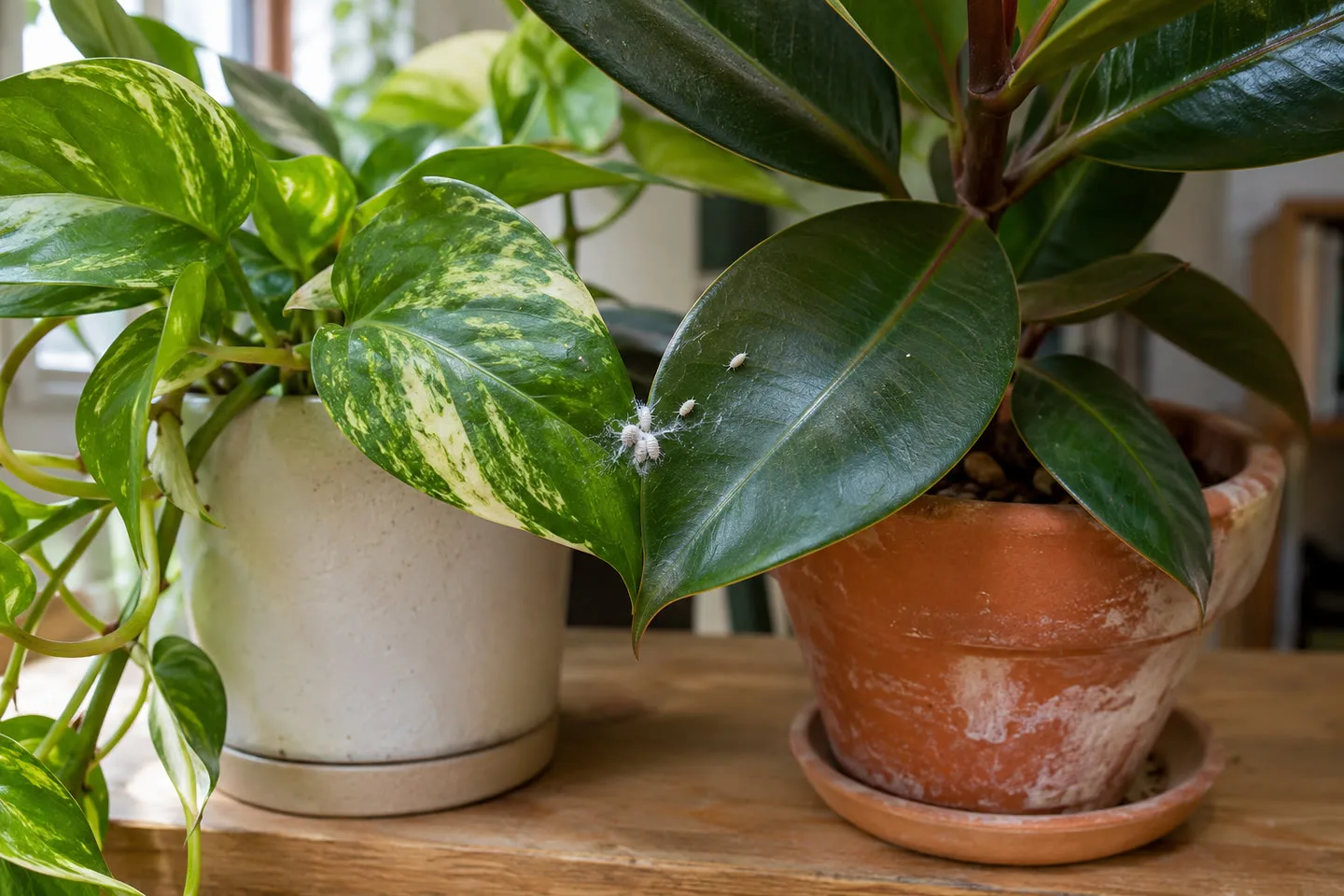
UW Madison Extension warns that mealybugs crawl easily from plant to plant where leaves or branches overlap, so one infested plant can spread them through a whole collection. Older nymphs and adults move too, just not far or fast. That is why a tight shelf or a crowded windowsill turns one problem plant into four.
Plants that spent summer outside
A plant that summered on a patio can come back in with mealybugs from the garden. In mild climates, mealybugs live on outdoor plants all year, and a potted citrus or hibiscus next to an infested shrub picks them up the same way a houseplant does from a neighbor.
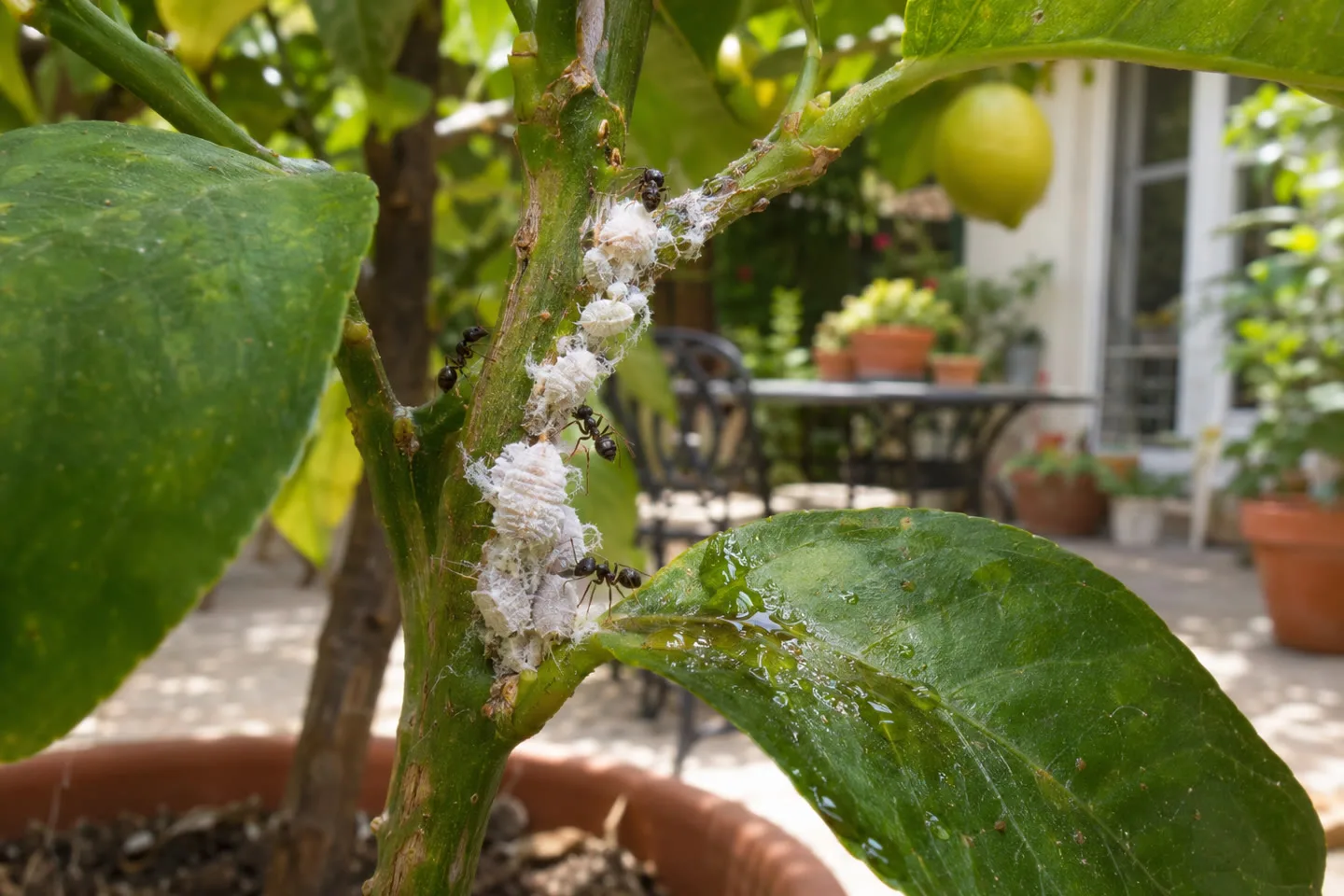
Ants are a clue here. Mealybugs excrete sticky honeydew, ants feed on it, and UC IPM notes that ants protect mealybugs from their natural enemies. A line of ants running up a potted plant's stem is a reason to check every joint before it comes back indoors. If you find a sticky film without ants, our guide to sticky leaves on plants helps you work out which sap feeder left it, since aphids and scale leave honeydew too.
Reused pots, soil and stakes
Mealybugs and their egg sacs can stay behind on things you reuse. UC IPM advises checking pots, stakes and other materials for mealybugs and egg sacs, and getting rid of infested items rather than passing them to the next plant.
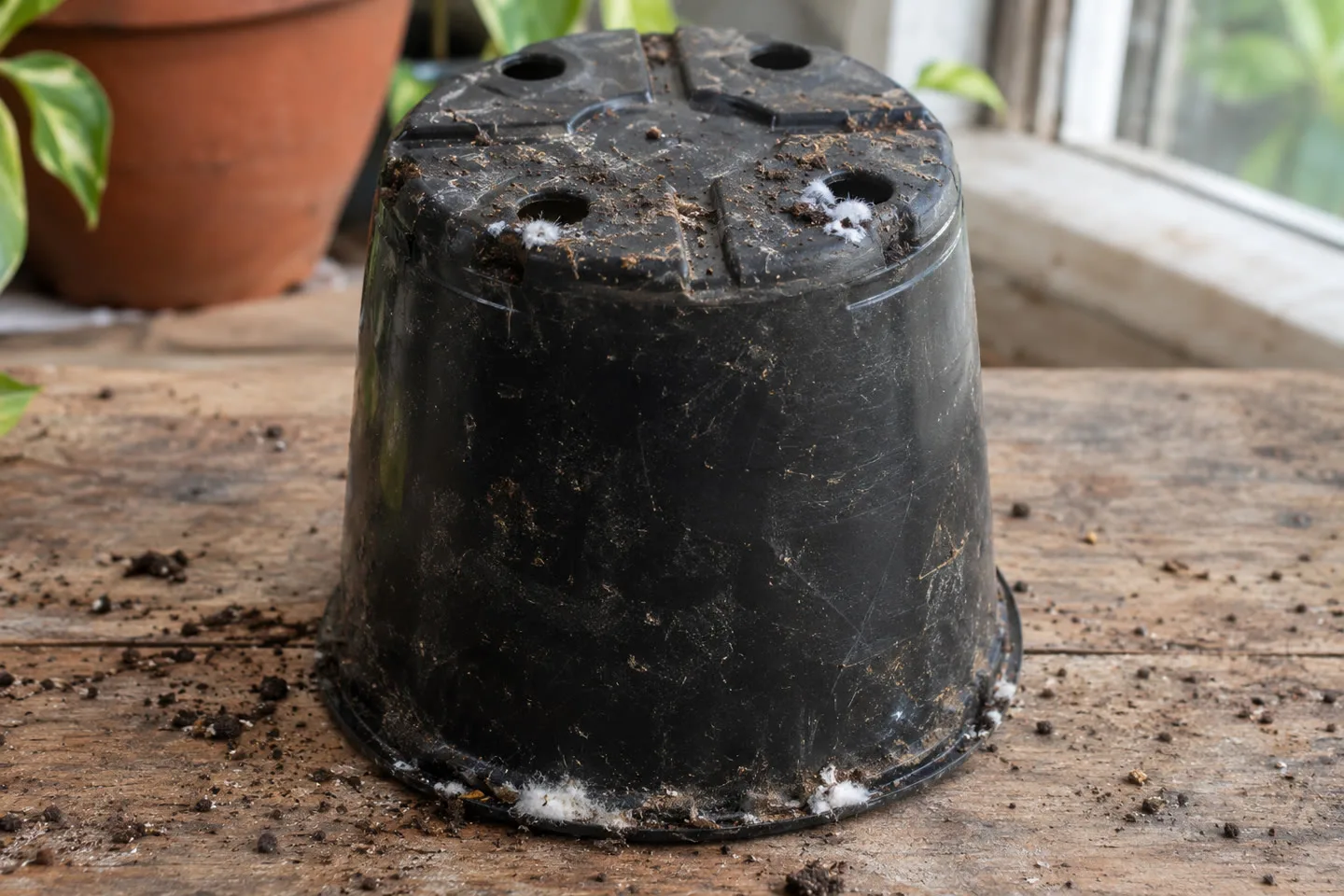
Look closely at the inside rim and around the drainage holes. UW Madison Extension notes that small white cottony masses around a pot's drainage holes can be a sign of mealybugs on the roots. Wash a reused pot well and inspect it before it holds a new plant, and do not pour old mix from a plant that had mealybugs into a fresh pot. Our repotting guide has the full routine for a clean pot change.
Root mealybugs live in the soil
A few species feed on roots. The ground mealybug is the most common soil mealybug on houseplants, especially African violets, says UW Madison Extension, and it causes yellowing, wilting, stunting and fewer flowers. Often the only way to confirm it is to slide the root ball out and look.
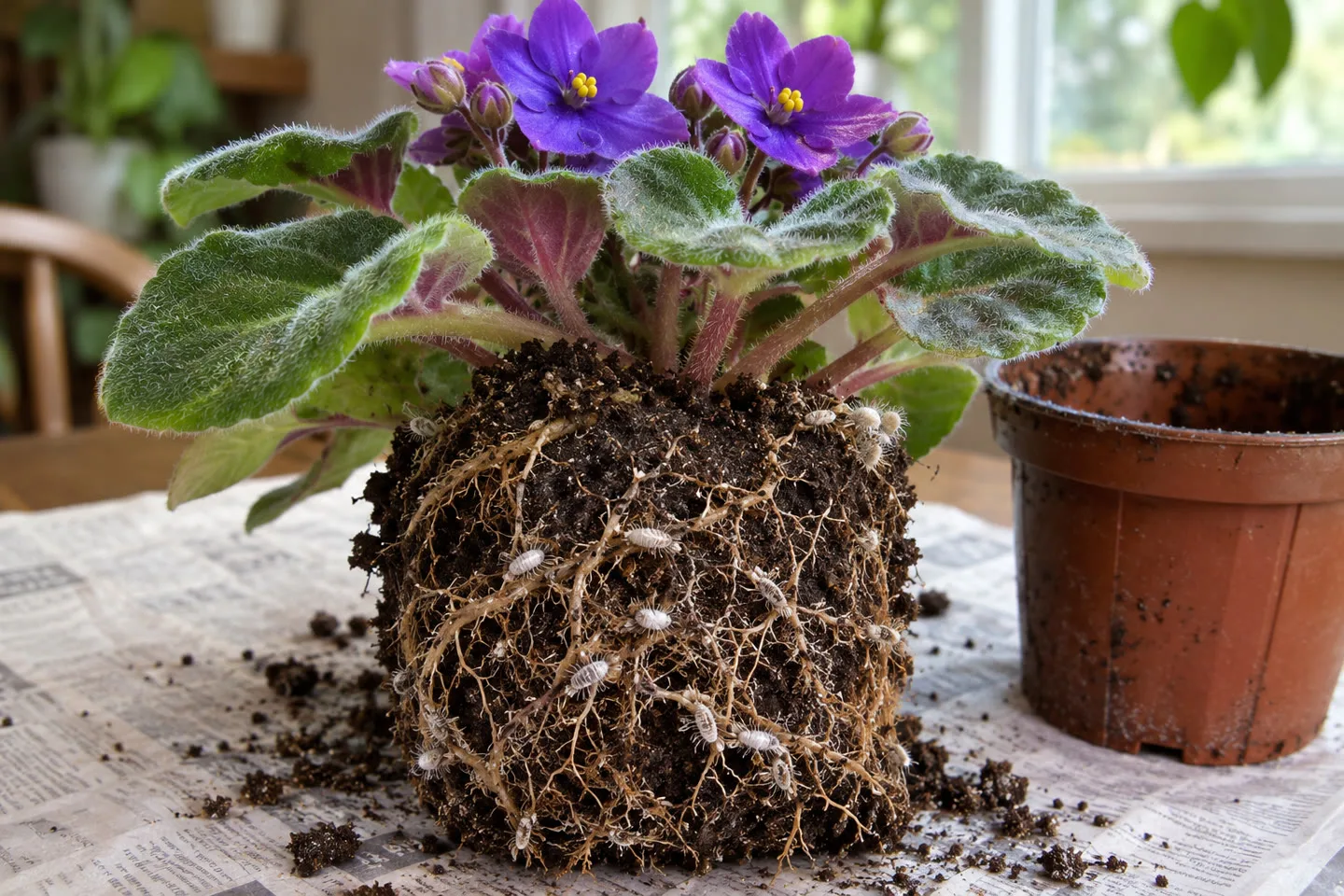
So yes, mealybugs can come from soil, but only from soil that already held them: an old root ball, a pot that held an infested plant, or a plant you bought with root mealybugs already aboard.
What does not cause mealybugs
Overwatering, dust, dirty leaves and "bad soil" do not create mealybugs. They are insects, and every colony starts with insects or eggs that arrived from somewhere. If you never added a plant, cutting, pot or outdoor visitor, look harder at the plants you already had, because a small colony can sit unnoticed for a long time.
Some conditions do help them once they are in. UC IPM explains that too much nitrogen fertilizer combined with regular watering pushes soft new growth, which is where mealybugs prefer to lay eggs, and UW Madison Extension says mealybugs like lush foliage. Feed at label strength or less, not more.
Why mealybugs keep coming back
Mealybugs come back because a cleanup almost never reaches every egg sac. UC IPM notes that females of most species lay 100 to 200 or more eggs in a cottony sac over 10 to 20 days. The longtailed mealybug is an exception: its eggs hatch inside the female, so it produces live young. Many species also reproduce without mating, so a single survivor can restart the colony.
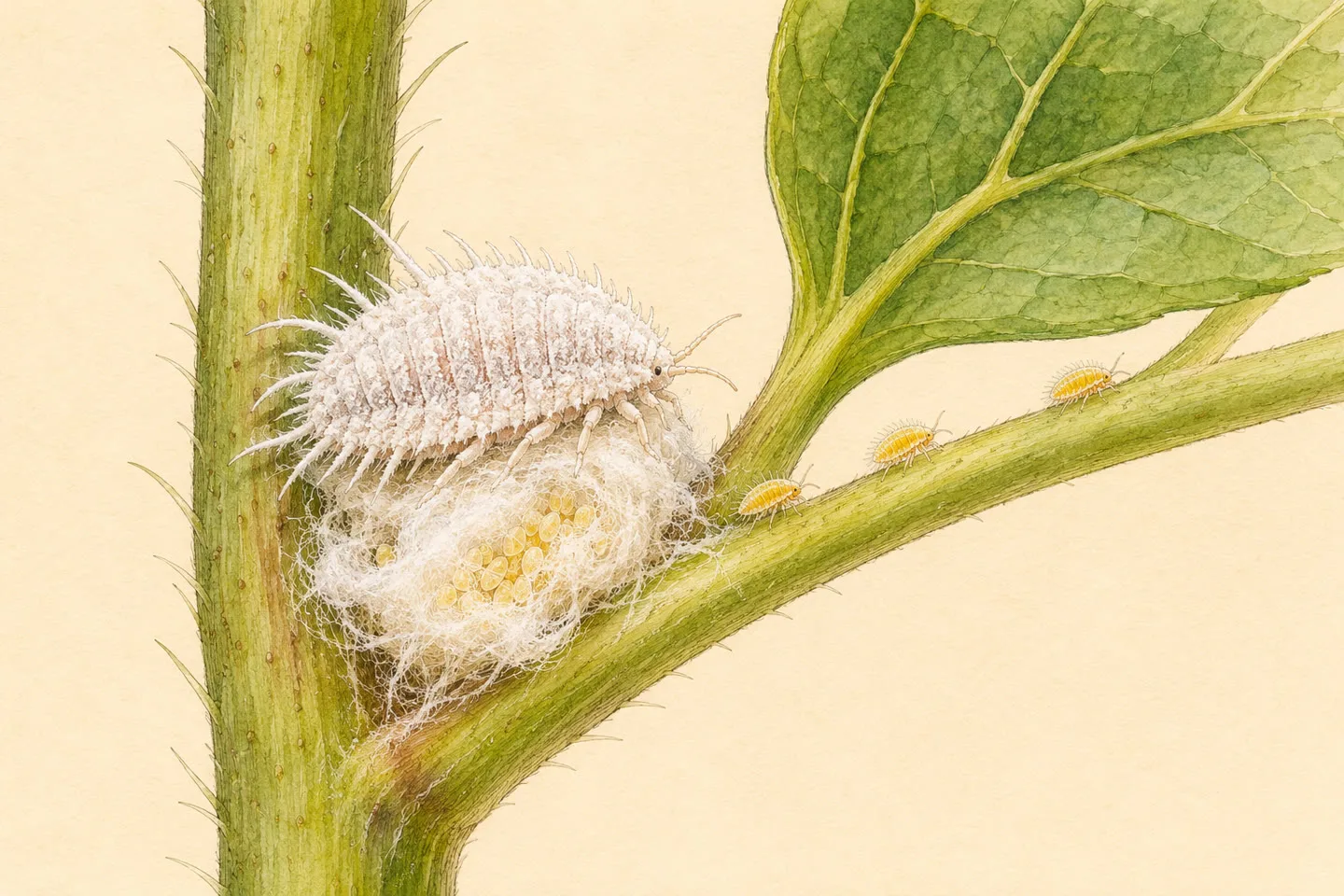
Indoors, all life stages can be present all year, and UC IPM puts it at two to six generations a year depending on species and conditions. Wipe off every visible tuft and you still leave eggs in a crevice you could not see. Two or three weeks later, a new wave of crawlers settles on the same plant, and it looks like a fresh invasion.
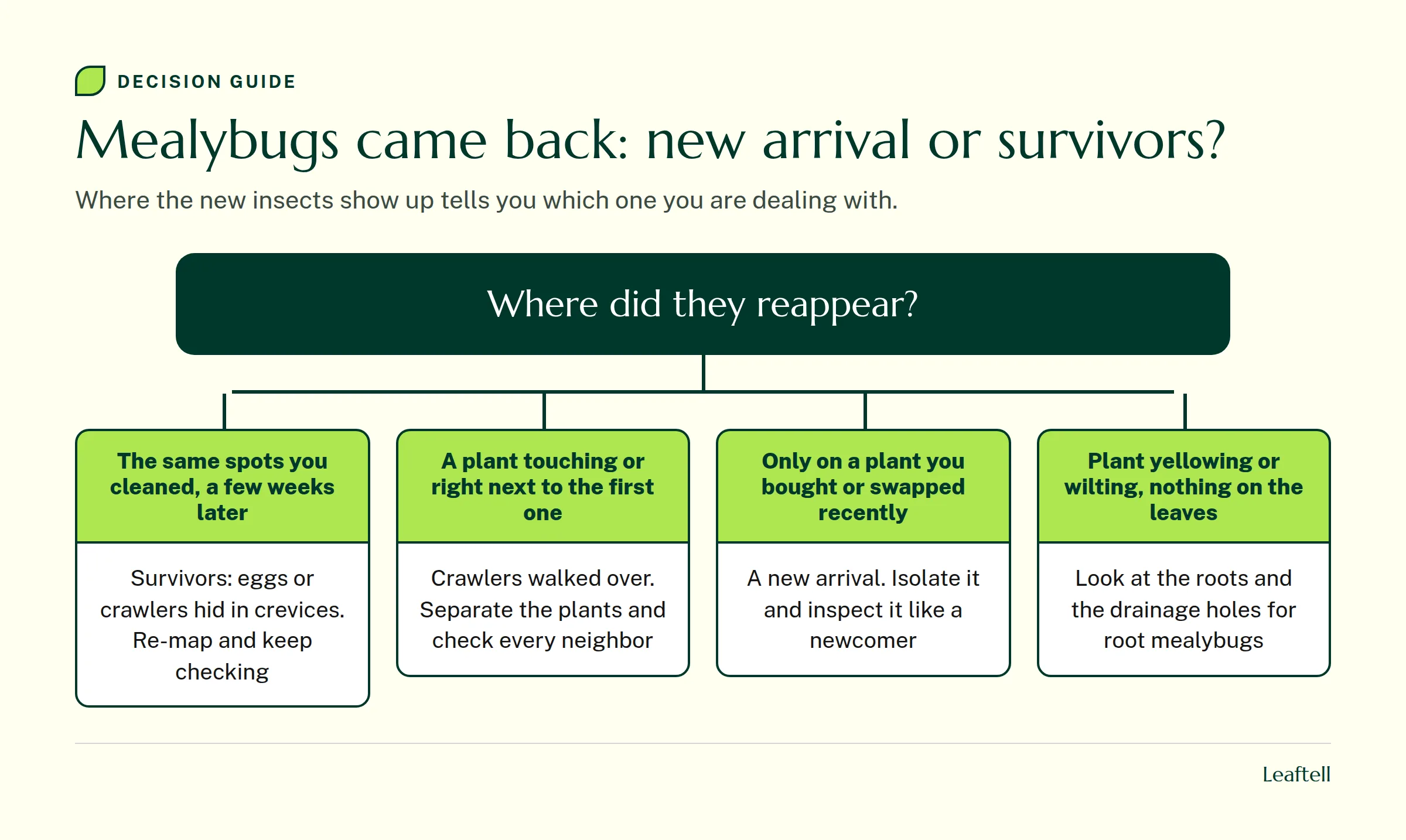
Where they reappear tells you which situation you are in.
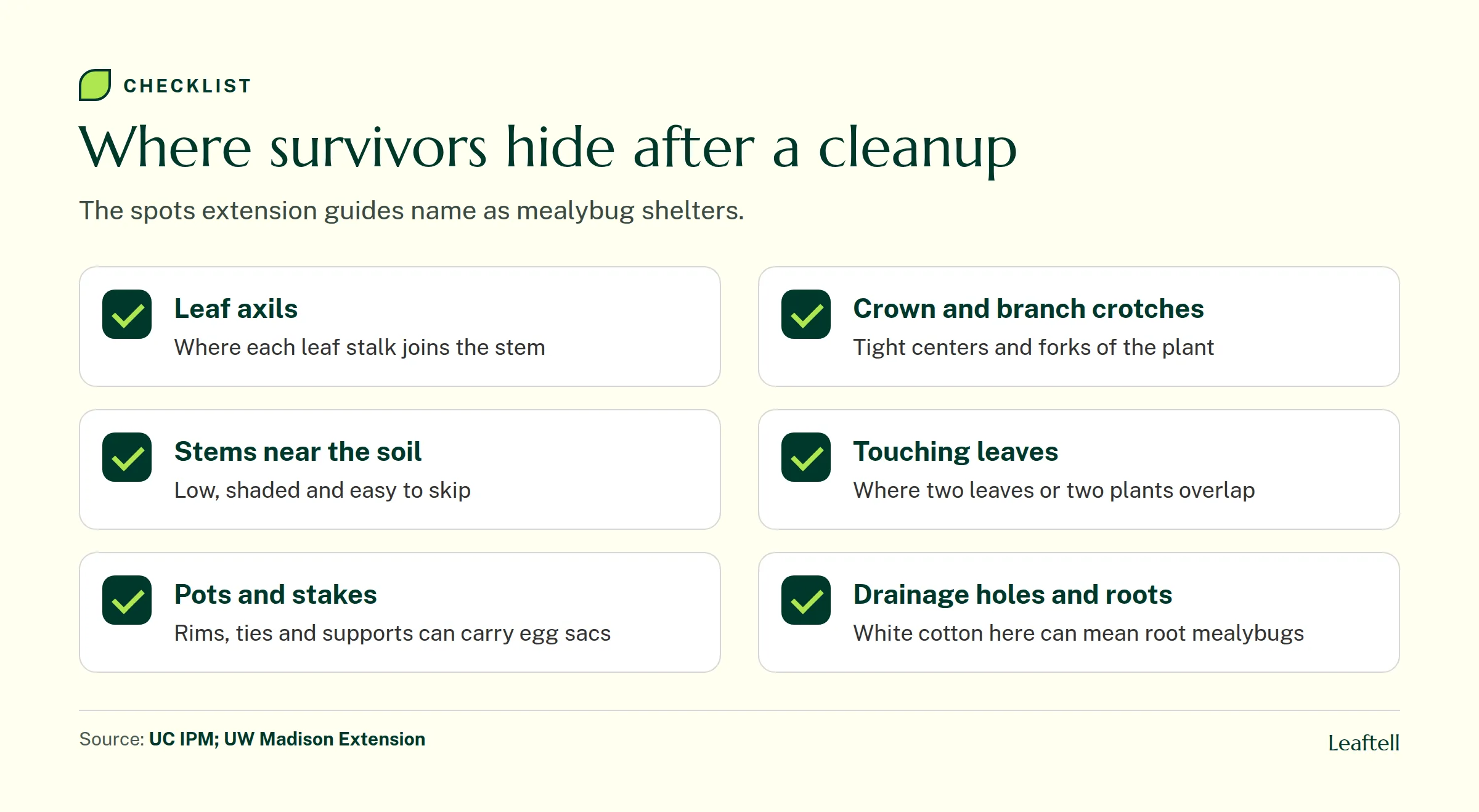
Survivors hide in the same shelters every time. Make a map of these spots on each infested plant and check the same ones on every pass, rather than scanning the plant as a whole. These shelters are also why a single spray of neem oil rarely clears mealybugs: it misses the adults and eggs packed inside them.
If the same plant keeps reinfesting your shelf after weeks of careful work, UC IPM suggests tossing older "grandmother" plants that may be a source of infestation for new plants. That is a hard call with a plant you love, but it can protect the rest of your collection. For the full removal routine, use our guide to mealybugs on plants, and the houseplant pests overview helps if you find more than one kind of insect.
How to keep the next mealybugs out
Prevention is the most reliable control for mealybugs on houseplants. UW Madison Extension recommends inspecting every new plant before it comes into your home and keeping it apart from your other plants for a week or so if possible.
How to quarantine a new plant
- Inspect it before it comes home
Turn the plant and look into every leaf axil, branch fork and the crown. Tip the pot and check the drainage holes and the rim. White cotton with a body underneath means you leave it or treat it in isolation.
- Give it a separate spot
Put it in another room, or at least where no leaf touches another plant. Crawlers walk, so distance matters more than anything you spray.
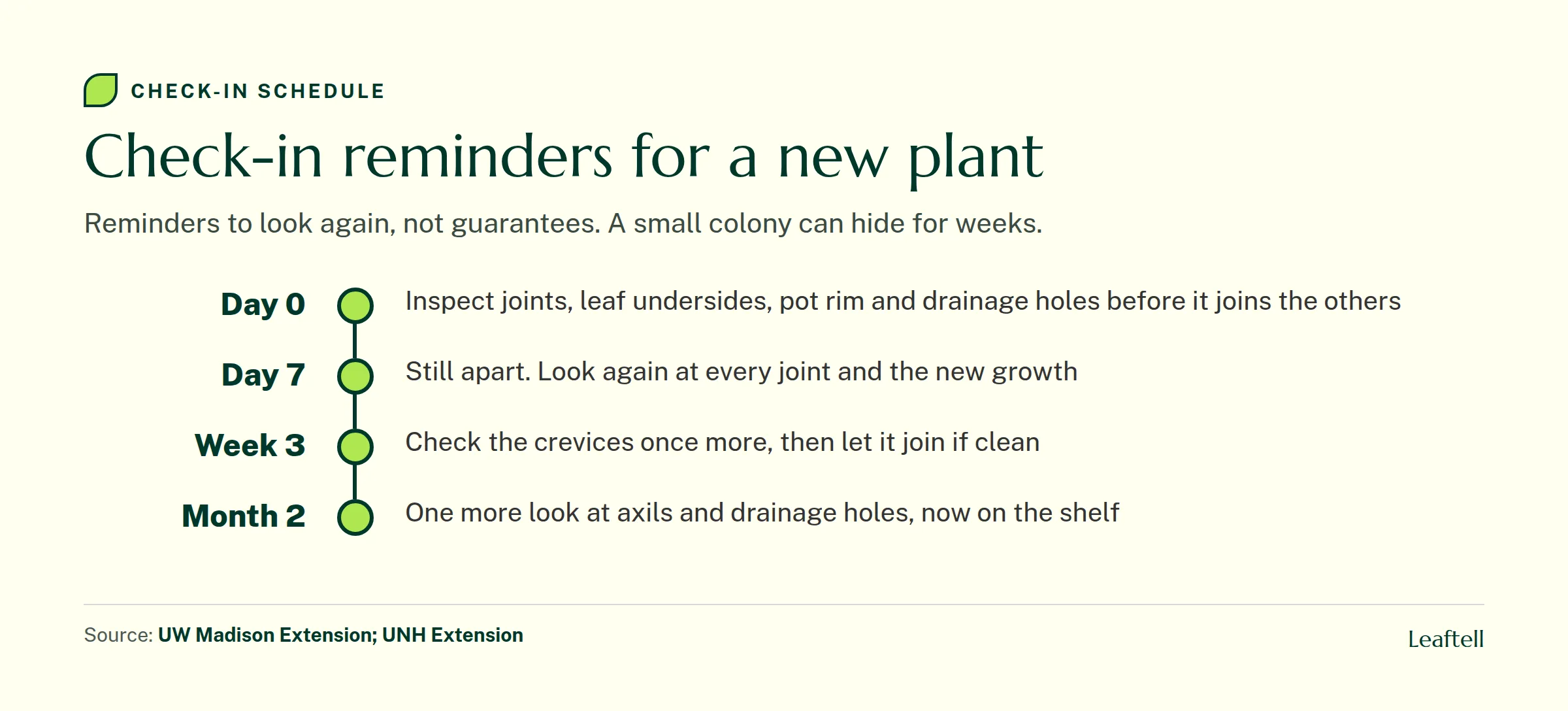
- Check again at day 7 and week 3
Look at the same joints, plus any new growth. A small colony that slipped past the first look often shows by then.
- Move it in, then keep looking
If it stays clean, let it join the others, and keep an eye on it during your normal care for the next couple of months.
These dates are reminders to look again, not a guarantee. A careful look on a schedule finds most hitchhikers, but a colony on the roots or deep in a crown can still slip through.
Two habits make the rest easier. Leave a little space between plants so leaves do not touch, and wipe the leaves now and then, which puts your eyes on every joint. When plants come back in from a summer outside, give each one the same inspection as a new plant.
Check your plant in Leaftell
Mealybugs come in on something you added, then spread by walking. Start with the most recent arrival, check whatever touches it, and treat a comeback as survivors until the map says otherwise. If you cannot tell whether a white tuft is a mealybug, an egg sac or something else, or which plant started it, check your plant in Leaftell. Send a close-up of the white material, a photo of where on the plant you found it, and one of the drainage holes.
Sources
Check your growing conditions with the plant watering calculator.
Frequently asked questions
Most likely on a plant, cutting or pot you brought in, or from an infested plant already touching them. Mealybugs cannot appear on their own and adult females cannot fly, so they were carried in. The source plant may have had a hidden colony for weeks before you saw anything.
Only from soil that already held them. A few species, such as the ground mealybug, live on roots, so an old root ball, reused mix or a pot from an infested plant can carry them. White cottony specks around the drainage holes are a sign to slide the plant out and look at the roots.
Adult female mealybugs have no wings and do not jump. Adult males of some species are tiny two-winged insects, but they are rarely seen. The young crawlers spread by walking, usually across leaves that touch.
UNH Extension lists coleus, cactus, ferns, hoya, jade, orchids, palms, philodendron, ficus, schefflera and citrus as plants mealybugs tend to prefer. Give these the slowest inspection when you buy them, and check African violets at the roots too.
Outdoors, UC IPM names parasitic wasps, lady beetles such as the mealybug destroyer, lacewings and spiders. Ants work against these enemies, because they feed on mealybug honeydew and protect the colony. Indoors, natural enemies are rarely practical, so inspection and hand removal do the work.
Remove what you can reach, then keep checking the same hiding spots for several weeks, because eggs hatch after the first cleanup. Isolate the plant, keep it from touching others and check every new plant before it joins the collection. The full removal routine is in our guide to mealybugs on plants.
Share article
About the author

Keep checking your plant
Plant care reference
Indoor plant care
Build a routine around your plant, light and potting mix.
Plant care reference
Why is my plant dying
Trace leaf and root symptoms before choosing a care change.
Plant care reference
Pothos plant care
Choose a growing spot and prune a trailing pothos for fuller growth.
Plant care reference
How to fix root rot
Inspect root firmness and drainage, then decide whether to repot.