Does Neem Oil Kill Mealybugs? Yes, but Only the Young Ones
Filip Leszczyński 28 November 2026 13 min read
In this article
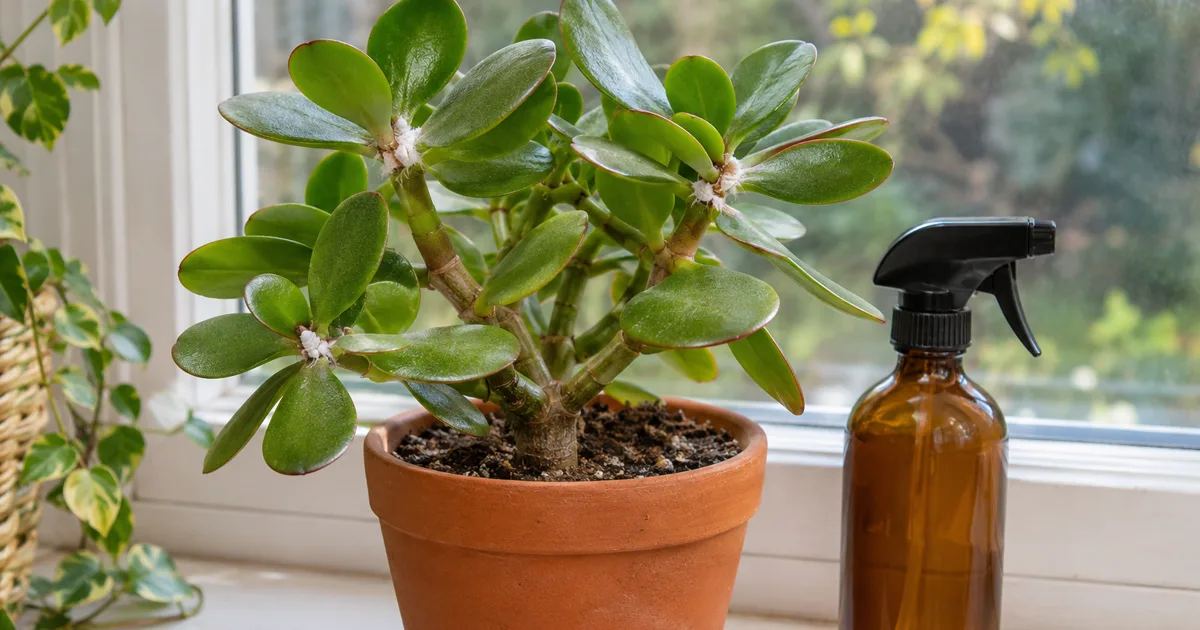
Yes, neem oil kills mealybugs, but only the ones it soaks, and mostly the young ones. The white wax on adult mealybugs and the cottony fluff around their eggs shed oil, so one spray almost never ends an infestation. Used the right way, neem oil is a good follow-up treatment, not the first thing to reach for.
That is why so many people say "I tried neem oil and they came back." The oil did work on what it touched. It just never touched the adults packed into the leaf joints or the eggs waiting to hatch next week. The University of California's Pest Notes on mealybugs puts it plainly: the waxy coating and the habit of hiding make contact sprays less effective, and soaps, oils and neem oil work best on young mealybugs with less wax. So the real question is not whether neem oil works, but where it fits in a plan that also handles the adults and the eggs.
How neem oil works on mealybugs
Neem oil is pressed from the seeds of the neem tree. Most bottles sold for houseplants are a clarified neem oil product that works mainly by contact: the oil coats a soft-bodied insect and smothers it. The National Pesticide Information Center adds that azadirachtin, the most active part of neem, also discourages feeding and disrupts insect hormones, which makes it harder for insects to grow and lay eggs. Not every product keeps much azadirachtin, so treat any extra effect as a bonus and read your label.
What matters for you: neem oil leaves no lasting kill behind. Once the spray dries, a mealybug that walks onto that leaf tomorrow is fine. NPIC gives azadirachtin a half-life of 1 to 2.5 days on leaves. Every treatment only counts for the bugs it hits while wet. Aphids are soft and wax-free, which is why the same spray looks so much stronger in our guide on how to get rid of aphids.
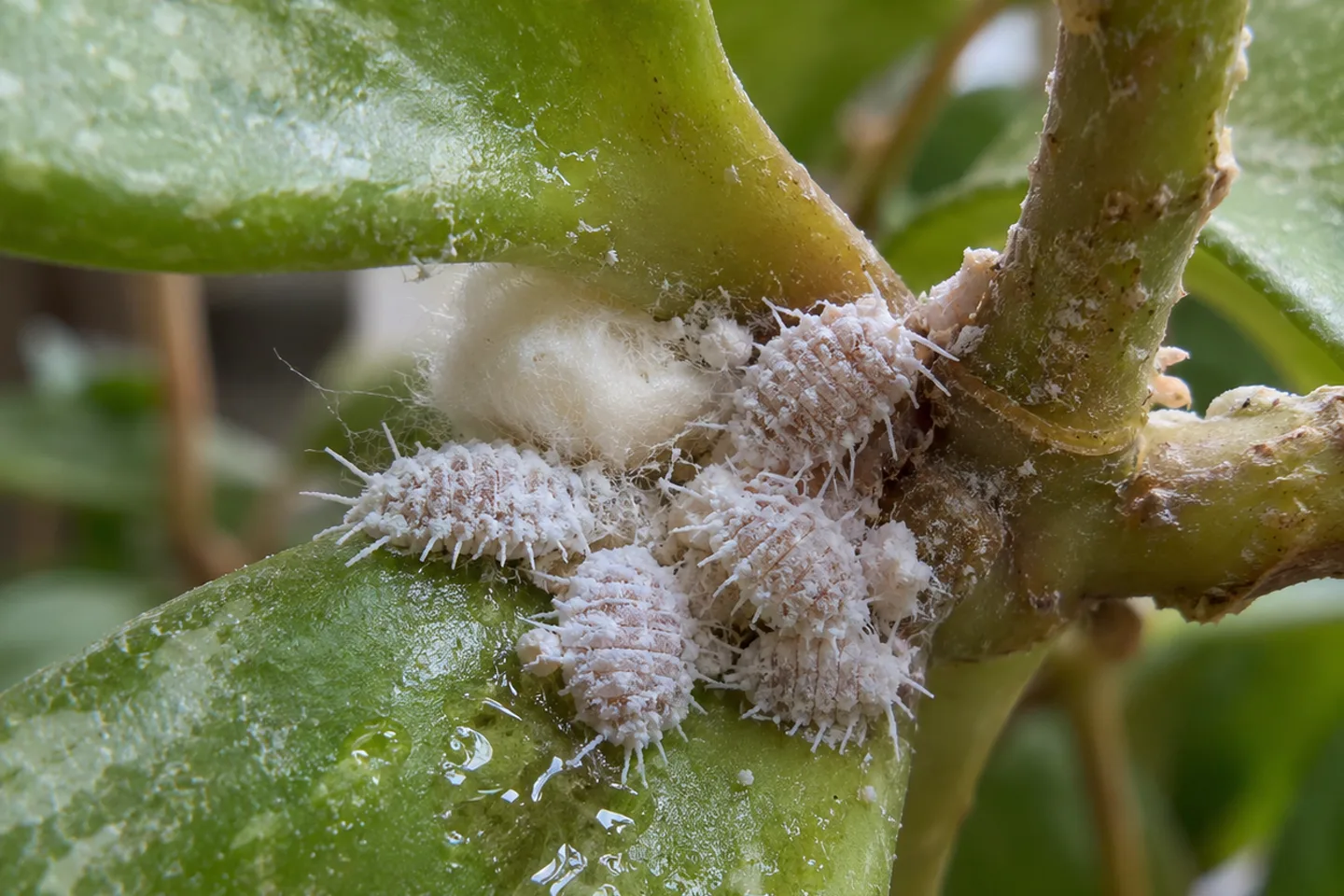
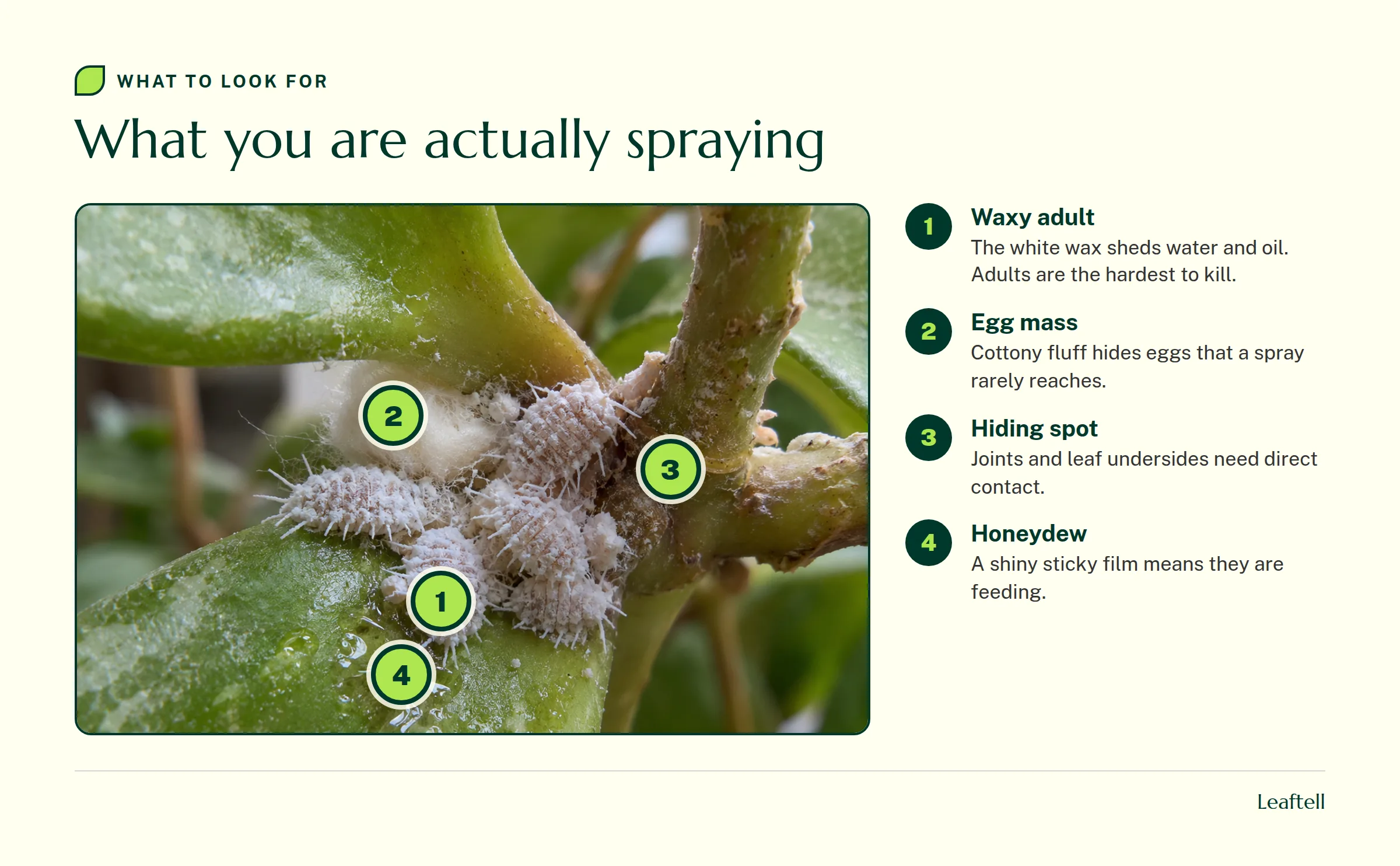
Mealybugs make that hard. They pack into the places a spray skims past: the crotch where a leaf stalk meets the stem, the undersides of leaves, the crown of a succulent, and sometimes the roots. A colony usually has every life stage at once.
Why adults survive and crawlers do not
This is the one detail that decides whether neem oil works for you. UC IPM describes newly hatched mealybugs, called crawlers, as yellow, orange or pink, without wax and on the move. They start building their waxy coat soon after they settle down to feed. Adults wear the full coat, and egg masses sit inside cottony fluff.
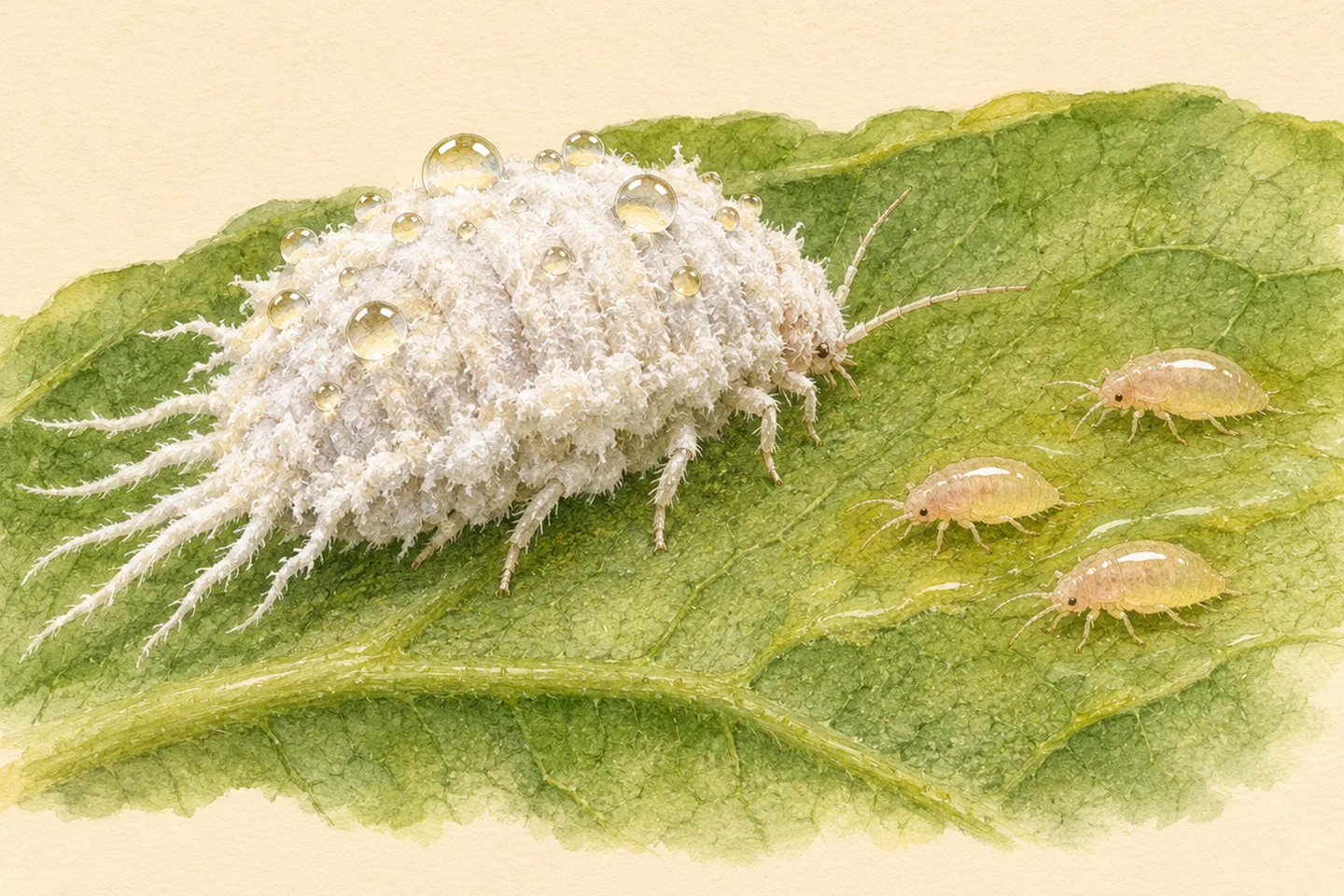
So neem oil does its best work against crawlers, the stage that is easiest to miss because it is tiny and not yet white. Adults shrug off a light mist, and eggs are protected until they hatch. That gives you a simple rule: remove what you can see by hand first, then use neem oil to catch the next wave of crawlers, and repeat.
| What is on the plant | Will a neem oil spray kill it? | What to do instead or as well |
|---|---|---|
| Crawlers (tiny, yellow to pink, no wax) | Yes, if the spray wets them | Spray every surface and repeat at your label's interval |
| Adults (white, waxy, oval) | Sometimes, if fully soaked | Swab them with rubbing alcohol or rinse them off first |
| Egg masses (cottony fluff) | Rarely | Wipe the fluff away, then catch the hatchlings with repeat sprays |
| Root mealybugs (white fluff on roots) | No, a leaf spray never reaches them | Unpot, clean the roots and repot in fresh mix |
Neem oil, insecticidal soap or rubbing alcohol?
All three kill mealybugs by contact, and none of them keeps working after it dries. The difference is how many bugs you have and where they are.
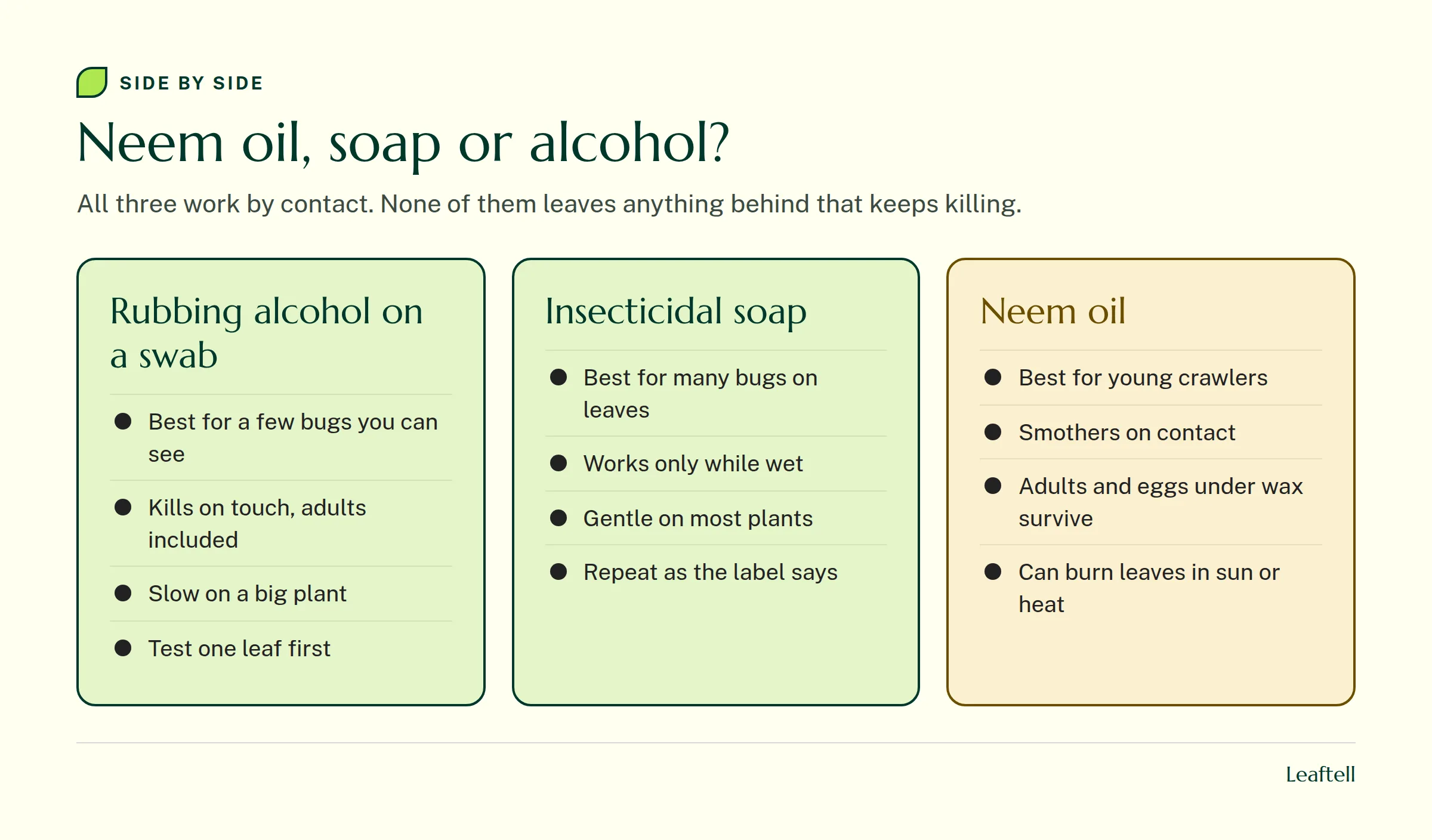
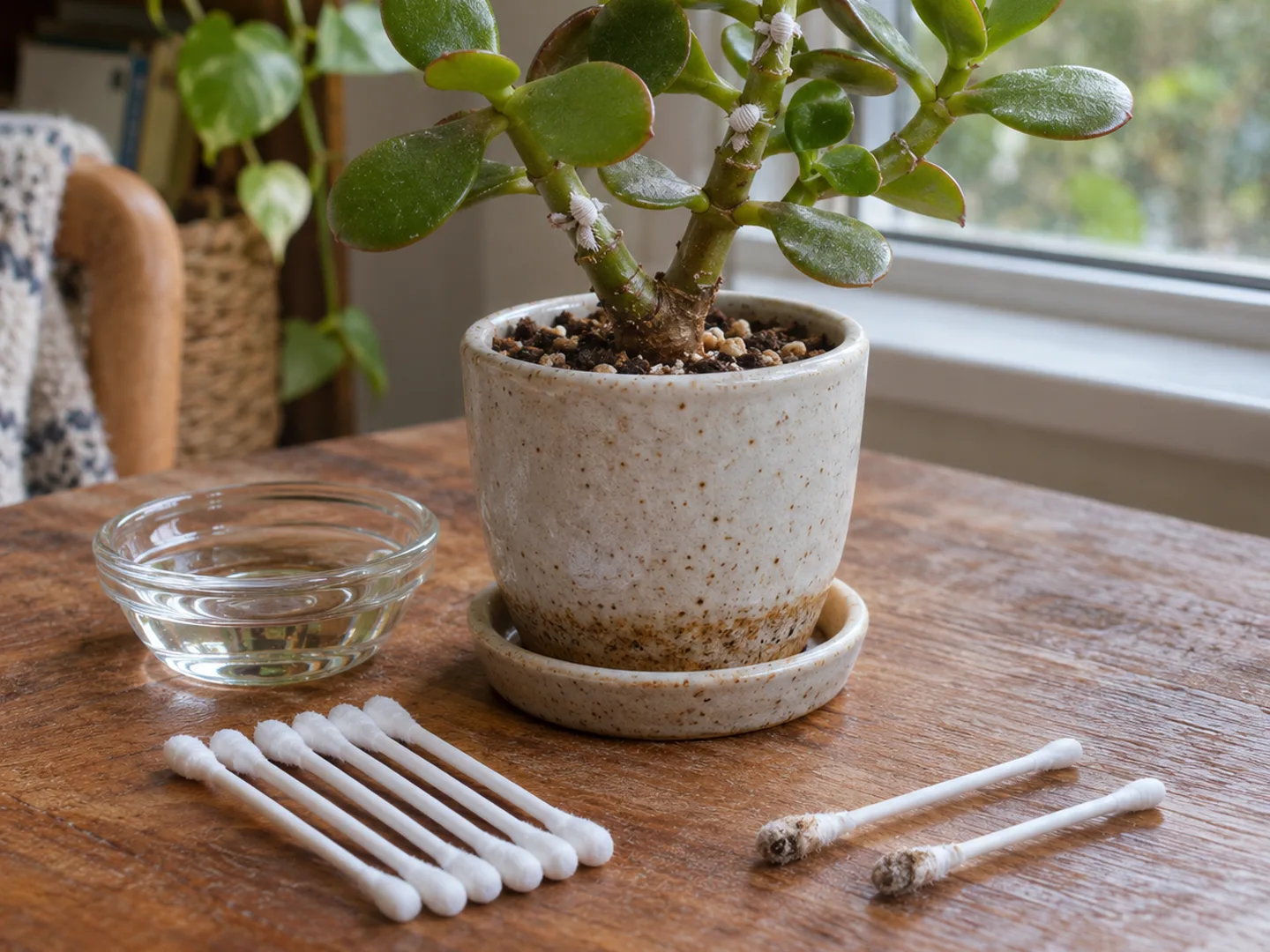
For a handful of bugs you can see, a cotton swab dipped in rubbing alcohol is faster and more certain than any spray, because you hit each adult directly. UC IPM recommends 70 percent or weaker isopropyl alcohol dabbed on with a swab, and testing it on a small part of the plant a day or two first. For a plant covered in bugs, swabbing turns into an evening's work, and a spray of insecticidal soap or neem oil covers the ground faster. Soap and neem oil are close cousins in how they act. Soap is generally the gentler choice on sensitive leaves, and neem oil tends to cling a little longer. Pick one per treatment. Never mix products in the same bottle or on the same day.
Where the mealybugs are decides the method
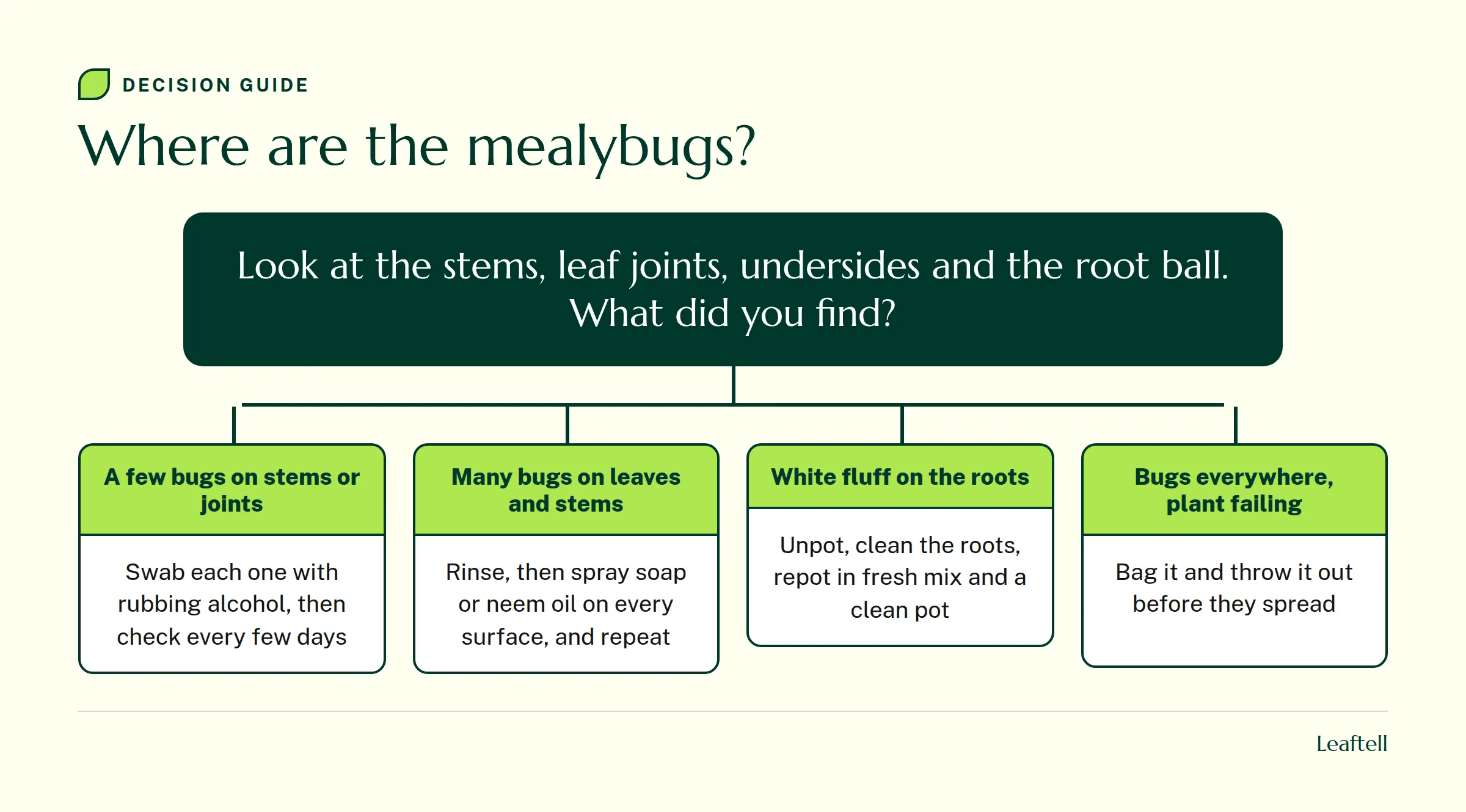
Before you spray anything, look at the whole plant: stems, leaf joints, both sides of the leaves, and the soil line. If the plant still looks unwell after the leaves are clean, slide it out of the pot and look at the roots. Mealybugs on the stems and leaves are one problem. White fluff on the roots is another, and no amount of neem oil on the leaves will touch it.
If you are not sure the white stuff is mealybugs at all, our guide to mealybugs on plants shows how to tell a colony apart from scale, wool aphids and mineral crust. Scale insects look similar from a distance and respond to the same contact treatments; see scale on plants if your bumps are flat and brown rather than white and fuzzy.
How to use neem oil on mealybugs
Rinsing first is the step most people skip, and it is the one that makes neem oil look like it works. A strong stream of water knocks off loose adults, egg fluff and the sticky honeydew they leave behind, so the oil lands on bugs and leaves instead of on a layer of wax and goo.
How to use neem oil on mealybugs
- Isolate the plant
Move it away from your other plants right away. Mealybug crawlers walk to touching leaves, so give it its own windowsill until it has been clean for a few weeks.
- Rinse and wipe
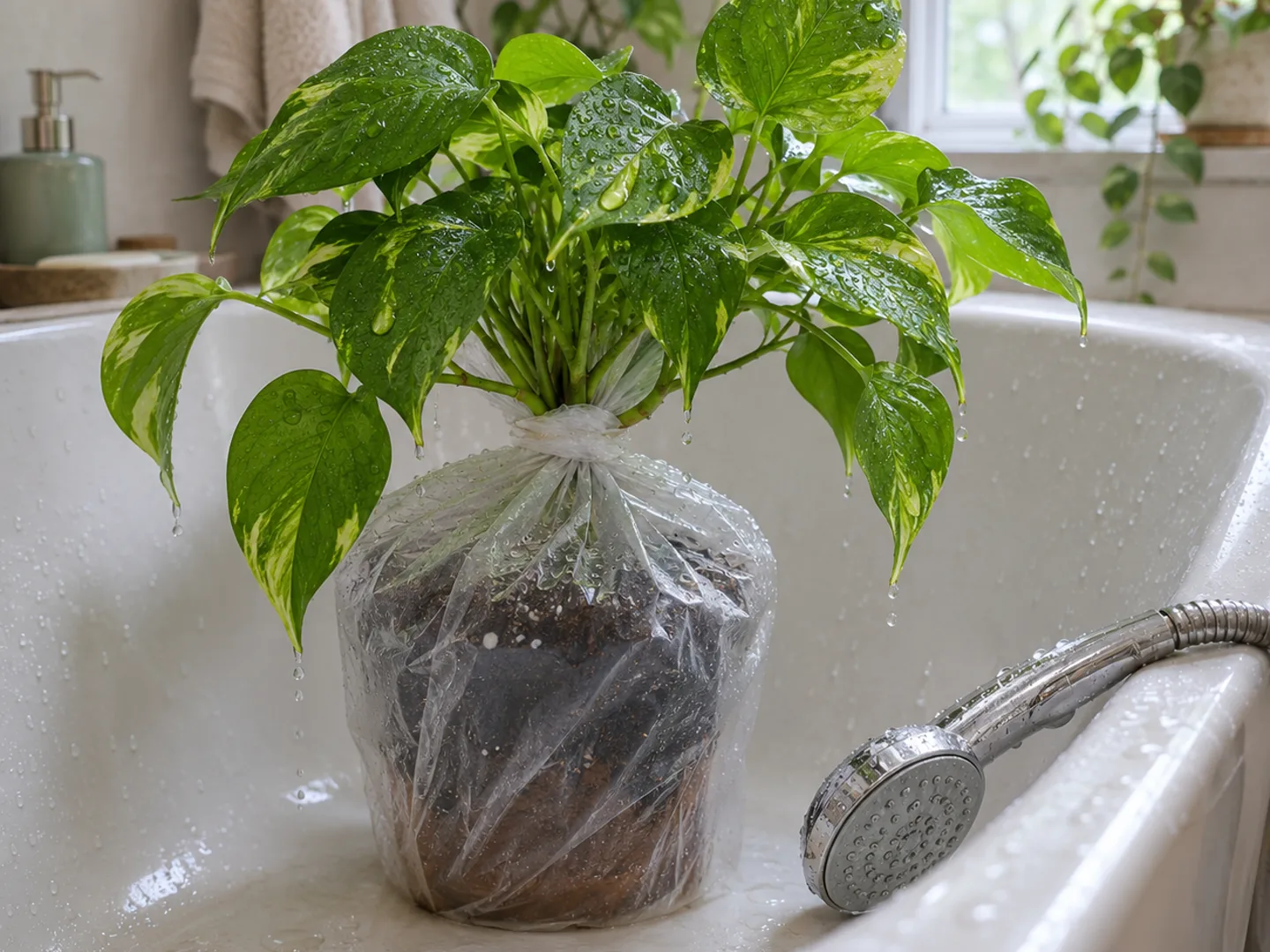
Cover the soil with a plastic bag, then rinse the leaves and stems with a firm stream in the shower or sink. Wipe away any white fluff you can reach with a damp cloth or swab.
- Swab the adults you can see
Dab every visible adult with a cotton swab dipped in rubbing alcohol. They should come away on the swab. Test it on one leaf a day or two earlier if the plant is new to you.
- Test the neem oil on one leaf
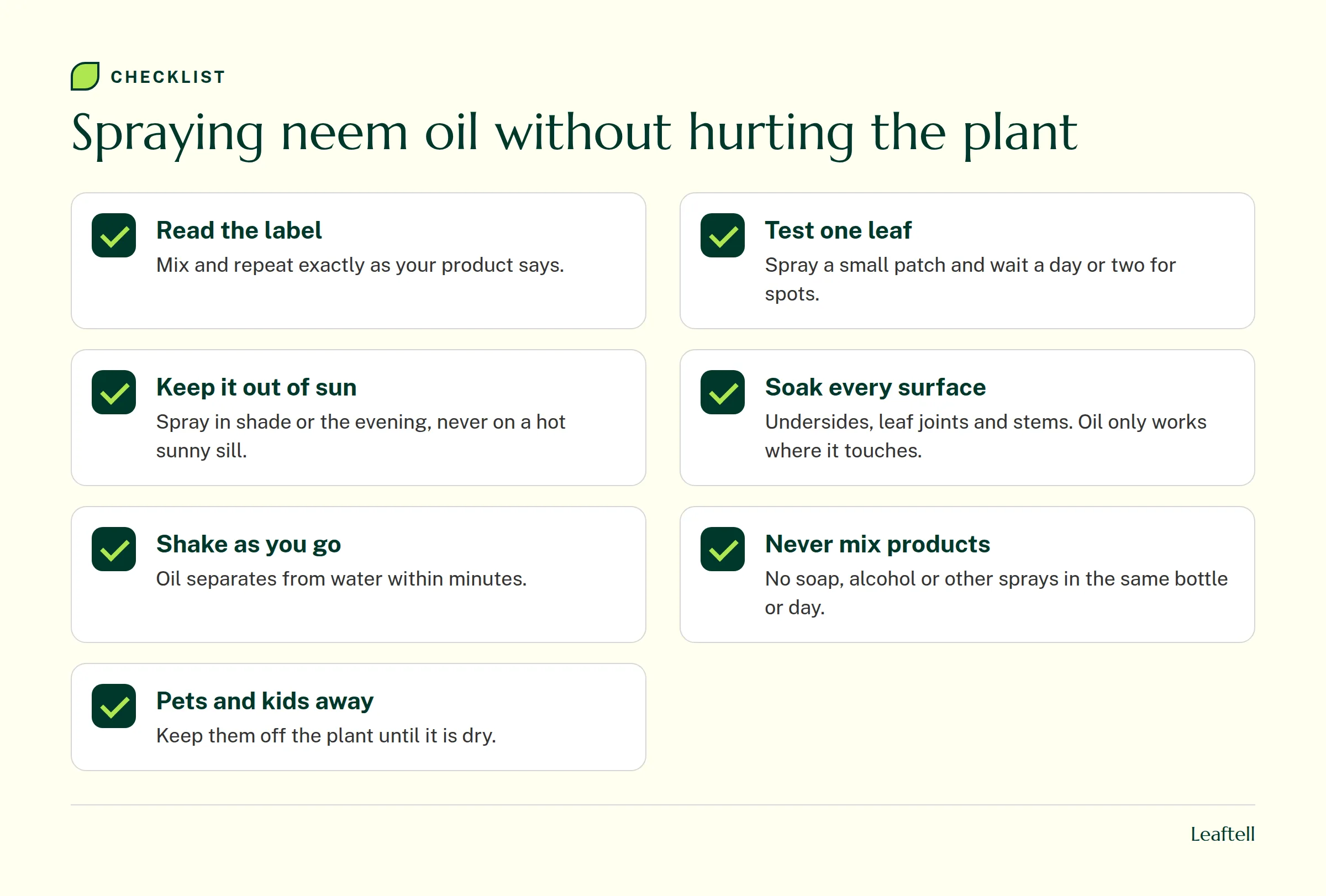
Mix and use the product exactly as its label says. Spray a small patch and wait a day or two. If you see spots or browning, stop and switch to insecticidal soap.
- Spray every surface out of the sun
Spray in shade or in the evening until leaf undersides, leaf joints and stems are wet. Shake the bottle as you go, because oil separates from water. Keep pets and kids away until it dries.
- Repeat and keep checking
Repeat at the interval on your label to hit crawlers hatching from eggs you missed. Check the leaf joints every few days and swab any new white spot as soon as you see it.
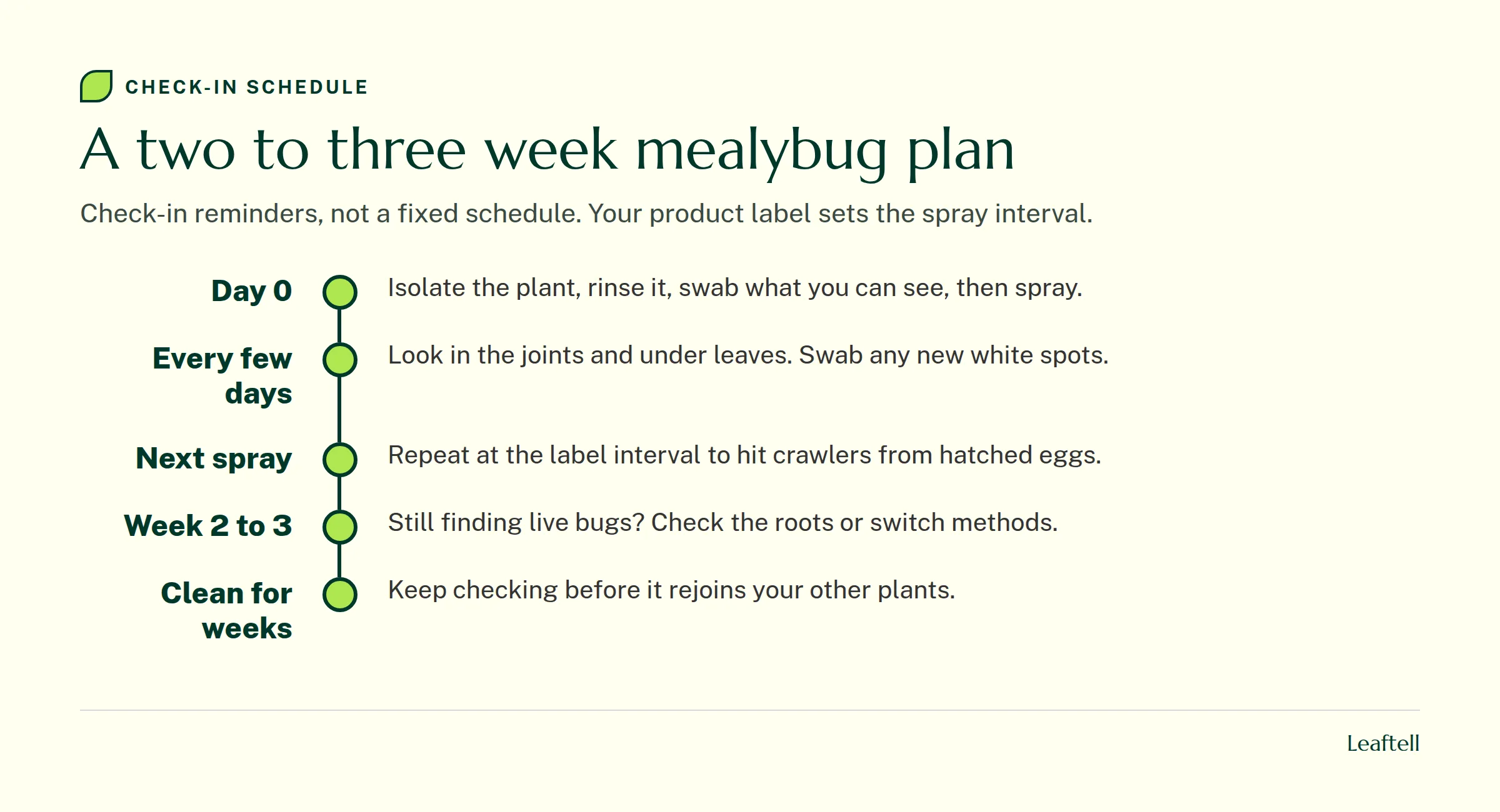
Plan on two to three weeks of this, not one spray. The repeats matter more than any single treatment, because each one catches crawlers from eggs the last one could not reach. If you still find live adults after that, check the roots and switch methods rather than spraying harder.
Mistakes that make neem oil fail or hurt the plant
Most bad neem oil results come down to a few habits.
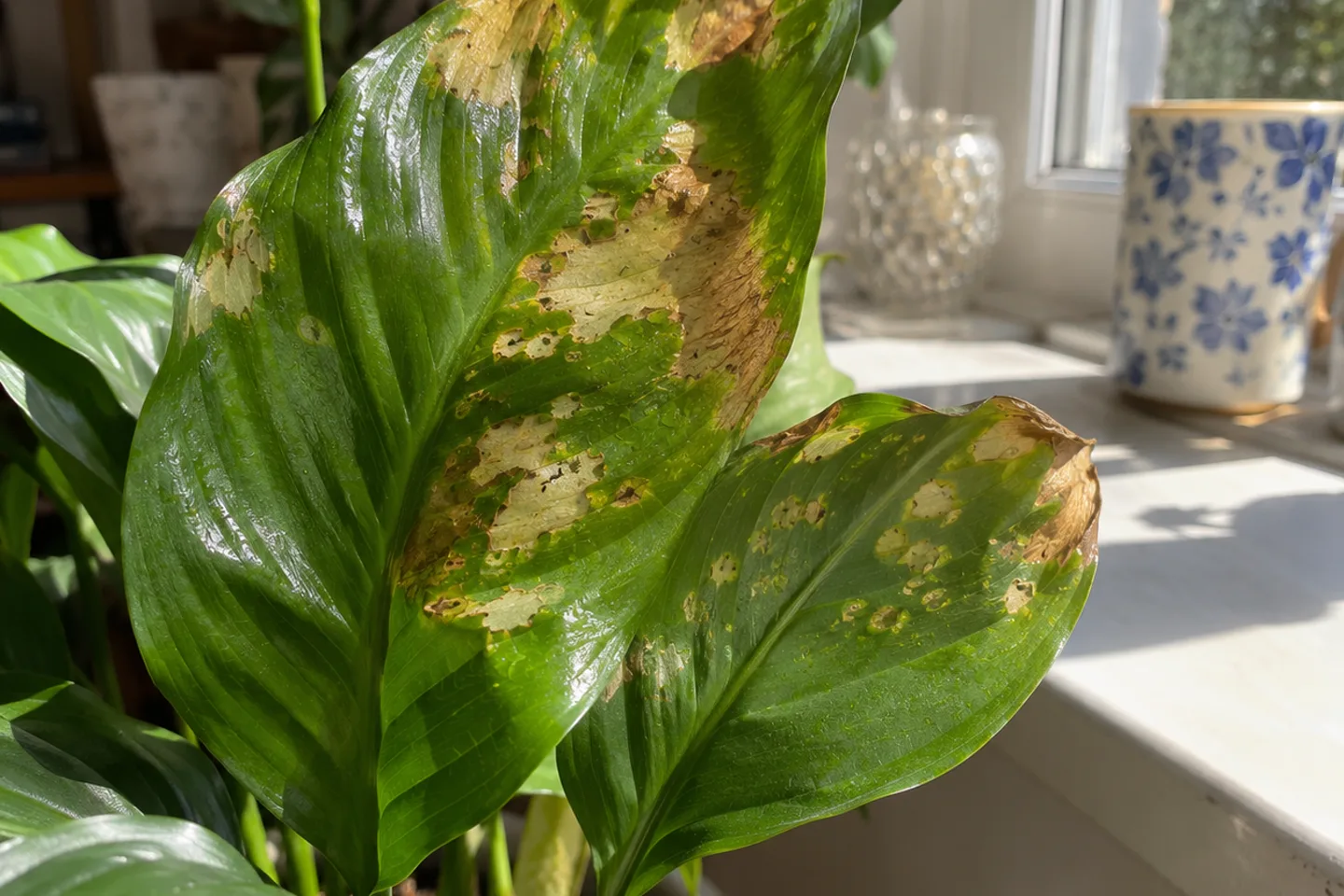
- Spraying in sun or heat. Oil on leaves in strong direct sun can scorch them. Move the plant out of the sun to spray and keep it in bright shade until the leaves are dry.
- Misting instead of soaking. A light, even mist looks tidy and misses the joints and undersides where the colony lives.
- Spraying once. One treatment kills crawlers that are out today and nothing that hatches next week.
- Skipping the test leaf. Some plants, especially thin or fuzzy leaves, react badly to oils. One test patch saves the whole plant.
- Mixing products. Do not add soap, alcohol or another spray to the same bottle, or stack them on the same day. Use one, rinse, then switch if it is not working.
- Spraying the roots' problem. If the white fluff is on the roots, foliage sprays will never reach it.
Neem oil around pets, kids and fish
Neem oil is one of the lower-risk options, not a risk-free one. NPIC lists it as practically non-toxic to birds and mammals but slightly toxic to fish, and reports that cats treated directly with neem oil for fleas in other countries have had serious reactions, including deaths. That is not the same as a cat walking past a sprayed plant, but it is a good reason to keep pets and children away until the leaves are dry, to spray well away from an aquarium, and to store the bottle out of reach.
If a pet chews a treated plant or licks the product, call your vet or the ASPCA Animal Poison Control Center. Do not wait for symptoms.
When the mealybugs are in the roots
Some mealybugs feed on roots, and UC IPM notes they usually go unseen until the plant is dug up. Signs are a plant that keeps declining after you clean the leaves, and white, cottony patches on the roots or the inside of the pot.
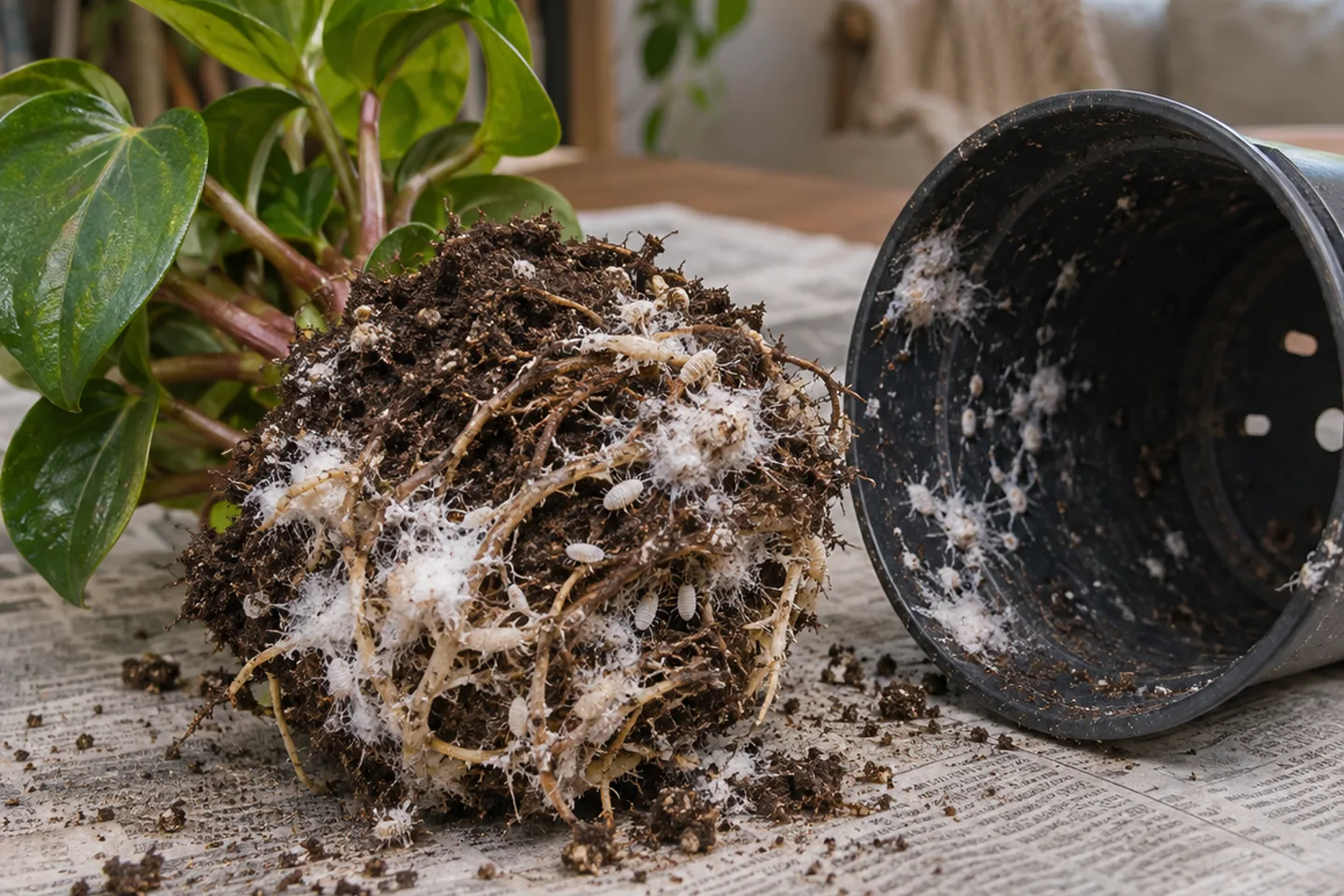
No foliage spray reaches them. Take the plant out of its pot, shake off and throw away the old mix, rinse the roots, trim any mushy ones, and repot into fresh mix in a clean or new pot. Our guide on how to repot plants covers pot size and handling. Watch it closely for the next few weeks.
When to give up on the plant
UC IPM's advice for houseplants includes something many people do not want to hear: discard heavily infested plants. If mealybugs cover most of the plant, have reached the roots, and the plant was cheap or already failing, bagging it and throwing it out protects every other plant in your home. Then clean the windowsill, the saucer and any stakes or ties it touched.
If your plants keep getting mealybugs back, the source is usually a new plant or a reused pot. Where mealybugs come from walks through the ways they get in and how to quarantine new arrivals.
Check your infested plant in Leaftell
Neem oil kills mealybugs it soaks, especially young crawlers, but it will not clear an infestation on its own. Swab or rinse off the adults first, spray every surface out of the sun, repeat at your label's interval for two to three weeks, and check the roots if they keep coming back. If the sticky film on your leaves is your first clue, our guide to sticky leaves on plants helps you confirm it is honeydew, and houseplant pests covers the other bugs that leave it.
Not sure the white spots are mealybugs, or whether treatment is working? Check your infested plant in Leaftell with a close-up of a leaf joint and a photo of the whole plant. Set yourself a check-in reminder to take a fresh photo in about seven days and compare.
Check your growing conditions with the plant watering calculator.
Frequently asked questions
Yes, by contact, much like neem oil. It works best on young crawlers and on adults it soaks fully, and it stops working once it dries. Rinse and swab off visible adults first, spray every surface, and repeat as the label directs.
For mealybugs they work in a very similar way, so coverage and repeat sprays matter more than the bottle. Insecticidal soap is generally the gentler pick for sensitive leaves. Neem oil can scorch leaves in sun or heat, so test either one on a small patch first and use one product at a time.
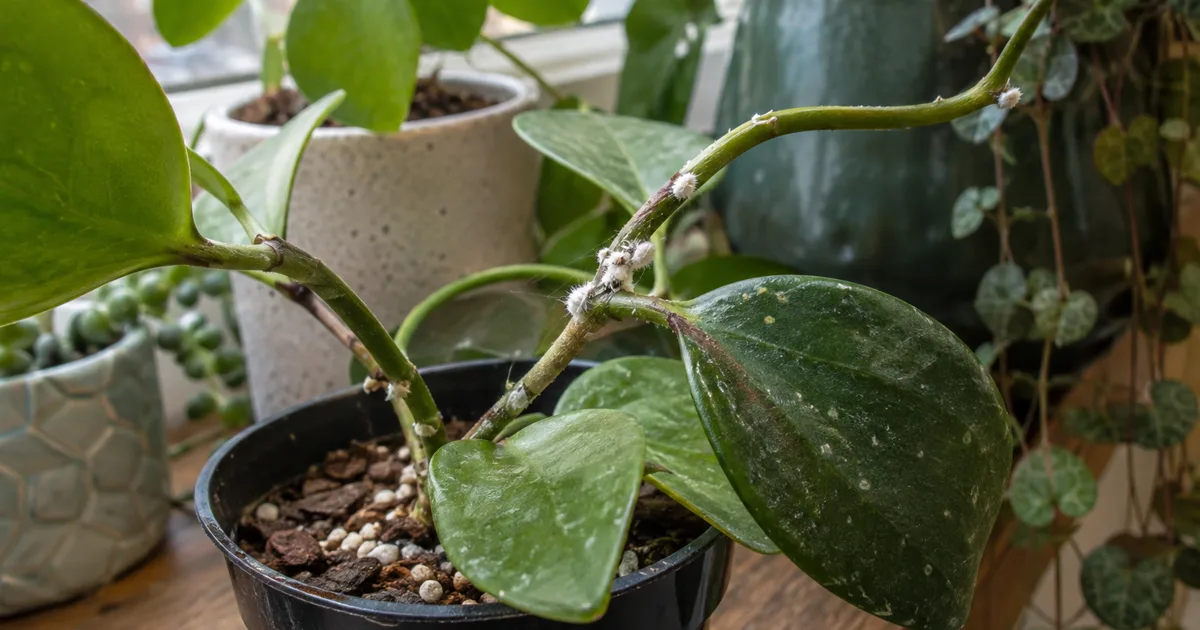
Mealybugs are small, soft, oval insects covered in white wax that suck sap from plants. They gather in colonies in leaf joints and under leaves, leave sticky honeydew behind, and lay eggs in cottony fluff. The photos above show what a colony looks like up close.
Permethrin is a broad-spectrum insecticide, and broad-spectrum sprays are not a good fit for mealybugs. Like other contact sprays, it struggles with the wax and hiding places, and UC IPM advises avoiding broad-spectrum products. Permethrin is also very dangerous to cats. Stick with rubbing alcohol, insecticidal soap or neem oil indoors.
Share article
About the author

Keep checking your plant
Plant care reference
Indoor plant care
Build a routine around your plant, light and potting mix.
Plant care reference
Why is my plant dying
Trace leaf and root symptoms before choosing a care change.
Plant care reference
Pothos plant care
Choose a growing spot and prune a trailing pothos for fuller growth.
Plant care reference
How to fix root rot
Inspect root firmness and drainage, then decide whether to repot.