Peace Lily Care: Light, Water and Repotting That Work
Filip Leszczyński 15 October 2026 13 min read
In this article
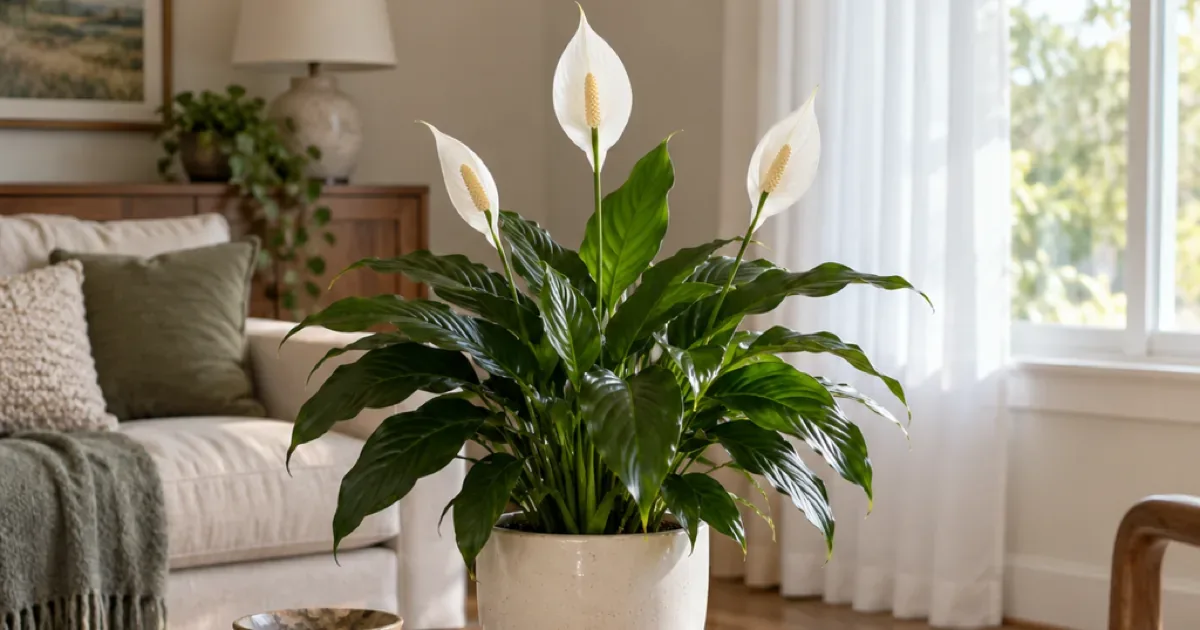
Peace lily care comes down to four things: bright light that never hits the leaves directly, watering when the top of the mix turns slightly dry, temperatures between 68 and 85°F, and a pot only a little bigger than the roots. Get those right and the plant asks for almost nothing else.
The catch is that the peace lily is famous for two habits that lead owners astray. It survives in a dim corner, so people park it there and then wonder why it never flowers. And it droops dramatically when thirsty, so people water it on a schedule to prevent the droop and drown the roots instead. Clemson's extension service names root and stem disease from overwatering as the most common peace lily problem, not drought.
This guide covers placement, watering, temperature, feeding, repotting and flowering, plus what the leaves are telling you. One thing a photo of your plant cannot show is how wet the root ball is at the bottom of the pot. Only lifting the pot and feeling the mix tells you that.
Where should a peace lily go in your house?
Put a peace lily in bright, indirect light: near a north or east window, or a few feet back from a brighter south or west one, with no sun landing on the leaves. It tolerates low light, which is why it gets called the office plant, but it grows and flowers best with more light than a dark corner gives. If your available spot is dim and flowers are not the priority, compare foliage plants for lower light, including options for homes with pets.
Clemson HGIC puts it plainly: peace lilies tolerate low light but grow best in bright indirect light, and direct sun scorches the foliage. NC State Extension describes them as preferring partial to deep shade outdoors, which indoors translates to filtered window light, not the windowsill of a sunny room.
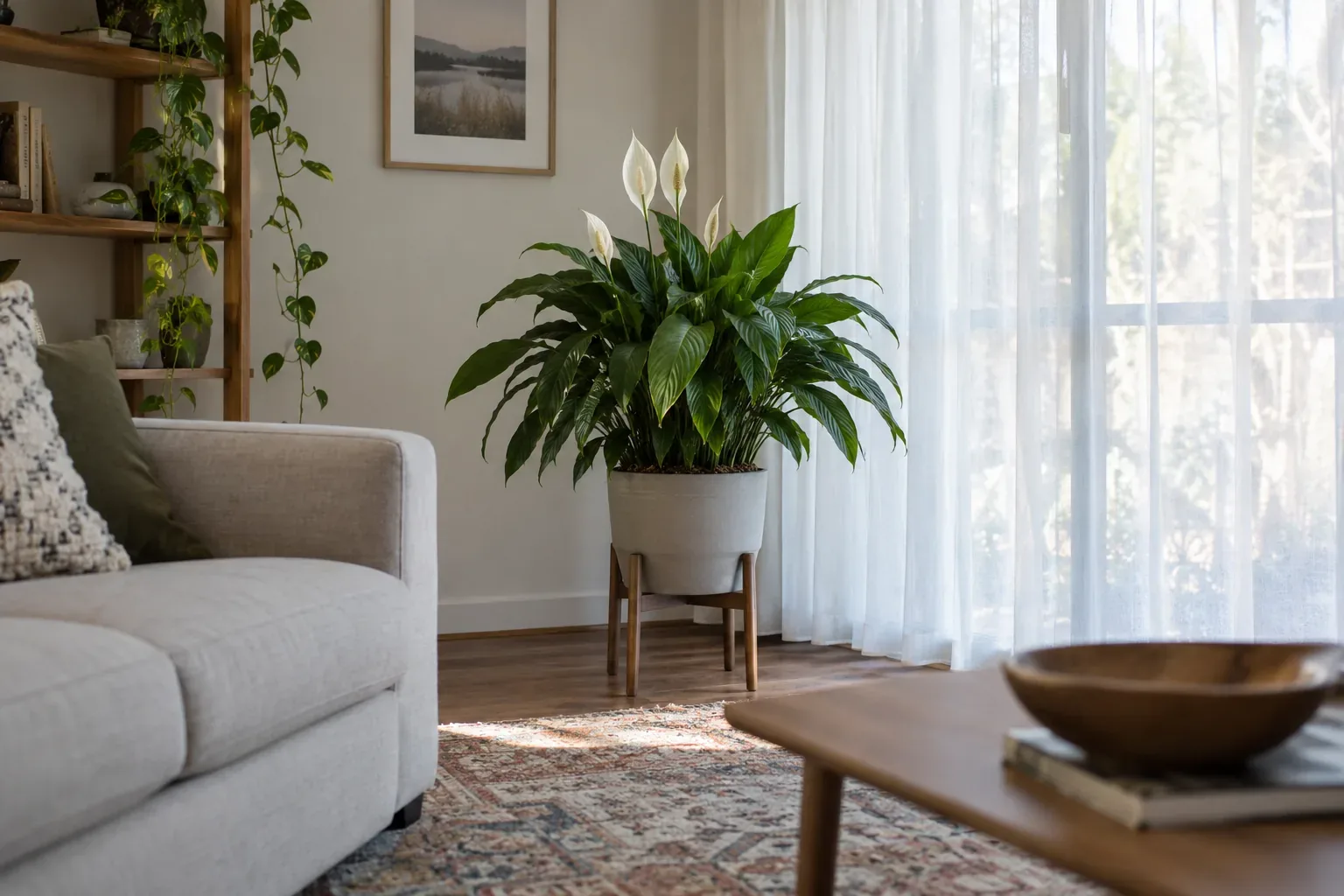
A sheer curtain is the easiest fix for a bright window. If you are unsure how bright a spot really is, the guide to reading your plant's light walks through a simple shadow test. Keep the pot away from heating and air conditioning vents too. Hot, cold or drafty air damages the leaves, even when the light is perfect.
| Spot in your home | How it suits a peace lily | What to adjust |
|---|---|---|
| North window | Good, close to the glass | Nothing, unless it stops flowering |
| East window | Very good | Keep it out of the strongest morning sun |
| South or west window | Too strong up close | Move it several feet back or filter with a sheer curtain |
| Interior room or office | Survives | Expect slow growth and few or no flowers |
| Next to a vent or radiator | Poor | Move it; hot or cold drafts damage leaves |
Plan for size as well as light. Clemson notes that most peace lilies grow 1 to 4 feet tall and wide, but a few cultivars reach 6 feet, so check the tag before you pick a spot. A compact type suits a desk or shelf; a large one needs floor space.

Peace lily temperature and humidity
Peace lilies like warm rooms: 68 to 85°F during the day and no more than about 10°F cooler at night. NC State notes that 40 to 60°F slows growth considerably, and longer spells below 40°F can damage leaves, stems and roots.
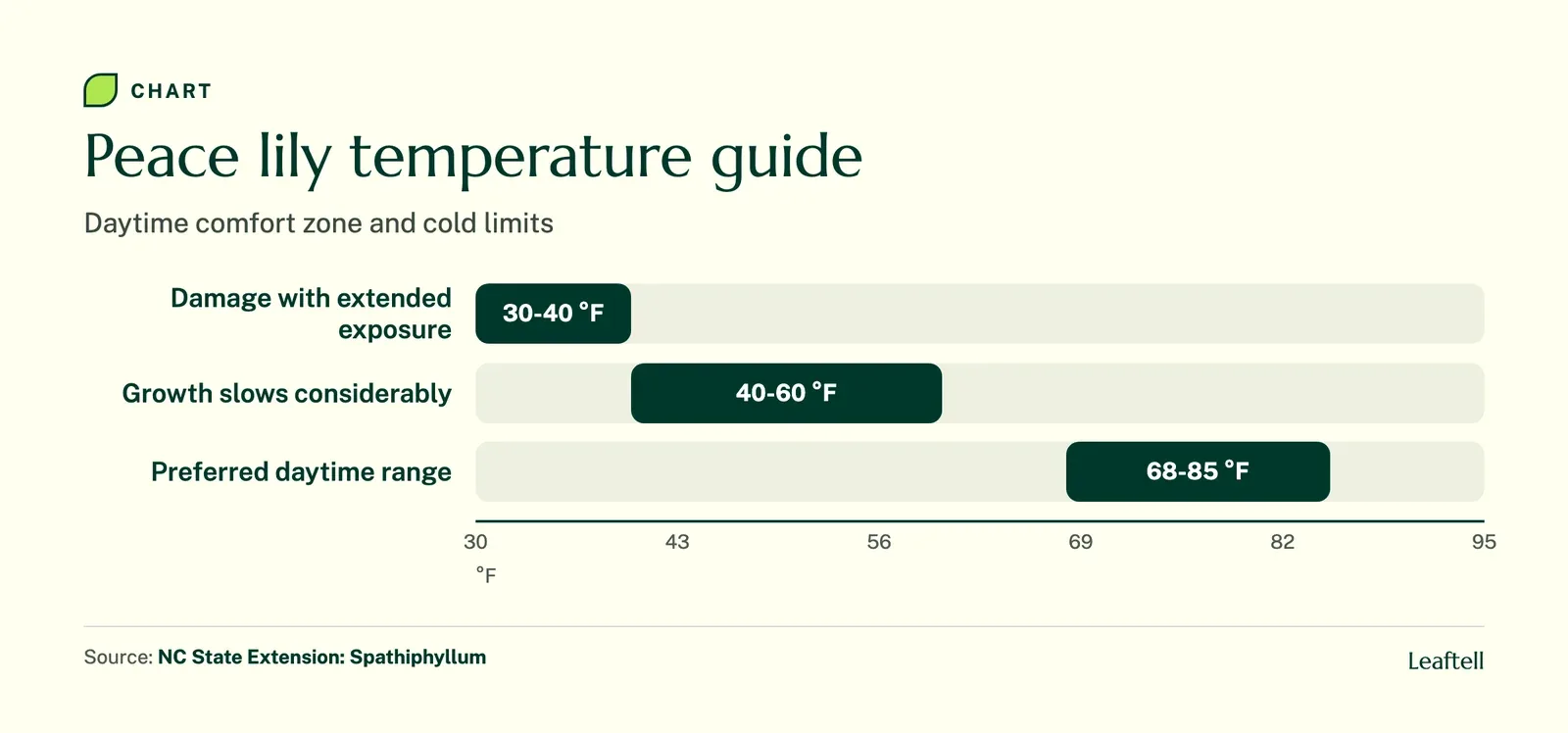
In practice, the risk spots are a cold windowsill in winter, a porch in fall and the blast of an air conditioner in summer. If a leaf touches cold glass overnight, pull the pot back a few inches.
Low humidity is one of the causes of brown leaf tips, along with direct sun and underwatering. Grouping plants together or keeping the peace lily out of the path of a heater helps more than an occasional mist, which dries within minutes.
How often to water a peace lily
Water a peace lily when the top inch of mix feels slightly dry, not on a fixed day. Keep the mix moist but never soggy, and never leave the pot sitting in a saucer of water. The gap between waterings shrinks in warm, bright summer months and stretches in winter, so let the mix decide, not the calendar.
Clemson recommends room temperature water and allowing the mix to dry slightly between waterings. If it dries out too far, the whole plant wilts and leaf edges can turn yellow. If it stays wet, the roots suffer. That is why the droop is a poor alarm: a waterlogged peace lily can droop too. Before you water a drooping plant, use the soil moisture checks to confirm the mix is actually dry.

NC State notes that watering from below works very well for peace lilies. Stand the nursery pot in a shallow basin of water, let the mix draw it up, then lift the pot out and let it drain fully. It wets the whole root ball evenly, which matters once a peace lily gets root bound and water starts running straight down the sides.
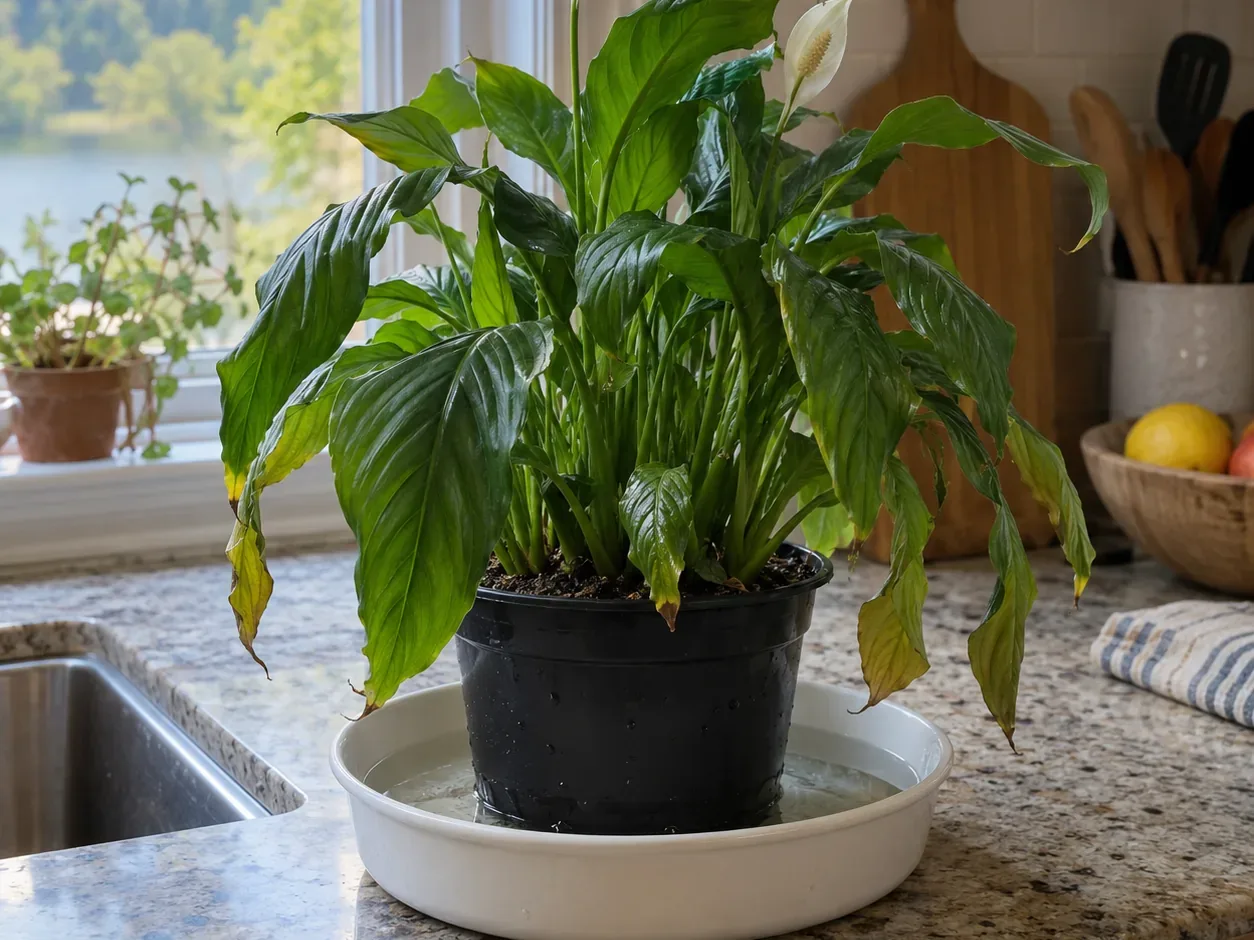
Decorative cover pots are the classic trap. Water pools in the bottom where you cannot see it, and the roots sit in it for days. Tip the cover pot out after every watering. If the mix smells sour or the stems feel soft at the base, read the root rot guide before you water again. For a starting interval to check against, try the plant watering calculator, then let the finger test have the final word.
Feeding a peace lily without burning it
Peace lilies need very little fertilizer. Clemson suggests a balanced liquid houseplant fertilizer every six to eight weeks in spring and summer, mixed at one quarter of the label strength. Skip feeding in fall and winter.
More is not better here. Overfeeding and salt buildup burn leaf tips and roots, and NC State recommends flushing the soil with plain water between feedings to carry excess salts out of the drainage hole. Follow the label of whatever product you use, measure rather than eyeball, and never mix two fertilizers together.
What the leaves are telling you
Most peace lily problems show up in the leaves first, and most trace back to water, light or feeding. Read the pattern before you change anything.
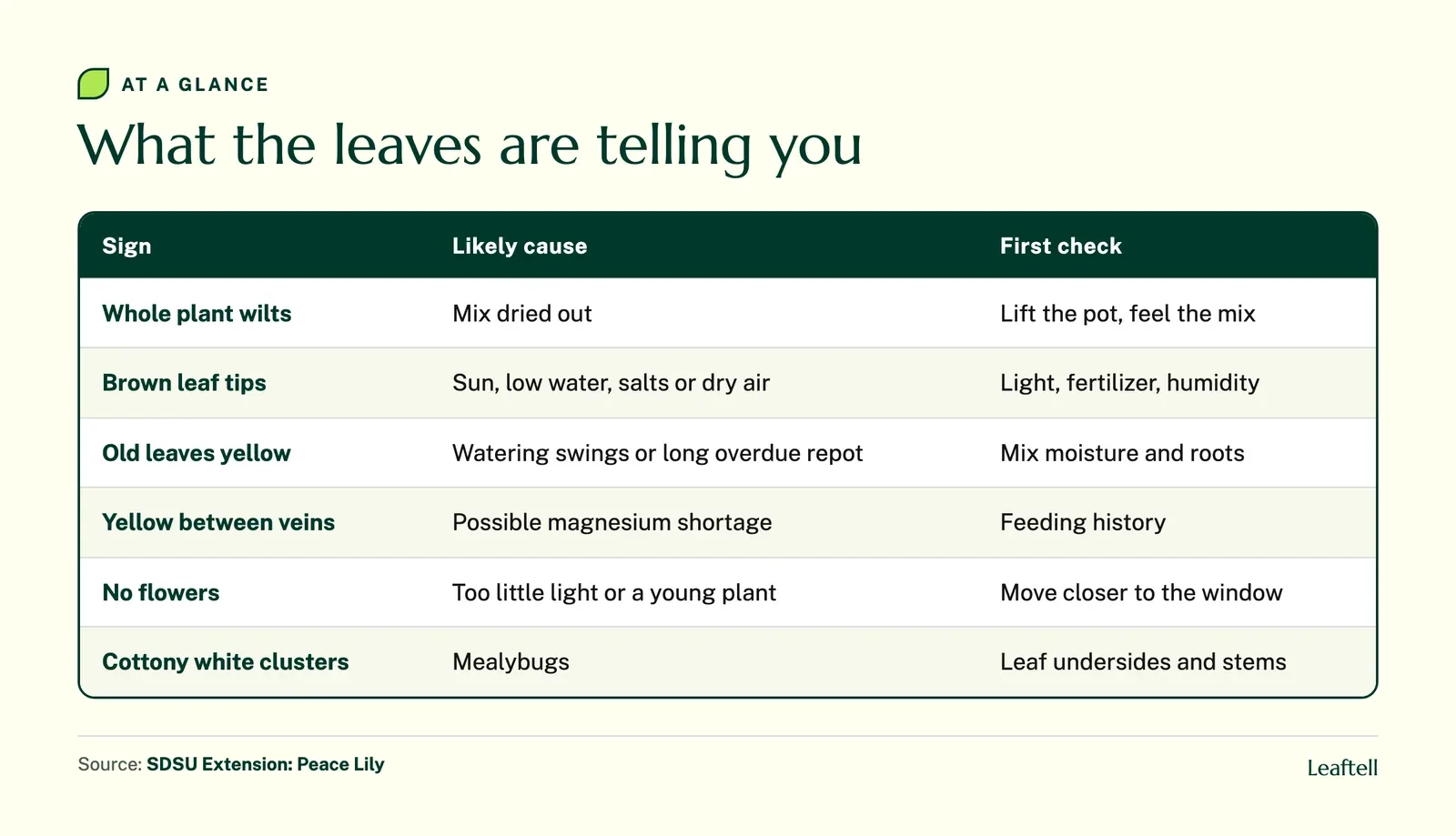
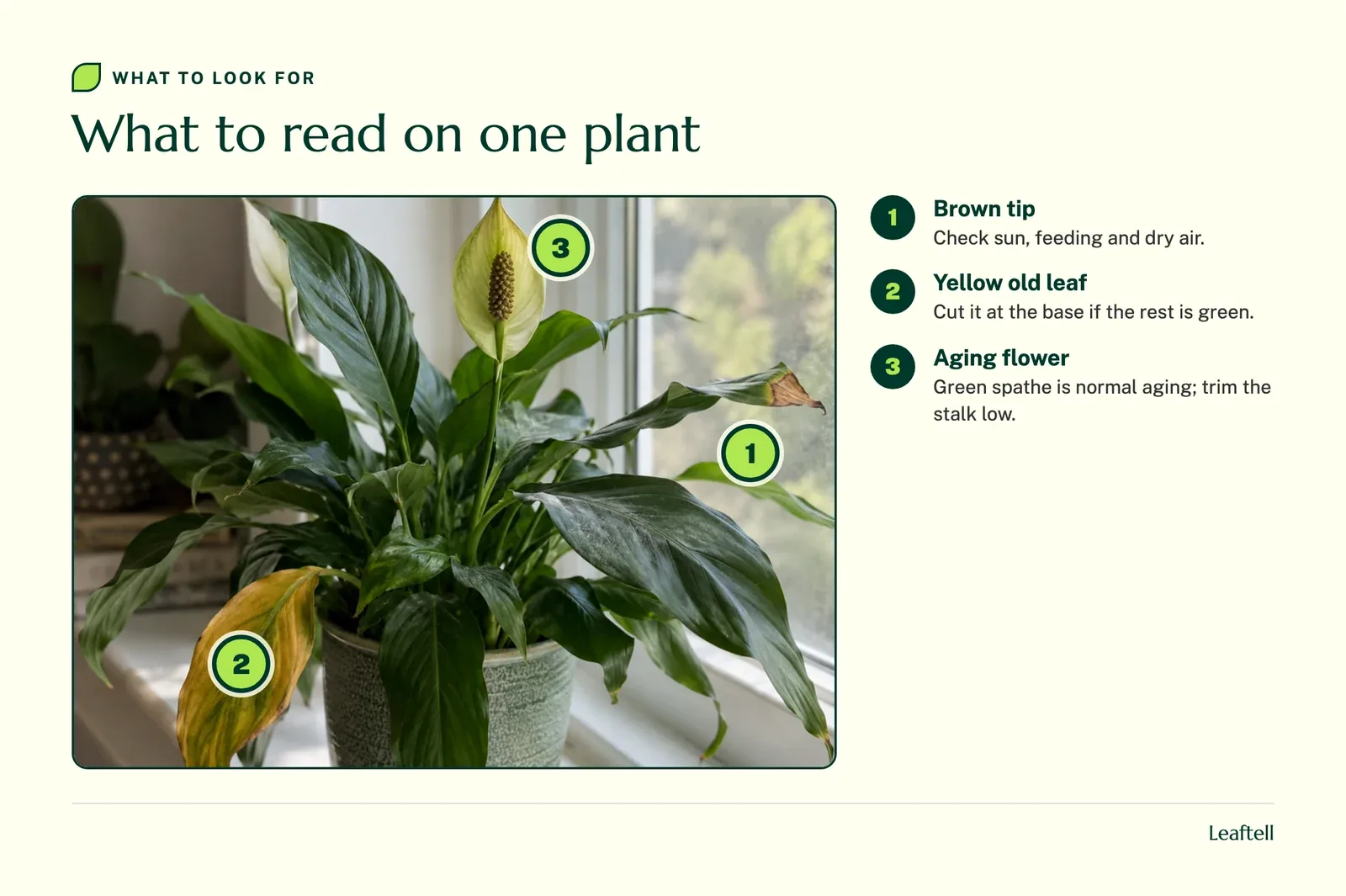
A single yellow leaf at the bottom of an otherwise green plant is often just age. SDSU Extension notes that older leaves also yellow when a plant has gone a long time without repotting. Yellow between the veins while the veins stay green can point to a magnesium shortage, according to Clemson, so check your feeding history before blaming water.
Peace lilies have few pests, but mealybugs, scale, spider mites and fungus gnats do turn up. NC State calls mealybugs probably the most common indoor pest on them. Wipe the broad leaves with a damp cloth every few weeks: it removes dust so the plant gets more light, and it knocks off some of the pests that gather underneath. If you find cottony white clusters, compare them with the mealybug guide. Sticky film on lower leaves usually means something is feeding above it; the sticky leaves guide shows where to look. Tiny flies around a wet pot point to fungus gnats, which is one more reason to let the top inch dry.
Start with the least toxic fix: isolate the plant, wipe or rinse the leaves and adjust watering. If you identify a pest and still need a product, choose an insecticidal soap or similar product labeled for houseplants and that pest, follow the label exactly, never combine products, and keep treated plants away from children and pets until the label says otherwise.
How to repot a peace lily
Peace lilies like to be slightly pot bound, so repot only when roots grow out of the drainage holes or circle on top of the mix. Move up just 1 to 2 inches in pot width; a much bigger pot holds extra wet mix around the roots and invites rot.
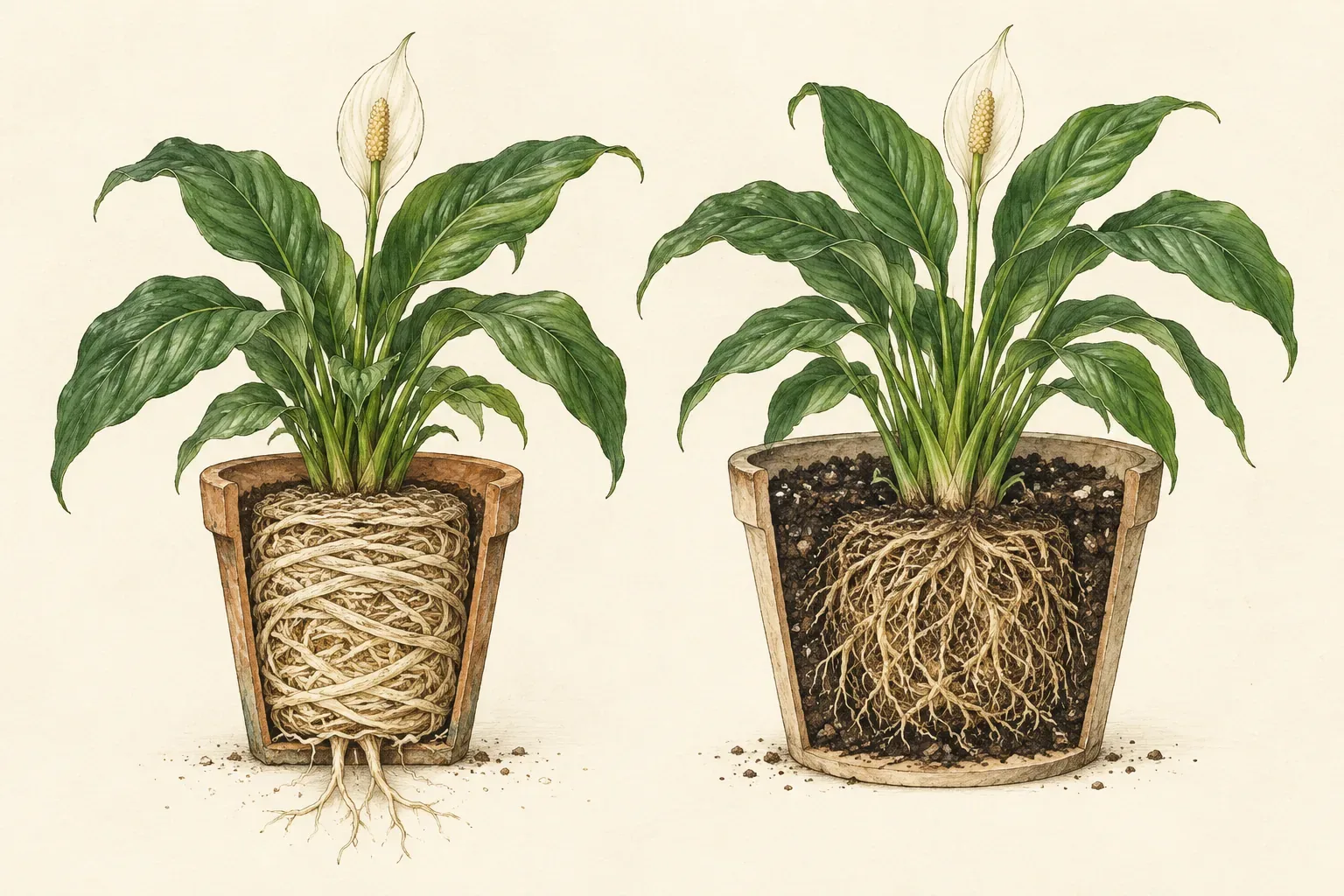
How to repot a peace lily
- Check that it is time
Look for roots poking out of the drainage holes or circling on the surface of the mix. If you see neither, wait.
- Pick a pot 1 to 2 inches wider
Choose a container with drainage holes that is only slightly wider than the current one. Clemson warns that a pot that is too large keeps the mix too wet.
- Use a well drained mix
Fill the bottom with fresh, well drained potting mix that is high in organic matter. Peace lilies grow in almost any good houseplant mix as long as water drains freely.
- Loosen the roots gently
Slide the plant out and tease the outer roots loose with your fingers so they can grow into the new mix. Do not rip or cut healthy roots.
- Set it at the same depth
Place the plant at the depth it grew before, fill around it with mix and firm lightly. Water thoroughly and let it drain completely.
- Give it a quiet week
Keep it in bright indirect light, out of drafts, and hold off on fertilizer for a few weeks while the roots settle.
Repotting works any time of year, but Clemson notes the plant recovers faster during the spring and summer growing season. NC State suggests late winter, in February or March, before active growth starts.
How to get a peace lily to flower
A peace lily that will not flower is almost always either too young or too dark. Clemson says lack of flowering usually happens in plants less than a year old or in insufficient light. Move it to brighter indirect light and give it time.
Peace lilies have no fixed bloom season and flower on and off when conditions suit them. Each white spathe stays bright for around 10 days, then turns pale green and can stay attractive for at least another month, according to NC State. That green tinge is normal aging, not a disease. When a flower turns brown, cut its stalk off near the base of the plant.
Is a peace lily toxic to cats and dogs?
Yes. The ASPCA lists the peace lily as toxic to cats and dogs. Every part contains insoluble calcium oxalate crystals, which cause intense mouth irritation, drooling, vomiting and difficulty swallowing if chewed.
Despite the name, it is not a true lily; SDSU Extension places it in the arum family with caladiums and elephant ears. That does not make it safe. SDSU advises keeping small children, cats and dogs from chewing it. Put it on a high stand or in a room pets cannot reach, sweep up fallen leaves and flowers, and call your veterinarian or a poison control service if a pet chews it.
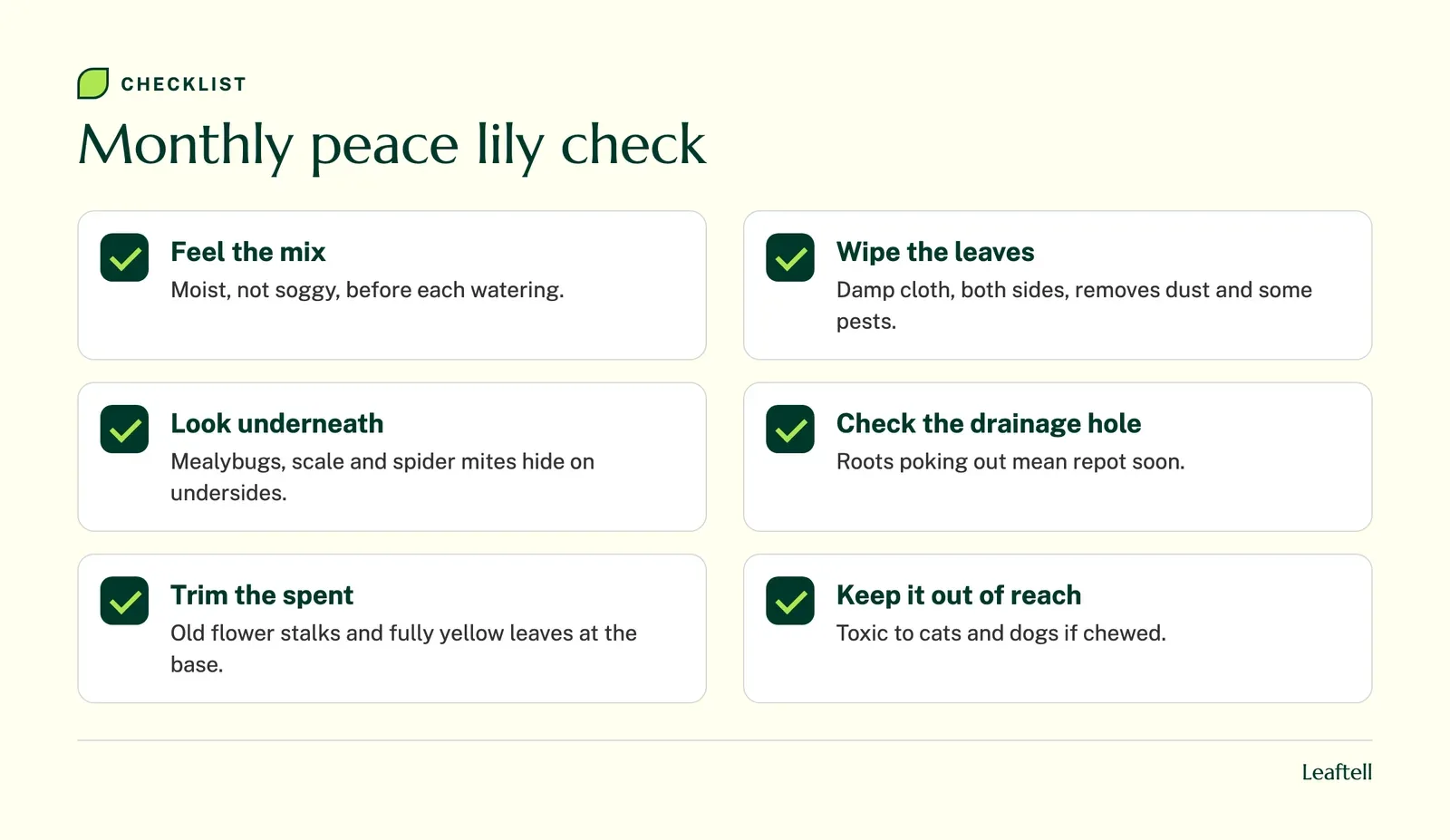
The short version of peace lily care
Give it bright light with no direct sun, water when the top inch feels slightly dry, keep it between 68 and 85°F and repot only when the roots run out of room. If it droops, check the mix before you water. If it will not flower, give it more light, not more fertilizer. And keep it away from pets that chew.
When the leaves change and you are not sure why, photograph the whole plant, a close-up of the affected leaves and the surface of the mix, and note when you last watered. Those details narrow the cause far faster than guessing.
References
Care figures come from Clemson HGIC's peace lily fact sheet, NC State Extension's Spathiphyllum profile and SDSU Extension's peace lily how-to, linked above. Pet toxicity comes from the ASPCA plant list. The room table and monthly checklist are practical routines, not research measurements.
Check your growing conditions with the plant watering calculator.
Frequently asked questions
A spot with bright, indirect light: near a north or east window, or several feet back from a south or west window. Keep it out of direct sun, which scorches the leaves, and away from heating and air conditioning vents.
Small ones. Peace lilies prefer to be slightly pot bound. When roots fill the pot, move up only 1 to 2 inches in width, because a much larger pot holds extra wet mix and raises the risk of root rot.
Give it more light. Lack of flowering usually means the plant is under a year old or sits in too little light. Move it to bright, indirect light, keep feeding light and regular in spring and summer, and give it time.
Yes. Trim the brown part with clean scissors, following the leaf's natural shape, and leave a thin brown edge rather than cutting into green tissue. Trimming only tidies the leaf, so also check the cause: direct sun, dry mix, low humidity or too much fertilizer.
They are not needed. Peace lilies need very little feeding, and a balanced houseplant fertilizer at one quarter strength every six to eight weeks in the growing season covers it. A layer of grounds on top of the pot also keeps the surface damp, which makes it harder to judge when to water.
It is toxic to cats and dogs if chewed, it sulks and droops when it dries out, and it rots if kept wet. It also flowers poorly in dim rooms. If you have pets that chew plants, place it out of reach or choose a pet safe plant instead.
Share article
About the author

Keep checking your plant
Plant care reference
Indoor plant care
Build a routine around your plant, light and potting mix.
Plant care reference
Why is my plant dying
Trace leaf and root symptoms before choosing a care change.
Plant care reference
Pothos plant care
Choose a growing spot and prune a trailing pothos for fuller growth.
Plant care reference
How to fix root rot
Inspect root firmness and drainage, then decide whether to repot.