How Often to Water Tomato Plants: Pots, Beds and Heat Waves
Filip Leszczyński Updated 5 November 2026 12 min read
In this article
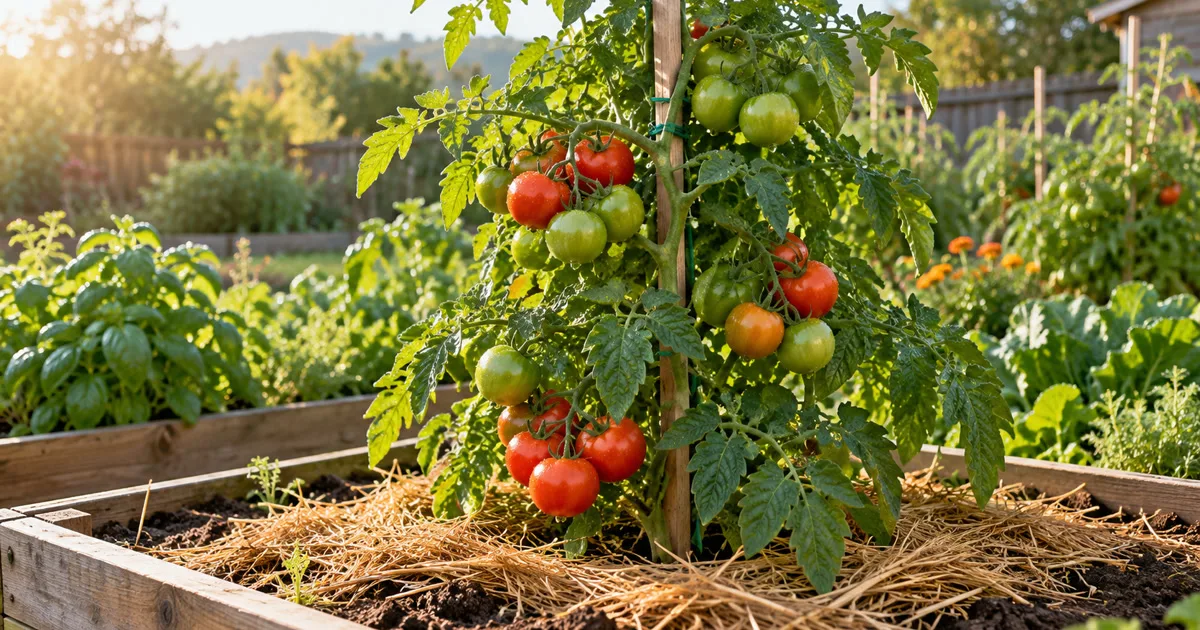
How often to water a tomato depends far more on where it grows than on the plant itself. A tomato in a pot usually needs water every day in summer, sometimes twice in a heat wave, while a tomato in garden soil does best with a deep soak once or twice a week, adding up to about an inch of water from rain and hose together.
The plant wants the same thing in both places: soil that stays evenly moist all the way down to its roots. The pot or bed just decides how fast that moisture runs out. So the most useful habit is not a schedule. It is a quick look 2 inches under the surface before you water, every time.
How often to water tomatoes, by where they grow
Start with your setup, then adjust for heat, wind and rain. These are starting points for when to check, not a calendar to water on.
| Where your tomato grows | How often to check | How to water | Watch for |
|---|---|---|---|
| Large pot, 5 gallons or more | Every morning in summer | Until water runs out of the drainage hole | Twice a day in a heat wave |
| Small pot, grow bag or hanging basket | Morning and late afternoon in summer | Slowly, until it drains; fabric bags dry fastest | Soil shrinking away from the sides |
| Raised bed | Every day or two in hot weather | Deep soak at the base, then let the top 2 inches dry | Beds drain faster than ground soil |
| In the ground, clay or loam | Twice a week | About 1 inch a week in total, rain included | Puddles that sit for hours mean too much |
| In the ground, sandy soil | Every two or three days | Same inch a week, split into more waterings | Midday wilting comes on fast |
| New transplant, first one to two weeks | Daily | Smaller amounts, keeping the root ball moist | Roots have not reached the bed yet |
Two numbers anchor this. University of Minnesota Extension guidance puts in-ground tomatoes at about one inch of water a week, whether it comes from rain, irrigation or both, and says container tomatoes need water at least once a day in summer. UNH Extension gives the same rule for pots: water thoroughly once the top 2 inches of mix are dry, until it drains, which can mean twice a day.
An inch of water over one square foot of soil is a little over half a gallon. A tomato whose roots spread over a 2 by 2 foot patch therefore needs roughly 2.5 gallons a week in total, more in hot, windy weeks. If you are unsure how much your sprinkler puts down, set an empty can in its path and time how long it takes to fill to an inch.
If you grow houseplants too, our plant watering calculator gives a starting check interval by pot and light, and the same "check first" logic applies.
Why tomatoes in pots need water so much more often
A container holds only a few gallons of soil, and a mature tomato in full sun can drink through most of it in a single hot day. Dark plastic heats up in the sun, the sides dry out, and the potting mix starts shrinking away from the rim. Once that gap opens, water can run straight down the sides and out of the drainage hole without wetting the root ball.
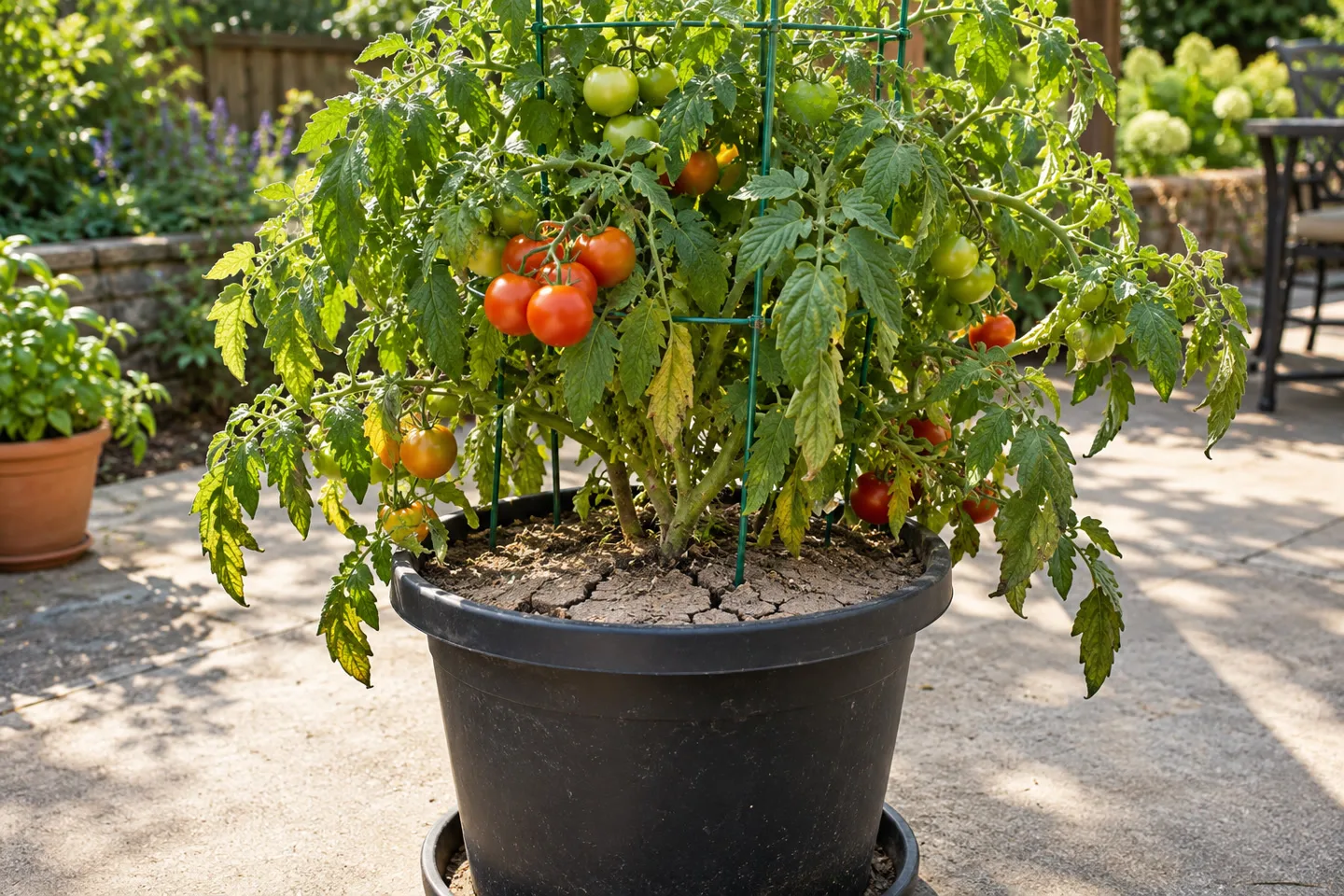
That is why "I watered it this morning" and "the soil is bone dry" can both be true at 4 pm. In summer, check pots every morning, and again in the afternoon during a heat wave. Bigger is easier: a 10 gallon pot buffers a hot day far better than a 3 gallon one, so if your container tomato needs water twice a day all season, a larger pot is the real fix.
If the mix has pulled away from the sides, water slowly in two or three rounds a few minutes apart so it can soak back in. Do not let a saucer of runoff sit under the pot for hours; a tomato standing in water is as unhappy as a dry one.
Water deeply, then wait: why light daily sprinkles backfire
In the ground, the goal is depth. A light sprinkle wets only the top inch of soil, so the roots stay up there, where the sun dries them out first. A deep soak pulls roots down into soil that stays cool and moist for days. UMN Extension makes the same point: when water stays near the surface, the roots stay there too, and the plant suffers in hot, dry weather.
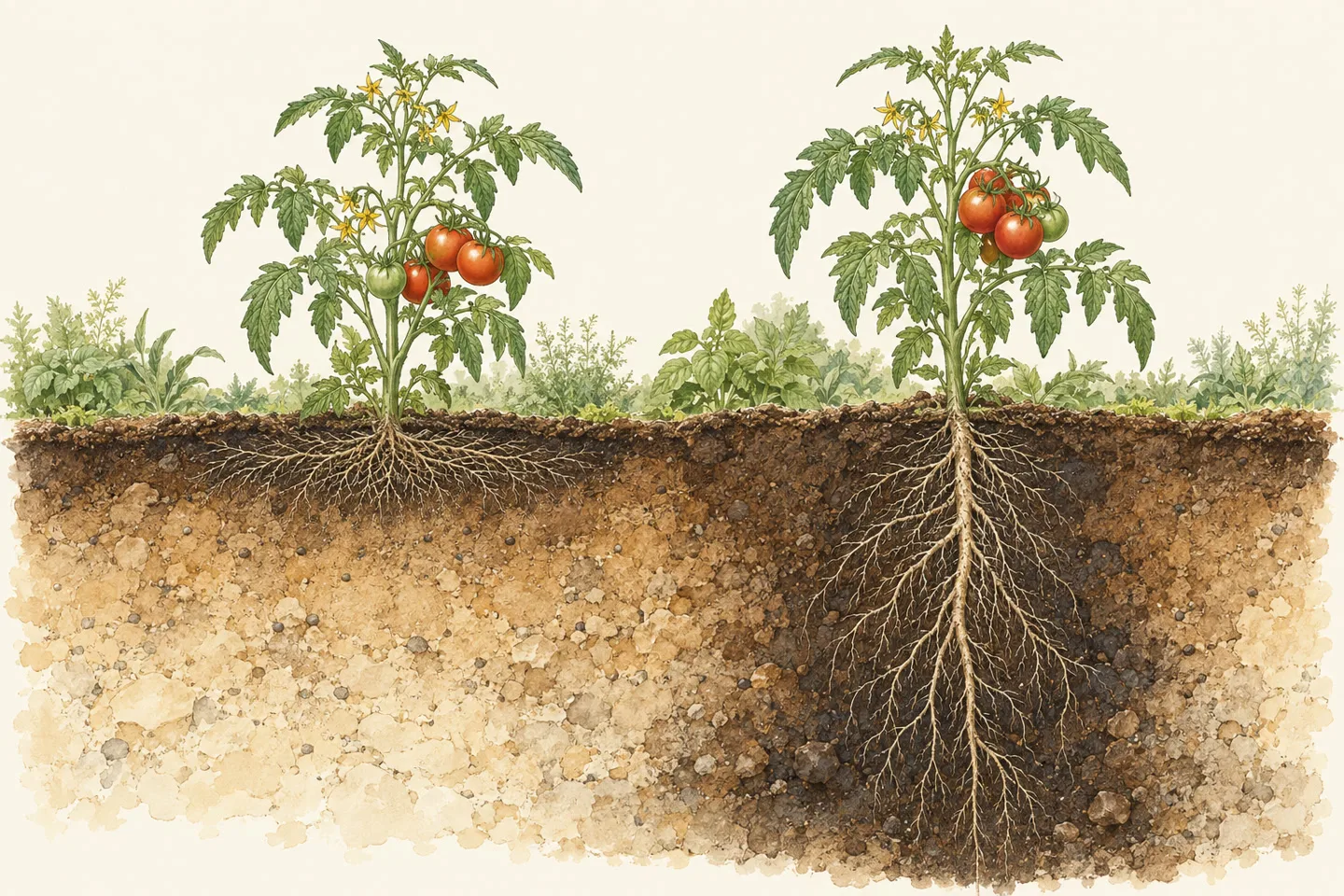
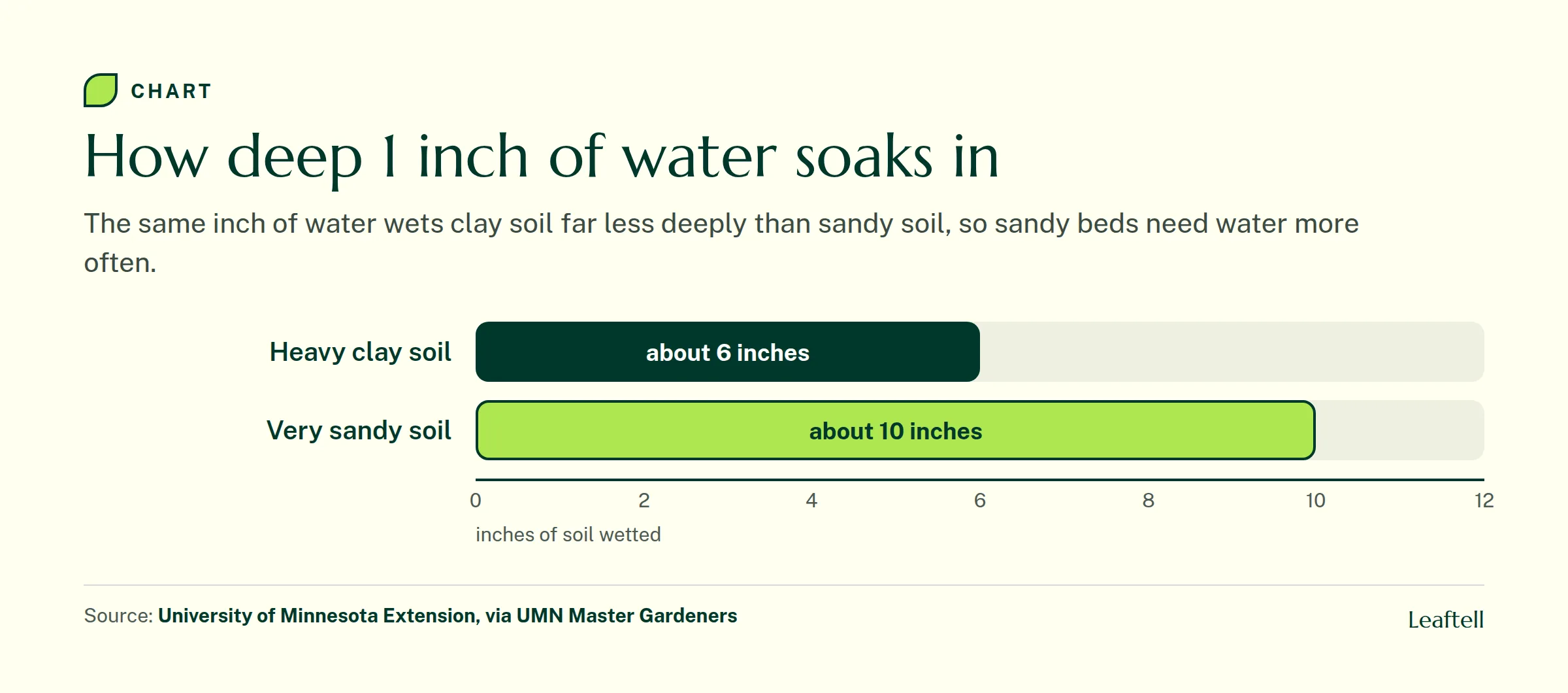
How deep an inch of water goes depends on your soil. In heavy clay it wets roughly the top 6 inches; in very sandy soil it runs down to about 10 inches and drains away sooner. That is why sandy beds need the same weekly amount split into more frequent waterings, and clay beds need patience between them.
The easiest test is a trowel. Push it in a few inches beside the plant after watering. If only the top inch or two is wet, keep going.
How to water a tomato plant deeply
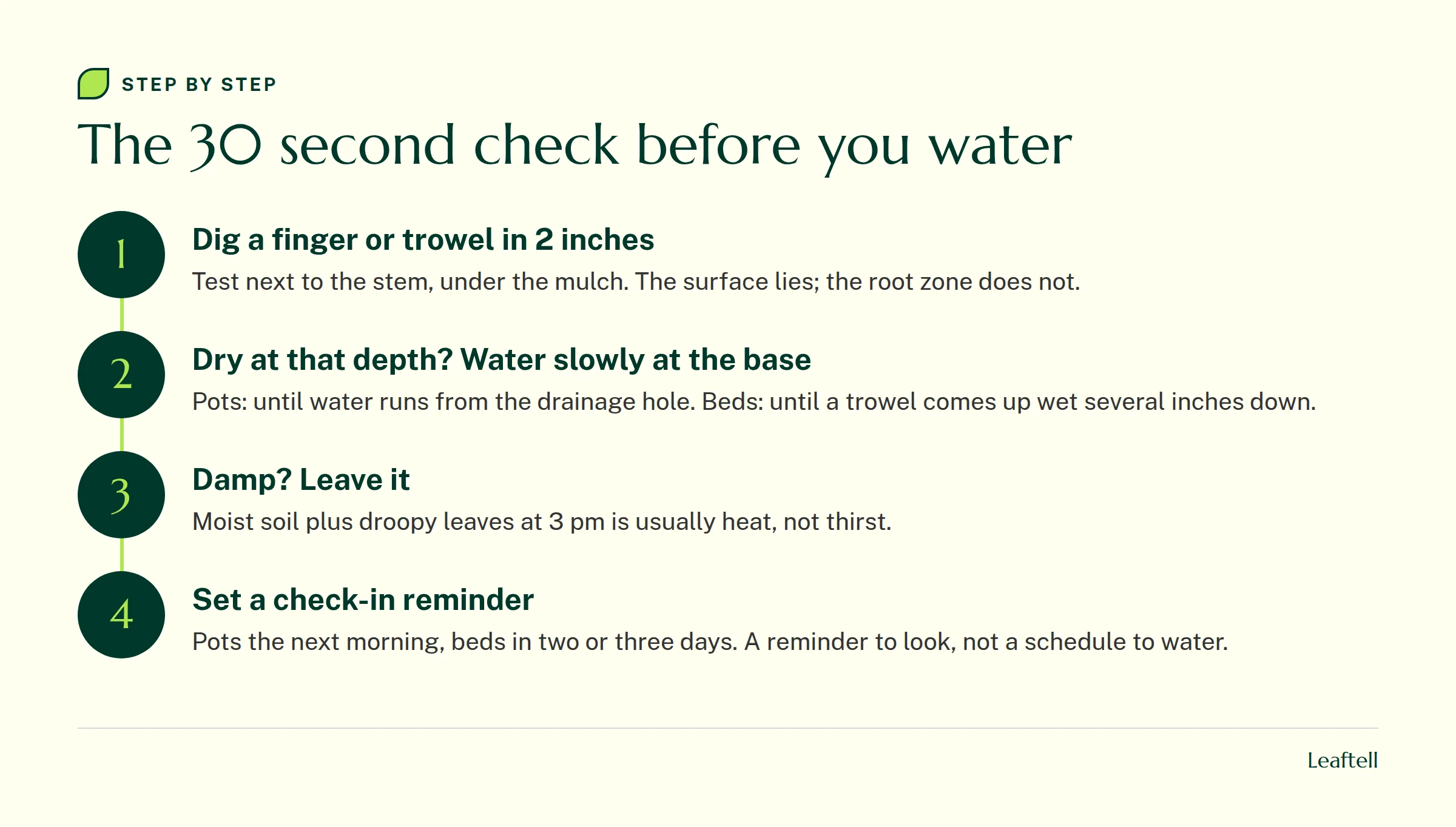
- Check the soil 2 inches down
Push a finger or a trowel into the soil next to the stem, under any mulch. If it feels damp, skip watering today.
- Water slowly at the base
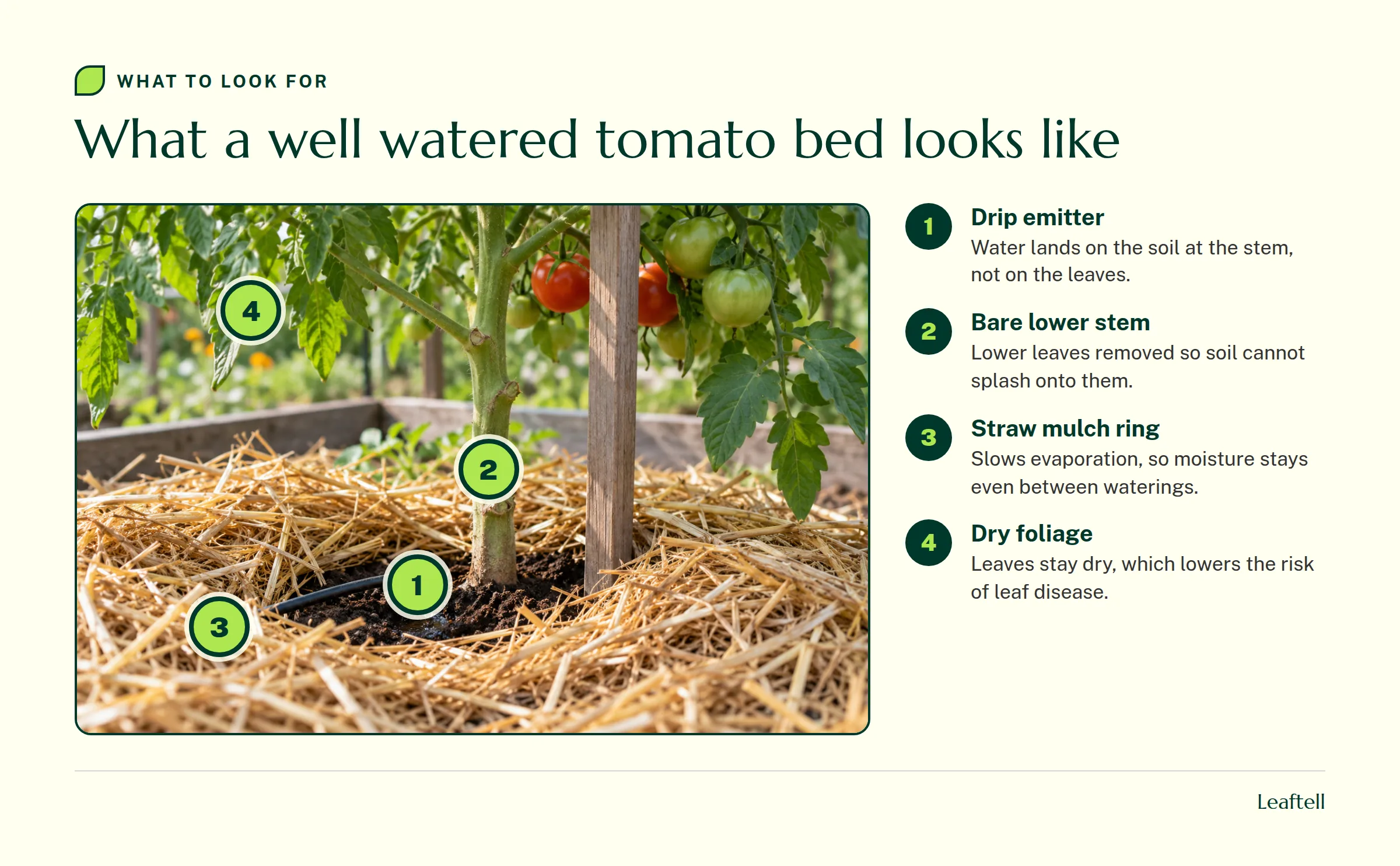
Aim a hose, watering can or drip line at the soil around the stem, not the leaves. Slow water soaks in; fast water runs off.
- Keep going until the root zone is wet
For pots, water until it runs out of the drainage hole. For beds, stop when a trowel comes up wet several inches down.
- Mulch to hold it there
Spread 2 to 3 inches of straw or shredded leaves around the plant, a few inches back from the stem, to slow evaporation.
- Check again before the next watering
Pots the next morning, beds in two or three days. Treat that as a reminder to look, not a day to water no matter what.
Water the soil in the morning, not the leaves
Morning is the best time to water tomatoes. The plant goes into the hot part of the day with full soil, and any splashes on the leaves dry quickly. Evening watering is fine for pots that are dry at the end of a hot day, but aim at the soil so the leaves do not sit wet overnight.
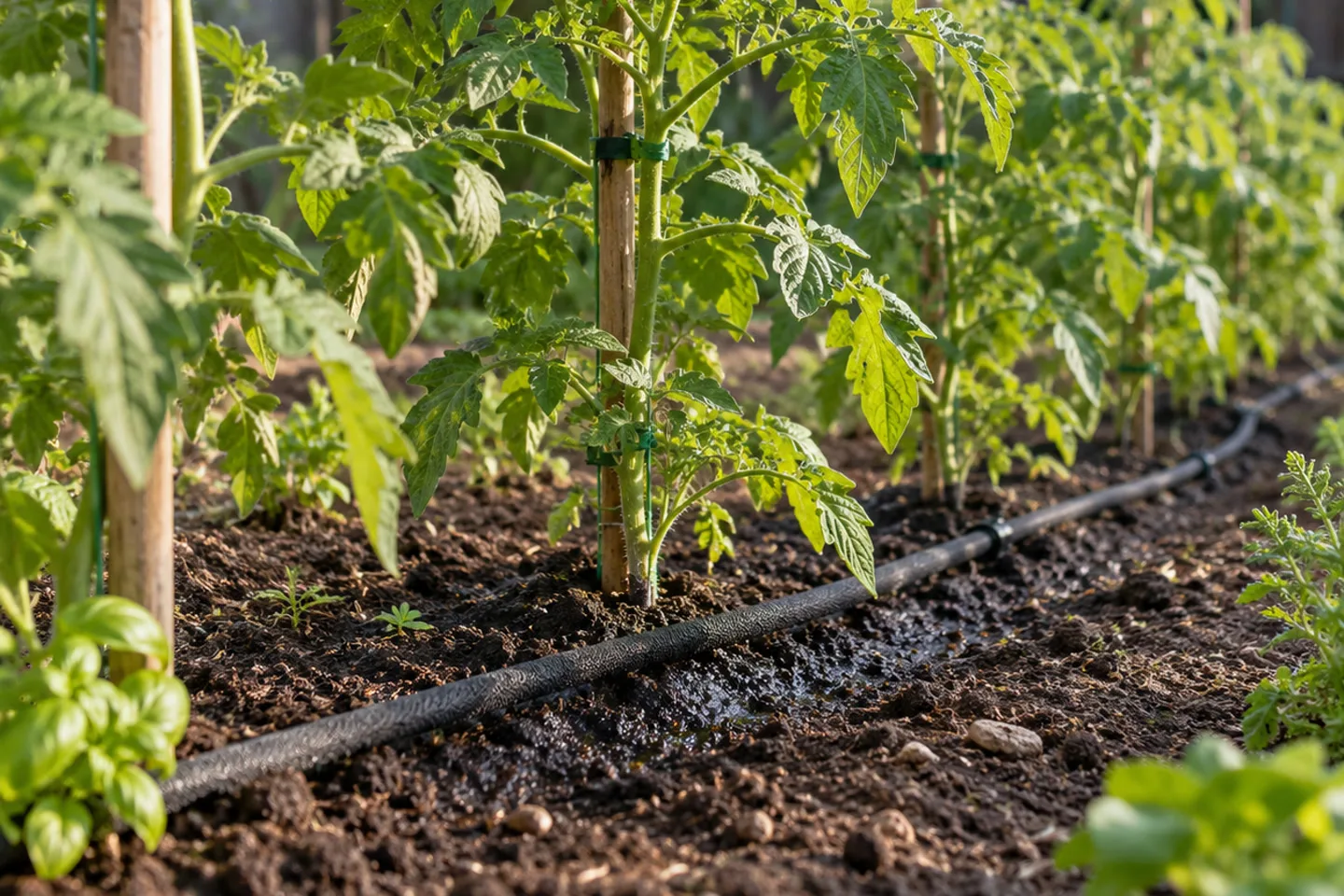
Wet leaves, especially leaves splashed with soil, are how many tomato leaf diseases spread. Soaker hoses and drip lines solve this by putting water exactly where the roots are. Pruning the lowest leaves off the stem and mulching the soil helps too, because rain and hose water cannot bounce soil onto them.
Consistency matters more than the exact amount
Here is the part most schedules miss. A tomato copes with a little too much or a little too little far better than with swings between the two. When the soil dries out hard and is then soaked, the fruit grows in a sudden rush and the skin splits. Uneven moisture during fruiting is also the main trigger for blossom end rot, the leathery dark patch on the bottom of the fruit, which UMN Extension links to soil that dries out and then becomes oversaturated.
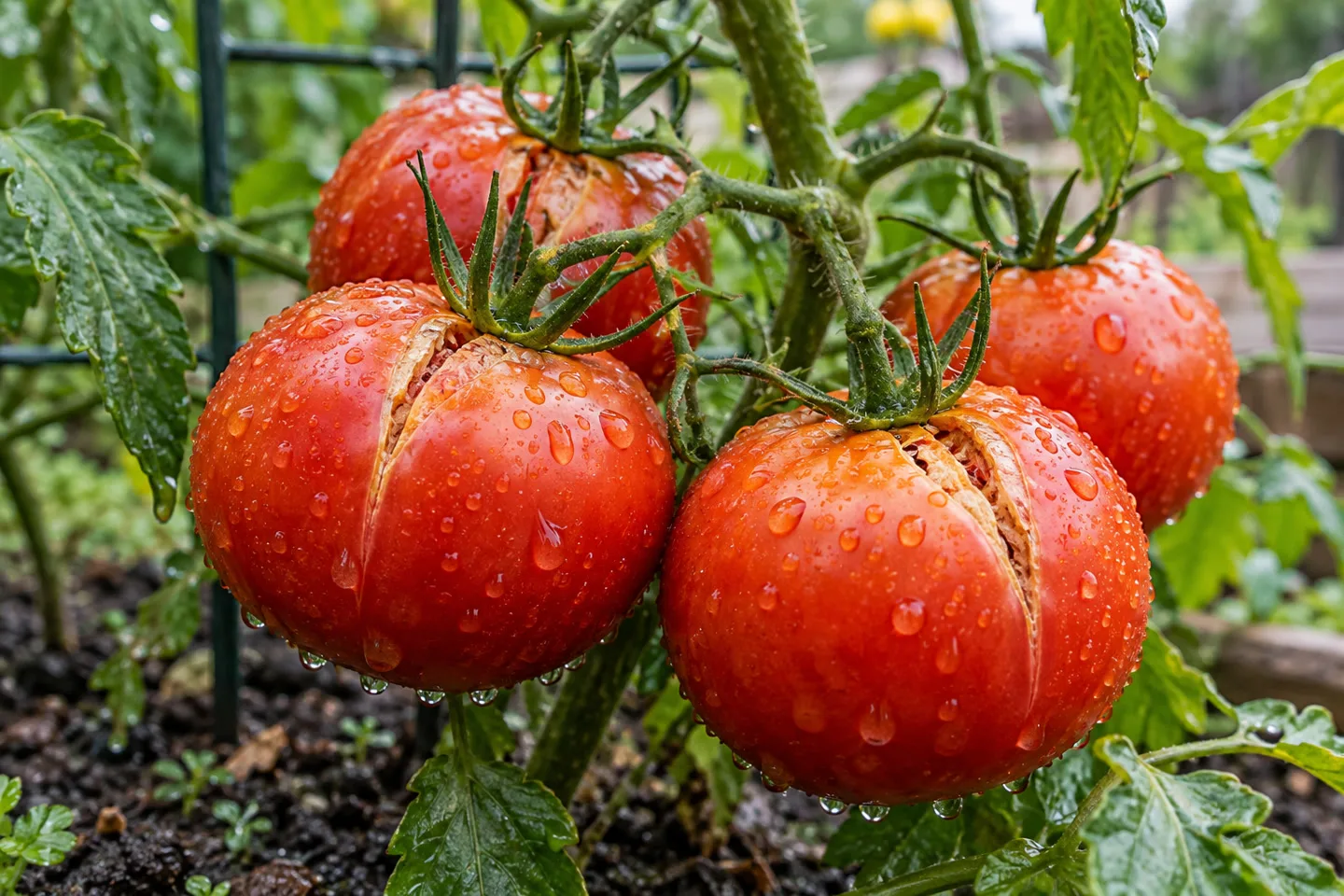
You cannot stop a summer storm, but you can keep the soil from swinging to bone dry before it. Mulch, deep regular watering and checking pots daily do most of the work. Once fruit is ripening, do not suddenly flood a dry bed; bring it back with a moderate watering, then return to your usual rhythm.
Wilting at 3 pm does not always mean thirsty
On a hot, sunny afternoon, tomato leaves often droop even in moist soil, because the leaves lose water faster than the roots can move it. That is heat wilt, and the plant usually perks up by evening. Watering it anyway is how many gardeners end up with soggy soil.
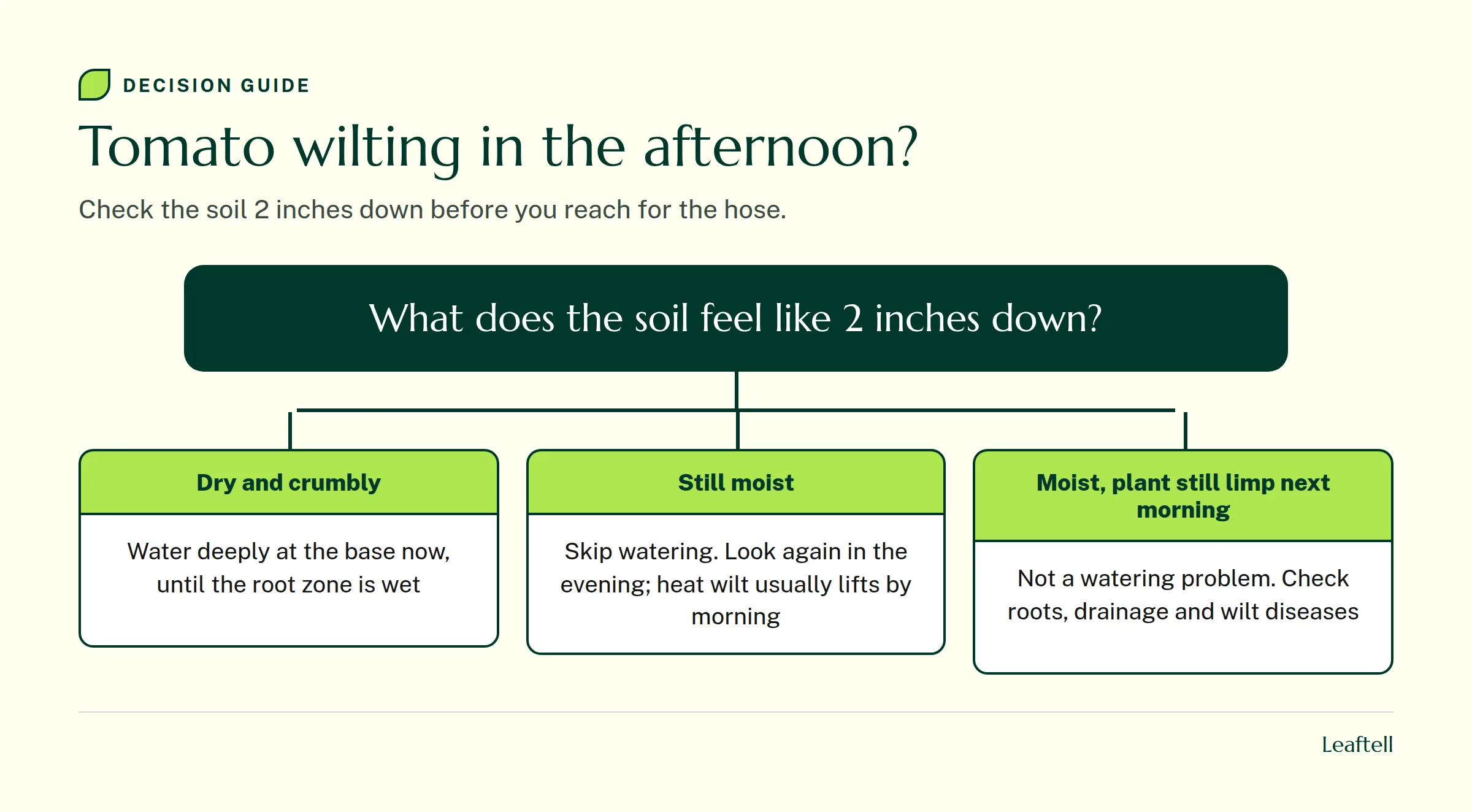
The test is the soil and the time of day. Dry soil plus droop means water now. Moist soil plus droop in the afternoon means wait and look again at dusk. A plant that is still limp the next morning in moist soil has a different problem, such as damaged roots, poor drainage or a wilt disease, and our guide to common tomato plant diseases covers how to tell them apart. Our guide to why a tomato plant droops walks through that morning check cause by cause.
Not sure if your tomato needs water or has something else going on? A photo of the whole plant and a close-up of the leaves is a good place to start.
Signs you are watering too much or too little
Overwatering and underwatering can look surprisingly alike from a distance, since both make a tomato droop. Up close, the soil and the pattern of damage tell them apart.
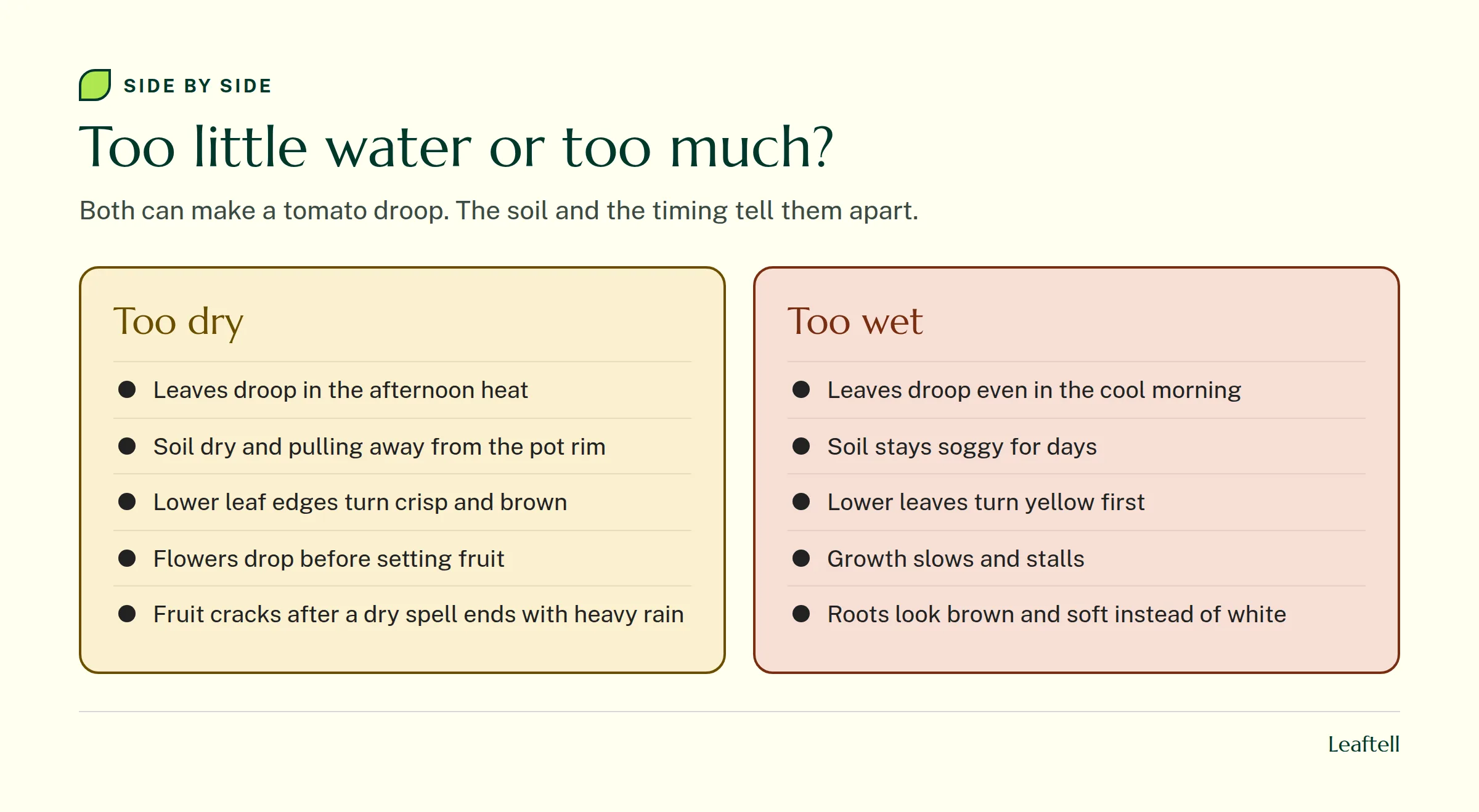
Too little water shows up as afternoon wilting, crisp brown edges on the lower leaves, dropped flowers and fruit that cracks after the dry spell ends. Too much water shows up as droop even in the cool morning, soil that stays soggy for days and yellowing that starts on the lowest leaves. Leaves that roll up lengthwise are a separate story; our guide to tomato leaves curling explains when that is just heat and when it is not.
For the general pattern across all plants, see overwatered plant symptoms. If a container tomato has sat in wet mix for a long time and the roots are brown and soft, the steps in how to fix root rot apply here too.
Adjusting through the season
A tomato's water use climbs as it grows. A small transplant needs little, but often, because its roots are still inside the original root ball. A full grown plant covered in fruit in July can use many times more. Rain counts toward the weekly inch, so after a soaking rain you can usually skip a watering or two in the ground; pots under eaves or on a covered patio may not get any of it.
Cooler, cloudy weeks in late summer slow everything down again. This is where fixed schedules cause the most trouble: the same "every day" that kept a pot alive in July can leave it waterlogged in September. Keep checking the soil, and let that decide.
The short answer
Check the soil 2 inches down before every watering. Water pots when they are dry at that depth, which in summer often means daily. Give tomatoes in the ground about an inch of water a week as one or two deep soaks, more often in sandy soil, and mulch to keep the moisture even. Water the soil in the morning, not the leaves.
If a tomato still looks wrong when the soil is right, the watering is probably not the problem. A guide to telling wet from dry soil before watering helps if you are unsure what you are feeling, and you can check your tomato in Leaftell with a photo of the whole plant, a close-up of the affected leaves and a note on how the soil feels 2 inches down. Take a fresh photo in about seven days as a check-in reminder and compare the newest growth.
Check your growing conditions with the plant watering calculator.
Frequently asked questions
No. Water the soil at the base of the plant and keep the leaves as dry as you can. Wet foliage, especially leaves splashed with soil, is how many tomato leaf diseases spread. Drip lines, soaker hoses or a watering can aimed at the soil all work. If you must use a sprinkler, run it early in the morning so the leaves dry quickly.
For a tomato, a cup is almost always too little. A tomato in the ground needs about an inch of water a week, which is roughly 2 to 3 gallons for one plant, and a large container tomato in summer can need water every day. Small cups of water only wet the surface and keep roots shallow. Water until a pot drains or a bed is wet several inches down.
The ones home gardeners meet most are early blight, Septoria leaf spot and late blight on the leaves, and Fusarium and Verticillium wilt in the stems and roots. Blossom end rot looks like a disease but is a disorder tied to uneven watering. Each leaves different marks on the leaves, stems or fruit, so a close look tells you which one you are dealing with.
It is a popular garden tip that claims baking soda makes tomatoes sweeter by lowering soil acidity. We could not find university extension research supporting it. Sweetness comes mostly from the variety, plenty of sun and steady watering. Baking soda also adds sodium to the soil, which builds up and can harm plants over time, so it is better left in the kitchen.
Share article
About the author

Keep checking your plant
Plant care reference
Indoor plant care
Build a routine around your plant, light and potting mix.
Plant care reference
Why is my plant dying
Trace leaf and root symptoms before choosing a care change.
Plant care reference
Pothos plant care
Choose a growing spot and prune a trailing pothos for fuller growth.
Plant care reference
How to fix root rot
Inspect root firmness and drainage, then decide whether to repot.