How to Clean Monstera Leaves Without Hurting Them (Skip the Shine)
Filip Leszczyński 9 November 2026 11 min read
In this article
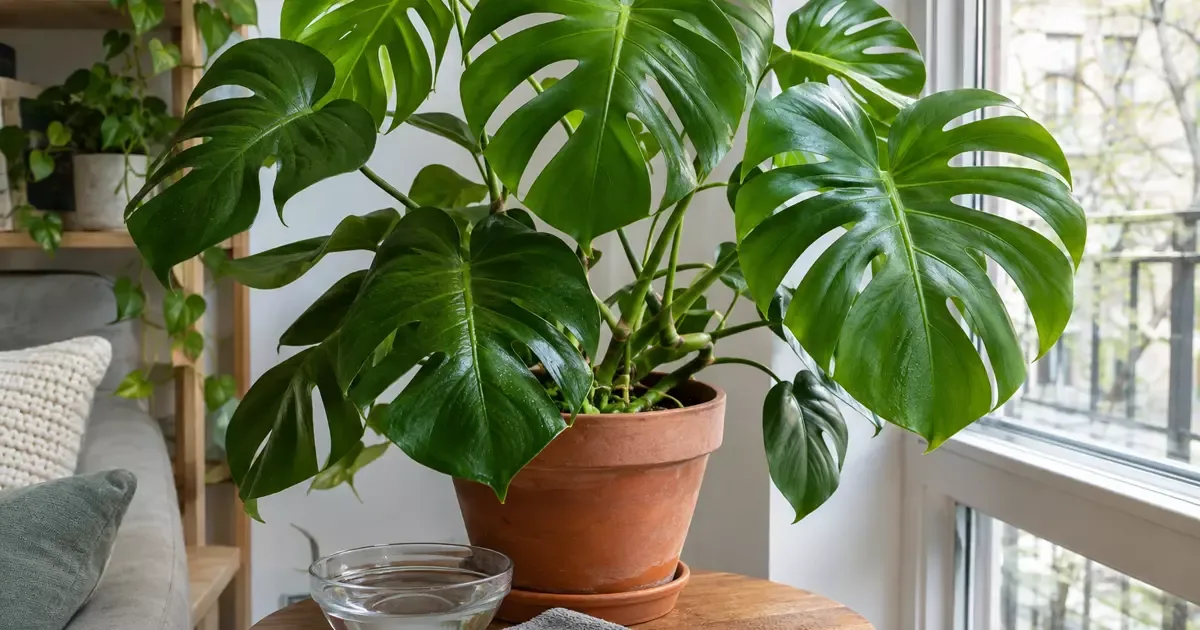
To clean monstera leaves, wipe each leaf with a soft cloth dampened in lukewarm water while you support it from below, top side first, then the underside. That is all most monsteras ever need: no leaf shine, no oil, no vinegar.
The cleaning is the easy part. The real value is the close look you get while you do it. A monthly wipe is the one time you see every underside, every leaf joint and every sticky patch up close, which is where pests and watering problems show up first.
Why dust matters on a monstera
Dust is not only cosmetic. The University of Georgia's indoor plant guide says dust dulls leaf color, shades the leaf surface so less light reaches it, and on the undersides can clog the stomata the leaf uses to exchange gases. Monstera leaves are big, flat and held horizontally, so they collect a lot of it.
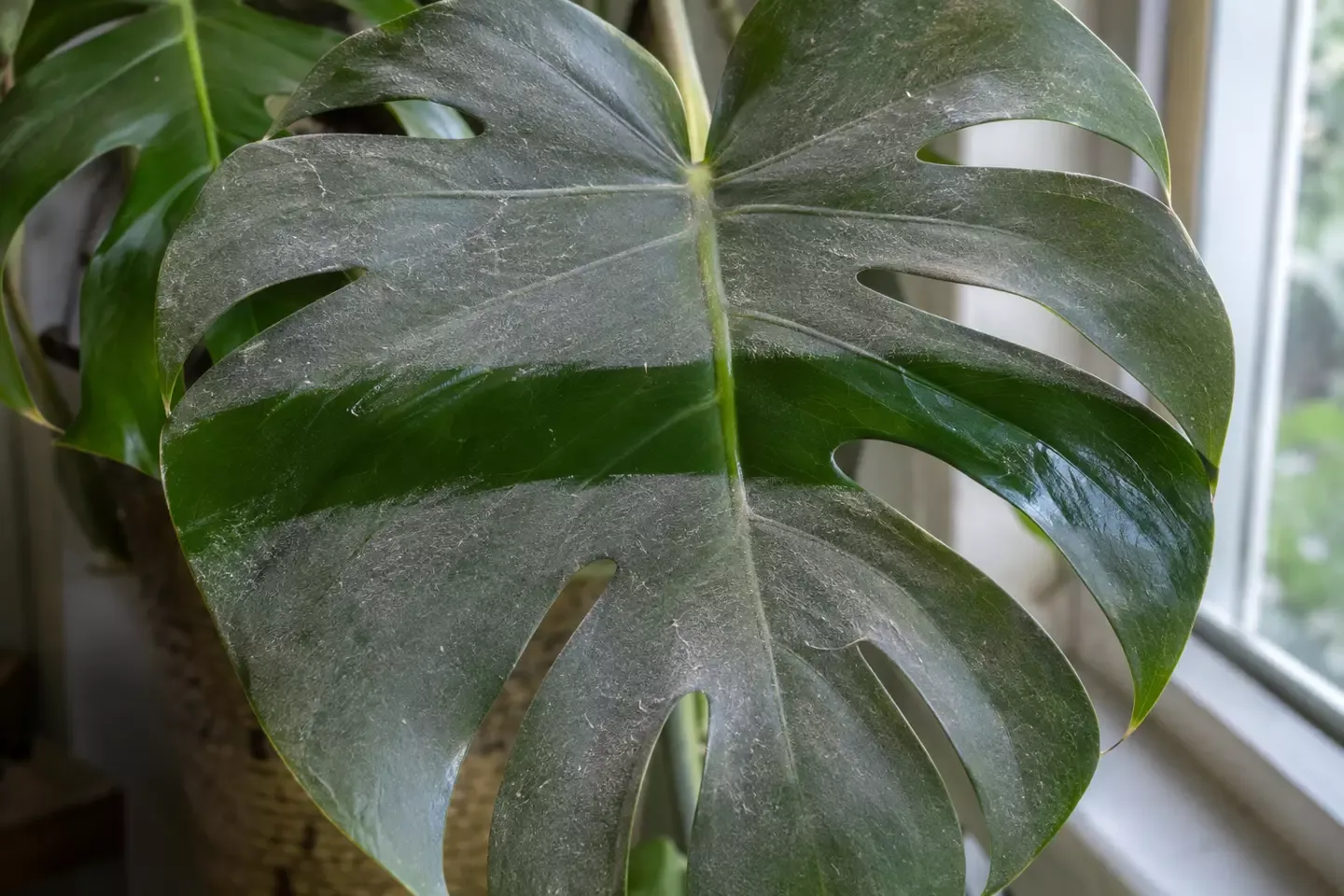
That is why both NC State's Monstera deliciosa page and the University of Wisconsin's monstera article list wiping the dust off the leaves as part of regular care. If your plant already sits a long way from the window, dust takes light it cannot spare. Our guide to reading your plant's light helps you judge how much it has to begin with.
Check what is on the leaf first
Run a dry fingertip along one leaf before you get anything wet. Loose gray dust, a smeary film, a sticky shine and white chalky spots each need a slightly different approach, and two of them are clues rather than dirt.
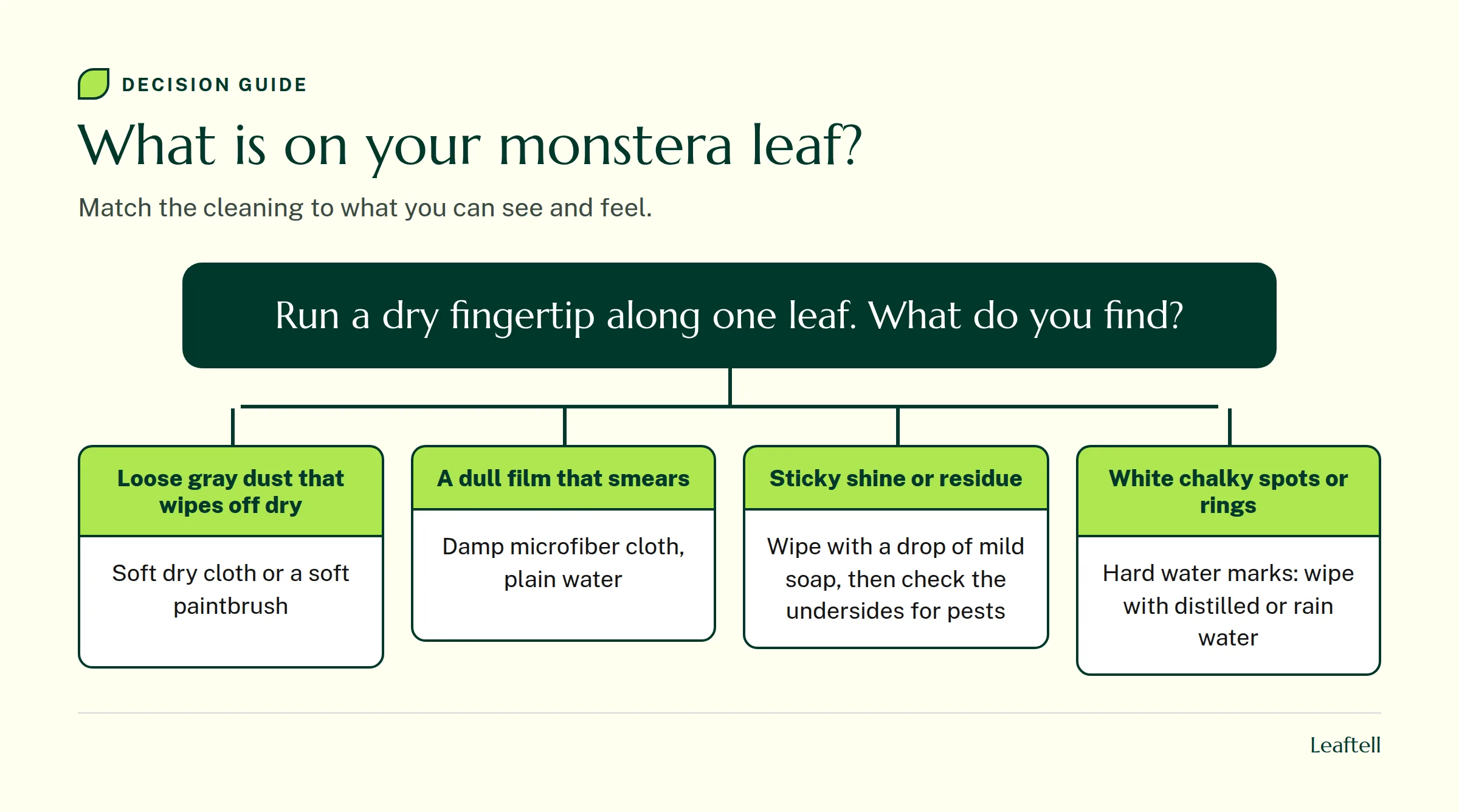
A sticky shine is the one to take seriously. It is usually honeydew from sap feeding insects on the leaves above, and our sticky leaves guide shows how to trace it. White spots that appear after cleaning or misting are usually minerals from hard tap water, covered further down.
Pick the method by plant size
The size of your monstera decides how you clean it more than anything else.
| Your monstera | Best method | Why |
|---|---|---|
| Small, tabletop, a few leaves | Tip the pot, dip the foliage in tepid water and swirl | Fastest; UGA recommends this for small plants |
| Medium, still easy to lift | Rinse in the shower or tub, then wipe | Cleans the undersides and joints you cannot reach well |
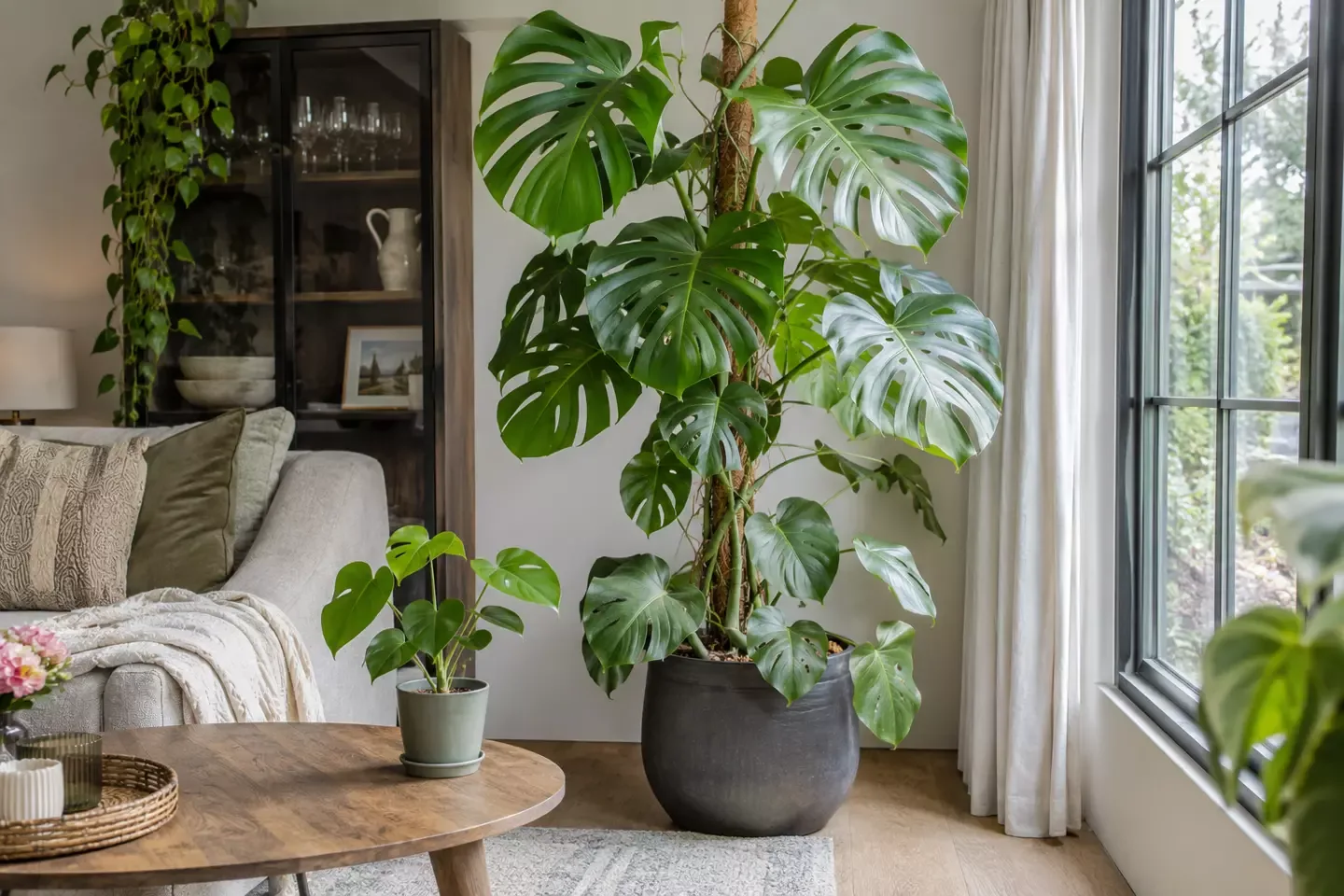
| Large floor plant on a pole | Wipe each leaf in place with a damp cloth | Moving it risks snapped stems and torn leaves |
| Any size with a sticky film | Damp cloth with a drop of mild soap, then a plain water wipe | Water alone smears honeydew instead of lifting it |
What you need
You need less than most guides suggest: a bowl of lukewarm water, a soft microfiber cloth or sponge, and a soft paintbrush for dry dust in the splits and holes. Add a drop of mild liquid soap only when the leaf is sticky.
Skip anything that leaves a coating. Leaf shine sprays, oils, mayonnaise and milk make the leaf look glossy for a while, but a film on the leaf works against the very thing you are cleaning for, and it hides the dust pattern and early pest signs you would otherwise notice.
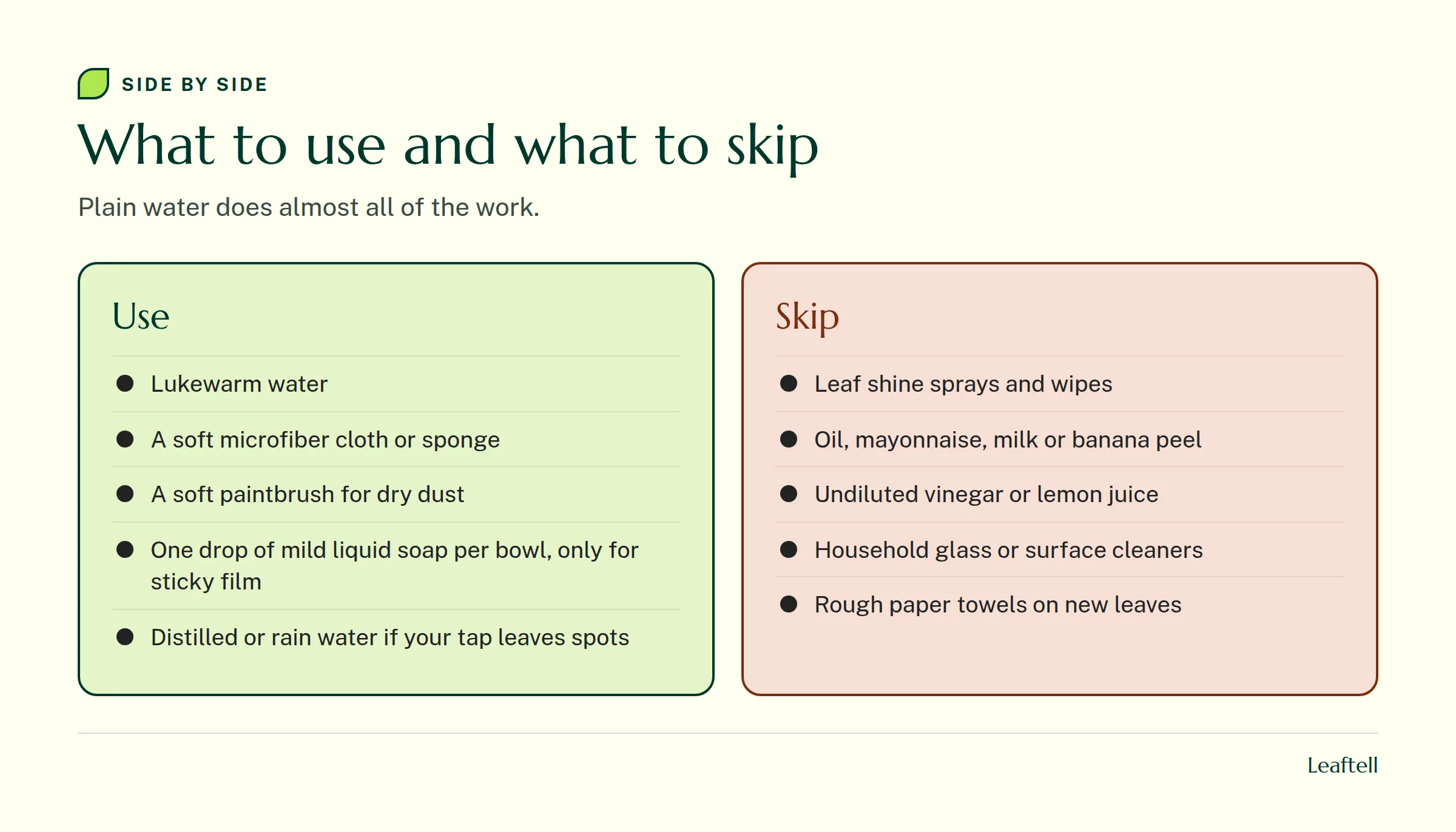
How to wipe a monstera leaf
How to clean monstera leaves
- Wet the cloth, then wring it out
Dip a microfiber cloth in lukewarm water and wring it until it is damp, not dripping. Cold water straight from the tap can mark tender leaves, and a soaked cloth drips into the soil.
- Support the leaf from below
Rest the leaf on your flat palm or on a second folded cloth. Monstera leaves are heavy and the stalk can crease or snap if you press down on an unsupported leaf.
- Wipe from the stalk out to the tips
Use gentle, single strokes from the center of the leaf toward the edges, following the veins. Rinse the cloth when it turns gray so you are not spreading dust around.
- Do the underside too
Turn the leaf over in your supporting hand and wipe the underside. This is where dust clogs the leaf pores and where spider mites and mealybugs like to hide.
- Brush the holes and splits
Use a soft dry paintbrush along the edges of the fenestrations, where a cloth snags and dust collects.
- Let it dry before strong light
Dab off any standing water in the splits and keep the plant out of direct sun until the leaves are dry.
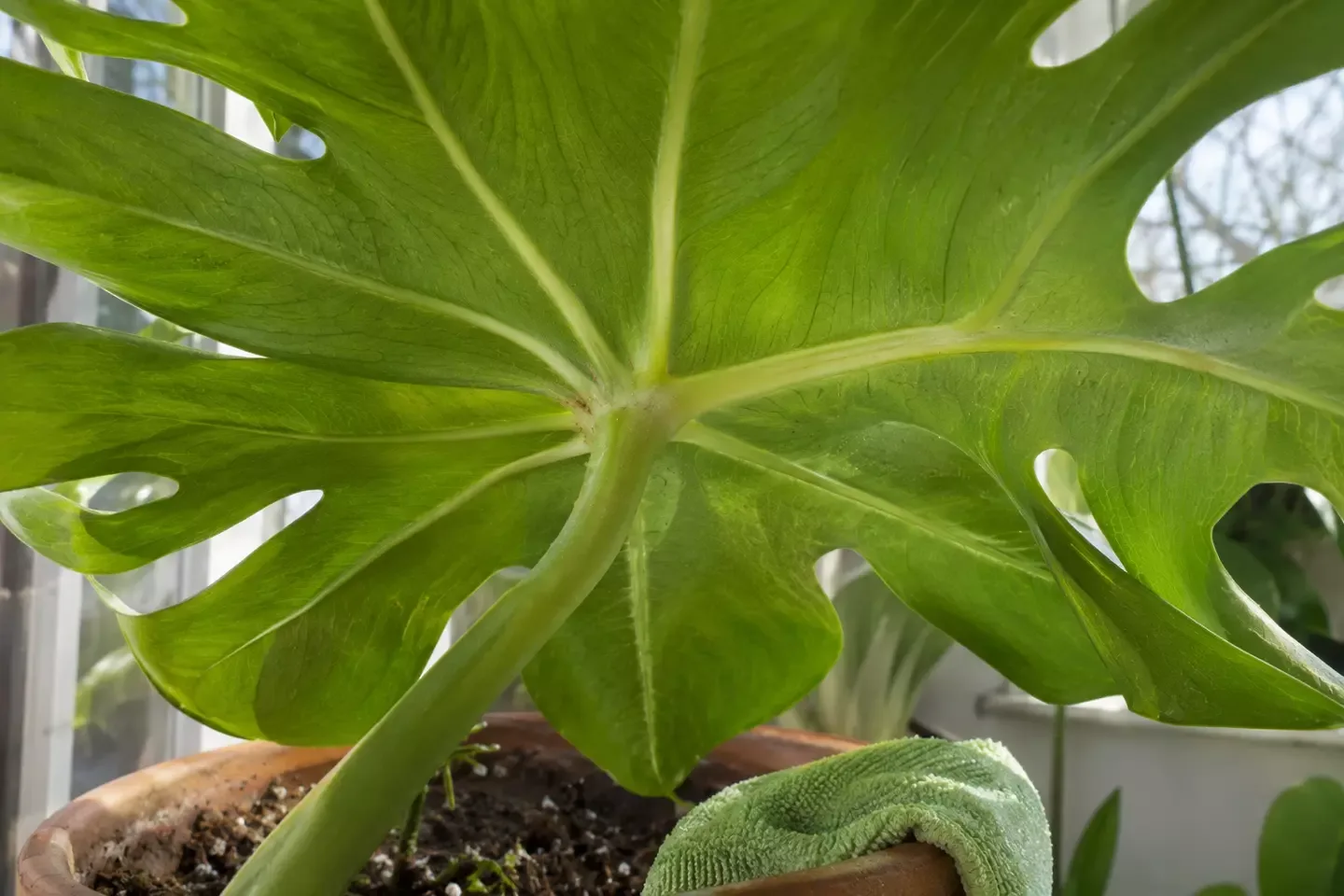
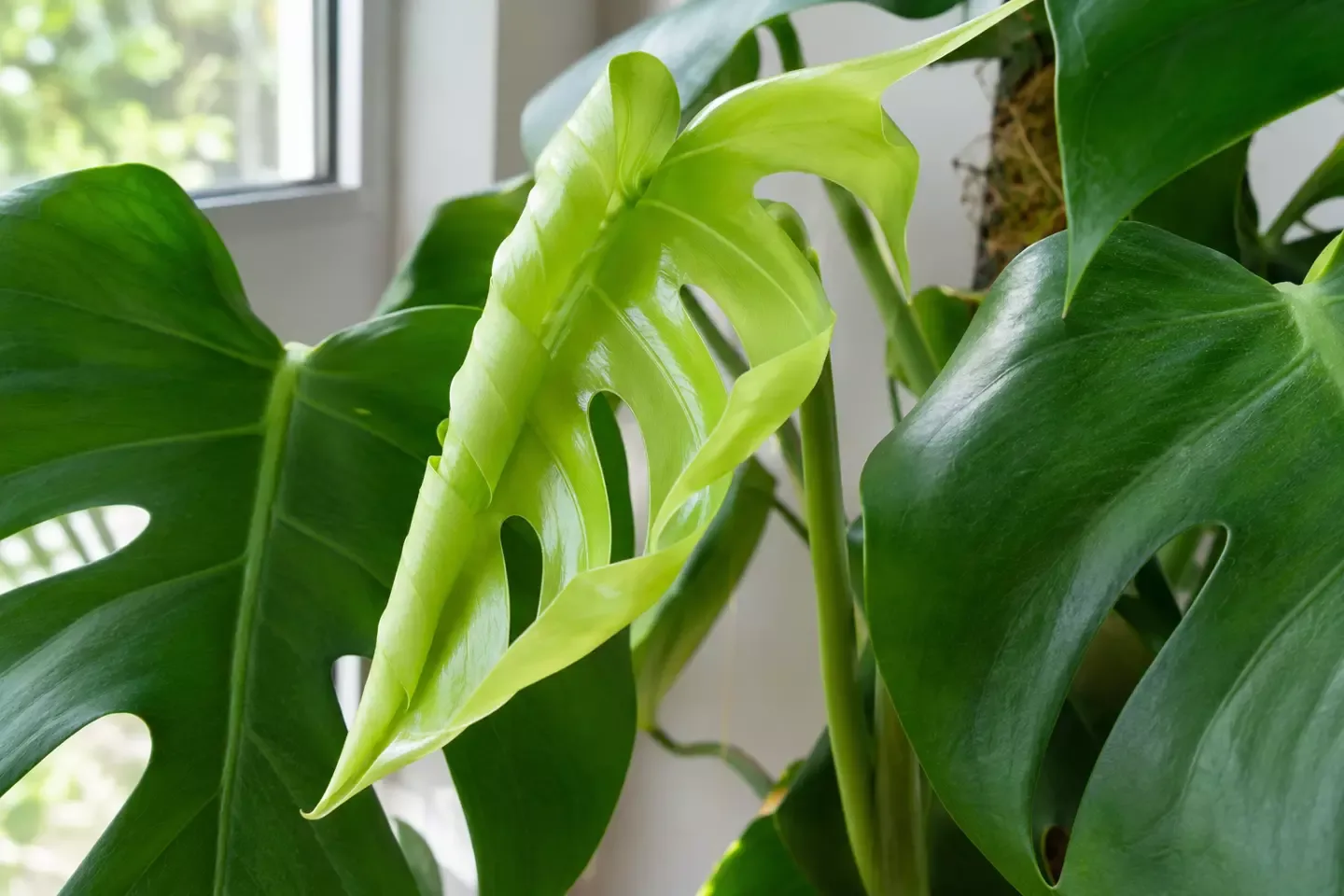
Leave the newest leaf alone while it is still soft and unfurling. It tears easily and has had no time to collect dust anyway. Wipe it once it has hardened and darkened to the same green as the rest.
Rinse it in the shower if you can lift it
For a medium monstera, a lukewarm shower is faster than wiping leaf by leaf and reaches every underside. Do it on a day you would water anyway, so the extra water is not a problem for the roots.
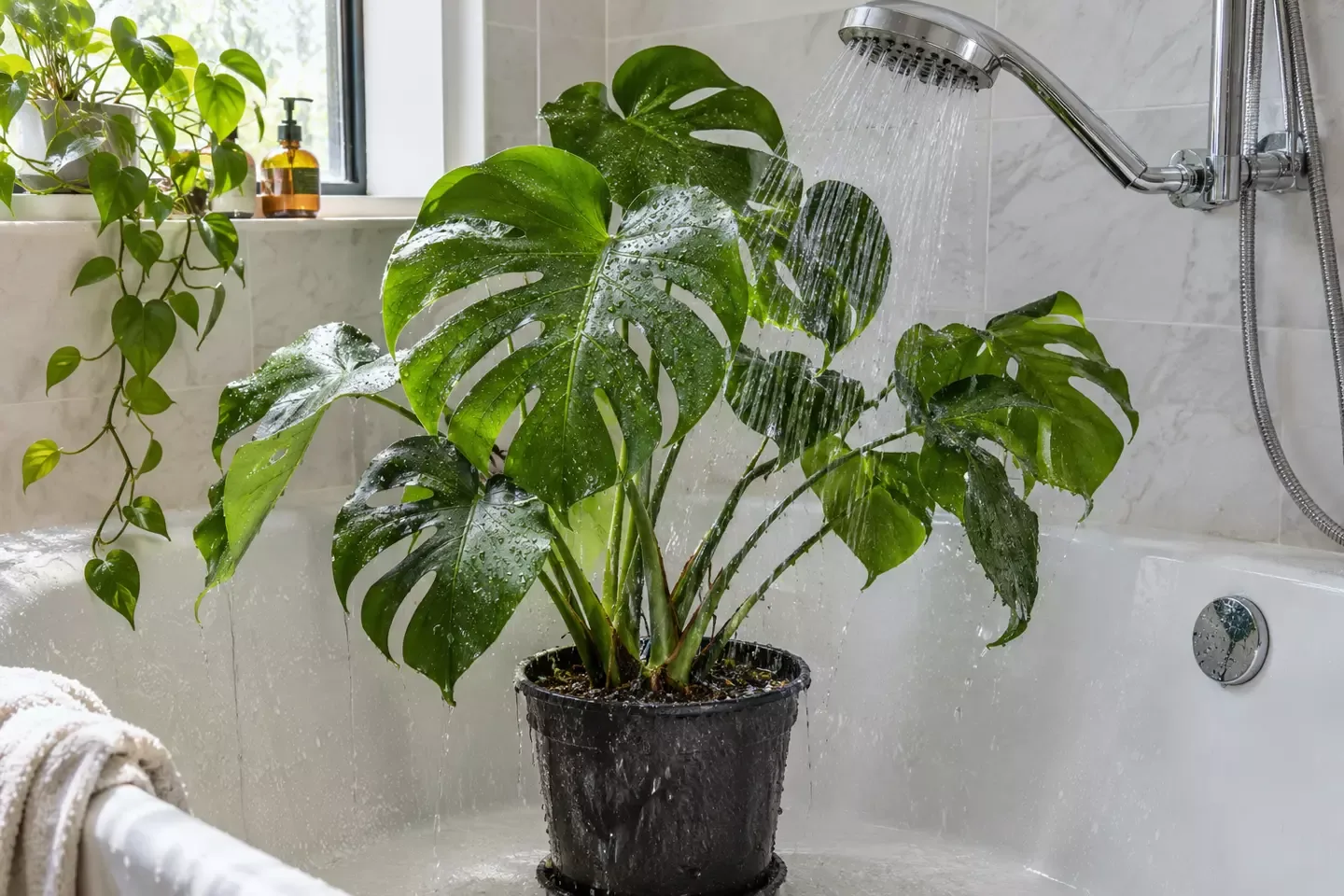
Use a gentle spray, not full pressure, and hold the shower head above the leaves so water runs off them rather than blasting the stalks. Let the pot drain completely in the tub before it goes back on its saucer, then dry the leaves with a soft cloth if your tap water leaves spots. If the soil is already wet, wipe instead and save the shower for later.
White spots after cleaning: that is hard water
Chalky white spots or rings that appear after you wipe or mist are minerals left behind when hard tap water dries on the leaf. They are harmless to the plant but they look worse than the dust did.
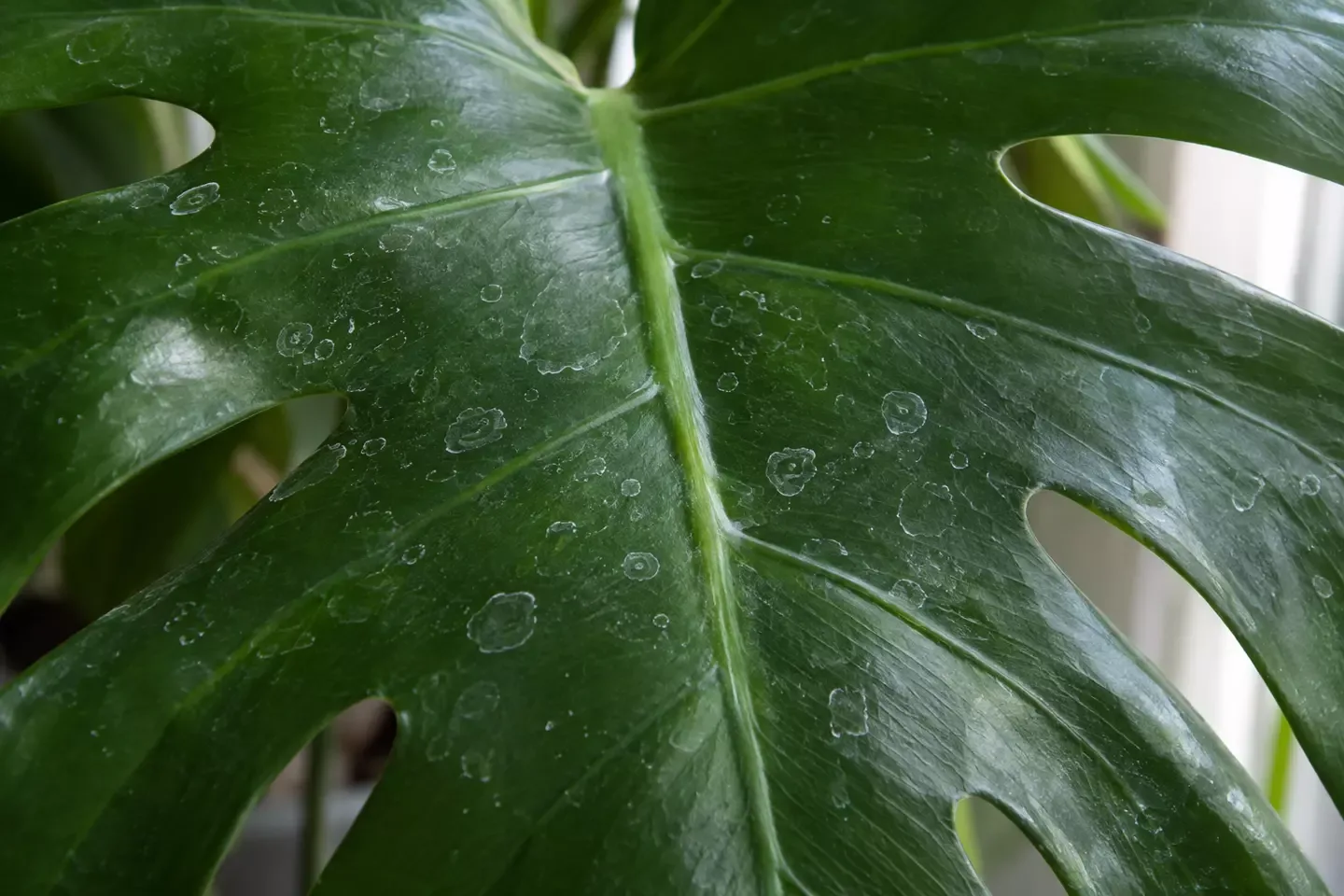
Wipe them off with a cloth dampened in distilled water, filtered water or rainwater, then dry the leaf. Use the same water for future cleaning and the spots stop coming back. Do not reach for vinegar or lemon juice: acid on the leaf surface is a bigger risk than a few mineral spots.
Look while you wipe: what the cleaning shows you
This is the part most cleaning guides skip, and it is the part that saves plants. With every leaf in your hand, take ten extra seconds to look.
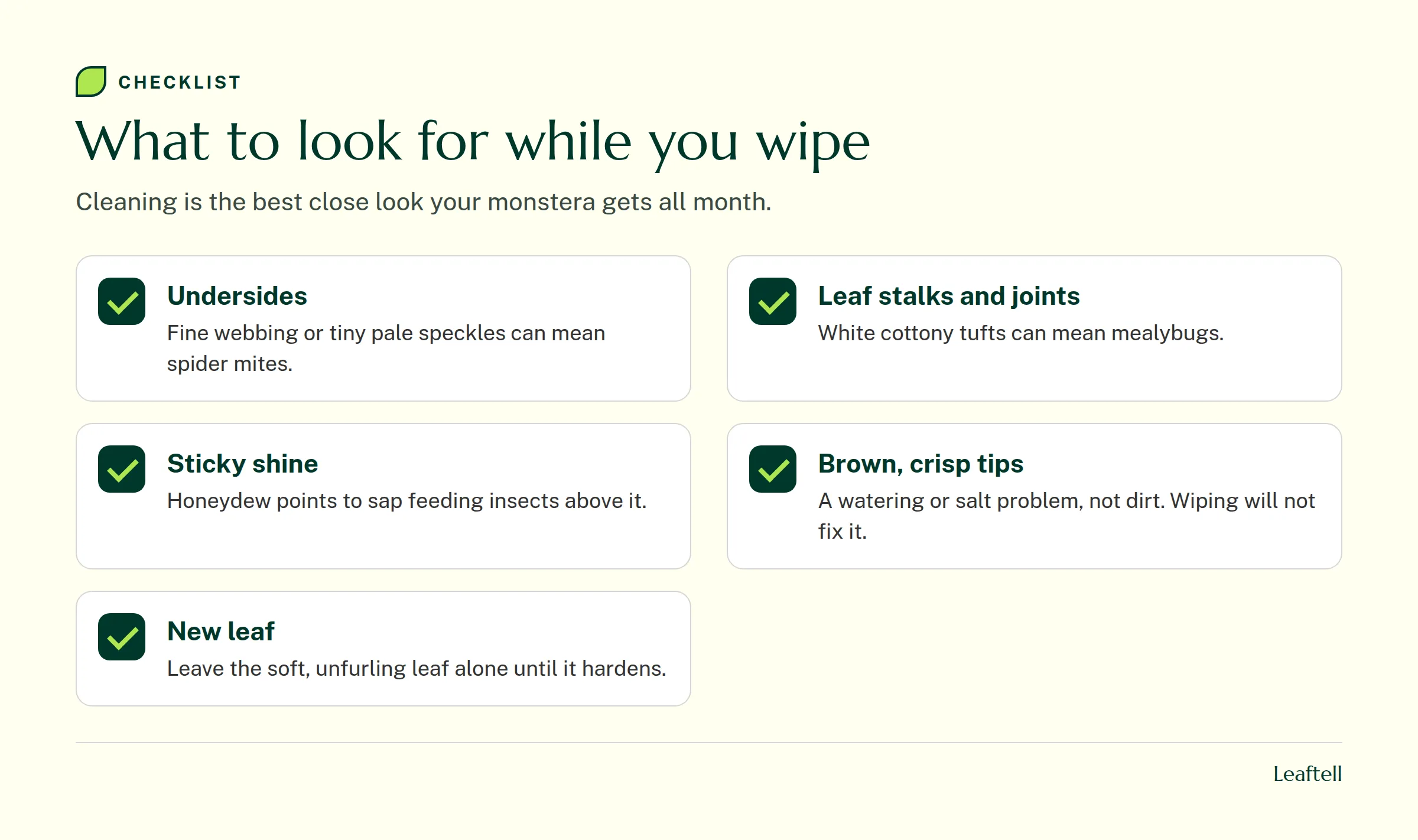
Fine webbing near the leaf stalks or tiny pale speckles on the undersides are classic signs of spider mites on plants. White cottony tufts in the leaf joints point to mealybugs. Wisconsin lists aphids, mealybugs, scale insects and spider mites as the pests that do reach indoor monsteras, and the same wipe-and-look routine works for all of them.
If you find pests, isolate the plant from your others first. A thorough wipe of every leaf and a shower rinse are the least toxic first step and remove a large share of them, but repeat the check after a week, because eggs hatch after the adults are gone.
Found something odd while cleaning? A photo of the whole plant plus a close-up of the leaf underside is enough to start a check.
Brown, crisp tips and yellow leaves are not a cleaning problem. Wiping will not change them, and they point to the roots. Our guides to brown tips on monstera leaves and monstera leaves turning yellow walk through those.
How often to clean monstera leaves
There is no fixed schedule. Clean when a dry fingertip picks up gray dust from the leaf. In most homes that means roughly once a month, and more often near an open window, a busy street, a kitchen or a heating vent running all winter. Treat that as a reminder to look, not a rule.
Cleaning more often does not help. Wiping a clean leaf every day only adds wear to the surface, so match the cleaning to the dust you can actually feel.
A note on sap, kids and pets
Monstera sap contains needle-like calcium oxalate crystals. NC State notes that contact with the sap can irritate skin, so wear gloves if you are sensitive and wash your hands after handling broken stems or trimmed leaves. The ASPCA lists monstera as toxic to cats and dogs, so pick up any leaf you trim while cleaning instead of leaving it on the floor.
The short version
Feel the leaf first, then wipe it with a damp microfiber cloth and lukewarm water while you support it from below, top side and underside. Rinse a medium plant in the shower, dip a small one, wipe a big one in place. Use soap only for a sticky film, distilled or rain water if your tap leaves spots, and nothing that leaves a coating.
Use each cleaning as your monthly inspection. For the rest of the routine, from light to watering, see the full monstera care guide.
If something you saw while wiping worries you, check your monstera in Leaftell with a photo of the whole plant and a close-up of the spot.
Sources
Check your growing conditions with the plant watering calculator.
Frequently asked questions
Clean them when a dry fingertip picks up dust, which in most homes is about once a month. Plants near open windows, kitchens or heating vents need it more often. Wiping already clean leaves every day adds nothing.
We would skip it. A healthy monstera leaf is naturally glossy once the dust is off, and a coating hides the dust and early pest signs you want to see. Plain water and a soft cloth give the same shine without the film.
Not for cleaning leaves. It does not remove dust any better than plain water, and a strong mix can mark tender leaf tissue. If you are thinking about it because of soft stems or a sour smell from the pot, that is a root problem: slide the plant out of its pot and check the roots before anything else.
Smooth, glossy leaves like peace lily or ficus clean the same way, with a damp cloth or sponge. UGA advises against using water on fuzzy or hairy leaves such as African violets and cacti; use a soft, dry paintbrush on those instead. Small plants of any kind can be dipped upside down in tepid water.
Only a little, by letting more light reach the leaf. Leaf size mostly comes from light, a support to climb and the plant's age. UGA notes that new leaves smaller than the older ones are a sign the plant is not getting enough light, so check the window before anything else.
Share article
About the author

Keep checking your plant
Plant care reference
Indoor plant care
Build a routine around your plant, light and potting mix.
Plant care reference
Why is my plant dying
Trace leaf and root symptoms before choosing a care change.
Plant care reference
Pothos plant care
Choose a growing spot and prune a trailing pothos for fuller growth.
Plant care reference
How to fix root rot
Inspect root firmness and drainage, then decide whether to repot.