How to Care for a Houseplant: A Routine for Every Season
Filip Leszczyński 12 November 2026 12 min read
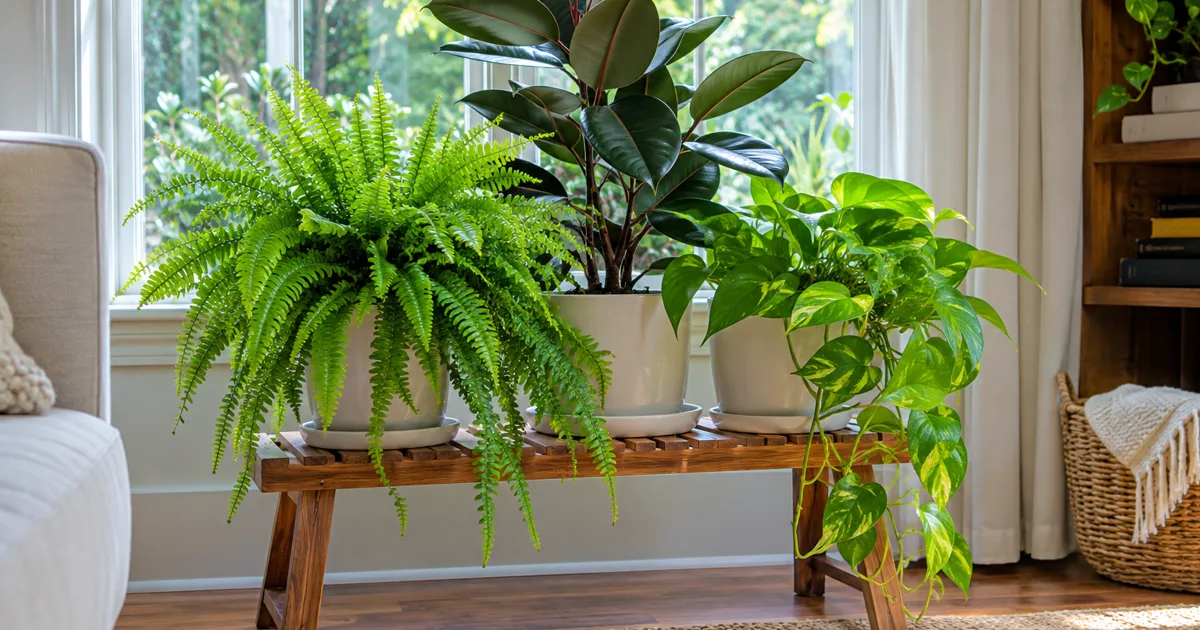
In this article
To care for a houseplant, give it the brightest light it can take, water only when the mix has dried as far down as that plant likes, grow it in a pot that drains, and feed it only while it is growing. Then change that routine as the seasons turn, because the same plant in the same pot needs far less water and food in January than it did in July.
That second part is where most houseplants actually get lost. A routine that kept a plant thriving all summer will rot its roots in winter, when the window gives less light and the plant barely grows. So this guide covers what every houseplant needs, how those needs differ by type of plant, and how to shift your care through spring, summer, fall and winter.
What does a houseplant need?
A houseplant needs six things: light, water, the right temperature, enough humidity, a mix that drains, and a little fertilizer while it grows. Mississippi State University Extension calls light the single most important of them, and that matches what you see at home: a plant in poor light will struggle however well you water it.
- Light. Closest to the window is brightest. Light drops off fast as you move back into the room, so a plant a few feet from the glass gets far less than one on the sill. Check the light in a spot before you buy a plant for it.
- Water. Water when the mix is dry to the depth that plant prefers, then water until it runs out of the bottom. More houseplants die from too much water than too little.
- Temperature. Most houseplants do well at 65 to 75°F in the day and about 10 degrees cooler at night. Long spells below 50°F can do permanent damage, according to University of Florida IFAS Extension.
- Humidity. Most homes are drier than tropical plants like, and heated homes in winter are driest of all. Ferns and calatheas feel it first, and so does their relative the prayer plant; our prayer plant care tips show how to keep its air humid enough.
- A mix that drains. Use a potting mix made for indoor plants, never garden soil, in a pot with a drainage hole.
- Food. Indoor plants grow slowly, so they need less fertilizer than you might think, and only while they are putting out new growth.
The kit that covers most of it
You do not need much. A watering can with a long, thin spout lets you water the mix instead of the leaves. Pots with drainage holes and saucers stop roots from sitting wet. Small pruning snips handle dead leaves and leggy stems. A liquid houseplant fertilizer covers feeding. A plain wooden chopstick, pushed into the mix and pulled out, tells you whether the pot is still wet down where the roots are.

How to care for a houseplant by type
Care advice only fits the plant it was written for. A fern and a cactus can share a windowsill and still need opposite things from you in the same week. Find your plant's type in the table, then follow that row.
| Plant type | Common examples | Light | Water when | Humidity | What usually goes wrong |
|---|---|---|---|---|---|
| Leafy tropicals | Pothos, philodendron, monstera, rubber plant | Bright, indirect; many cope with medium | The top inch or two of mix is dry | Average home air is fine | Too little light, then too much water for the light it has |
| Ferns | Boston fern, maidenhair fern | Medium, near a window | The surface just starts to feel dry; never let it dry out fully | High; they suffer in heated winter air | Crispy fronds from dry air or one missed watering |
| Succulents and cacti | Aloe, jade plant, echeveria, most cacti | High, some direct sun | The mix is dry all the way through | Low; dry air suits them | Watered like a fern, so the roots rot |
| Flowering plants | Peace lily, African violet, kalanchoe | Medium to bright | Depends on the plant; check it often while it blooms | Moderate | Fewer or no flowers in poor light |
For succulents, the full routine is in our succulent care guide. Leafy tropicals and flowering plants follow the core routine below. Ferns need one extra habit.
How to care for a fern houseplant
A fern is the houseplant that shows dry air fastest, so put it near a window with medium light, keep the mix evenly moist, and raise the humidity around it. Water when the surface just starts to feel dry instead of waiting for the whole pot to dry out. A fern that dries out completely drops fronds that do not come back.
Indoor air in buildings with central heating or cooling often sits at 10 to 30 percent humidity, while most tropical plants come from places with 70 to 90 percent, according to Mississippi State University Extension. A tray of wet pebbles under the pot helps, as long as the pot sits on the pebbles and not in the water. Grouping plants together helps too. A bathroom with a bright window suits a fern well.

How to water a houseplant
Check the mix, then water the whole root ball or not at all. Push a finger or a chopstick into the mix. If it is still damp at the depth your plant type likes, wait and check again in a few days. If it is dry, water slowly with room temperature water until it runs out of the drainage holes, let it drain, and empty the saucer. Cold water can shock roots, and a small splash every day keeps the top wet while the bottom stays dry.
The answer to "how often" changes all year. A plant in a bright window in July can drink in days what it takes weeks to use in December.

Your houseplant care routine, season by season
Your plant does not read a calendar, but it does respond to the window. As days lengthen, it grows and uses more water and food. As they shorten, it slows down and uses less. This chart is the whole routine on one page; the sections below explain each season.

Spring: restart growth
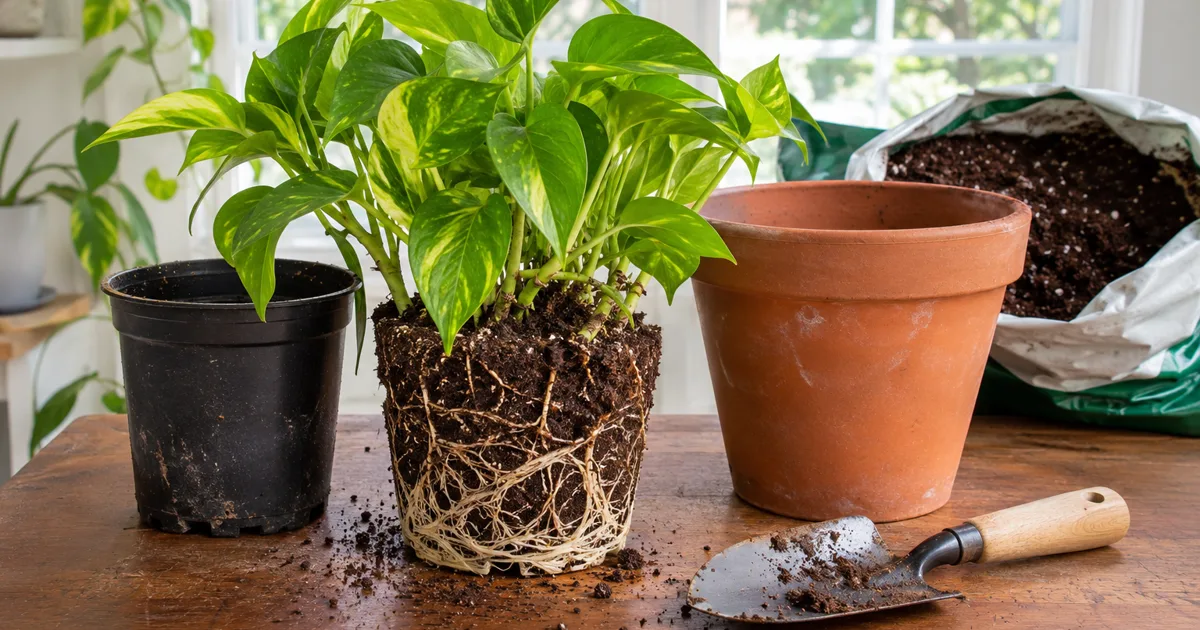
Spring is when the routine speeds back up. The first sign is new growth: a fresh leaf, a lighter green tip or a new shoot. Once you see it, start checking the mix more often and restart feeding as the fertilizer label directs. Spring is also the best time to repot a plant that has outgrown its pot and to cut back anything that stretched over winter, because the plant is about to grow and can recover quickly.

Summer: water and feed the most
Summer brings the strongest light and the fastest growth, so this is when you check most often and water most deeply. Feed while the plant is actively growing. Mississippi State University Extension suggests a household fertilizer once every 2 or 3 months for actively growing indoor plants, and every 2 to 3 weeks for plants moved out to a porch or patio for the summer, where they grow much faster. Always follow the label. Watch plants that sit right against hot glass, since a leaf pressed to a sunny window can scorch.
Fall: slow down and inspect
As the light fades, growth slows and the mix stays wet longer, so check less often and taper off feeding. Before you close the windows for the season, look under the leaves and at the stem joints of every plant for webbing, sticky residue or white fluff. Plants that spent summer outside should get the closest look, and a rinse in the shower before they come back in. If you find something, our guide to common houseplant pests starts with the least toxic fixes.
Winter: do less of everything
Winter care is mostly subtraction. Water only when the mix is dry at the depth your plant likes, which may be far less often than in summer. Feed less, if at all. And move plants away from the two winter hazards: cold glass and hot air.
Do not let leaves touch the glass when it is freezing outside. A plant set just back from a frosty window keeps most of the light without the cold.

Heating vents and radiators are the other problem. Hot, dry air blowing on a plant crisps leaf edges on the side facing the heat, and the damage does not grow back green. Move the plant a few feet away rather than trying to out-water the heater.

The air itself is drier in winter, too. If your ferns, calatheas or other tropical plants get crisp tips every winter, this is usually why.

Should you cut back houseplants?
Yes, when there is a reason: dead or yellow leaves, long bare stems, or a plant too big for its spot. Pull off dead leaves any time of year. Save real cutting back for spring and summer, when the plant can grow new shoots.

Cut with clean, sharp snips just above a leaf node, the point on the stem where a leaf grows out. New growth usually comes from just below the cut. Take a little at a time rather than shearing the whole plant in one go. If a plant is long and bare because it sits too far from the window, cutting it back only helps if you also move it to better light; our guide to fixing leggy plants covers both. Pothos and other vines root easily from the pieces you remove, so a trim can also give you new plants.

The habit that matters most
If you build one habit, make it checking the mix before every watering, and expect the answer to change with the seasons. Light decides how much water and food a plant can use. When the light changes, everything else should change with it.
For a closer look at checking light, moisture and new growth on a weekly basis, read our indoor plant care guide. If you are just starting out, the beginner plant care tips put the most important habits in order.
Check your plant in Leaftell
When a leaf changes and you cannot tell whether it is light, water, dry air or pests, check your plant in Leaftell. Send a photo of the whole plant and a close-up of the affected leaves, and say how the mix felt an inch or two down, since a photo cannot feel the soil.
Sources
- Mississippi State University Extension, Care and Selection of Indoor Plants
- University of Florida IFAS Extension, Caring for Houseplants
- ASPCA Animal Poison Control, Toxic and Non-Toxic Plants
Check your growing conditions with the plant watering calculator.
Frequently asked questions
Yes, when the plant gives you a reason. Remove dead, yellow or fully brown leaves any time. Cut back long, bare or overgrown stems in spring or summer, just above a leaf node, so the plant can grow new shoots from below the cut. Skip pruning on a plant you just repotted or moved until it puts out new growth.
Indoor plants need light, water, the right temperature, humidity, a well draining mix and some fertilizer while they grow. Light matters most, because none of the other needs make up for a spot that is too dark. For temperature, most houseplants do well at 65 to 75°F in the day and about 10 degrees cooler at night.
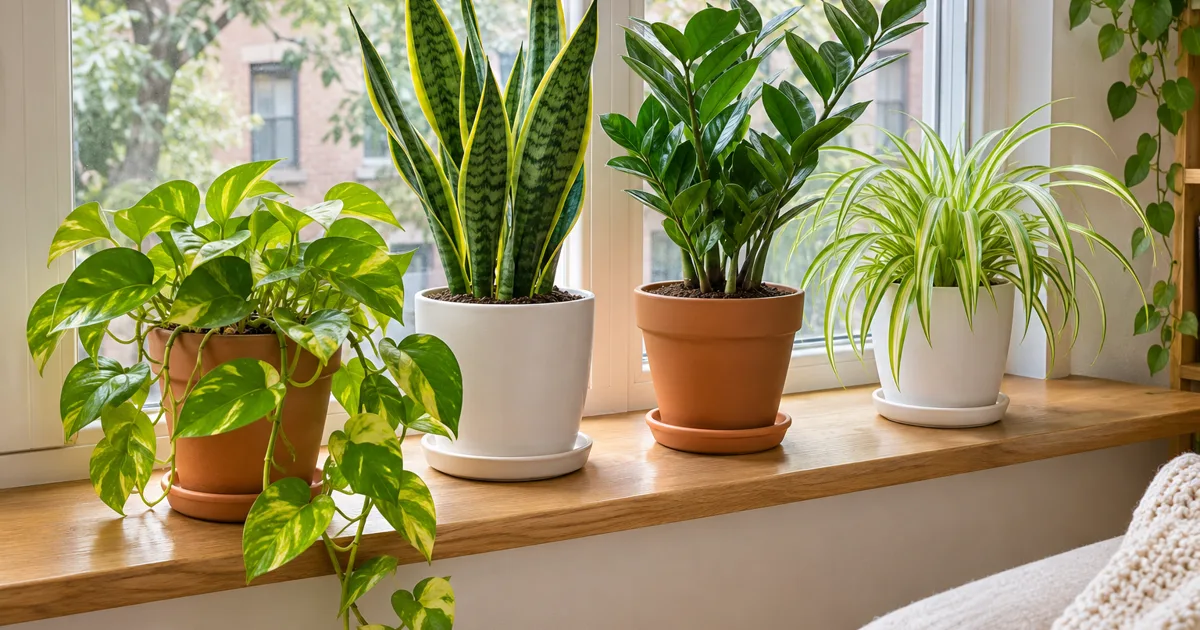
Pothos, snake plant, ZZ plant, spider plant, peace lily and monstera are among the houseplants you see most often in stores, mostly because they forgive a missed watering or a dim corner. If you have pets, check the ASPCA plant list first: pothos, peace lily and snake plant are on its toxic list for cats and dogs, while spider plant is listed as non-toxic.
No, not most of them. Check them often, but water only when the mix is dry to the depth that plant likes. Daily watering keeps the roots wet all the time, which leads to root rot. A small pot in a hot, bright window in summer may need water every day or two, but that is the exception, and the same plant will need far less in winter.
Share article
About the author

Keep checking your plant
Plant care reference
Indoor plant care
Build a routine around your plant, light and potting mix.
Plant care reference
Why is my plant dying
Trace leaf and root symptoms before choosing a care change.
Plant care reference
Pothos plant care
Choose a growing spot and prune a trailing pothos for fuller growth.
Plant care reference
How to fix root rot
Inspect root firmness and drainage, then decide whether to repot.