How Often to Water a Poinsettia (and Why the Foil Kills It)
Filip Leszczyński 2 November 2026 11 min read
In this article
There is no fixed number of days for how often to water a poinsettia. Water it when the top of the soil feels dry to the touch, soak it until water runs out of the bottom of the pot, and then let it drain completely before it goes back on display.
In a warm home that can mean every few days for a small pot and once a week or longer for a big one in a cool room, which is why a calendar fails. The bigger surprise is that most holiday poinsettias that wilt and drop leaves in December are not thirsty at all. They are sitting in water trapped inside the foil sleeve they came in, and the roots are drowning.
How often to water a poinsettia, by where it sits
Poinsettias want soil that is just moist: never bone dry, never soggy. The pot, the room and the wrapper decide how fast the soil gets from one to the other. Use this table to set how often you check, then let the soil decide whether you water.
| Your setup | How fast it dries | How often to check | What to do differently |
|---|---|---|---|
| Plastic grower pot inside a foil sleeve | Slowly, and hides trapped water | Every 2 to 3 days | Take the foil off or tear holes in the bottom before watering |
| Clay or terracotta pot | Fast, the pot wicks water away | Every 1 to 2 days in a warm room | Expect to water more often than a plastic pot |
| Mini poinsettia in a 4 inch pot | Fastest, very little soil | Daily | Check by lifting; tiny pots go from fine to wilted quickly |
| Large pot or several plants in one bowl | Slow in the center | Every 3 to 4 days | Make sure the bowl drains; push a finger 2 to 3 inches down |
| Cool room around 60°F | Slow | Every 3 to 4 days | Water less; cool, wet soil is where root rot starts |
| Warm room near a heater vent | Fast and uneven | Every 1 to 2 days | Move it away from the vent if you can; hot dry air also drops leaves |
These intervals are reminders to look, not a watering schedule. Colorado State University Extension puts it plainly: there is no set rule on how often to water a poinsettia, because pot type, temperature and potting mix all change it. If you want a starting check interval for your other plants too, the plant watering calculator works from pot size and light.
The foil sleeve is the real problem
Poinsettias are sold wrapped in decorative foil or plastic sleeves. They look festive and they hold every drop that runs out of the drainage holes. Water the plant in its sleeve and the bottom inch of the pot sits in a puddle for days.
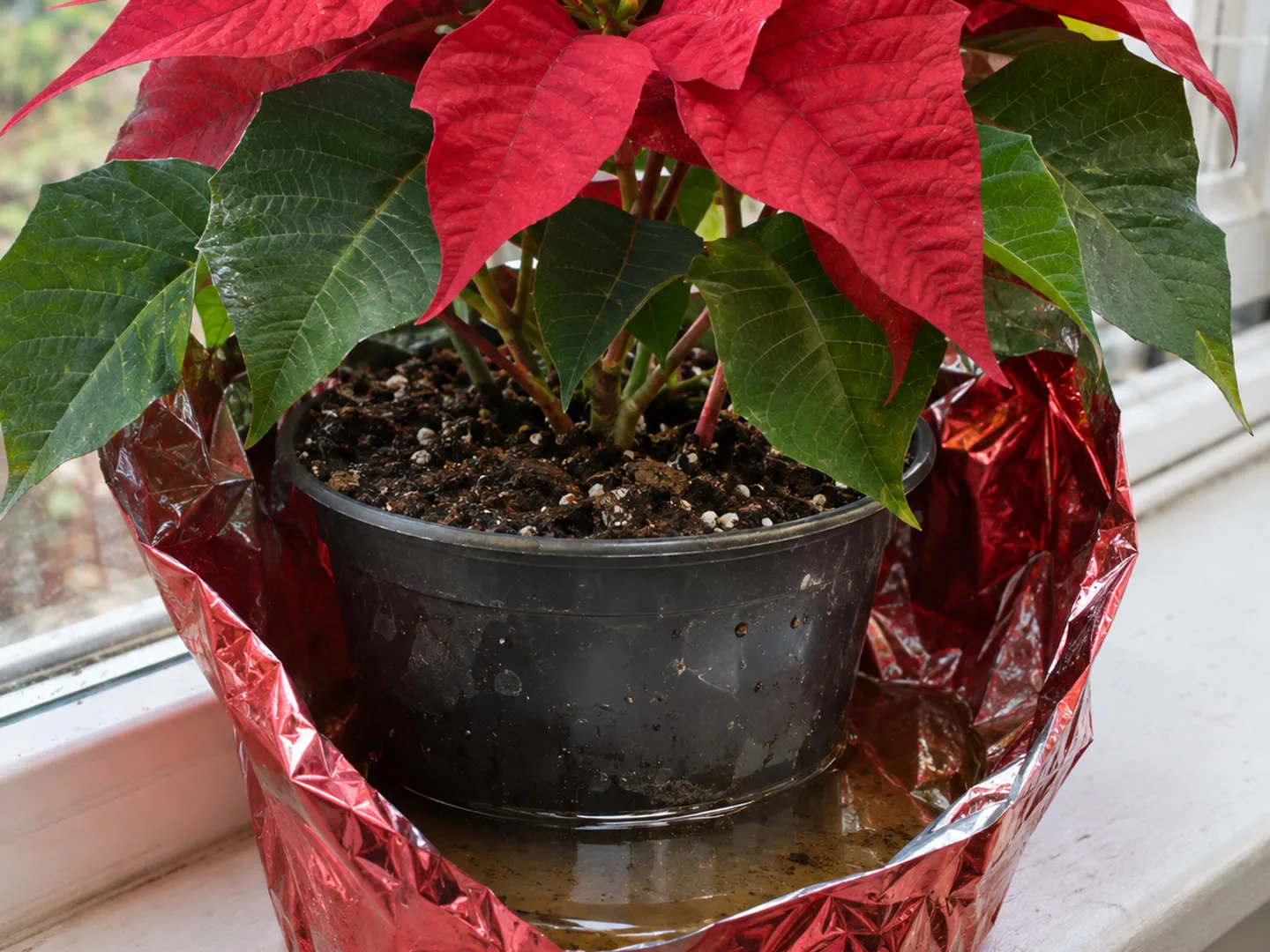
The roots in that wet zone run out of air, start to rot and stop taking up water. The plant then wilts, which looks exactly like thirst, so the owner waters again. That loop is how most poinsettias are lost before New Year. Utah State University Extension warns that poinsettias are very sensitive to overwatering and develop root rot quickly if kept too wet.
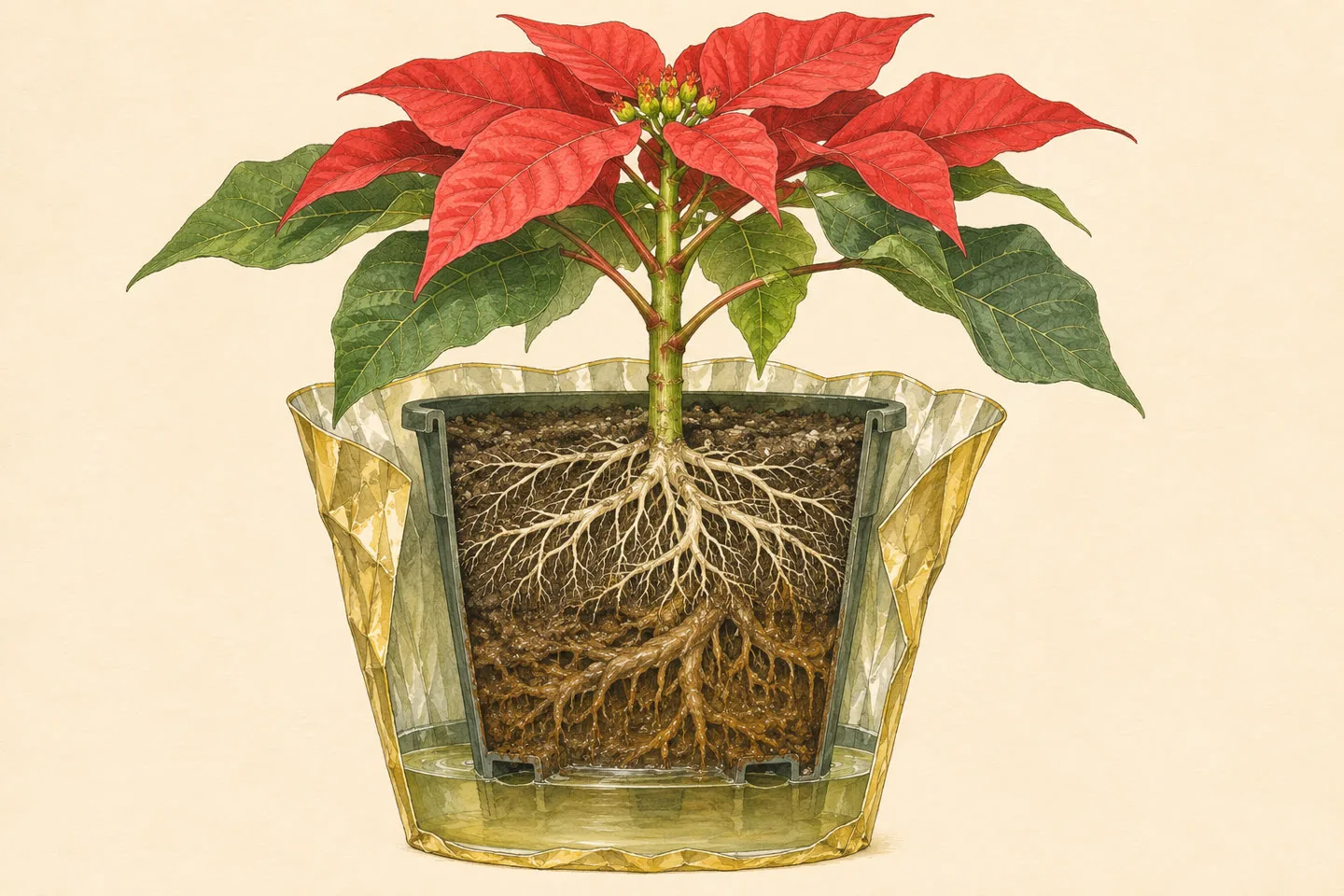
The fix is simple. Either take the sleeve off every time you water, or tear or poke a few holes in its base and set the pot on a saucer you empty after every watering. If water is sloshing around inside the foil right now, pour it out today.
How to water a poinsettia properly
Water thoroughly, then leave it alone until it needs water again. Small sips every day keep the surface damp and the bottom of the pot soggy, which is the worst of both.
How to water a poinsettia
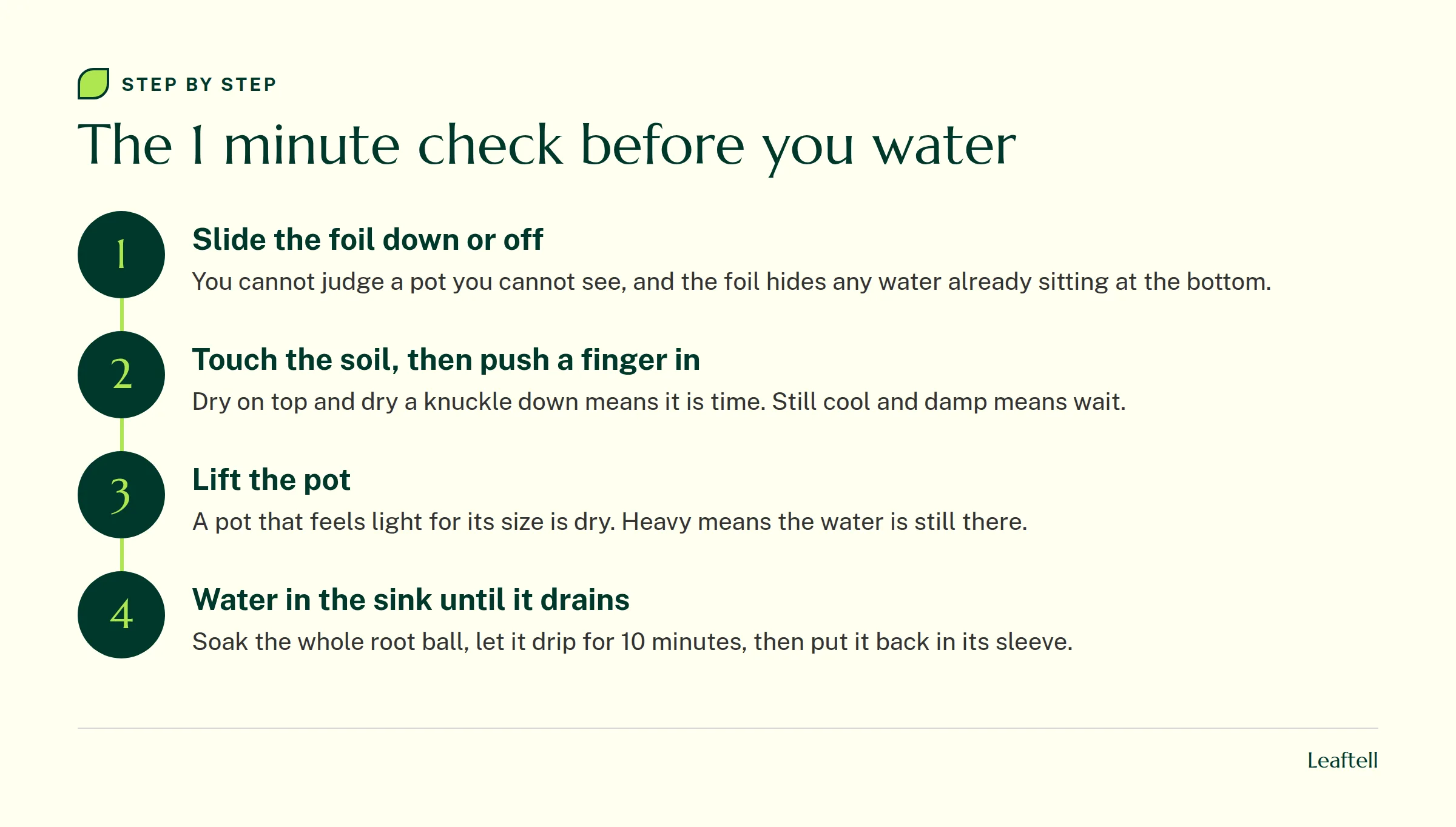
- Check the soil first
Touch the surface. If it is dry and still feels dry a knuckle deep, it is time. If it is cool and damp, wait a day and check again. For a large pot, go 2 to 3 inches down.
- Take it out of the foil
Lift the plastic grower pot out of its sleeve or decorative pot so the water can run out freely.
- Water at the sink until it drains
Pour room temperature water slowly over the whole soil surface until it runs out of the drainage holes. Or stand the pot in a bowl of tepid water for 10 to 20 minutes so the mix soaks it up from below, the method the RHS suggests.
- Let it drip
Leave the pot in the sink or a dish rack for about 10 minutes until it stops dripping.
- Put it back and empty any leftovers
Return it to its sleeve or cover pot. Check again an hour later and pour out any water that has collected at the bottom.
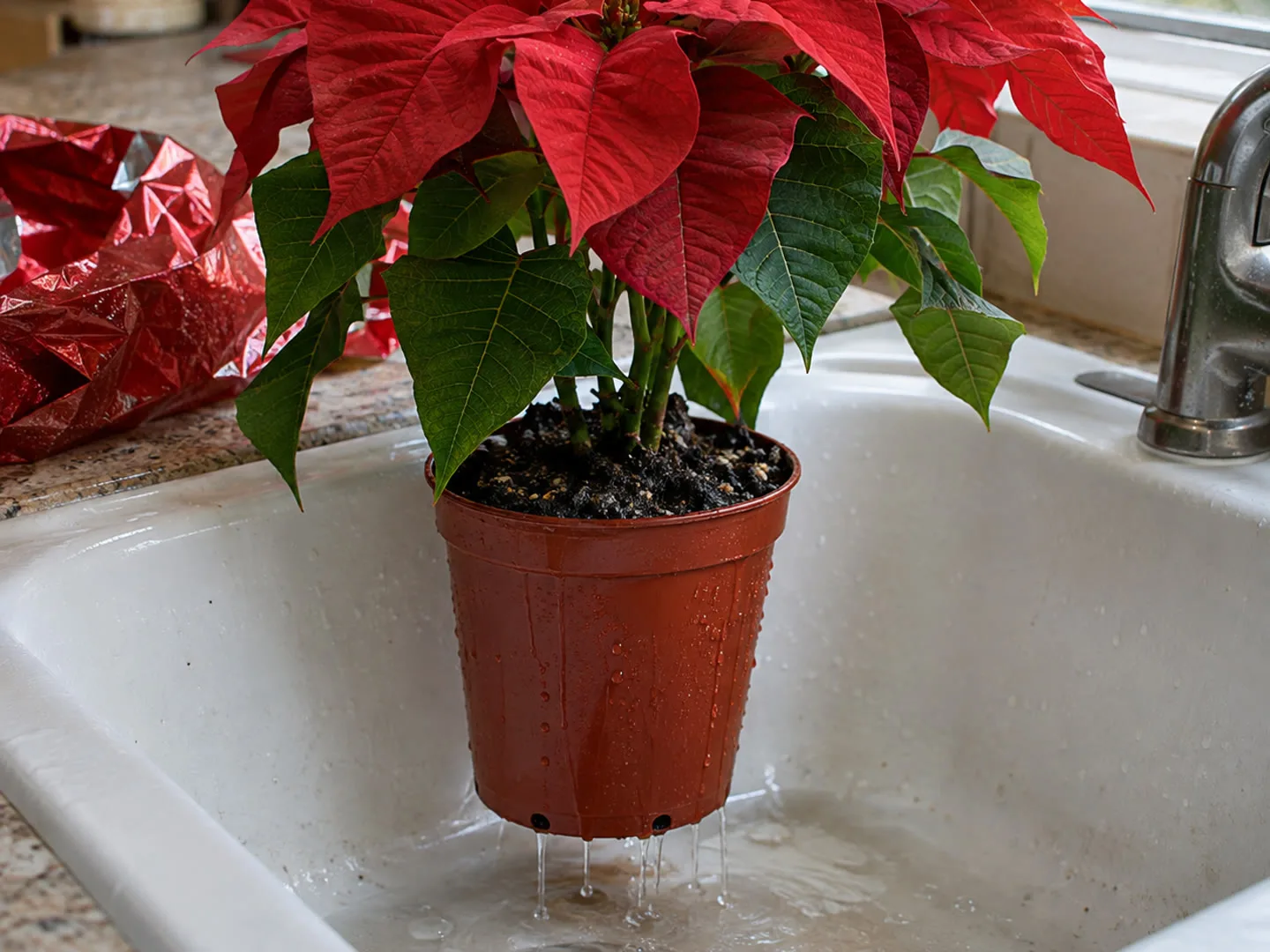
A useful habit is to lift the pot right after watering so you know how heavy "wet" feels. A few days later, lift it again. Once you know the difference, you can tell whether it needs water without touching the soil. Our guide on how to tell wet soil from dry before watering goes through the finger, weight and color checks in more detail.
What makes a poinsettia need water more or less often
Three things change the pace more than anything else: pot size, pot material and room temperature.
- Pot size. A 4 inch mini holds so little soil that a warm day can dry it out. A 10 inch bowl of three plants can stay wet for a week.
- Pot material. Clay breathes and dries faster. Plastic holds water longer, which is why CSU notes plastic pots are the ones prone to overwatering.
- Temperature and air. Warm, dry indoor air speeds things up. A room near a heater vent can dry a small pot in a couple of days, and a cool hallway slows it right down.
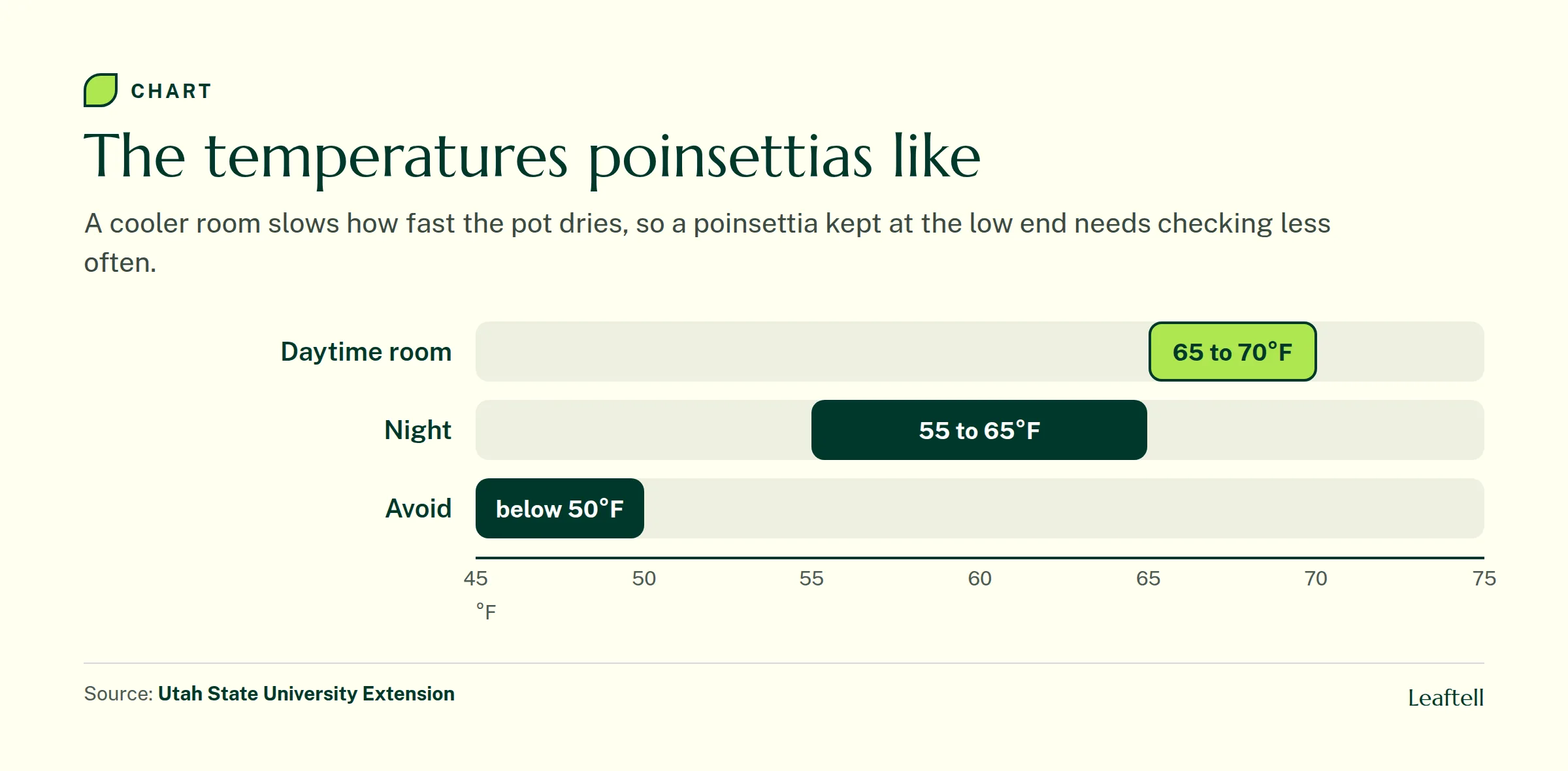
Poinsettias come from Mexico and dislike cold. Keep them where daytime temperatures sit around 65 to 70°F and nights do not drop below the mid 50s. A plant kept at the cool end uses less water, so check it less often, but do not chase warmth by parking it on a radiator or in a hot sunny window. Bright, indirect light for at least six hours a day is what keeps the bracts colored, and our guide to reading your plant's light helps you find that spot.
Signs you are watering too much or too little
Both problems make a poinsettia droop and drop leaves, so the plant alone will not tell you which one you have. The soil will.
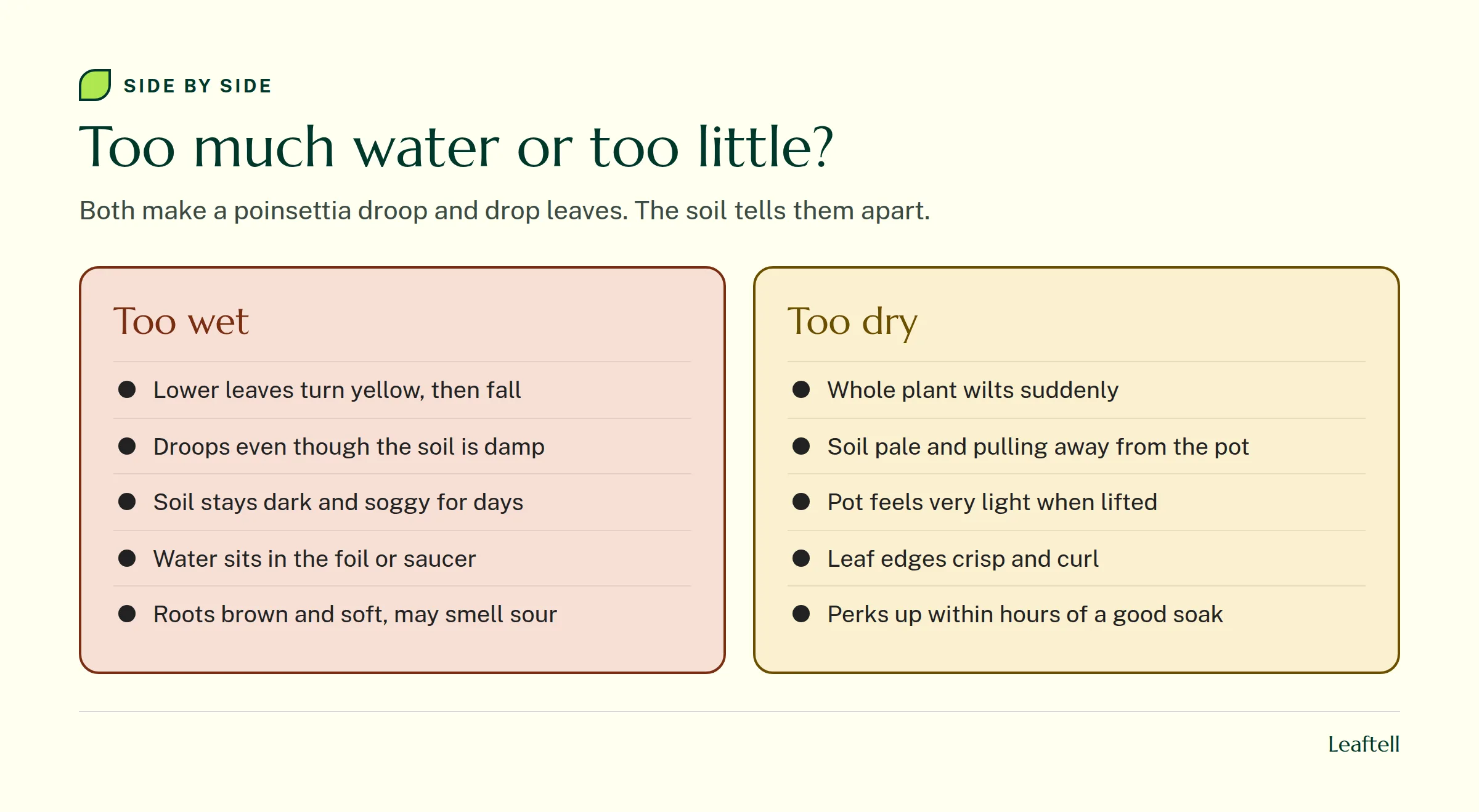
Overwatered poinsettia
Lower leaves turn yellow and fall, the plant droops even though the soil is damp, and water collects in the foil or saucer. If it has gone on for a while, the stems soften at the base and the soil smells sour.
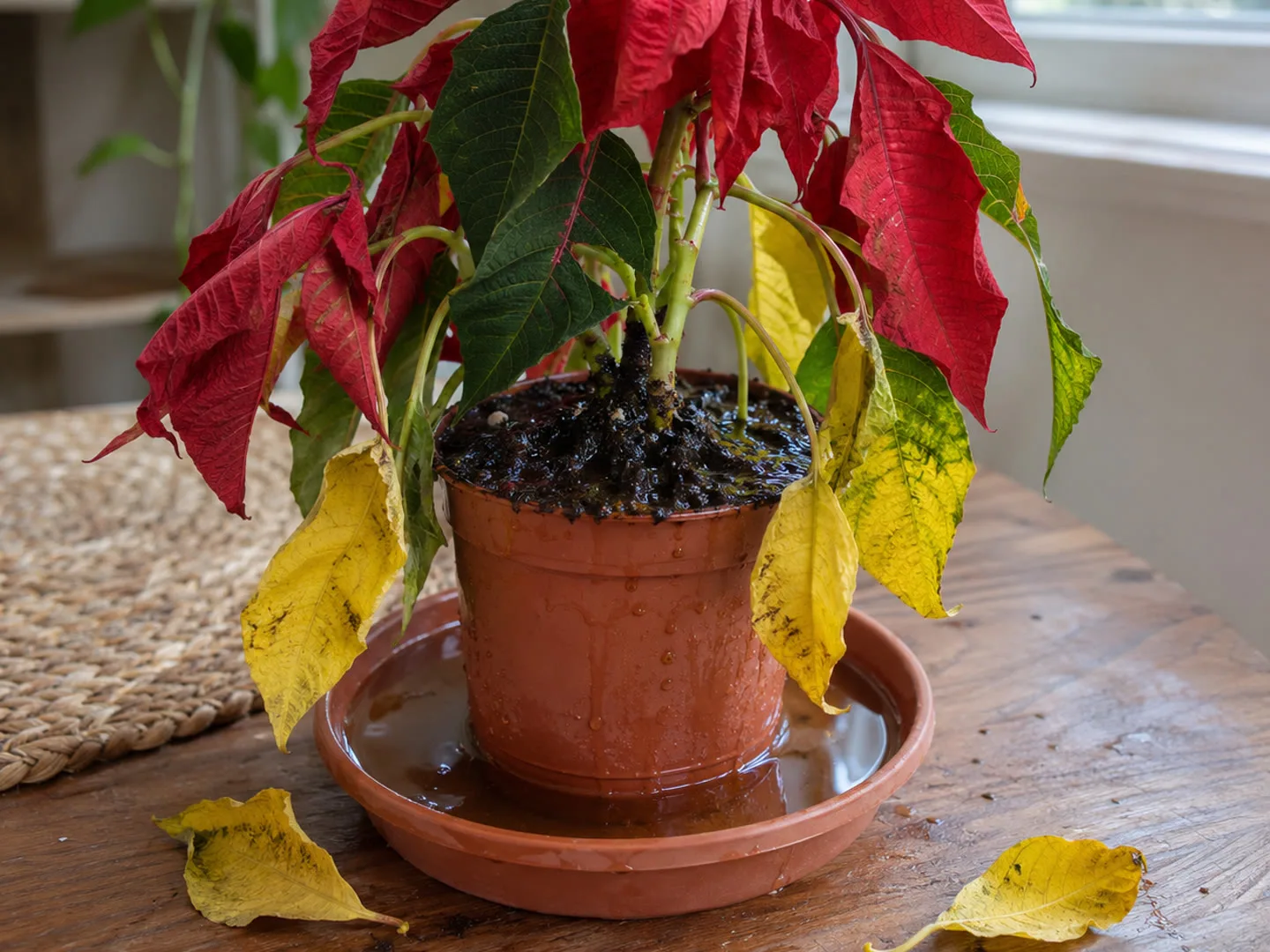
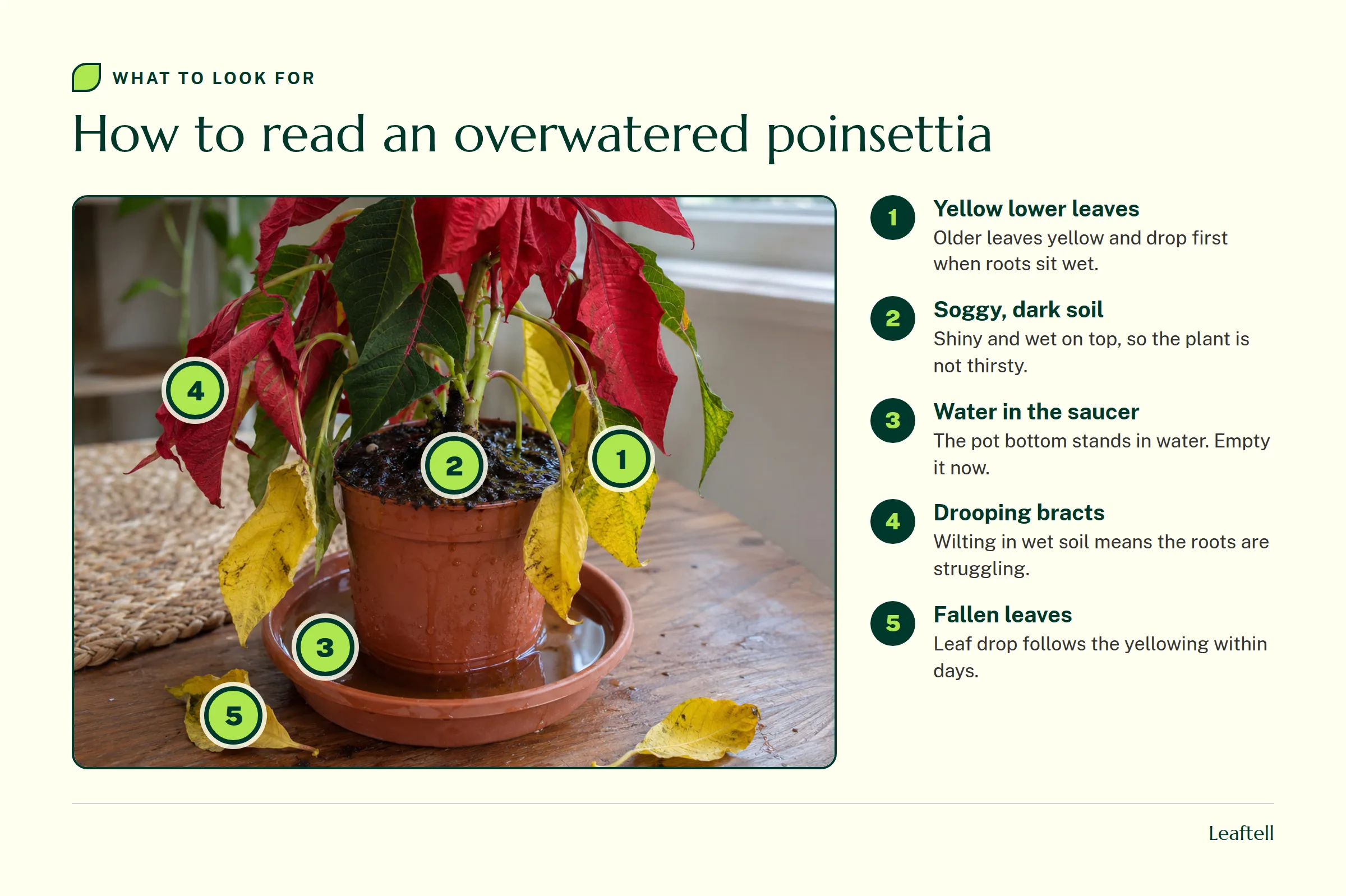
Stop watering, take the foil off and let the top inch dry out before you water again. If the plant is still collapsing, slide it out of the pot and look at the roots: firm and white is fine, brown and mushy is rot. Our step by step guide on how to fix root rot covers trimming and repotting, and the broader list of overwatered plant symptoms helps if you are not sure.
Underwatered poinsettia
The whole plant wilts quickly, the soil looks pale and has shrunk from the side of the pot, and the pot feels light. Leaf edges may go crisp. An underwatered poinsettia usually perks up within hours of a good soak in the sink.
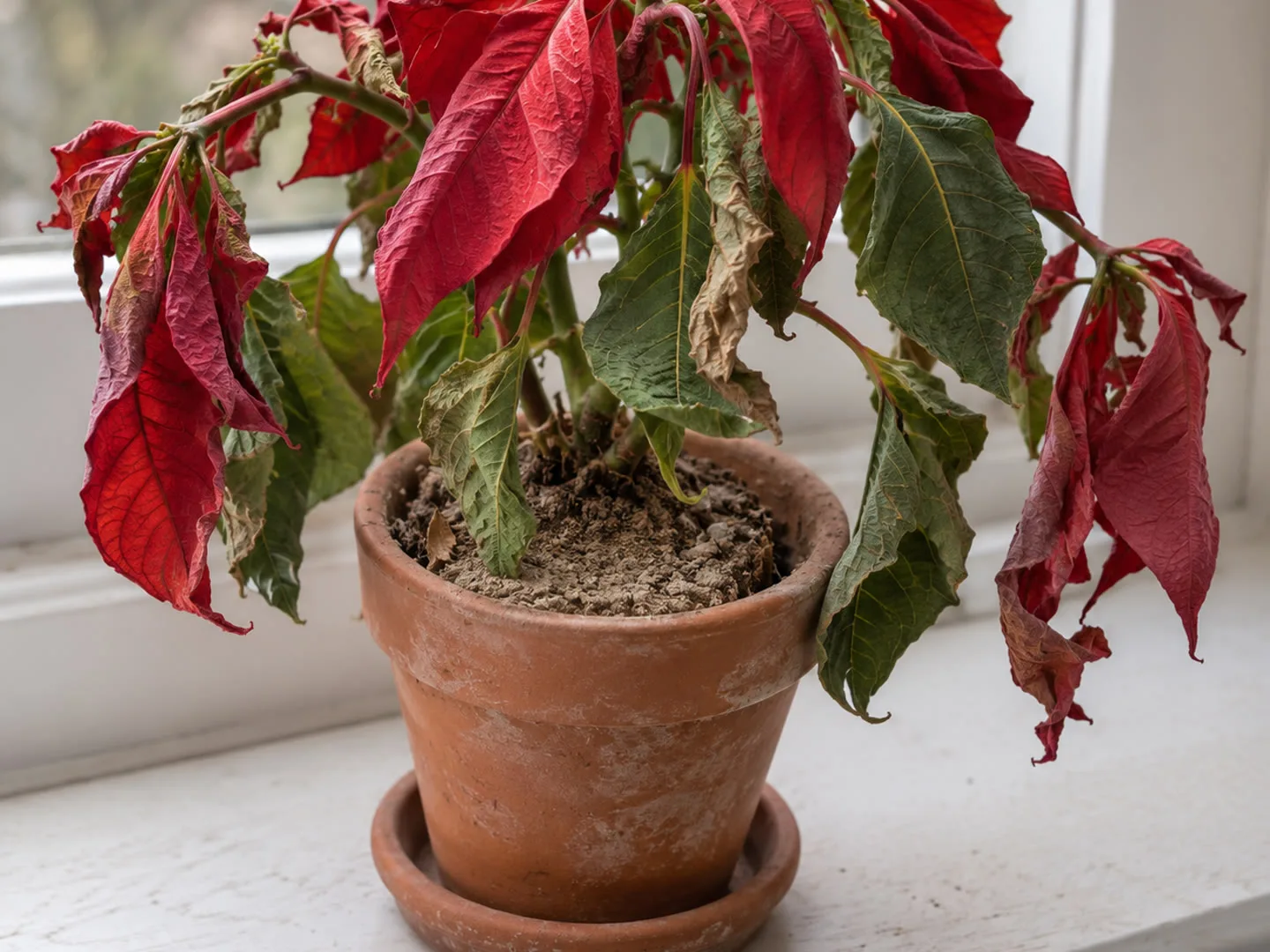
Leaves that drop while the soil is fine usually point to cold drafts, a heater blast or a sudden move, not water. The guide to drooping plants walks through the other causes when watering checks out.
Not sure if your poinsettia is too wet, too dry or reacting to a cold draft? A photo of the whole plant and a close-up of the leaves is a good place to start.
Watering after the holidays
Most poinsettias end up in the compost in January, and that is fine. If you want to keep yours, the watering changes with what the plant is doing.
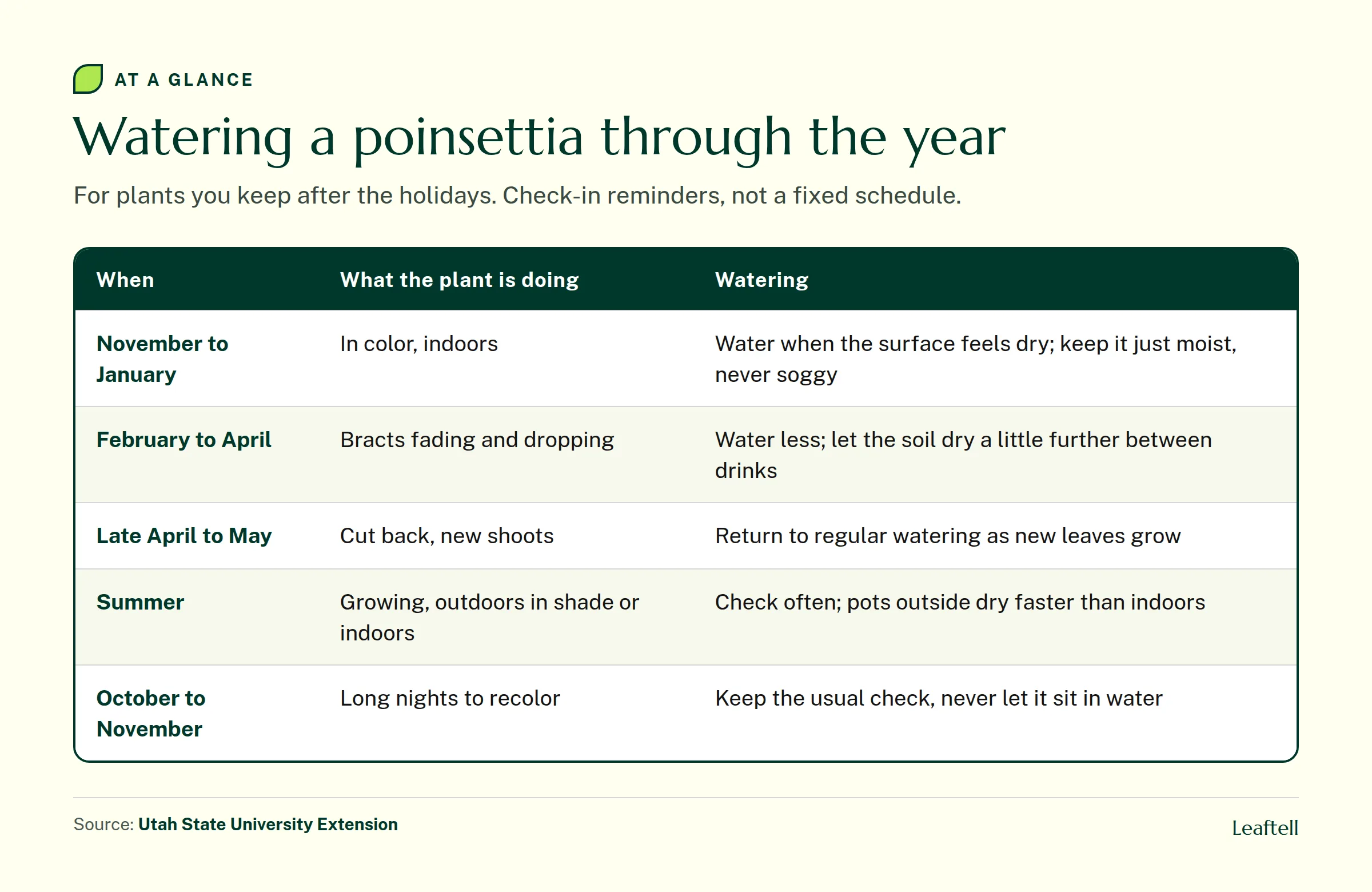
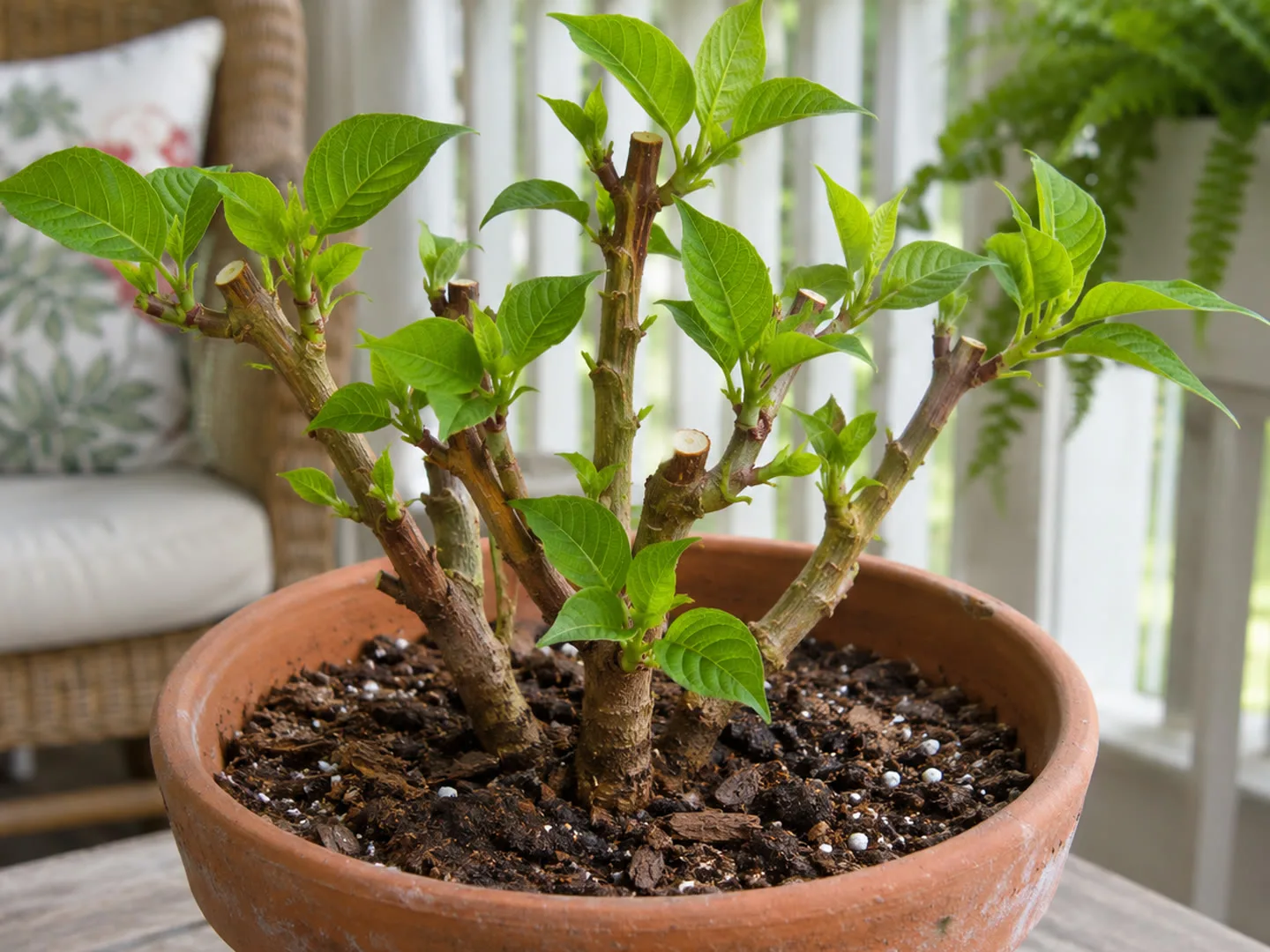
Once the colored bracts fade and drop, usually late winter, water less and let the soil dry a little further between drinks while the plant rests. When you cut it back in spring and new shoots appear, go back to regular watering. Over summer it can grow outdoors in a shady spot, where pots dry out much faster than indoors, so check them more often. Getting the color back for next December takes long, completely dark nights from early October, and the watering check stays the same throughout.
If you also keep a Christmas cactus, it follows a similar seasonal rhythm with different rules, which our Christmas cactus care guide explains. It needs more water than its name suggests, as our guide on Christmas cactus watering shows.
The short answer
Check a poinsettia every few days, water it when the top of the soil is dry, soak it until it drains and never leave it standing in water. The foil sleeve matters more than the number of days: take it off to water, or tear holes in it, and most holiday poinsettias make it well past New Year.
If your plant is drooping or dropping leaves and you cannot tell whether it wants more water or less, check your poinsettia in Leaftell with a photo of the whole plant, a close-up of the affected leaves and a note on how the soil feels a knuckle deep. Take a fresh photo about seven days later as a check-in reminder and compare the newest leaves.
Check your growing conditions with the plant watering calculator.
Frequently asked questions
An overwatered poinsettia has yellowing lower leaves that drop, droops even though the soil is wet, and often has water pooled in its foil sleeve or saucer. Let the top inch of soil dry, remove the foil and check the roots for brown, mushy rot if it keeps declining.
A plant you will compost after the holidays does not need any. If you keep it, use an all purpose water soluble houseplant fertilizer, given on already moist soil and diluted exactly as the label says, and stop feeding while it rests after the bracts drop. Store fertilizer away from pets and children, and note the ASPCA lists poinsettia as toxic to cats and dogs: its sap irritates the mouth and stomach.
No. Poinsettias are tropical plants that drop leaves when they get cold, and a few melting cubes rarely wet the whole root ball evenly. Room temperature water poured until it drains, then emptied from the foil, works better.
Share article
About the author

Keep checking your plant
Plant care reference
Indoor plant care
Build a routine around your plant, light and potting mix.
Plant care reference
Why is my plant dying
Trace leaf and root symptoms before choosing a care change.
Plant care reference
Pothos plant care
Choose a growing spot and prune a trailing pothos for fuller growth.
Plant care reference
How to fix root rot
Inspect root firmness and drainage, then decide whether to repot.